A decade after Britain voted to leave the European Union, the UK and the EU took their biggest step yet toward repairing the relationship on Friday, November 20, 2026. Prime Minister Andy Burnham met European Council President António Costa and European Commission President Ursula von der Leyen in Brussels for only the second EU-UK summit since Brexit, and the three leaders emerged with a package of agreements covering young people, food trade and carbon markets — a deal Burnham called a step toward undoing a decade of damage from the divorce.
“The Brexit we were given has not worked. We have lost more than we gained,” Burnham said ahead of the summit, adding that “a closer partnership with Europe is good for working people, good for Britain and good for Europe.” Von der Leyen called the meeting “a turning point” in post-Brexit relations, describing the two sides as “good old friends that are rejuvenating the friendship.”
What the Brussels Deal Covers
Three agreements sit at the heart of the package. The first creates a youth experience scheme that will let up to 100,000 young adults from Britain live and work in EU countries for up to three years, with the same number of Europeans able to do the same in the UK. The second removes checks on food and agricultural products, ending the post-Brexit export paperwork that has frustrated British farmers and food exporters. The third links the UK and EU emissions trading systems, so companies on both sides no longer have to pay each other’s new carbon border taxes.
Burnham pitched the package as a practical test: “does it make life better for people in Britain?” He said the food and agriculture deal “holds out the real prospect that the cost of the weekly shop will begin to come down,” while the government claims it could add up to £5.1 billion a year to the economy. The prime minister said the deals overall could add a modest 0.4% to Britain’s economy.
A Second Chance for Young People
The youth mobility scheme is the centrepiece of the reset, and the part Burnham has talked about most. It is aimed squarely at the generation that lost the automatic right to live, study and work across Europe when Britain left the EU — a freedom many young Britons never got to use.
Under the scheme, up to 100,000 young adults from Britain will be able to live and work in EU countries for up to three years at a time.

Von der Leyen said ahead of the summit that she wanted it to be “a summit of ambition and concrete results. More opportunities for young people. Easier agrifood trade. And a stronger cooperation on economic security.” For Burnham, the scheme is also personal politics: he has said the reset deal was done to give young people the opportunities Brexit took away.
Cheaper Food and Linked Carbon Markets
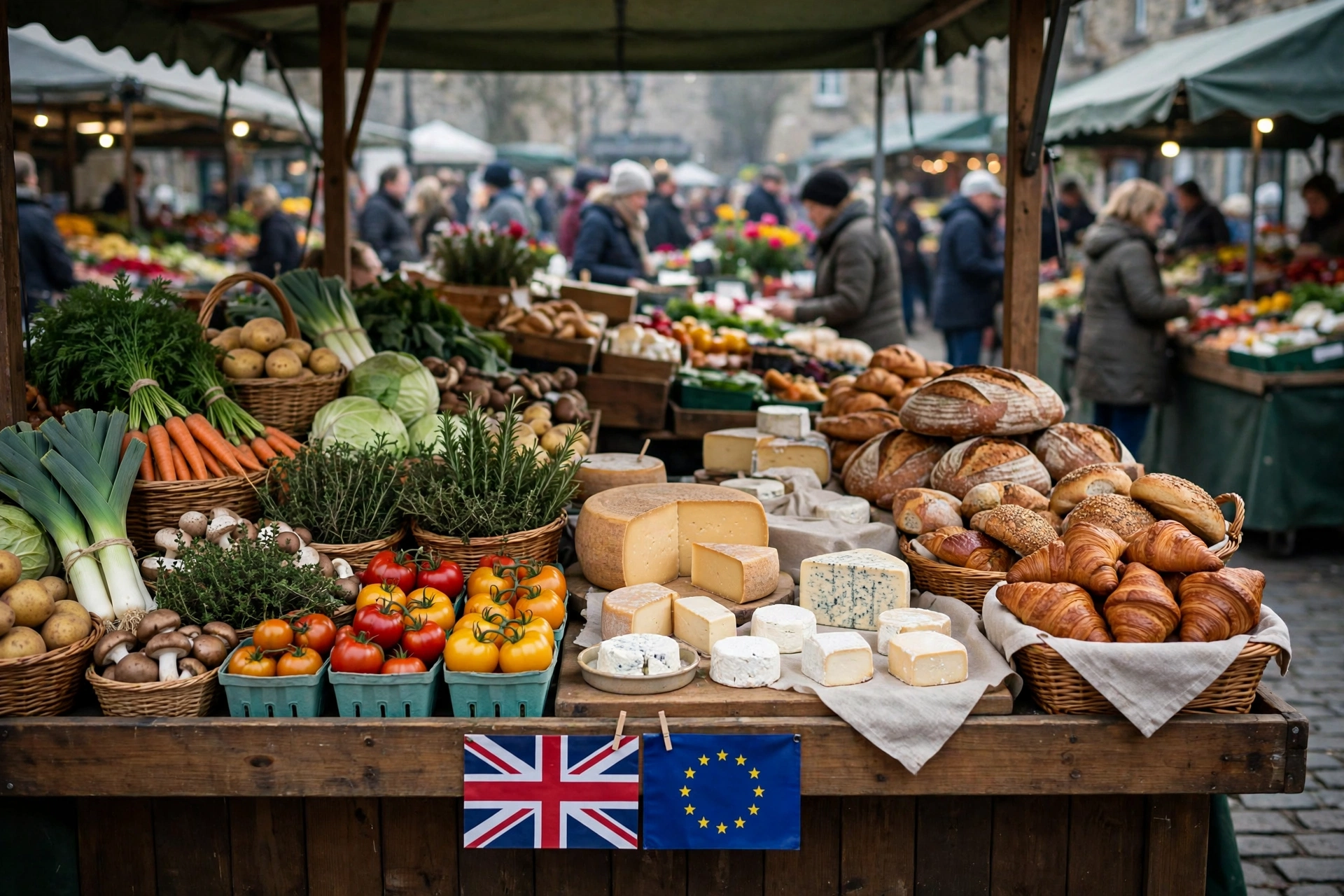
The food and agriculture deal is the one businesses care about most. It creates a common area for food, animal and plant rules, with Britain aligning with EU trade rules on sanitary and phytosanitary goods from March 2028. In practice, that means an end to the certificates and border checks that have slowed British food exports to Europe since Brexit — and the government says removing that red tape could add up to £5.1 billion a year to the economy.
The carbon market linkage is quieter but significant. Linking the two emissions trading systems should mean UK and EU companies no longer face each other’s carbon border taxes, removing a cost that has threatened to grow as both sides tighten their climate rules. It is the kind of technical agreement that rarely makes headlines but directly affects the price of energy-intensive goods.
The Tuition Fee Catch
Not everything was settled in Brussels. The biggest loose end is student tuition fees: the EU gave the UK a six-month deadline to agree on new fees for European students at British universities, and officials in Brussels indicated that implementation of the whole deal could be affected if the issue is not resolved. Von der Leyen said she was “confident” the two sides would find common ground, and the Russell Group of leading universities has already reacted to the demand.
The summit also exposed the limits of how far the reset can go for now. Costa made clear that the EU’s red lines remain the same: Britain would have to accept freedom of movement, payments to EU budgets and Brussels’ control over UK laws as the price of anything more ambitious than incremental improvements in relations.
What Happens Next
Burnham has vowed to put new legislation before Parliament next week to begin implementing the deal, despite Brussels holding out final approval until the tuition fee question is settled. He also intends to start a national conversation about the UK’s future relationship with the EU — something that could potentially include rejoining the bloc — though he has now pushed that discussion to the next EU-UK summit, which he suggested would not take place for another year.
The deal has already reopened the Brexit debate at home. Reform UK leader Nigel Farage said the reset breached Labour’s manifesto commitments and called Burnham’s claims “simply untrue,” warning that “the great Brexit debate has just started again” and that the summit “very, very soon becomes a debate about: do we rejoin or do we stay out?” Burnham has stressed that reversing Brexit is just one possible outcome and far from imminent — it would need the backing not just of British voters, but the unanimous support of a mistrustful EU.
The summit had originally been planned for July but was postponed when Burnham’s predecessor, Sir Keir Starmer, resigned. Its timing also reflects a changed security picture: the war in Ukraine and the UK’s military strength are drawing the two sides back together, and the leaders used the closing press conference to condemn Russia’s recent violation of Polish airspace — an incident covered in our report on Russia’s massive overnight missile attack on Ukraine.
Why This Summit Matters
The Brussels summit matters because it is the first time since Brexit that both sides have agreed on a package this broad — and because it happened at all. EU officials have been weary after a decade of shifting demands from seven British prime ministers, and reluctant to encourage talk of the UK rejoining. As Costa put it ahead of the meeting, “Our security and prosperity are closely intertwined, making a strong partnership between us essential.”
It also comes in a week of high-stakes diplomacy. Just a day earlier, the leaders of the United States, China and Russia met for a three-way summit in Shenzhen and issued a joint peace declaration. And the Brussels meeting followed a week in which the world court ruled that Myanmar committed genocide against the Rohingya and the US Senate rejected a war powers resolution on Iran — a reminder that the UK-EU reset is one thread in a much larger pattern of nations renegotiating old certainties.
Whether the Brussels package becomes a genuine turning point or another incremental step will depend on what happens in the next six months: the tuition fee talks, the legislation in Parliament, and whether the promised cheaper food and new opportunities for young people actually arrive.
Frequently Asked Questions
What did the UK and EU agree at the Brussels summit on November 20, 2026?
Three agreements: a youth mobility scheme for up to 100,000 young adults each way, a food and agriculture deal ending post-Brexit export checks, and a linkage of the UK and EU carbon emissions trading systems.
How long can young people live and work abroad under the youth scheme?
Up to three years at a time, with the scheme capped at 100,000 people in each direction.
When does the food trade deal take effect?
Britain will align with EU rules on food and plant goods from March 2028, removing the need for certificates and border checks on products crossing between the UK and EU.
What is still unresolved after the summit?
Student tuition fees for Europeans studying in the UK. The EU gave Britain a six-month deadline to agree on new fees, and implementation of the deal could be affected if it is not resolved.
Sources
- NPR: The U.K. and EU hold a rare summit to strengthen ties
- The Oldham Times: UK-EU relationship at ‘turning point’ as Burnham agrees new deal with Brussels
- Hillingdon Times: Burnham says UK and EU ‘stronger together’ ahead of deal with Brussels
- European Council: Joint statement EU-United Kingdom summit, 20 November 2026