A fourth oil tanker in 24 hours caught fire after striking a naval mine east of the Strait of Hormuz, Iran’s navy said on Monday night, in the latest blow to shipping through the world’s most important oil chokepoint. Hours earlier, Iran’s Revolutionary Guards said they had seized an American military drone flying near the strait — a claim Washington had not commented on by Monday evening.
The two developments, reported within hours of each other on November 16, 2026, mark a sharp escalation in a confrontation that has already disrupted commercial shipping for months. The vessels involved have not been publicly identified, and the Iranian accounts have not been independently verified — a caveat that matters, because the details coming out of the strait are now almost entirely controlled by the parties to the conflict.
Here is what is known, what is claimed, and why it matters for oil markets, shipping and the wider region.
A Fourth Tanker in 24 Hours
Iran’s Army Navy said on Monday night that another oil tanker caught fire after hitting a naval mine east of the Strait of Hormuz, calling it the fourth such incident in the past 24 hours. The vessel was sailing through a restricted zone with its navigation systems switched off, according to the navy’s public relations office, and the strike left it on fire and severely damaged. Press TV reported the announcement late on Monday.
The incident capped a weekend of attacks on shipping. On Sunday, the Islamic Revolutionary Guard Corps (IRGC) Navy said two oil tankers struck mines and caught fire while trying to use an unauthorised southern route through the waterway, and the Iranian Army said late on Sunday that a different tanker had also hit a mine east of the strait. Early on Monday, the IRGC said two more tankers had burst into flames after hitting mines. The Guards put the tally at six tankers caught fire since Sunday; Iranian state media’s count reached seven.
None of the ships has been named, and there is no independently confirmed account of the state of their crews or the extent of the damage. Reuters reported the IRGC’s claims while noting it could not independently verify them.
Iran’s position is that the tankers were violating its maritime regulations. Since February 28, 2026, Tehran has barred safe passage through the strait for vessels belonging to or affiliated with Israel and the United States, following what it described as joint strikes on Iranian territory. Iranian forces say vessels that switch off their tracking systems or enter prohibited areas without authorisation face “serious” repercussions — a warning the navy repeated on Monday.
There is at least one independent data point. The United Kingdom Maritime Trade Operations agency said in incident report 207, dated November 16, that a tanker transiting the strait outbound reported being struck by an unidentified projectile, causing a fire in its engine room. No casualties were reported and all crew were accounted for, UKMTO said, with damage and environmental impact still unknown. That account, from a British maritime security body rather than either side in the conflict, is the clearest confirmation so far that commercial shipping in the strait is actively being hit.
The pattern is not new. The IRGC reported similar incidents on November 5, when it said two tankers and a tugboat caught fire, and on November 10, when it said three more tankers had caught fire after using unauthorised routes. The International Maritime Organization has said it has verified more than 130 attacks on commercial vessels in the Strait of Hormuz since the US-Iran war that began in February.
Iran Says It Seized a US Drone
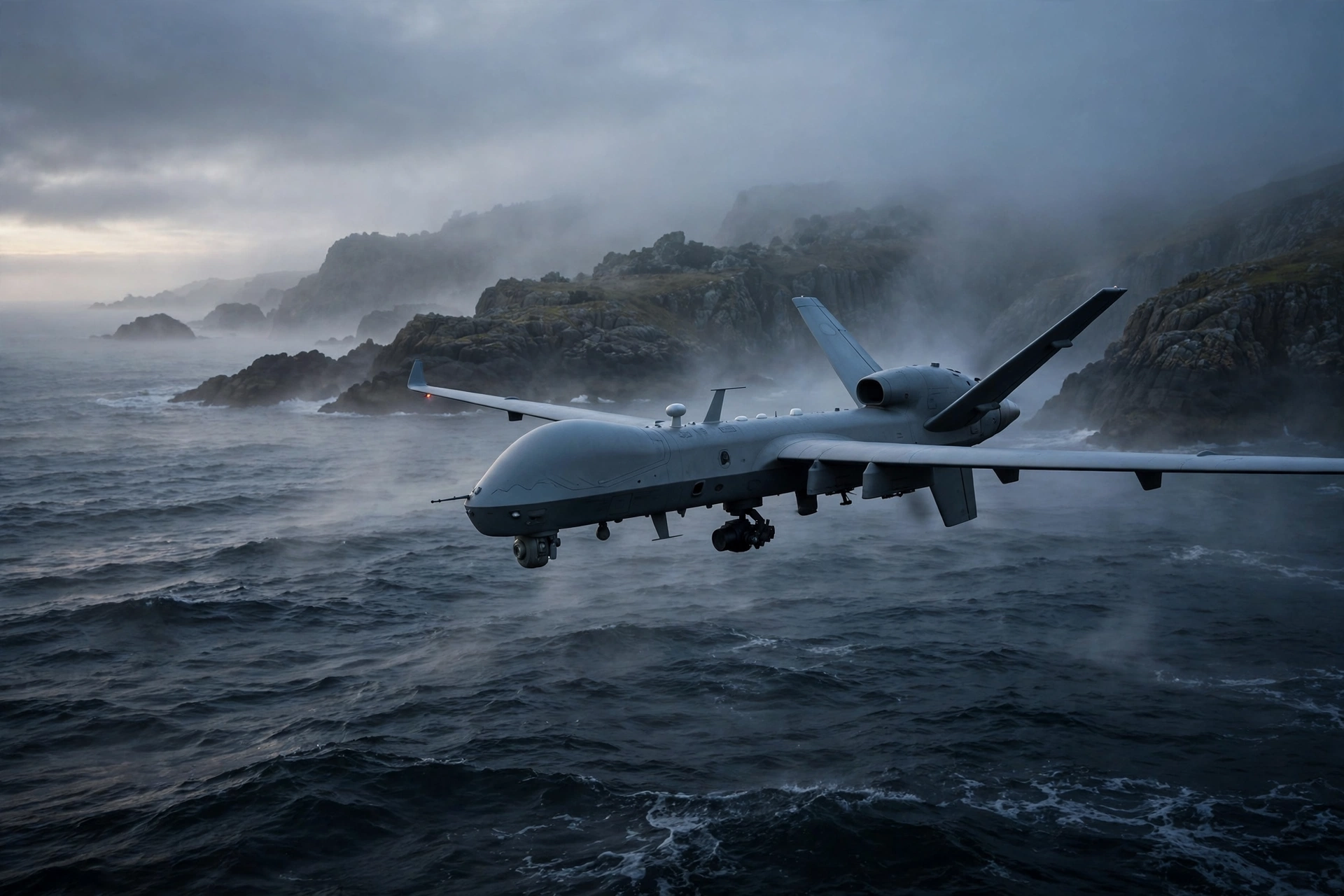
Separately on Monday, the IRGC Navy said it had seized control of a US Army MQM-170 drone south of Qeshm Island and brought it down intact during an electronic warfare operation. Naval Today reported the claim, citing a statement published by Sepah News, the Guards’ news outlet.
According to the statement, the drone had been operating in the area to track and identify Iranian air defence and electronic warfare systems before Iranian forces disrupted its control systems and took over its flight guidance. The Guards said it was the fourth MQM-170 they had landed safely and the eighth US drone captured intact in the Strait of Hormuz area overall. Iran’s Army separately said its air defence force had intercepted an MQ-1 Predator drone over the strait.
There was no immediate comment from the United States on the claims. That silence is worth noting: the US military rejected an earlier Iranian account of a drone capture, and Iran has made similar announcements in recent weeks, including in early November, when the IRGC reported using electronic warfare against MQM-170 drones near Qeshm Island.
The MQM-170, known as the Outlaw and made by US-based Griffon Aerospace, is a relatively small unmanned aircraft used for training and target missions — not a large armed drone like the MQ-9. That distinction matters, because the capture of a small target drone is a very different event from the downing of a frontline surveillance or strike aircraft. What the IRGC claims to have demonstrated is an electronic warfare capability: the ability to take over a drone’s flight controls and land it, rather than shoot it down.
Whether or not the latest claim holds up, electronic warfare is becoming a defining feature of modern conflict, and the contest over drones and the systems that defeat them is now playing out in one of the world’s busiest shipping lanes.
Why the Strait of Hormuz Matters
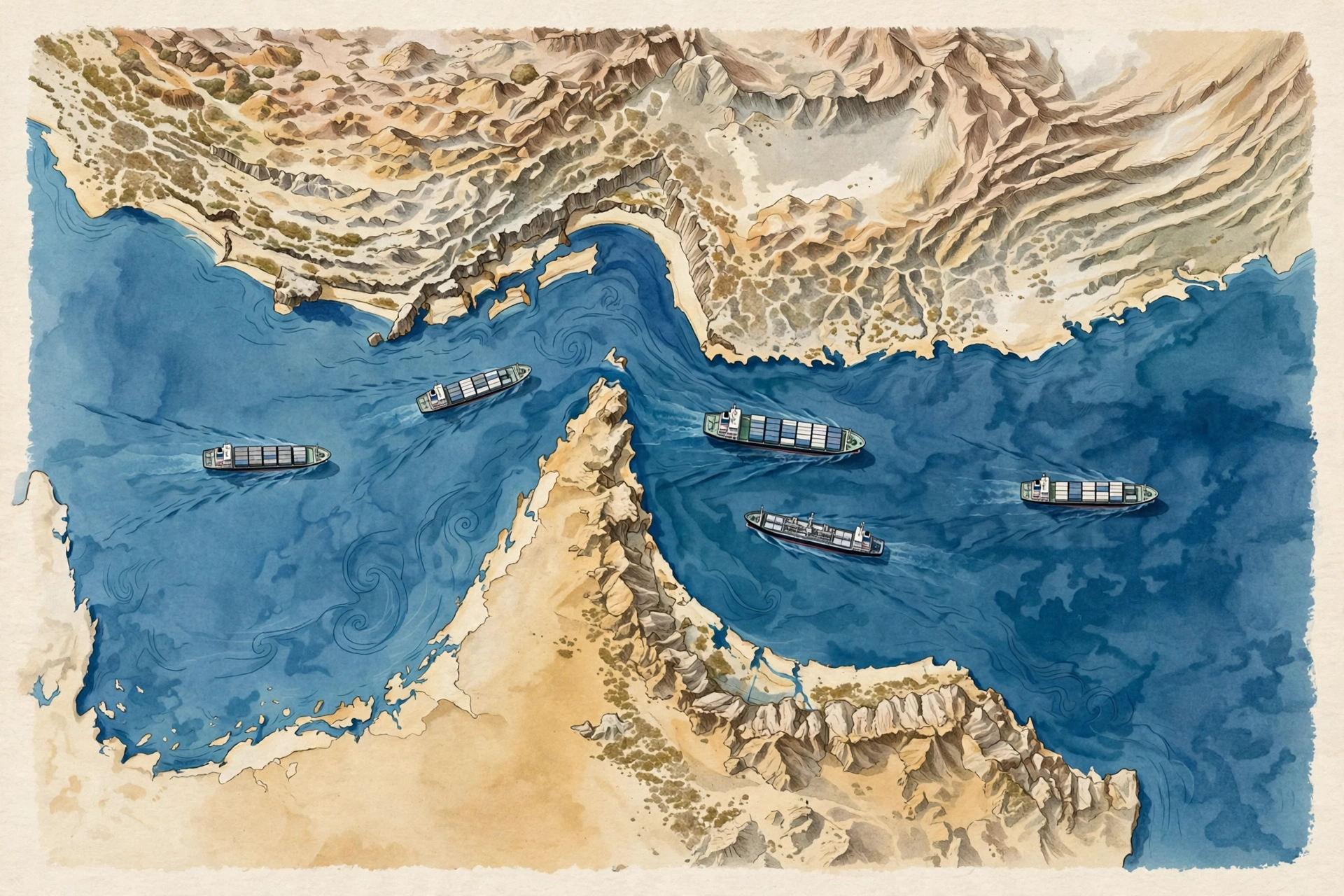
The Strait of Hormuz links the Persian Gulf with the Gulf of Oman and carries about a fifth of the world’s seaborne oil. Roughly 9.1 million barrels of oil a day flowed through it in the third quarter of 2026, according to US Energy Information Administration data.
That is why every incident in the strait moves markets — and why the reaction on Monday was more muted than the headlines might suggest. Oil prices fell on Monday, Reuters reported, citing signs that oil flows through the strait are recovering and reinforcing expectations of surplus supply. The International Energy Agency said on Friday that the world oil market will return to a surplus in the fourth quarter of this year, with supply averaging 105 million barrels a day against forecast demand about 1.7 million barrels lower.
But the physical picture is harder to read than the price. The EIA itself noted that since the end of February 2026, tracking data for ships in the strait has become especially unreliable, because vessels are switching off their transponders — exactly the behaviour Iran cites when it calls a tanker a violator. When ships go dark, insurers, traders and navies all lose visibility, and the risk premium creeps back in even when headline prices fall.
For importers in Asia, which take the largest share of Gulf crude, the stakes are direct: there is no short alternative route for most of the oil that leaves the Gulf. And global energy markets are already under strain from the year’s overlapping shocks, from the climate talks in Antalya to the scramble to power the AI boom.
A War Now in Its Ninth Month
The tanker fires and the drone claim land in a conflict that began on February 28, 2026, when the United States and Israel struck Iranian targets and Tehran responded by treating the strait as a contested battlespace. More than 130 verified attacks on commercial vessels since then, according to the International Maritime Organization, make this the most sustained campaign against shipping in the waterway in decades.
Yet there are also signs of restraint. Reuters reported that President Donald Trump has told advisers he may hold off further attacks on Iran absent new provocations from Tehran or the Houthis — a signal that Washington is weighing whether the latest incidents amount to a provocation or a continuation of a pattern it has already priced in.
Diplomacy, meanwhile, is about to get a rare stage. The first-ever trilateral summit of the leaders of China, Russia and the United States is due on Thursday, November 19, in Shenzhen, on the sidelines of the APEC leaders’ meeting, with Trump expected to raise the war in Iran and the question of reducing nuclear arsenals. How the confrontation has escalated through 2026 will be the backdrop to that meeting, and the tanker fires will be hard for any of the three leaders to ignore.
What to Watch Next
Several questions will decide whether Monday’s incidents are a spike or a turning point. First, verification: until vessels are named and their condition confirmed, the scale of the damage remains an Iranian claim rather than an established fact. Second, the American response: whether Washington answers the drone claim, and how, will signal whether the US treats electronic warfare seizures as an escalation. Third, shipping behaviour: if more owners reroute or pause transits, the strait could tighten even without a formal blockade. And fourth, Thursday’s summit in Shenzhen, where the war in Iran is now firmly on the agenda.
For now, the pattern is clear. The Strait of Hormuz, the narrow passage that carries a fifth of the world’s seaborne oil, is becoming more dangerous by the week — and the contest over it is being fought with mines, drones and electronic warfare as much as with ships and missiles.
Frequently Asked Questions
How many tankers have been hit in the Strait of Hormuz?
Iran’s navy said a fourth tanker in 24 hours caught fire after hitting a mine on Monday, November 16, 2026. The IRGC put the tally at six tankers since Sunday; Iranian state media counted seven. The vessels have not been named and the claims have not been independently verified, though UKMTO confirmed one tanker was struck by an unidentified projectile on November 16.
What drone does Iran say it seized?
Iran’s Revolutionary Guards said they seized a US Army MQM-170 drone, also known as the Outlaw, south of Qeshm Island, claiming they took control of it through electronic warfare and landed it intact. They said it was the fourth MQM-170 they had landed safely and the eighth US drone captured intact in the strait area. The US has not commented on the claim.
Why does the Strait of Hormuz matter so much?
The strait is the only sea route out of the Persian Gulf, carrying about a fifth of the world’s seaborne oil — roughly 9.1 million barrels a day in the third quarter of 2026, according to the US Energy Information Administration. There is no practical alternative route for most Gulf crude, so any disruption threatens global supply and prices.
Is the United States planning to strike Iran again?
Reuters reported that President Donald Trump has told advisers he may hold off further attacks absent new provocations from Tehran or the Houthis. A trilateral summit with the leaders of China and Russia is scheduled for Thursday, November 19, in Shenzhen, where the war in Iran is expected to be discussed.