US President Donald Trump arrived in Manila late on Tuesday afternoon, opening a four-day Asia trip that ends with the first-ever trilateral meeting of the leaders of the United States, China and Russia in Shenzhen on Thursday, November 19. The journey takes in a Quad leaders’ meeting, a US-ASEAN summit and a trade deal signing with Thailand before the main event: three nuclear-armed powers sitting at the same table for the first time.
Trump departed Washington on Monday, November 16, and landed in the Philippines at the tail end of the ASEAN summit, skipping the East Asia Summit. Reuters reported that he will join a US-ASEAN “Special Summit” later on Tuesday and meet Philippine President Ferdinand Marcos Jr. on Wednesday before flying on to Shenzhen.
The trip comes at a delicate moment for the White House. It follows the Republican Party’s defeat in the midterm elections, and it unfolds against a fragile trade-war truce with China, new US curbs on China’s access to AI chips, and the fallout from the Nvidia spying scandal. Expectations for the week are being managed carefully on all sides — and nowhere more so than for Thursday’s three-way meeting.
A First Quad Meeting in Two Years
Trump’s first engagement in Manila is a meeting of the Quad — the United States, Japan, Australia and India — the first gathering of the group’s leaders in two years and Trump’s first since returning to the White House in January 2025. His predecessor, Joe Biden, had regarded the Quad as a signature foreign policy initiative, and the grouping’s revival is one of the clearest signals of the trip.
The Quad sits awkwardly alongside the rest of the itinerary. Chinese President Xi Jinping, who hosts this week’s APEC summit, has previously objected to the grouping as an effort to encircle Beijing — and Trump will be sitting down with Xi himself barely 48 hours later. That tension is the trip in miniature: Washington courting its Indo-Pacific partners in Manila while preparing to negotiate with its chief rival in Shenzhen.
Trade is also on the Manila agenda. Trump will sign a joint statement with Thai Prime Minister Anutin Charnvirakul on Tuesday on an agreement on reciprocal trade, Thailand’s government said. The United States is Thailand’s largest export market, accounting for 24 percent of its total shipments this year. No ASEAN-wide trade framework with Washington is expected; the visit is set to produce separate bilateral deals instead.
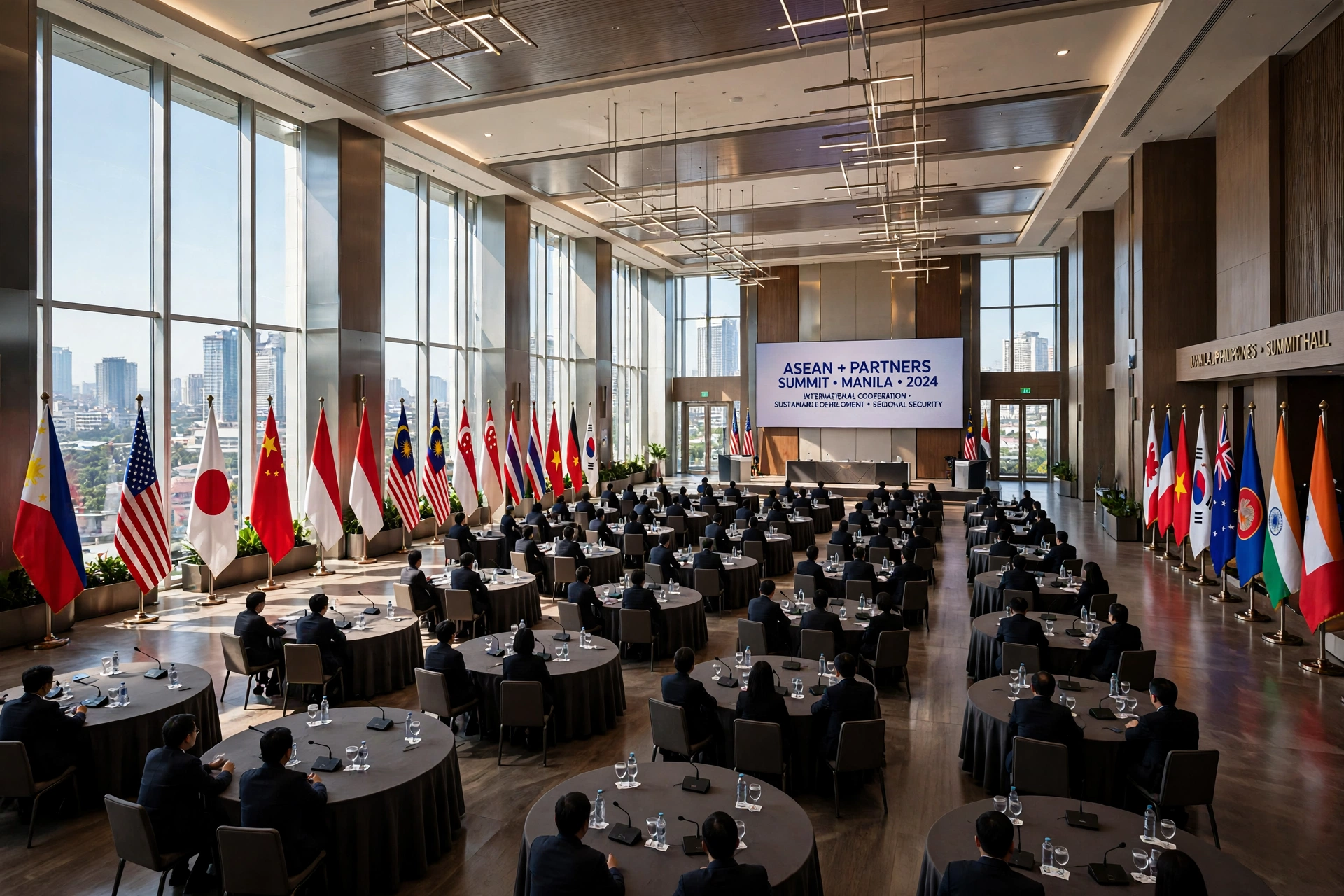
Protests awaited Trump on arrival in Manila, and the Philippines — a US defence ally — has declared November 16–18 special non-working days in the capital region for the summit. The US-India trade ties that run through the Quad meeting are a reminder of how much of this trip is about keeping partners close while the bigger negotiation waits in China.
The Shenzhen Trilateral: Nuclear Arms on the Table
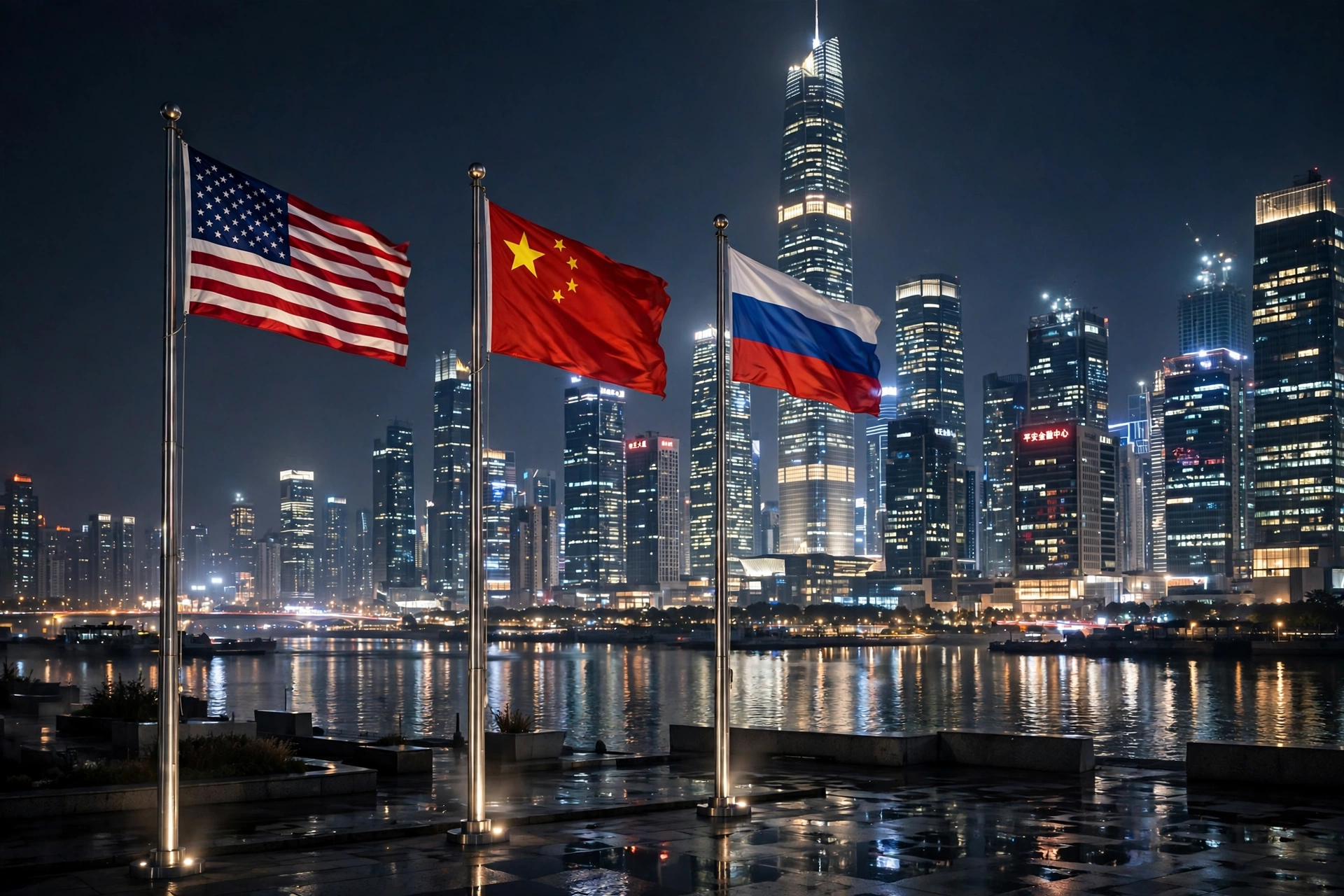
The centrepiece of the trip is Thursday’s meeting in Shenzhen, on the sidelines of the 33rd APEC Economic Leaders’ Meeting, hosted and chaired by Xi and bringing together 21 member economies. According to the White House schedule, Thursday runs from a 9:30 a.m. APEC Leaders’ Family Photo and a 9:45 a.m. plenary session to a 12:45 p.m. bilateral meeting between Trump and Xi, and then the trilateral itself at 2:30 p.m. — Trump, Xi and Russian President Vladimir Putin in one room, for the first time ever.
The White House confirmed the meeting on Friday, November 13. Beijing confirmed it on Monday, November 16, and the Kremlin confirmed it the previous Saturday, according to reporting citing Kremlin spokesman Dmitry Peskov. The leaders of the world’s three largest nuclear powers have met in pairs many times; they have never held formal talks as a trio.
The stated focus is nuclear weapons. White House spokeswoman Olivia Wales told reporters that Trump “will discuss the reduction of nuclear weapons in the world” at the meeting. The context is stark: New START, the last treaty limiting the nuclear arsenals of the United States and Russia, expired in February, leaving the world’s two largest nuclear powers without any binding cap on their arsenals for the first time in decades. A senior administration official described the Shenzhen session as an entry point — a first conversation that could, in time, lead to negotiations on a new arms-control framework between the three countries.
Officials are deliberately lowering expectations. “We do not expect to get to any kind of agreement,” a White House official said, according to reports. The meeting is being framed as a beginning rather than a negotiation.
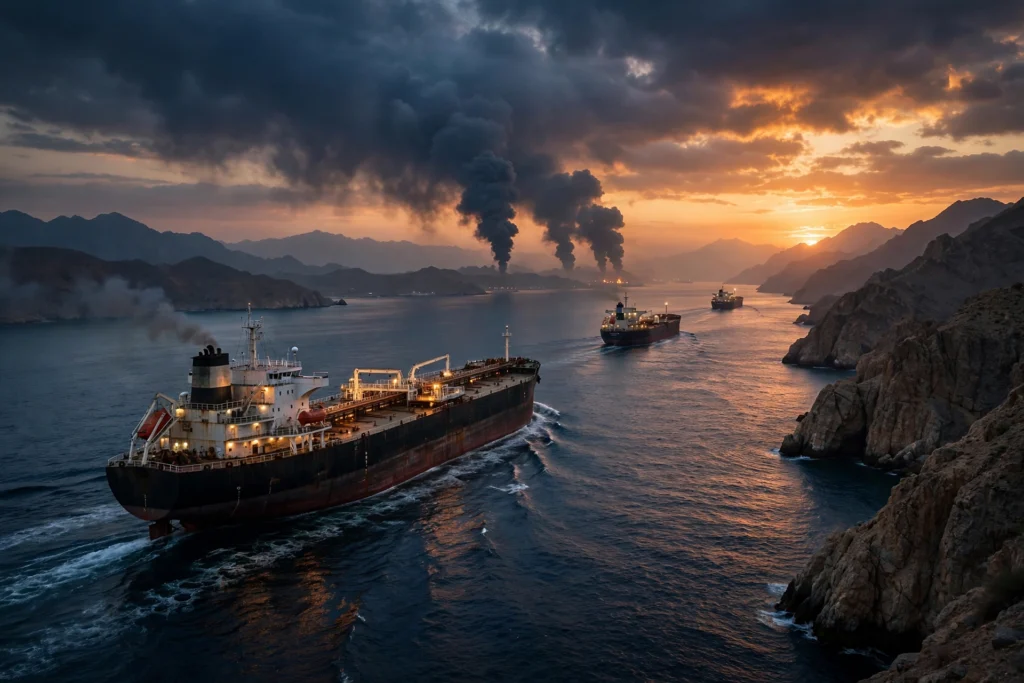
Trump also intends to raise the war in Iran with both leaders. That conflict is the backdrop to the week: a fourth oil tanker in 24 hours was hit by a mine in the Strait of Hormuz on Monday night, and the war in Iran is now firmly on the agenda in Shenzhen. What is not on the agenda, according to US officials, is Ukraine — Trump is not expected to raise Russia’s war in Ukraine at the trilateral, and no separate bilateral meeting with Putin is scheduled.
A Trip Shaped by Trade Tensions and the AI Chip Fight
The diplomacy in Shenzhen cannot be separated from the trade and technology fight that has defined US-China relations this year. The trip comes amid a fragile trade-war truce, new American licensing requirements for advanced processor sales to data centres across Southeast Asia, and the continuing fallout from the Nvidia spying scandal, which prompted chief executive Jensen Huang to resign.
Trump is under pressure to raise the spying matter with Xi when they hold their bilateral meeting on the sidelines of APEC. The president has said he does not plan to bring up the subject, and administration officials insist the meeting will be dedicated to implementing a trade agreement between the two superpowers. The Nvidia spying scandal and the resignation that followed it nonetheless hang over the week, as does China’s push to govern artificial intelligence at home while Washington tightens its export controls abroad.
Elon Musk, the Tesla and SpaceX entrepreneur, is accompanying Trump to APEC, according to White House officials — a notable presence given that Musk spent almost $500 million unsuccessfully supporting Republican candidates in this month’s midterm elections.
Singapore, meanwhile, is seeking trusted access to advanced AI processors from Washington following the fresh American export curbs, a reminder that the chip fight reaches well beyond the two superpowers and into every economy in the region.
What to Watch Next
Wednesday brings Trump’s meeting with Marcos Jr. in Manila and his departure for Shenzhen. The APEC leaders’ meeting runs Wednesday and Thursday, November 18–19, with the APEC CEO Summit on November 17–18 ahead of it. Japanese Prime Minister Sanae Takaichi is also due in Shenzhen on November 19 for APEC, according to Japan’s NHK.
The questions that will define the week are straightforward. First, does the Quad meeting in Manila produce anything concrete, or is it mainly a photograph before the real negotiation? Second, does the Thailand trade signing set a pattern other Southeast Asian exporters follow? And third — the one the world will be watching — does Thursday’s trilateral in Shenzhen become a process, with a follow-up and a framework, or does it end as a photograph of three leaders who had never sat together before?
The meeting was announced with no agreement expected, no agenda agreed in public and two of the three participants slow to confirm it. That is either careful expectation management or a warning. By Thursday evening, in Shenzhen, we will know which.
Frequently Asked Questions
When is the Trump–Xi–Putin trilateral meeting?
The three leaders are scheduled to meet at 2:30 p.m. on Thursday, November 19, 2026, in Shenzhen, China, on the sidelines of the APEC summit. It is reported to be the first-ever trilateral meeting of the leaders of the United States, China and Russia.
What is on the agenda for the Shenzhen meeting?
The White House says the stated focus is reducing nuclear weapons, following the expiry in February 2026 of New START, the last US–Russia arms control framework. Trump also intends to raise the war in Iran. Ukraine is not expected to be discussed, and no separate bilateral meeting between Trump and Putin is scheduled.
Why is Trump’s Asia trip significant?
The four-day trip covers a Quad leaders’ meeting in Manila — the first in two years — a US-ASEAN summit, a trade deal signing with Thailand and the APEC summit in Shenzhen, ending with the first-ever three-way meeting of the US, Chinese and Russian leaders. It is Trump’s first overseas trip since his party’s midterm election defeat.
Is an agreement expected from the trilateral meeting?
No. A White House official said, “We do not expect to get to any kind of agreement.” Officials describe the meeting as a first conversation that could eventually lead to negotiations on a new arms-control framework.