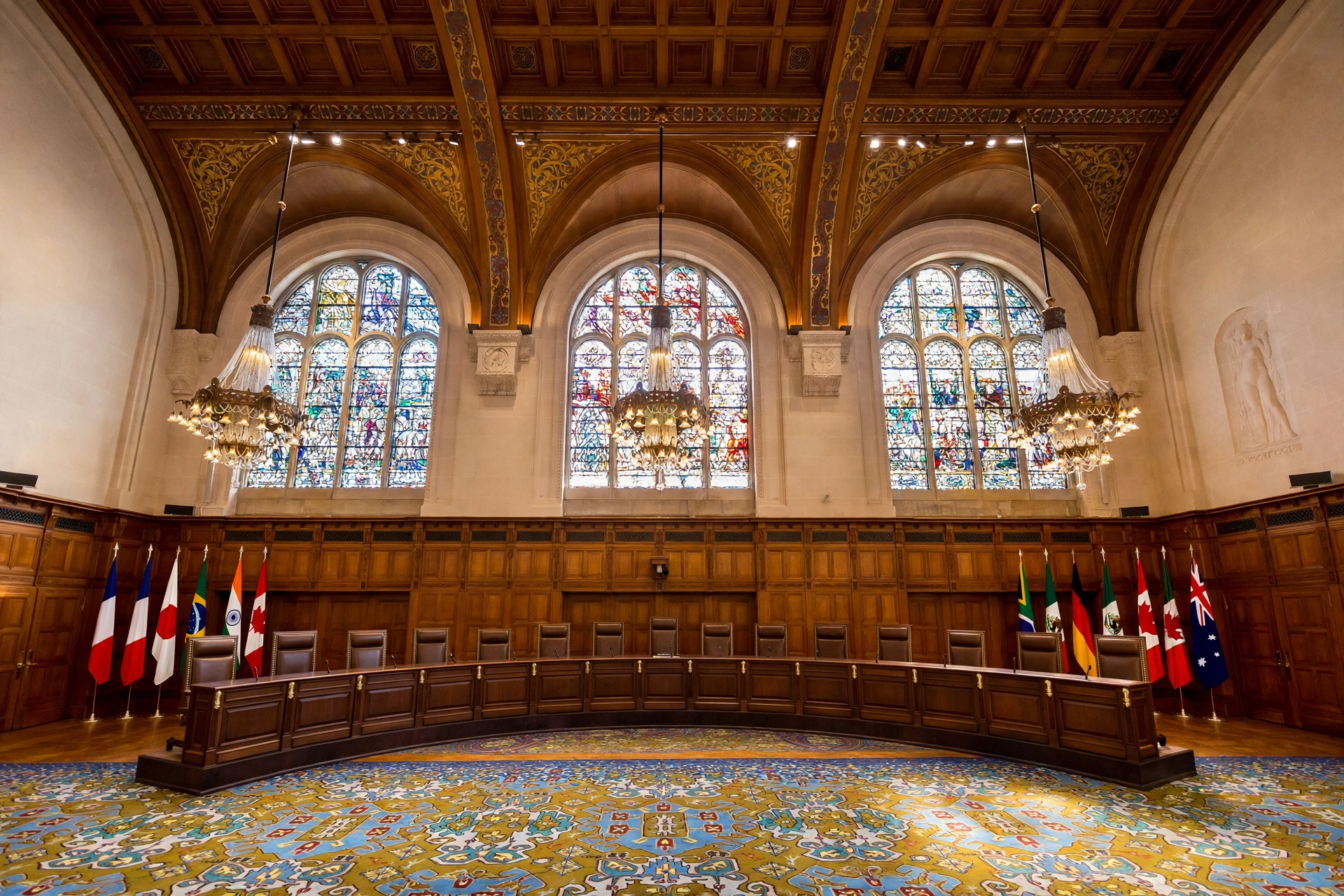
In a landmark ruling delivered on Thursday, November 19, 2026, the International Court of Justice (ICJ) found that Myanmar committed genocide against the Rohingya people during its 2017 military crackdown in northern Rakhine State. It is the first time in the court’s 80-year history that it has held a state responsible for genocide — a verdict that survivors, human rights groups and Bangladesh, which shelters more than a million Rohingya refugees, have waited nearly a decade to hear. ICJ President Yuji Iwasawa read the judgment in the court’s Great Hall of Justice in The Hague, in a session lasting nearly three hours.
A 9-6 Verdict, Read Over Nearly Three Hours
By nine votes to six, the 15-judge court ruled that Myanmar committed acts of genocide under the 1948 Genocide Convention, with the intent to destroy a substantial part of the Rohingya population. “The Court is fully convinced that Myanmar committed acts under Article II (a), (b), and (d) of the Genocide Convention with an intent to destroy a substantial part of the Rohingya population of Myanmar,” the judgment said. By the same 9-6 margin, the court found that Myanmar had violated its obligation to prevent genocide by individuals acting alongside its security forces. All fifteen judges wrote separately to explain their reasoning, and the judgment itself runs to 191 pages.
The case was brought by The Gambia in November 2019, backed by the Organisation of Islamic Cooperation, under the Genocide Convention — a treaty that allows any state party to bring a case against another it believes has breached it. The court confirmed its jurisdiction in July 2022, and heard arguments on the merits from January 12 to 29, 2026. Our preview of the case ahead of the judgment explains the seven-year path to this day and what was at stake for both sides.
The Evidence That Convinced the Court
The judges found that Myanmar’s security forces killed thousands of Rohingya civilians, committed widespread sexual violence, and carried out extreme acts of violence against children during the 2017 “clearance operations.” The court estimated that around 10,000 Rohingya were killed. It found that the approximately 815,000 Rohingya living in northern Rakhine State before the operations constituted a substantial part of the group targeted by Myanmar.
Three strands of evidence proved decisive. First, the court found that Myanmar’s military had systematically spread hate speech portraying the Rohingya as “sub-human” and a threat, creating an atmosphere conducive to violence. Second, it considered decades of discrimination — including the 1982 citizenship law that excluded the Rohingya from Myanmar’s list of 135 recognised ethnic groups, and restrictions on movement, marriage and the registration of births. The court found that a two-child restriction was intended, at least in part, to reduce births within the Rohingya population. Third, it found that sexual violence during the clearance operations was intended to physically and mentally impair the population’s ability and willingness to reproduce. Taken together, the judges said, the only reasonable inference was genocidal intent. The court also found The Gambia’s witnesses credible, noting that several key statements about the final week of August 2017 were not challenged during cross-examination.
The Human Cost Behind the Case
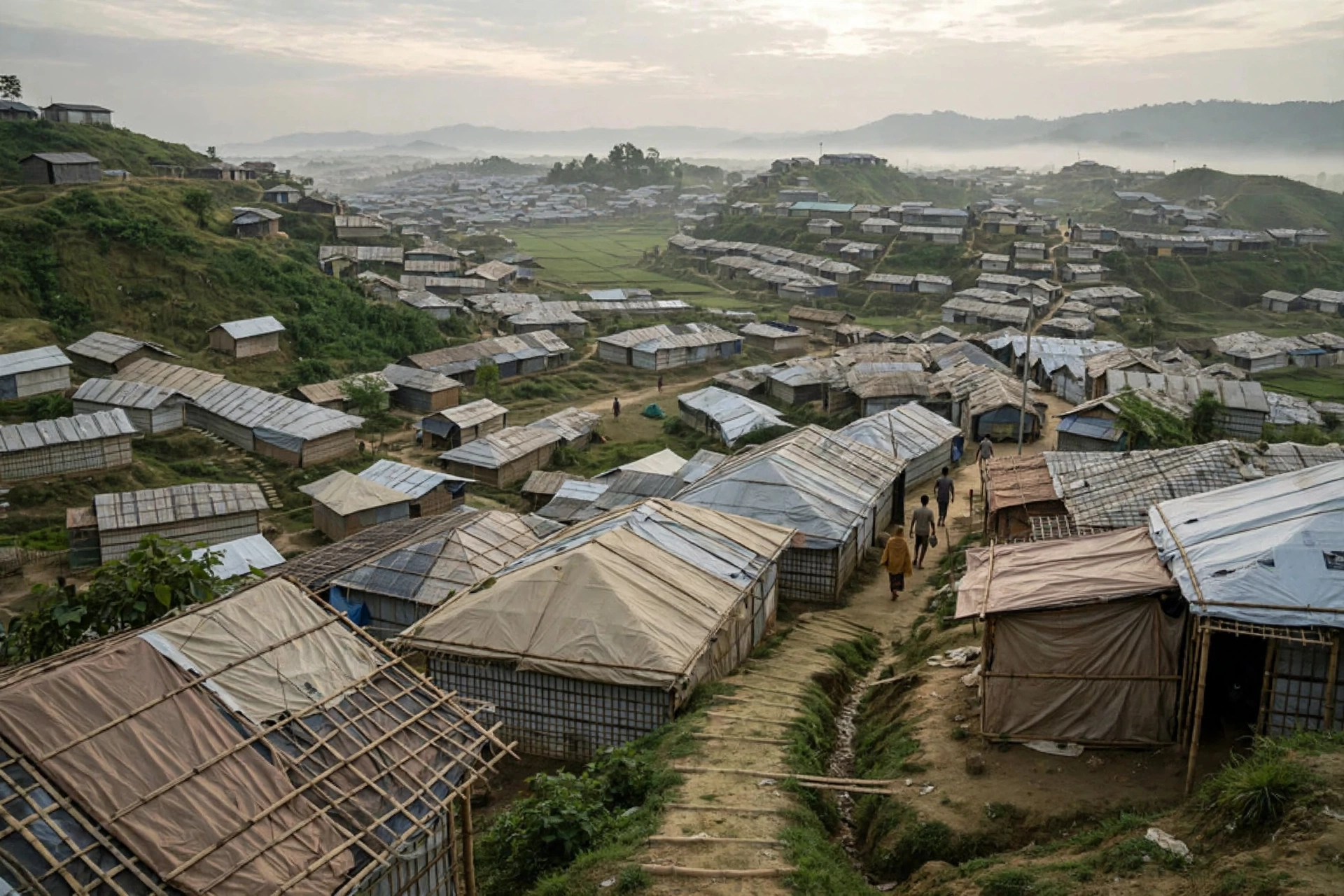
At least 730,000 Rohingya fled Myanmar in 2017, most of them into Bangladesh, where about 1.2 million now live in the Cox’s Bazar settlement — the world’s largest refugee camp. The judgment is especially significant for Bangladesh, which has hosted the refugees for nine years and has pressed for a safe and dignified return. While the ruling strengthens the legal basis for demanding justice and reparations, it does not by itself guarantee that return: repatriation would require security guarantees, the restoration of rights and citizenship, and protection against renewed persecution.
What Myanmar Must Do Now
The court issued a series of binding orders. By 11 votes to four, it found that Myanmar had violated its obligation to punish genocide and other acts prohibited under the convention. By 14 votes to one, it ruled that Myanmar had failed to enact the legislation needed to give effect to the convention’s provisions. By 13 votes to two, it ordered Myanmar to take immediate and effective steps to investigate all persons reasonably suspected of committing prohibited acts in connection with the 2017 operations. By nine votes to six, it directed Myanmar to provide assurances and guarantees that it would not repeat the violations.
On reparations, the court ruled by 10 votes to five in two separate findings that Myanmar must compensate the Rohingya group and its members. The amount and the modalities of compensation and other forms of reparation will be decided by the court at a later stage of the proceedings. Myanmar must also allow and facilitate the safe, voluntary and dignified return of displaced Rohingya and the reunification of families, and must report to the court within two years on the restitution measures it has adopted and on compensation. The court also found, by 11 votes to four, that Myanmar had violated its obligation to preserve evidence, contrary to the provisional measures order it issued in January 2020. One claim did not succeed: by 14 votes to one, the court did not find that Myanmar had publicly incited genocide.
Why This Ruling Matters Beyond Myanmar
The verdict matters for three reasons. First, it is the first time the world’s top court has found a state — rather than an individual — responsible for genocide, setting a precedent that other cases under the Genocide Convention will be measured against. Second, it gives significant momentum to efforts to hold individual perpetrators criminally accountable: in 2024, the prosecutor at the International Criminal Court sought an arrest warrant for Senior General Min Aung Hlaing, who oversaw the 2017 campaign and is now Myanmar’s president, for alleged crimes against humanity including deportation and persecution. Third, it tests whether international law can deliver anything concrete for victims when the state found responsible is ruled by the same military that committed the crimes.
That test is already visible elsewhere in world affairs. Great-power diplomacy is moving fast — the Xi and Putin meeting in Shenzhen — while armed conflict continues to strain the rules-based order, from the US-Iran tanker war in the Gulf to the Congo Ebola outbreak that has topped 11,500 cases. The ICJ’s authority rests on states choosing to comply, and on other governments choosing to press them to do so.
What Happens Next — and What the Ruling Cannot Do
The judgment is final and binding, and it cannot be appealed. But the ICJ has no police force and no way of enforcing its verdicts, and it remains to be seen whether Myanmar’s rulers will adhere to the orders. The court does not prosecute individuals or impose criminal sentences, so the ruling does not automatically result in the arrest or prosecution of military commanders. Individual criminal accountability would require separate proceedings before a competent criminal court.
Reaction from rights groups was swift. Amnesty International called the ruling a rare victory for survivors, and its Secretary General Agnes Callamard said the finding of genocide was unequivocal. Fortify Rights said the ruling must be followed by compliance from the junta and by Rohingya-led reparations, and that it would give significant momentum to holding individual perpetrators accountable. The Mukwege Foundation welcomed the judgment and noted that the court recognised sexual violence as part of the genocide. Legal analysts at Just Security, in an early analysis of the 191-page judgment, note that the court applied its established standard of proof — that it must be “fully convinced” — and found the evidence met it.
Frequently Asked Questions
What did the ICJ actually decide?
The court ruled 9-6 that Myanmar committed genocide against the Rohingya in northern Rakhine State in 2017, violating the 1948 Genocide Convention, and ordered reparations, investigations and the safe, voluntary and dignified return of displaced Rohingya.
Is this the first time the ICJ has found a state guilty of genocide?
Yes. In its 80-year history, the court had never before determined that a state committed genocide. Previous genocide cases, including Bosnia v. Serbia, did not produce a finding of state responsibility for the crime itself.
Will anyone go to prison because of this ruling?
Not directly. The ICJ rules on the responsibility of states, not individuals. Criminal cases against commanders would need to go through courts such as the International Criminal Court, which in 2024 sought an arrest warrant for Min Aung Hlaing.
What happens to the Rohingya refugees in Bangladesh now?
The ruling orders Myanmar to allow their safe, voluntary and dignified return and to pay compensation, but the amount will be set later and return depends on security guarantees and restored rights. More than a million refugees remain in Cox’s Bazar for now.
For the full detail of the verdict, see the report in The Business Standard.