Today, Thursday November 19, 2026, the world’s highest court will answer a question that has waited seven years: did Myanmar commit genocide against the Rohingya people? The International Court of Justice (ICJ) will deliver its judgment at 10 a.m. local time at the Peace Palace in The Hague — 4 a.m. Eastern time — with the Court’s president, Judge Yuji Iwasawa, reading the decision in a sitting expected to last up to 90 minutes.
For the roughly 1.2 million Rohingya living in the sprawling Cox’s Bazar refugee settlement in Bangladesh, and for the governments and lawyers watching from around the world, the ruling is the most consequential moment yet in a case that began in 2019. Whatever the judges decide, it will be final: there is no appeal from an ICJ judgment. What follows is what the case is about, what the judges must decide, and what a ruling can — and cannot — change on the ground.
A Case Seven Years in the Making
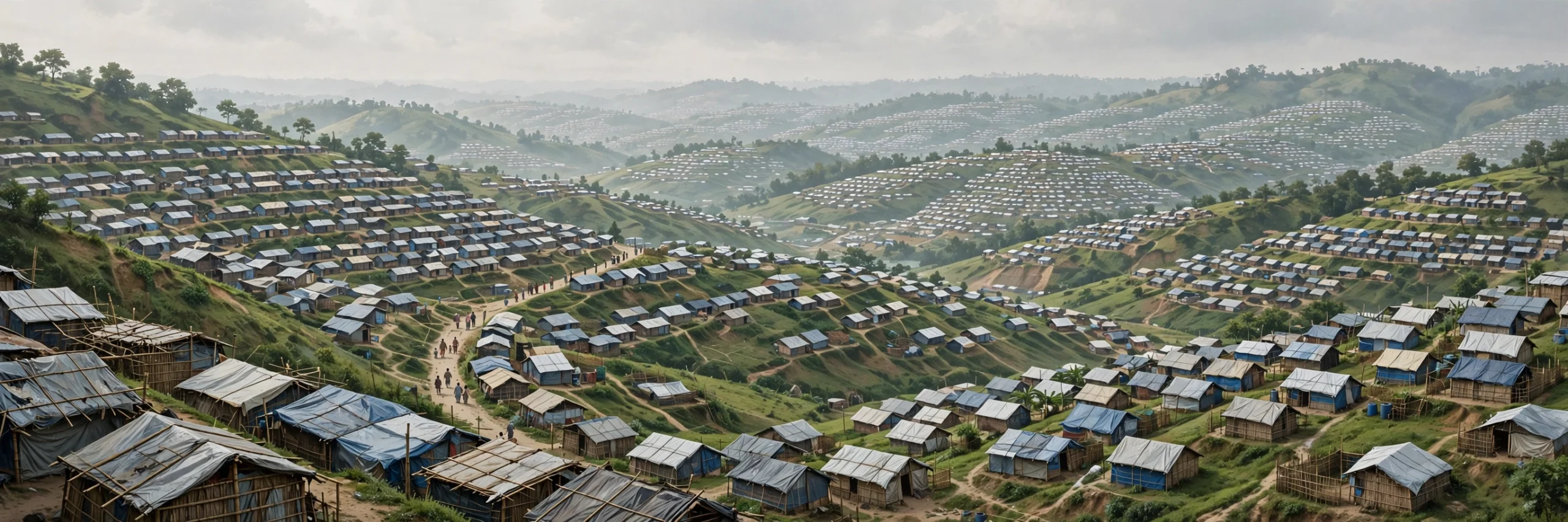
The case began on November 11, 2019, when The Gambia, a small West African nation acting with the backing of the Organisation of Islamic Cooperation, filed proceedings against Myanmar under the 1948 Convention on the Prevention and Punishment of the Crime of Genocide. The Gambia accused Myanmar’s military of a campaign of mass killings, widespread sexual violence, the destruction of villages and the forced displacement of the Rohingya, a predominantly Muslim minority, during so-called clearance operations in Rakhine State in 2016 and 2017.
The scale of what followed is not in serious dispute. At least 730,000 Rohingya fled across the border into Bangladesh in 2017 alone, joining earlier waves of refugees in what is now the world’s largest refugee settlement. Myanmar has consistently denied that genocide was committed, describing its operations as legitimate counter-insurgency measures against militants. That disagreement — over what happened, and what the military intended — is exactly what the Court has spent seven years examining.
What the Judges Must Decide
The central question is one of intent. Under the Genocide Convention, it is not enough to show that terrible crimes took place; The Gambia must show that Myanmar’s military acted with the specific intent to destroy the Rohingya as a group, in whole or in part. The Gambia argued during the hearings that the pattern of killings, sexual violence and village destruction demonstrated exactly that intent. Myanmar’s government disputed the interpretation, arguing the evidence does not meet the legal threshold.
If the judges find for The Gambia, it would be the first time the International Court of Justice has ever found a state responsible for committing genocide — a landmark in international law. The Gambia has also asked the Court to order Myanmar to pay reparations and to ensure the safe return of Rohingya refugees. Legal experts will be reading the judgment closely for how the 15-member bench assesses state responsibility, because the reasoning is expected to echo in other cases before the Court, including South Africa’s 2023 case accusing Israel of genocide in Gaza. As Reuters reports, the decision is the Court’s first major ruling in more than a decade on the application of the 1948 Genocide Convention.
The Long Road to The Hague
The road to today’s judgment has been long. In January 2020, the Court ordered Myanmar to take provisional measures to prevent acts prohibited under the Genocide Convention and to preserve evidence. In July 2022, it rejected Myanmar’s preliminary objections and confirmed it had jurisdiction to hear the case. Public hearings on the merits were held from January 12 to January 29, 2026, with both countries presenting arguments and witness evidence.
Eleven states formally intervened in the proceedings — Canada, Denmark, France, Germany, the Netherlands, the United Kingdom, the Maldives, Slovenia, the Democratic Republic of the Congo, Belgium and Ireland — a measure of how widely the case is seen as a test of the Genocide Convention itself. The Court announced on November 3 that it would deliver its judgment on November 19, according to the Court’s announcement.
Why the Verdict Matters Beyond Myanmar
The judgment lands at a moment when the Court itself is under pressure. Reports ahead of the ruling have raised fears that the United States could sanction ICJ judges — including Navi Pillay, the Nobel Peace Prize laureate chosen by The Gambia as an ad hoc judge — if the Court finds genocide, after Washington already sanctioned International Criminal Court judges over arrest warrants for Israeli Prime Minister Benjamin Netanyahu. Those fears underline how politically charged the Court’s work has become.
For the Rohingya, the stakes are more personal. Activists who fled Myanmar as teenagers have told reporters they hope the ruling will finally bring recognition of their community’s suffering. The UN Special Rapporteur on human rights in Myanmar has urged governments around the world to enforce whatever the Court decides, saying accountability is essential to delivering justice and addressing the root causes of a crisis that has now lasted nearly a decade. The same global stakes run through other crises covered in this series, from Congo’s Ebola outbreak to the US–Iran confrontation in the Gulf — and even to Xi and Putin’s meeting in Shenzhen, where the world’s major powers are redrawing the rules of the international order even as the Court tries to uphold them.
What a Ruling Cannot Do
Whatever the judges say, there are hard limits to what a court in The Hague can achieve. ICJ judgments are final and legally binding, but the Court has no police force, no army and no independent enforcement agency. If Myanmar does not comply, the Court’s only formal recourse is to refer the matter to the UN Security Council.
The facts on the ground have also moved on since the case was filed. The Arakan Army, an ethnic armed group, now controls substantial areas of Rakhine State, creating a new and complicated reality for civilian protection, humanitarian access and any potential repatriation of refugees. A judgment can establish responsibility and order redress, but delivering either will depend on compliance — and on politics far beyond the courtroom. As with Alaska’s Senate race, where a single result reshaped the balance of power overnight, the real test of today’s ruling will begin only after the judges stop reading.
What to Watch Today
The judgment will be read in public session from 10 a.m. in The Hague (4 a.m. Eastern, 9 a.m. GMT), and the reading is expected to take up to 90 minutes. Listen for three things: first, whether the Court finds that genocide was committed or that Myanmar breached its obligations in some other way; second, what remedies it orders, including reparations and guarantees for the safe return of refugees; and third, what it says about Myanmar’s compliance with the provisional measures it ordered back in 2020. Each of those findings will shape not only the future of the Rohingya, but how the world understands the Genocide Convention for years to come. The Business Standard notes the Court’s judgment is expected to determine whether Myanmar breached its obligations under the Convention — and the world will be watching the answer.
Frequently Asked Questions
When will the ICJ deliver its Rohingya judgment?
On Thursday, November 19, 2026, at 10 a.m. at the Peace Palace in The Hague (4 a.m. Eastern time). Court President Judge Yuji Iwasawa will read the judgment in a public sitting expected to last up to 90 minutes.
Who brought the case against Myanmar?
The Gambia filed the case on November 11, 2019, with backing from the Organisation of Islamic Cooperation, alleging Myanmar violated the 1948 Genocide Convention in its treatment of the Rohingya.
What happens if the Court finds Myanmar committed genocide?
It would be the first time the ICJ has found a state responsible for genocide. The Court could order reparations and measures to ensure the safe return of refugees, but it has no enforcement force of its own.
Can Myanmar appeal the judgment?
No. ICJ judgments are final and without appeal, although compliance depends on the state concerned and, ultimately, on the UN Security Council.