Israeli tanks have rolled back across the Yellow Line in central Gaza, ending the first ground raid into Hamas-controlled territory since the ceasefire that halted the war more than a year ago. The operation lasted barely a day — but it exposed just how fragile that truce has become, arriving in the same week that the body overseeing the peace plan warned the United Nations that the ceasefire could collapse altogether.
On Wednesday, November 18, 2026, Israeli forces pushed west of the line near the Nuseirat and Bureij refugee camps, in what the military described as a targeted operation against a tunnel it said threatened its troops. By Thursday morning, the army said the operation was over and the main road through central Gaza had reopened. Three Palestinians were reported killed on Wednesday, and families who had fled their homes were left to weigh whether it was safe to return.
The Raid Across the Yellow Line
The Yellow Line was drawn under the October 2025 ceasefire, which took effect on October 10, 2025. It marks the boundary between the roughly two-thirds of the Gaza Strip that remains under Israeli control and the smaller area under Hamas control — and crossing it has, until now, been a line neither side had publicly crossed with ground forces since the truce began.
On Wednesday, witnesses said Israeli tanks rolled onto the main Salah al-Din road, the north-south artery that runs through central Gaza, in the area of the Nuseirat and Bureij refugee camps. The Israeli military said troops and intelligence personnel had begun what it called a “targeted operational activity” to dismantle a tunnel west of the line that it described as a threat to its soldiers. The operation was a joint one by the Israel Defense Forces and the Shin Bet security service.
COGAT, the Israeli defence ministry body responsible for civilian affairs in the Palestinian territories, warned international aid agencies and Palestinian civilians to stay away from the area, identifying blocks 660, 661 and 666 around Bureij and Nuseirat, and said sections of the Salah al-Din road would close. Israeli Army Radio reported that the operation had been coordinated with the United States in advance and was limited to 300 to 400 metres beyond the Yellow Line.
What Each Side Says
The two sides described the same day in very different terms. Israel presented the raid as a precise, limited action against a specific threat: a tunnel west of the line that its military said endangered its troops. Hamas called it a “flagrant violation of the ceasefire agreement” and said it confirmed that Israel had reneged on its obligations, appealing to mediators to intervene.
Palestinian medics told Reuters that three people were killed on Wednesday — one in an airstrike near the location of the army raid, and two others in separate incidents in Deir al-Balah and Gaza City. Reporting differs on how many of the three deaths belong to the operation itself, and that uncertainty is part of the story: in a territory where strikes have continued almost daily despite the truce, it is not always possible to draw a clean line between one operation and the wider pattern of violence.
The ceasefire has held in the narrow sense — major fighting has not resumed — but it has never fully stopped the killing. More than 1,600 Palestinians, many of them civilians, and five Israeli soldiers have been killed in Gaza since the truce took effect, according to Reuters.
Families Flee Again
For the families living near the line, the distinction between a limited operation and a wider offensive mattered less than the tanks on the road. The UN aid coordination office, OCHA, said Palestinians were fleeing west and southwest from Deir al-Balah, in central Gaza, heading away from the operation area with whatever they could carry. The Hamas-run Gaza government media office put the number of people who left the area on Wednesday at around 6,000.
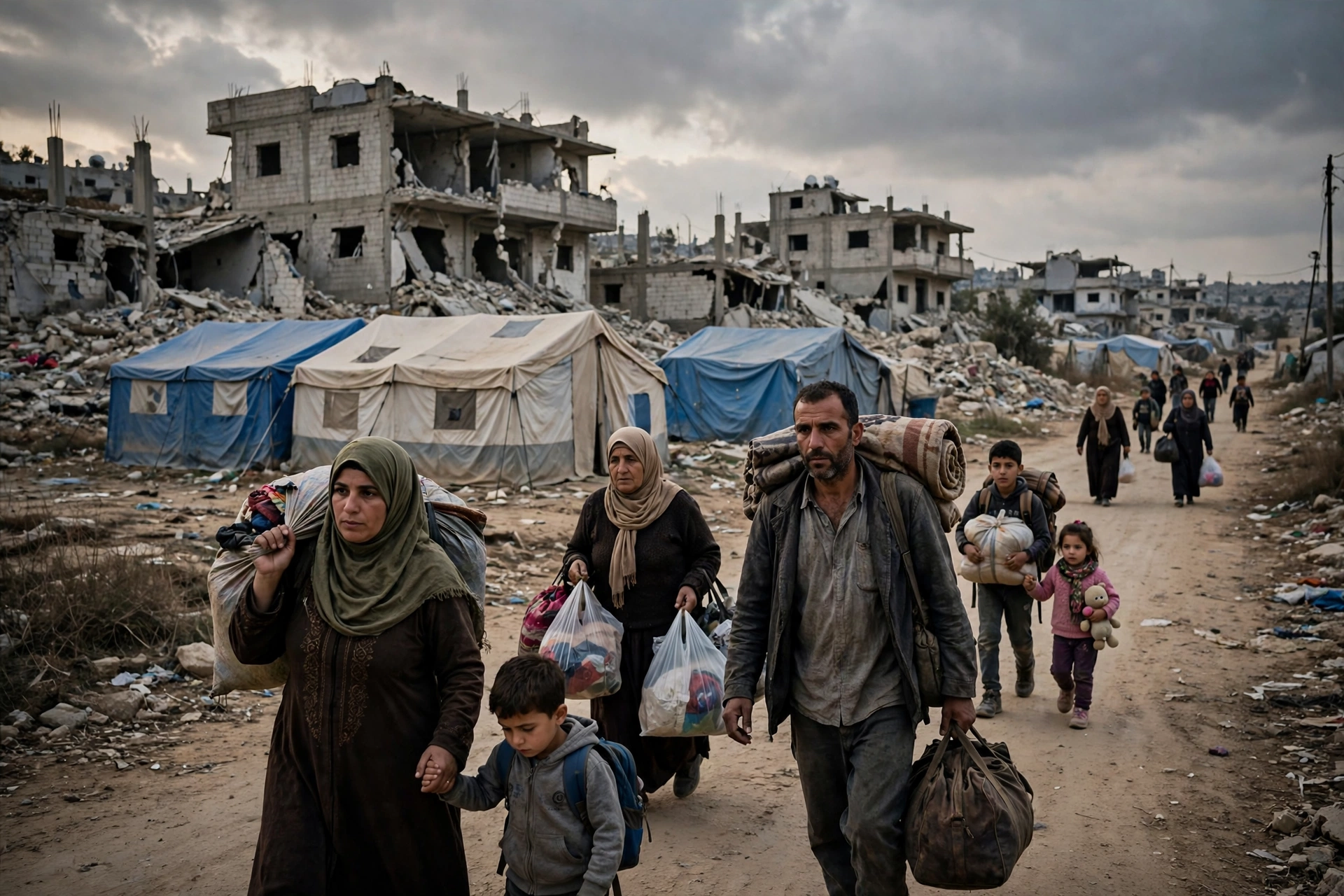
It is a journey many Gazans have made before, and the timing makes it harder: winter is approaching, and much of the population is still living in tents and damaged buildings. The Board of Peace report published this week specifically called for the immediate scaled-up entry of shelter and winterisation materials, along with pumps, generators and heavy machinery to help Gazans prepare for seasonal flooding.
By Thursday, COGAT said the operation had ended, the Salah al-Din road had reopened, and Palestinians would again be free to move in the areas near the Bureij and Nuseirat camps. But residents told reporters the route remained dangerous, with sporadic gunfire still being heard — a reminder that an official “all clear” and safety on the ground are not the same thing.
A Ceasefire Under Strain
The raid did not happen in a vacuum. On Tuesday, November 17, the Board of Peace — the body established by US President Donald Trump to oversee his plan to end the Gaza war and rebuild the territory — submitted its second report to the UN Security Council. It is a sobering document.
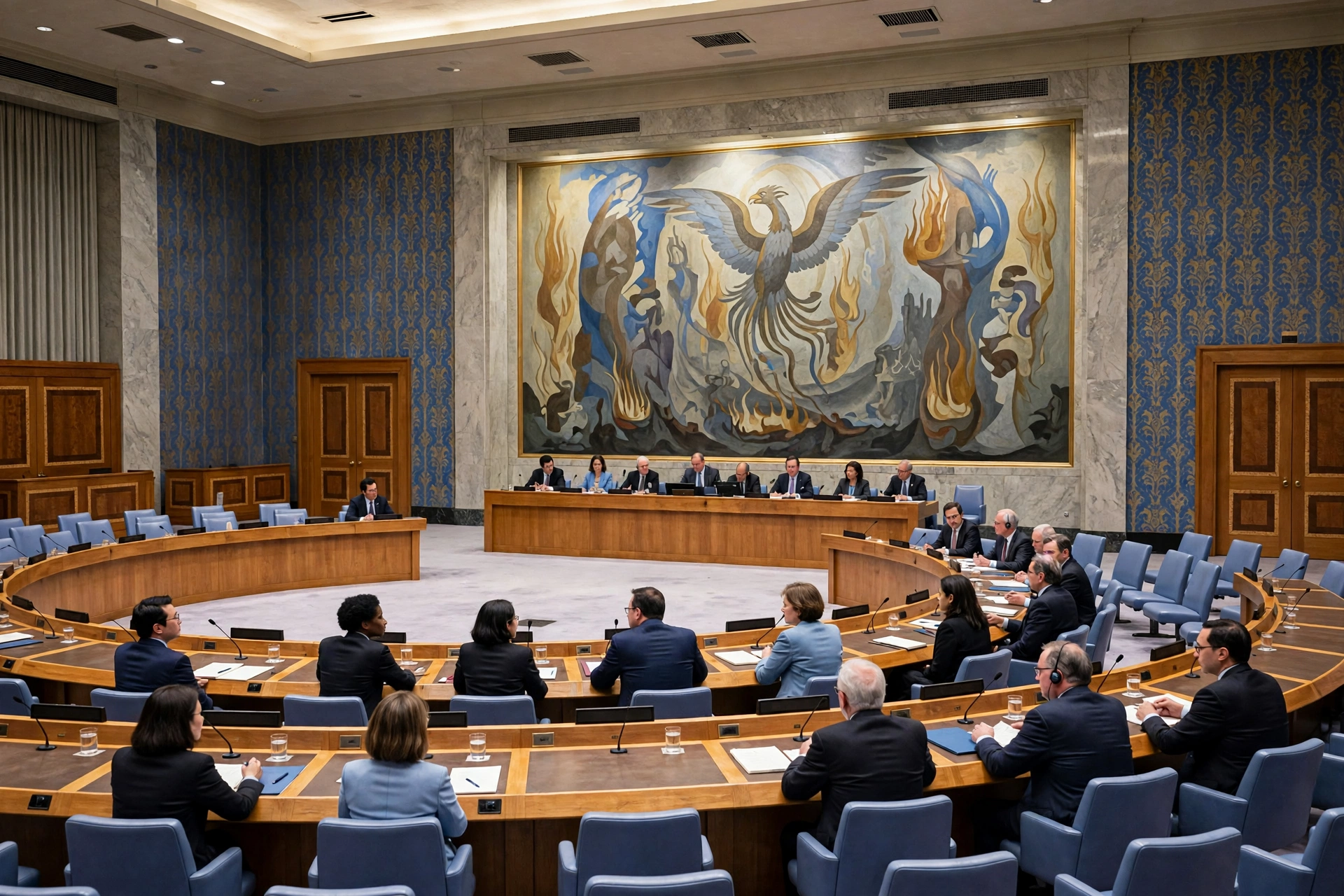
The 12-page report, which covers developments from May 15 to November 16, 2026, accuses both Israel and Hamas of failing to meet their commitments under the ceasefire agreement. “The distance between what has been agreed and what is happening on the ground nonetheless remains the principal risk to the process,” it says, warning that “a ceasefire that delivers nothing visible cannot be sustained indefinitely.”
The wider plan has effectively stalled since soon after the ceasefire took effect. Under it, Hamas was to disarm, Israeli troops were to withdraw, and reconstruction was to begin. Hamas agreed in July to a Board of Peace roadmap to surrender its weapons and transfer governance of Gaza to a civilian transitional authority — but Israel rejected the roadmap, saying it will not withdraw until Hamas is dismantled. The National Committee for the Administration of Gaza, meant to take over civilian governance, has not yet entered the enclave, and the International Stabilization Force remains undeployed.
The report also criticised Israel’s government for an “absence of decisions” on arrangements to train and deploy a civilian Palestinian police force to replace Hamas as Gaza’s law enforcement authority, and said restrictions on supplies and funding shortfalls had hindered preparations for winter. Senior Hamas official Basem Naim dismissed the report as “pure disinformation”, accusing the Board of Peace of providing cover for Israel. The board is expected to present its findings to the Security Council in New York at the end of November.
Why This Raid Matters
On its own, a one-day raid 400 metres across a line might look like a footnote. In context, it is a test of whether the ceasefire’s boundaries still mean anything. The Yellow Line was the core territorial bargain of the October 2025 agreement: Israel keeps roughly two-thirds of Gaza, Hamas keeps the rest, and neither side’s forces cross. The first publicly announced crossing by Israeli ground troops since the truce began — even a brief one, even one coordinated in advance with Washington — shows how thin that bargain has worn.
It also comes at a moment when the region is already on edge. The widening war with Iran has spread across the Gulf in recent days, and the diplomatic calendar is crowded: the Shenzhen peace declaration issued by Trump, Xi and Putin on Thursday addressed nuclear risk and energy flows but said nothing about Gaza. The ceasefire, in other words, is being tested at the same time as the world’s attention is elsewhere. The escalation has already included the US strike on Iran’s Qeshm island, while questions of accountability for wartime abuses remain live, as shown by the International Court of Justice’s genocide ruling against Myanmar.
What Happens Next
The immediate question is whether the raid stays a one-off. The operation is over, the road is officially reopened, and no mediator has yet publicly responded. But the Board of Peace report makes clear that the underlying problem is not one raid: it is a ceasefire that has delivered neither disarmament, nor withdrawal, nor reconstruction, nor safety for civilians still being killed.
The Security Council is expected to discuss the board’s findings at the end of November. Until then, Gazans near the Yellow Line will be watching the road — and wondering whether the next crossing lasts longer than a day.
Frequently Asked Questions
What is the Yellow Line in Gaza?
The boundary established under the October 2025 ceasefire, which took effect on October 10, 2025. It separates the roughly two-thirds of the Gaza Strip under Israeli control from the area under Hamas control.
What happened in the November 18 raid?
Israeli tanks and troops crossed west of the Yellow Line near the Nuseirat and Bureij refugee camps in central Gaza, in what the military called a targeted operation to dismantle a tunnel it said threatened its troops. Three Palestinians were reported killed that day. The military said the operation was completed on November 19 and the Salah al-Din road reopened.
Has the ceasefire collapsed?
No. The ceasefire remains in force, and no source has reported that it has ended. But the Board of Peace warned in its second report to the UN Security Council, dated November 17, 2026, that the truce could collapse if both sides do not honour their commitments, saying “a ceasefire that delivers nothing visible cannot be sustained indefinitely.”
What did the Board of Peace report say?
Its 12-page second report to the Security Council found both Israel and Hamas failing to meet key commitments: Hamas has not fully ceased military activity, Israel has carried out near-daily strikes, the civilian administration has not entered Gaza, and the international stabilization force remains undeployed. More than 1,600 Palestinians and five Israeli soldiers have been killed since the ceasefire began.