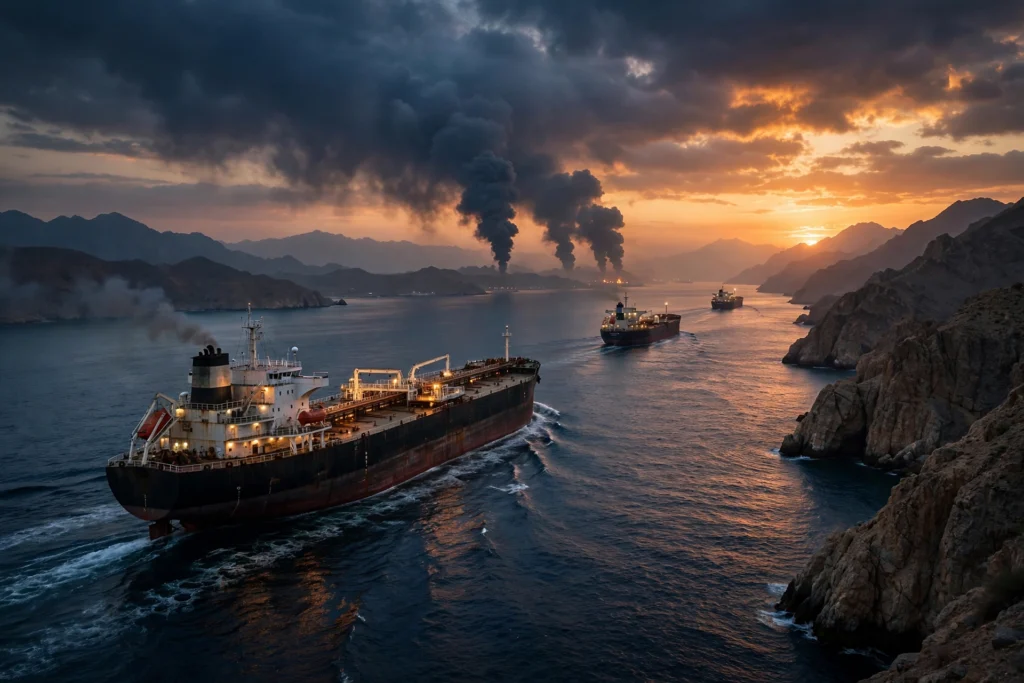
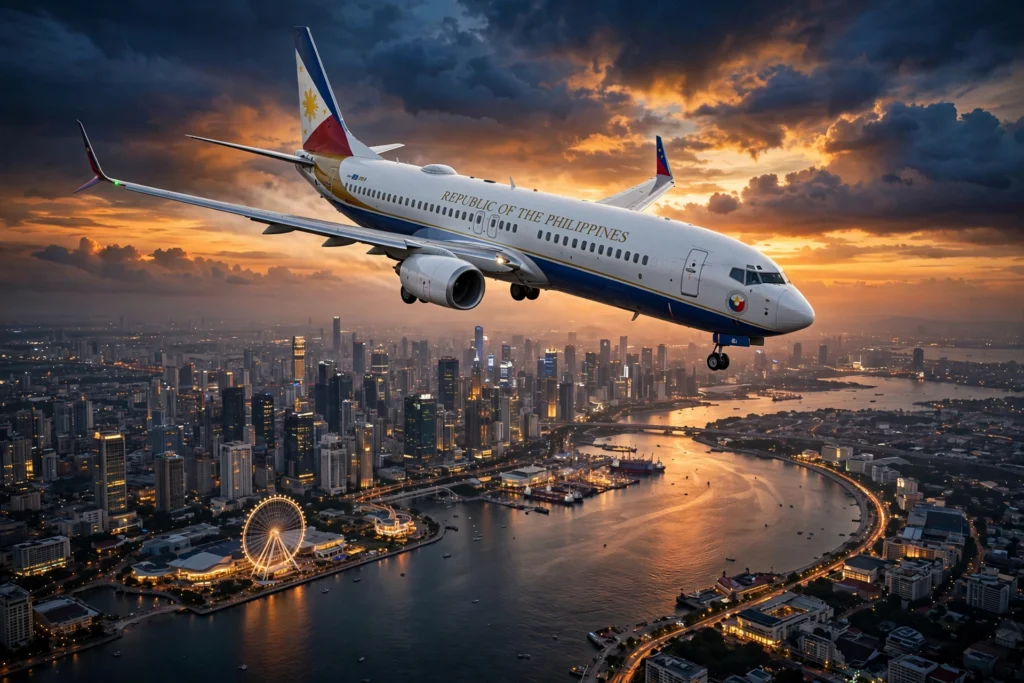
For the first time in modern diplomacy, the leaders of the world’s three largest nuclear powers sat down together at one table. On Thursday, November 19, 2026, US President Donald Trump, Chinese President Xi Jinping and Russian President Vladimir Putin held the first-ever US-China-Russia trilateral summit in Shenzhen, China, on the sidelines of the Asia-Pacific Economic Cooperation summit — and emerged with a four-point “Declaration Toward Peace” that pledges talks on nuclear risk, more fuel for world markets and reform of the United Nations.
The meeting lasted about 90 minutes. It produced no treaty, no ceasefire and no timetable. But the image alone — three leaders who have spent years circling each other as rivals, seated around a round table at a lakeside villa — marked a moment with no precedent, and the question now is whether the dialogue they promised becomes a process or fades into a photograph.
A First in Modern Diplomacy
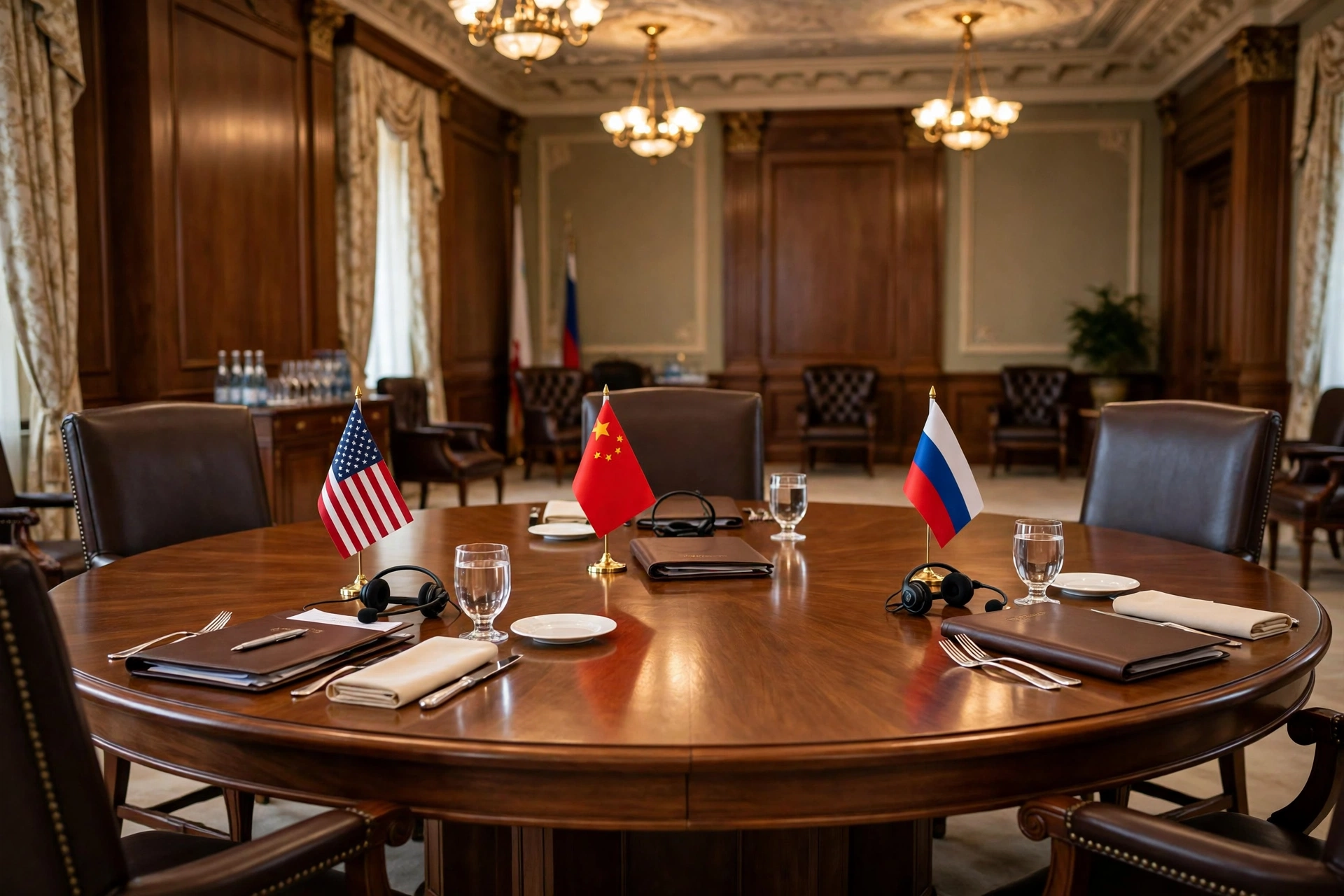
The summit took place at Kylin Villa, a government retreat beside Xili Lake in Shenzhen, the southern Chinese tech hub hosting this year’s APEC leaders’ meeting. China hosted, and Xi greeted Trump at the airport when he arrived on Wednesday. The three leaders posed for a family photograph before moving into closed-door talks, and they made no joint remarks to the press afterwards.
The idea of a three-way meeting was first raised publicly in September. The White House confirmed it on November 14, and the Kremlin said the session would run about an hour. In the end it ran closer to 90 minutes, with the leaders discussing nuclear weapons, trade tensions, artificial intelligence and the wars in Ukraine and Iran.
Before the three-way session, Trump held separate meetings with each of his counterparts — a bilateral with Xi, his third substantial meeting with the Chinese leader this year, and a sit-down with Putin, their first in-person meeting since their summit in Alaska in August 2025. At the opening of the trilateral, Trump said the three countries were “uniquely positioned” to discuss reducing nuclear weapons and the risk that they might be used. Putin said the three shared “numerous shared interests” in resolving regional conflicts, including the war in Ukraine.
The Four Points of the Peace Declaration
After the meeting, China and Russia published the joint text, described as a “Declaration Toward Peace.” It is a statement of intent, not a treaty, and it runs to just four points:
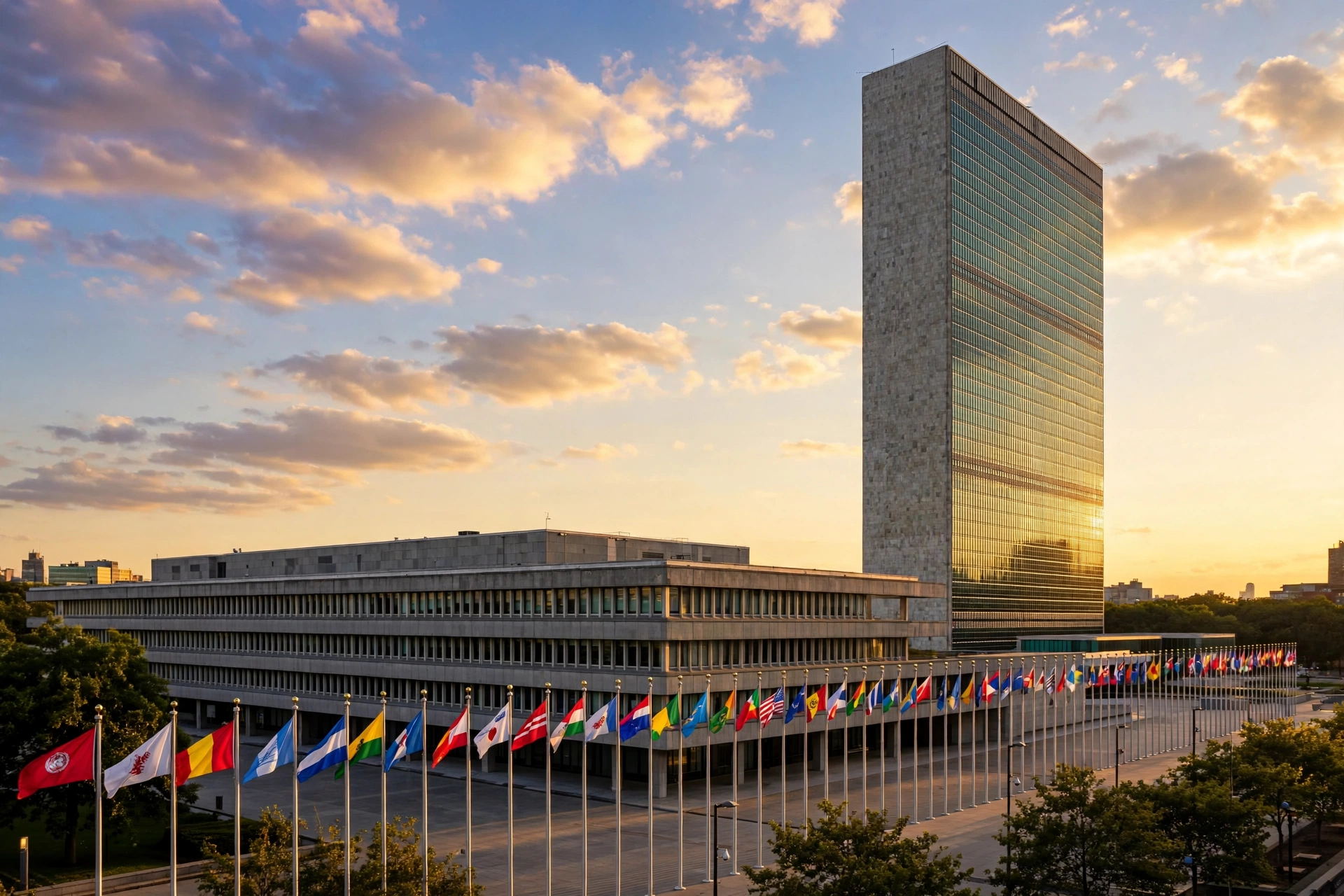
- Reform the United Nations. As permanent members of the UN Security Council, the three countries committed to reforming the UN so it can respond more effectively to global challenges and live up to its mission of international peace and security.
- Keep energy flowing. The three countries said they plan to increase the production and supply of refined petroleum products “for the benefit of all nations,” reaffirming the importance of stable energy flows at a time when war in the Gulf has made oil markets nervous.
- Limit the International Criminal Court. The declaration says the principle of state consent and respect for the immunities of state officials are of paramount importance, and the leaders agreed to guard against abuses of power by the ICC — a pointed message from three countries that have all clashed with the court. The leaders’ scepticism toward international courts also contrasts with the International Court of Justice’s historic genocide ruling against Myanmar.
- Talk about nuclear risk. The leaders reaffirmed that “a nuclear war cannot be won and must never be fought,” and agreed their countries “will conduct a dialogue on reducing nuclear risks and preventing the proliferation of nuclear weapons.”
Notably, the text sets no date, no venue and no agenda for that nuclear dialogue — the item Washington pushed hardest.
What the Declaration Leaves Out
What the declaration does not say may matter as much as what it does. The published text makes no mention of Ukraine, Iran, North Korea, Taiwan or trade. There is no commitment on the wars that dominate the headlines, no figure for the extra petroleum output, and no deadline for anything at all.
That silence was deliberate on at least one front. American officials had said before the summit that Ukraine would not be part of the trilateral discussion, even though Trump told reporters before leaving for Asia that he intended to raise it — calling it his “favourite subject” and noting that Ukraine and Russia were “losing 25,000 souls per month.” The war was instead left to the separate Trump–Putin bilateral, where, according to Kremlin foreign policy aide Yuri Ushakov, it dominated the conversation. Trump also told Xi that the United States and China could help bring an end to the war.
The widening war with Iran, which began with American and Israeli strikes in late February and has since spread across the Gulf, was likewise discussed in the room but absent from the text — even as the Strait of Hormuz remains closed and energy prices volatile.
Why Nuclear Arms Took Centre Stage
The nuclear question is what made Shenzhen different from an ordinary summit photo opportunity. In February 2026, New START — the last treaty limiting the deployed strategic nuclear arsenals of the United States and Russia — expired, leaving the two largest nuclear powers without any binding limit on their arsenals for the first time in decades.
Trump has said he wants a new, modernised agreement that includes China, whose arsenal of around 600 warheads is far smaller than the more than 5,000 believed held by each of the United States and Russia. Together, Washington and Moscow hold nearly 90 percent of the world’s nuclear warheads.
China has repeatedly resisted joining three-way disarmament talks, arguing that the two largest nuclear powers should cut their own arsenals first. That asymmetry is the central obstacle to any deal: Beijing has little incentive to accept caps while its stockpile is a fraction of the others’, and it is expanding its arsenal faster than any other country.
Daryl Kimball, executive director of the Arms Control Association, told NBC News that Trump’s showmanship could at best start a process that would eventually lead to a sustained set of talks on reducing arsenals. “One meeting will not likely produce dramatic breakthroughs,” he said — a view shared by most analysts, who kept expectations low throughout the week.
The Bilaterals Behind the Photo
The trilateral was the capstone of a carefully staged day. Trump’s Asia tour, which began in Manila at the ASEAN summit, was built around this meeting, and the two bilaterals that preceded it did much of the real work.
With Xi, Trump tested the durability of a trade truce reached earlier this month, pressing the Chinese leader to increase purchases of American agricultural products while both sides emphasised keeping oil moving through the Strait of Hormuz. With Putin, the conversation turned to Ukraine — the subject American officials had kept off the three-way agenda but which, by the Kremlin’s own account, received “considerable attention” on Trump’s initiative.
Xi and Putin’s own bilateral meeting in Shenzhen the day before was their fiftieth since Xi became China’s president in 2013 — a reminder that the two leaders’ partnership predates, and will outlast, any single summit.
Reactions: Cautious Welcome, Low Expectations
Reaction from other world leaders was measured. French President Emmanuel Macron said the peace declaration agreed by Trump, Putin and Xi would not “lead to a reorganisation of the world” — a caution against reading a four-point statement as a new world order.
Analysts were similarly restrained. The summit delivered a high-profile diplomatic opening, not a breakthrough on the conflicts that divide the three powers. For now, the public outcome is limited to broad areas of cooperation, with major differences over Ukraine, Iran, nuclear weapons and trade still unresolved.
A separate APEC statement released as the talks concluded was equally modest, limited to pledges and aspirations about cooperating on trade, technology innovation and economic growth.
What Happens Next
The test of Shenzhen is what follows it. The declaration pledges a dialogue on nuclear risk but names no date, no venue and no participants. Whether that dialogue convenes — and whether it includes China in earnest — will determine whether Thursday’s meeting was the start of a new arms-control process or a one-off piece of summit theatre.
Trump’s Asia trip concludes on Thursday, and he heads back to Washington as the three sides decide whether the conversation continues. For the leaders of the three largest nuclear powers, the hardest part was never getting into the same room. It is what they do with the room now that they have shared it.
Frequently Asked Questions
What is the Shenzhen peace declaration?
A four-point joint statement issued by Trump, Xi and Putin after their first trilateral meeting on November 19, 2026. It covers UN reform, refined fuel supplies, limits on the International Criminal Court and a dialogue on reducing nuclear risks. It is a statement of intent, not a treaty.
Has anything like this meeting happened before?
No. It was the first-ever three-way summit of the leaders of the United States, China and Russia — the world’s three largest nuclear powers — held at Kylin Villa in Shenzhen on the sidelines of the APEC summit.
Does the declaration mention Ukraine or Iran?
No. The published text does not mention Ukraine, Iran, North Korea, Taiwan or trade. The wars were discussed in the room and in the separate bilaterals, but no commitments on them appear in the declaration.
What happens to nuclear arms control now?
New START expired in February 2026, leaving US and Russian arsenals without a binding limit. The leaders pledged a dialogue on reducing nuclear risks, but set no date, venue or agenda — so the next step is uncertain.