

Google’s Willow quantum processor has just won a game that classical computers are mathematically barred from winning as often. In research published on the cover of the journal Science on November 19, 2026, Google Quantum AI showed that a strange quantum property called contextuality survives at scale on real hardware — and that it can be measured, tested and used. Willow, the company’s 105-qubit superconducting chip, won a well-known coordination game 98.3% of the time. The best any classical strategy can do is 88.9%.
The result matters because it is not a marketing benchmark. It is a peer-reviewed test of one of the deepest features of quantum mechanics, run on a working processor, with the numbers published for anyone to check. A preprint of the work first appeared on arXiv in December 2025, so the research community has had a year to look at it; the Science publication means it has now passed formal peer review. Google CEO Sundar Pichai highlighted the result the same day, noting Willow’s 98.3% win rate against the classical ceiling.
What Contextuality Actually Means
Entanglement usually gets the attention in quantum computing, but contextuality may be the deeper reason quantum computers can outperform classical ones. In classical physics, a measurement simply reveals a value that was already there. In quantum mechanics, that is not always true: the outcome of measuring a quantum system can depend on which other compatible measurements are performed alongside it. The result has no fixed, pre-existing value independent of its context.
Scientists have believed for years that contextuality powers certain quantum algorithms — that it is part of what lets quantum machines do things classical machines cannot. But belief is not evidence. Until now, contextuality had mostly been demonstrated in small, carefully controlled experiments. The open question was whether it would hold up as the system grew: add more qubits, more noise, more complexity, and does the quantum advantage wash out? Google’s answer, published today, is that it does not wash out. It scales.
The Magic Square Game Willow Won
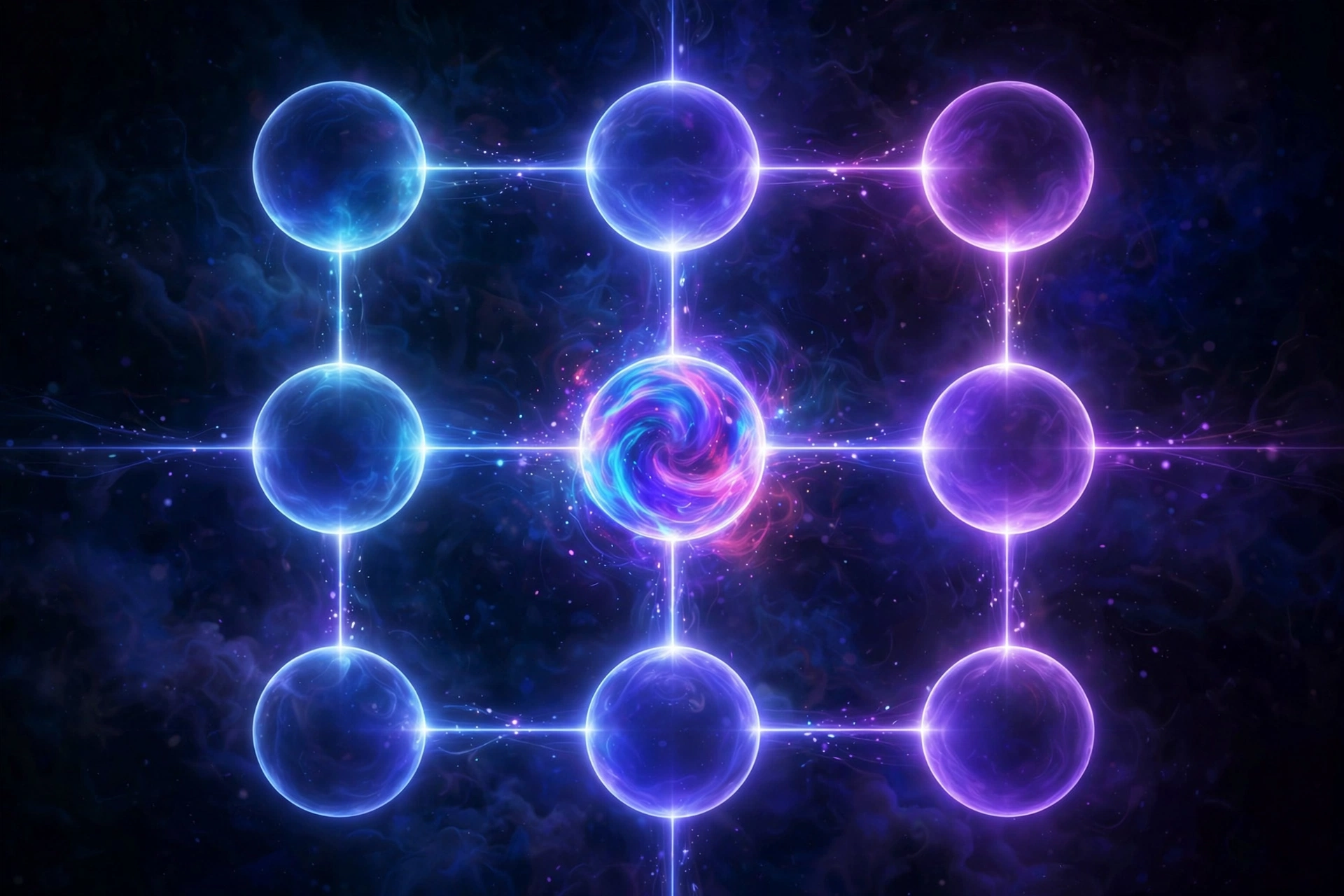
The headline experiment is built around the Mermin-Peres magic square game, a coordination game for two players who cannot communicate. Each player is handed part of a three-by-three grid and must fill it in following a set of rules. The catch is that the rules are impossible to satisfy perfectly with any fixed, pre-agreed strategy: the best a classical team can do is win 88.9% of the time. A quantum team sharing entangled qubits, however, can in principle win every round — because their answers are not fixed in advance. They are shaped by the context of the measurement itself.
Willow played the four-qubit version of the game and won 98.3% of the time. The team ran nine different game assignments, executing each one 100,000 times, so the result is not a lucky streak. When Willow did lose, the culprit was mostly residual noise in the hardware — the same enemy that haunts every quantum processor. The gap between 98.3% and a perfect 100% is a measure of how much noise remains, not a flaw in the theory.
Scaling the Test to All 105 Qubits
A four-qubit game is a proof of concept. The harder question is what happens when the test grows, and that is where this study earns its cover slot. The Google team extended the contextuality tests well beyond the magic square: multi-player GHZ-type games with up to 71 qubits, and a hidden linear function problem that used all 105 qubits on the Willow chip.
In the 71-qubit game, Willow again beat the best classical strategies. In the 105-qubit task, the chip returned a valid answer to a mathematical problem more than half the time, using only a fixed number of layers of operations — a shallow-circuit approach designed to test how much work a quantum computer can do in very few steps. For that largest test, the researchers’ estimate of how many steps a classical computer would need relies on a conjecture, so the size of any quantum advantage there remains an open question. Google is careful to say so in the paper itself, and that honesty is part of what makes the result credible.
A Second Test That Works in Any Quantum State
The team also ran a different kind of test, one designed to work regardless of the quantum state the processor starts in. In this state-independent test, Willow scored 5.59 on a measure known as χKSB (the figure reported in the paper is 5.618 ± 0.005). The classical bound is 4 and the quantum limit is 6, so the chip sits well above anything a classical system can produce and close to the theoretical maximum, with the remaining difference attributed to experimental errors.
Why run two kinds of test? Because each one probes contextuality from a different angle, and together they make the conclusion much harder to dismiss. The game results show a quantum system beating classical limits in a head-to-head contest. The state-independent result shows the effect is a property of the measurements themselves, not an artefact of one particular setup. Both point the same way.
What the Result Does Not Prove
It is worth being precise about the limits, because quantum computing has a long history of overclaimed milestones. The paper itself states that no unconditional proof of quantum advantage exists for a general computational model. These results concern particular tasks with bounded resources — games and mathematical problems chosen specifically to expose contextuality — not general-purpose computing.
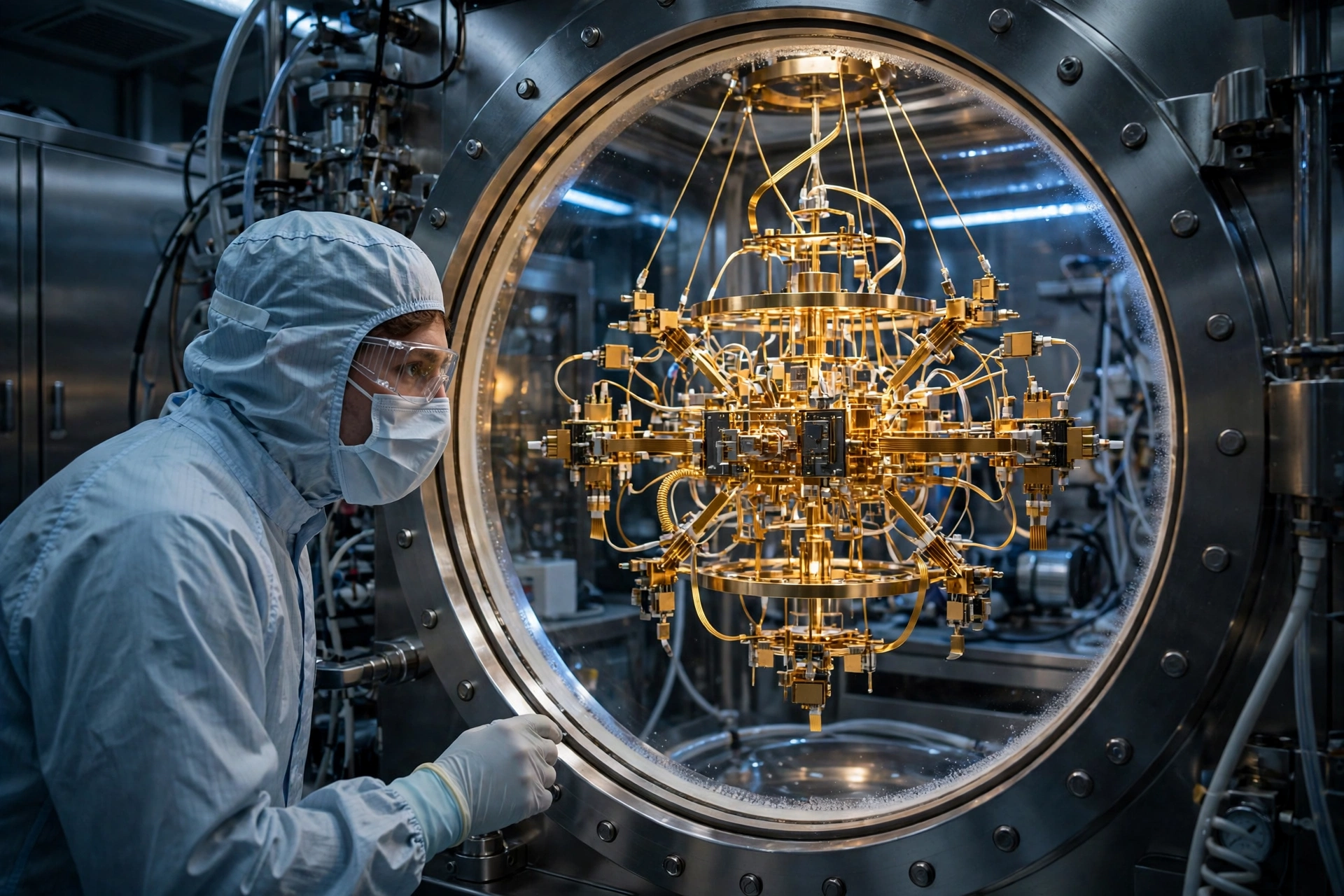
Nothing in this study means a quantum computer will replace your laptop, speed up your spreadsheet or crack encryption tomorrow. Willow is a research processor, and the experiments were run in a laboratory at temperatures colder than deep space. The 105-qubit hidden-function result, in particular, depends on a conjecture about classical difficulty that has not been proven. Rival labs will now try to reproduce and extend these results, and that scrutiny is exactly how science is supposed to work.
Classical computing is not standing still either — Solana Confidential Compute, for example, now offers private AI verified onchain without exposing the data.
Why This Matters Beyond the Lab
Even with those caveats, the study does three things that matter. First, it gives researchers a practical way to test whether a quantum processor is genuinely exploiting quantum effects at scale, rather than just simulating them inefficiently. Contextuality tests can also expose hardware errors that other benchmarks miss, because a chip that is merely noisy in the wrong way will fail the game in characteristic patterns. In other words, the magic square is not just a parlour trick — it is a diagnostic tool for the hardware itself.
Second, it strengthens the case that contextuality is a real, usable resource for quantum algorithms, not a theoretical curiosity that vanishes when systems get big. That shapes where researchers invest their effort: if contextuality survives at 105 qubits, it is worth designing algorithms that lean on it.
Third, it sets a bar. Willow was announced in December 2024 as a 105-qubit superconducting transmon processor, and it made headlines then for error-correction results showing that scaling up physical qubits could reduce logical error rates. Now the same chip has demonstrated a foundational quantum property at full scale. Other labs — and other chip architectures — will be measured against this demonstration, and the competition it creates is good for the whole field.
NVIDIA’s Nemotron for Science agents show the same pattern on the classical side, using open AI agents to do chemistry research rather than just chat about it.
The quantum threat to today’s encryption is also why platforms like Pelican Cortex are already building quantum-ready AI for financial crime prevention.
What Comes Next for Willow and Quantum Computing
The near-term work is straightforward to describe and hard to do: less noise, more qubits, better error correction. Every percentage point Willow lost in the magic square game traces back to hardware imperfections, so improving gate fidelity and coherence times should push the win rate closer to 100%. The longer-term question is whether contextuality-based tests can be turned into practical benchmarks that buyers and builders of quantum hardware actually use — a standard way to answer “is this machine really quantum?” with a number rather than a claim.
For the rest of the tech world, the practical implications are still years away. Quantum computers will not run your AI models or your databases any time soon — that is what machines like NVIDIA’s new RTX Spark desktops are for, bringing 128GB of local AI memory to an ordinary desk. But the boundary between what is classically possible and what is not has moved a little further, and this time it moved on the cover of Science, with the receipts published. In a field where hype routinely outruns evidence, that is worth noting.
Google’s week has been busy on the classical side too, with Google Gemini 4 Neon bringing near-frontier AI to developers at a lower price.
Sources
- Google Quantum AI — Testing quantum contextuality at scale on Google processors
- Unite.AI — Google Quantum AI Demonstrates Contextuality Across 105 Qubits
- The Quantum Insider — Google’s Quantum Chip Beats Classical Limits in Tests of Teamwork

