NVIDIA has moved its local-AI push from laptops to the desktop. On November 18, 2026, the company announced that compact RTX Spark desktops from ASUS, Dell and MSI are now available to buy, bringing a dedicated Windows PC for local AI agents, image and video generation, and model fine-tuning to your desk. The pitch is simple: instead of renting cloud GPUs or sending your files to an API, you run the models at home — on a box roughly the size of a hardcover book.
It is a big moment for the idea of personal AI hardware. Until now, running a serious open model locally meant a large tower, a workstation GPU, or a cloud bill. RTX Spark shrinks that down to a mini PC — but at a price that makes clear who it is for.
What NVIDIA Announced on November 18
According to NVIDIA’s announcement, the first RTX Spark compact desktops come from three makers: the ASUS ProArt GR1X mini PC, the MSI EdgeMesa N AI+ series, and a Dell Creator Edition desktop. They join the RTX Spark laptops that arrived earlier in 2026, with prices for those starting at $2,599.
More systems are on the way. NVIDIA says mini PCs from Acer, GIGABYTE and HP are coming soon, along with the Microsoft Surface RTX Spark Dev Box — a 128GB system listed at $5,999.99 that has been available to preorder since October 7 and is due to ship in November.
The timing is no accident. NVIDIA has just reported record fiscal third-quarter revenue of $115.8 billion, up 103 percent from a year earlier, driven by demand for AI infrastructure. Local AI is now a visible second front for the company: sell the cloud chips, and sell the desk-side box too.
What’s Inside the RTX Spark N1X
Every RTX Spark desktop is built around the same N1X superchip, which pairs a 20-core NVIDIA Grace CPU — based on the Arm architecture — with a Blackwell RTX GPU carrying 6,144 CUDA cores. The two share a single pool of up to 128GB of LPDDR5X unified memory, and NVIDIA rates the platform at up to 1 petaflop of AI performance, measured at FP4 precision.
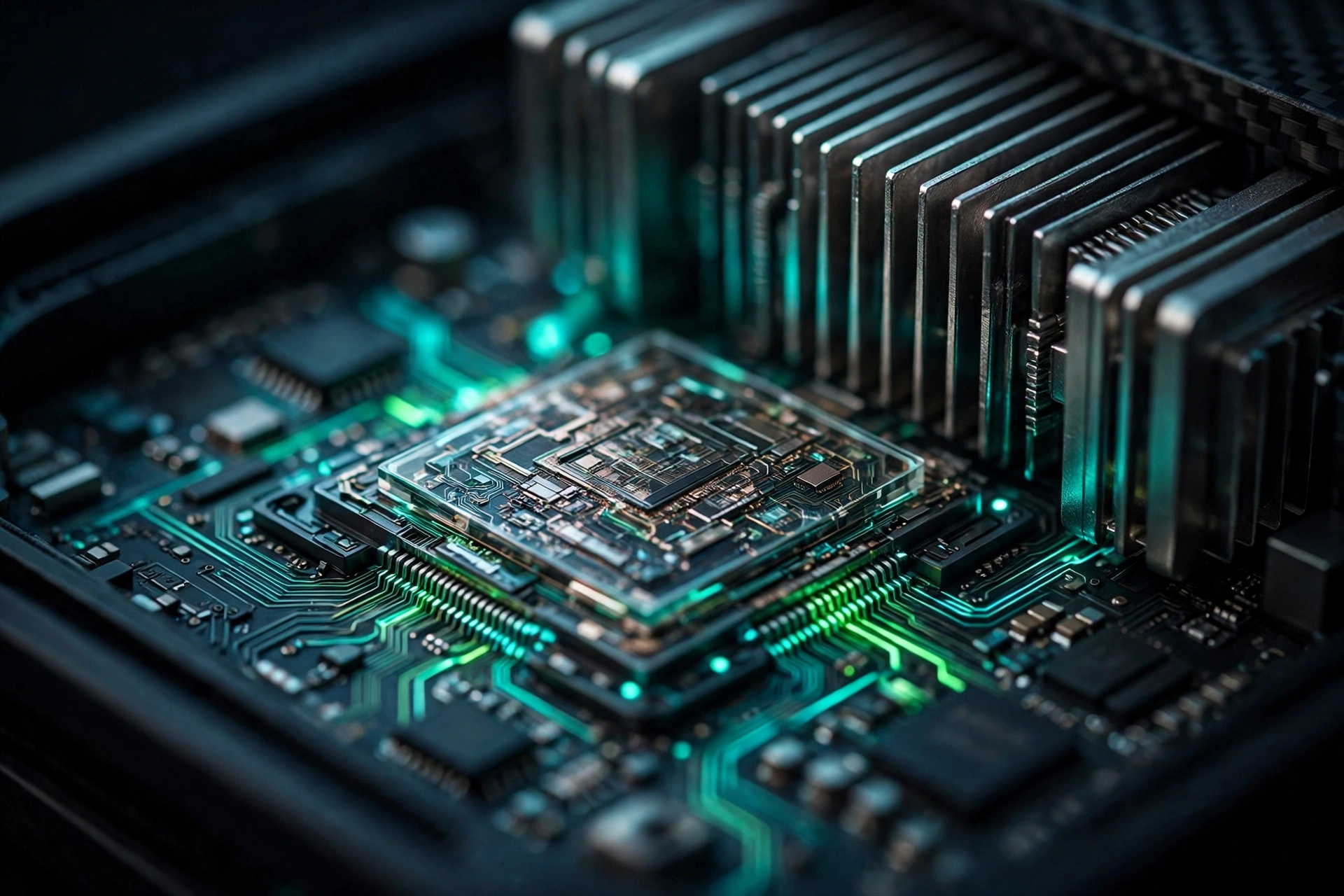
That shared-memory design is the whole point. On a normal PC, a GPU has its own memory and the CPU has its own; a big model has to be split, shuffled or shrunk to fit. With 128GB in one pool, NVIDIA says the desktops can run language models with up to 120 billion parameters entirely on-device — the class of model that previously needed a data-centre card or a cloud endpoint.
Other specs worth knowing: 10-gigabit Ethernet for moving large datasets and model files between the desktop and network storage, and a full Windows system, with Windows on Arm apps and Linux tools through WSL. The ASUS ProArt GR1X measures just 150 × 150 × 51 mm and offers memory bandwidth of up to 300GB/s, according to reports. The MSI EdgeMesa N AI+ is a 1.3-litre box with a USB-C power adapter — though its memory is soldered, so what you buy is what you keep.
A word of caution on the headline number: 1 petaflop is a peak FP4 figure supplied by NVIDIA, not a measured inference result, and no independent benchmarks of these desktops have been published yet. Treat it as a ceiling, not a promise.
What You Can Actually Do With One
NVIDIA positions the desktops as a machine for always-on AI work. A dedicated desktop can keep agents and scheduled tasks running around the clock while your laptop travels or handles other work — a job a laptop, however powerful, is not really built for.
The company names three headline uses: running personal AI agents, generating images and video, and fine-tuning supported models for a specific task. It points to Hermes Agent and its NemoClaw blueprints as routes to setting up agents, and to Unsloth for fine-tuning. For supported models processed locally, NVIDIA says your code and files stay on the PC — and you avoid per-token cloud API charges for those tasks.
There is a nuance worth understanding before you buy. NVIDIA’s Switchyard software, available in Hermes, routes tasks between local and cloud models: everyday work runs on the machine, while the most advanced reasoning draws on cloud models. So the privacy and cost benefits apply to the work that actually runs locally, not automatically to your whole workflow. If your agent leans on a frontier cloud model for hard reasoning, the cloud bill does not disappear — it just gets smaller.
That said, for developers, creators and small teams whose workloads sit inside the local envelope, the math is attractive: one purchase instead of a meter that never stops running.
Prices: From $4,499 — and the Memory Matters
NVIDIA’s own announcement lists no prices, so the numbers below come from retailer listings and reporting — and they vary by store, so check before you buy.
The ASUS ProArt GR1X starts at $4,499 with 64GB of memory and 1TB of storage, with a 64GB/2TB version listed at $4,999.99. MSI’s EdgeMesa N AI+ is listed at $4,699 for 64GB with a 1TB SSD, rising to $7,999 for the 128GB model with a 4TB SSD, according to TechRadar’s reporting. (Some outlets have shown the MSI 64GB model as low as $4,399 — another reason to compare listings.) Dell has opened orders for its Creator Edition desktop with 128GB of memory, but has not published a price.
The price spread tells you where the value sits. The 64GB models can run agents and mid-sized models locally, but the full 120-billion-parameter promise belongs to the 128GB configuration — which costs roughly $3,000 more on the MSI. Memory prices are also rising across the industry: NVIDIA raised the price of its own 128GB DGX Spark from $3,999 to $4,699 in February 2026, citing memory supply constraints, per TweakTown. If you want the big-model experience, the memory is the purchase.
Who Should Buy One — and Who Should Wait
The RTX Spark desktop makes sense for a specific buyer: a developer or creator who runs AI agents daily, fine-tunes models, or generates media locally, and who wants that work on a dedicated machine that never sleeps. If you already pay a meaningful monthly cloud AI bill, or you handle code and files you would rather keep off someone else’s server, the case is easy to make.

It makes less sense if your AI use is mostly chatting with a hosted model, or if you need the very best reasoning available — that still lives in the cloud, and Switchyard will send your hardest tasks there anyway. It also makes less sense as a general-purpose PC: at $4,499 and up, you are paying for the unified memory and the AI stack, not for a bargain desktop.
The bigger picture is that RTX Spark is part of a chip race that is now being fought on desktops as well as in data centres. Microsoft is building its own Maia inference chips for Azure — Microsoft’s Maia 200 chip and Maia 300 — and Cerebras is splitting inference between GPUs and wafer-scale chips — both bets that AI hardware is fragmenting into specialised machines for specialised jobs. NVIDIA’s bet is the opposite direction: put the whole stack on one small box on your desk.
The Bottom Line
The RTX Spark compact desktops are the first credible attempt to make local, always-on AI a normal desk accessory rather than a hobbyist project. The hardware is genuinely capable — 128GB of unified memory and a 1-petaflop ceiling in a box the size of a book — and the software story, from Hermes agents to Switchyard’s local-cloud routing, is more thought-through than a simple spec sheet suggests. The newest models it will run include Google’s Gemini 4 Neon and OpenAI’s GPT-6.2 Astra and Sol.
The price is the honest part of the story. From $4,499, and $7,999 for the configuration that delivers the headline 120-billion-parameter experience, this is a tool for people who run AI all day, not a gadget for everyone. But if that is you, the cloud meter finally has competition — and it sits on your desk.