
Microsoft is no longer just buying AI chips. It is building them — and at Ignite 2026 this week, CEO Satya Nadella put the company’s third-generation accelerator back in the spotlight. The Azure Maia 300, first unveiled on October 12, 2026 by Scott Guthrie, Microsoft’s executive vice president for Cloud and AI, is the chip Microsoft plans to make the primary inference system for its own products and services, starting with production deployments in 2027. Its headline promise is not raw speed but efficiency: Microsoft says Maia 300 will deliver 40% more tokens per megawatt than leading GPU-based systems. In an industry where the cost of answering a prompt is becoming the metric that matters, that is a deliberate change of subject — from how fast a chip can think to how cheaply it can keep thinking.
What Is Microsoft Maia 300?
Maia 300 is the third generation of Microsoft’s Azure Maia family and the first one designed from the ground up as an inference chip. Training a model and running it are different jobs, and Maia 300 is built for the second one: generating answers from trained models, over and over, at cloud scale. Microsoft says the chip is aimed at three workloads that define where AI is heading — long-context reasoning over big documents and conversations, latency-sensitive chat experiences, and sustained, multi-step agentic tasks that run for minutes rather than seconds. It follows the Maia 200, which is already in production serving Microsoft Copilot and deploying across the United States, Europe and Australia, with GitHub Copilot and Microsoft Foundry to follow by the end of 2026. Maia 300 will begin production deployments in 2027, and Microsoft says it will scale the Maia family to multi-gigawatt deployments from that year onward.
Maia 300 Specs: 288GB of HBM4 and a Chiplet Design
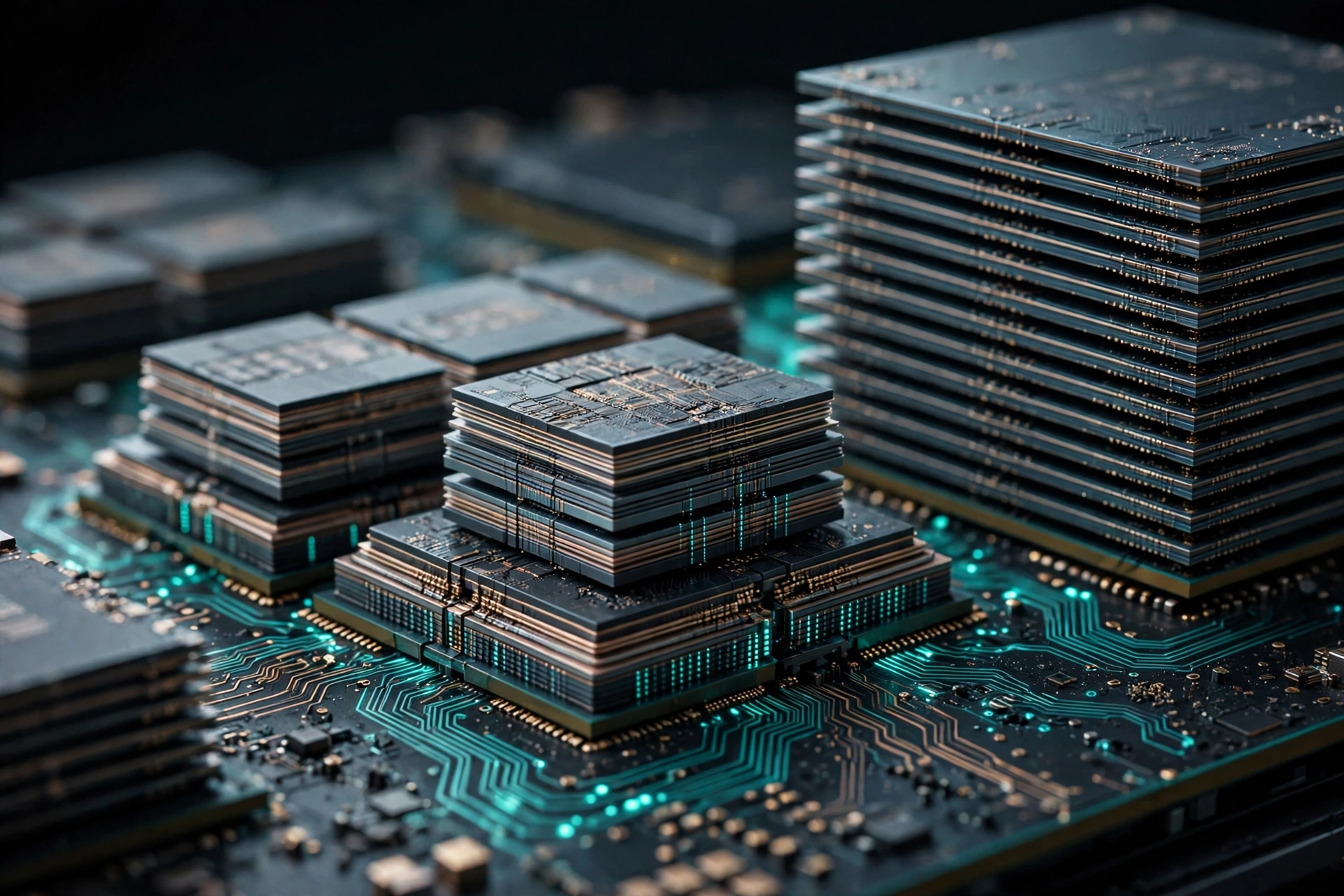
The chip itself is a multi-chiplet package. Compute chiplets are built on TSMC’s N2P process node, while memory-controller and input/output functions sit on separate dies tuned for bandwidth, connectivity and cost. Each accelerator carries eight HBM4 memory stacks totalling 288GB of capacity, with 18.0 TB/s of peak memory bandwidth inside a 950-watt thermal design power envelope. That is 2.5 times the memory bandwidth of Maia 200 and about a third more capacity per chip. Microsoft’s design philosophy is that moving data, not raw compute, is now the bottleneck in large inference systems, so Maia 300 uses a software-defined dataflow architecture with AI-assisted kernel optimization to keep data close to the compute that uses it, and on-die SRAM works as a software-managed scratchpad to reduce pressure on the HBM. Support for enhanced MXFP4 low-precision formats shrinks both compute and memory requirements, which means larger context windows and higher throughput inside the same power envelope.
The Rack Is the Real Product: 96 Accelerators, 167 Kilowatts
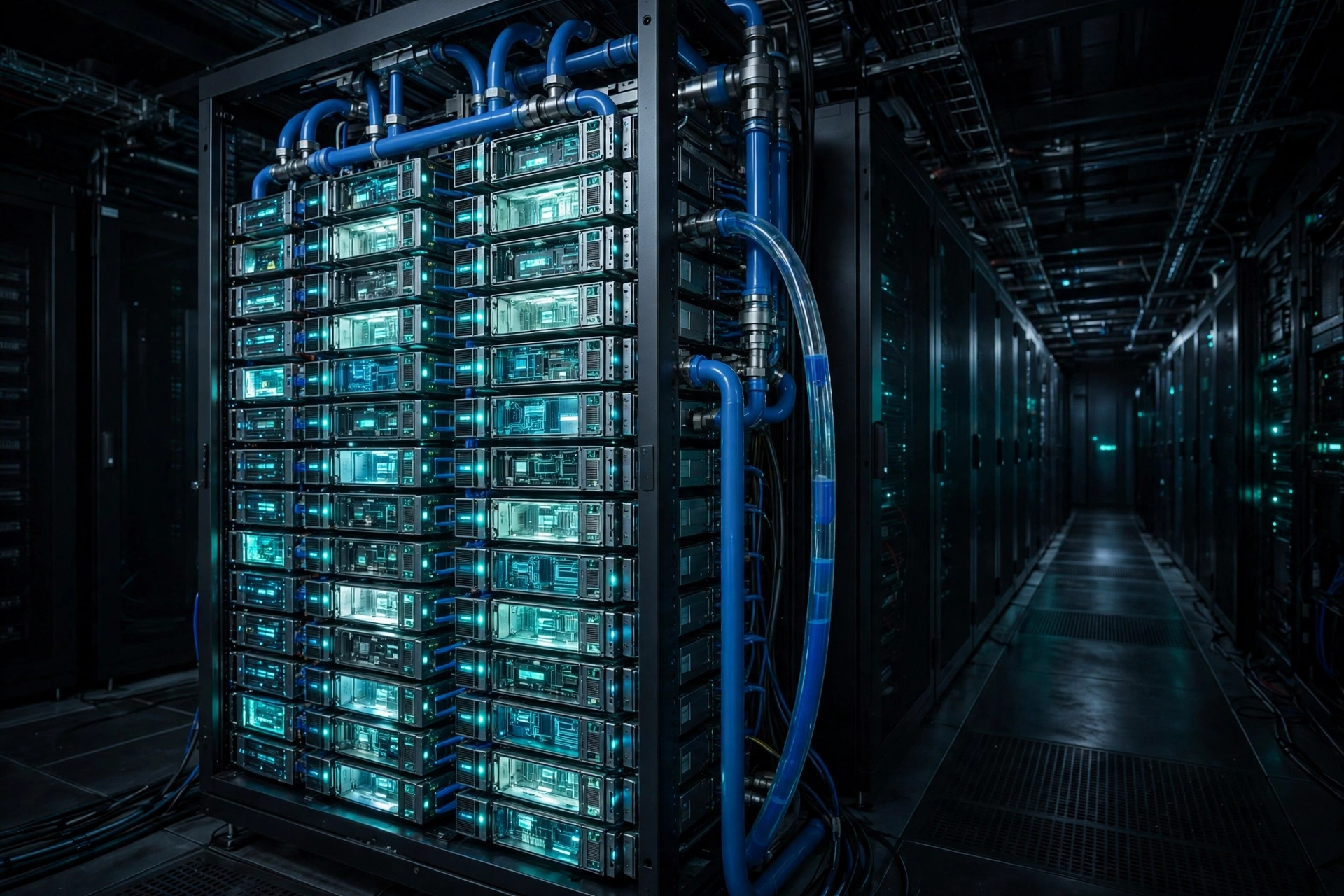
Microsoft’s argument is that Maia 300 is a rack design, not just a chip — and the published numbers support that framing. Ninety-six accelerators sit in 24 four-accelerator trays inside a single 167-kilowatt rack, holding 27.6TB of HBM with 1.7 PB/s of aggregate memory bandwidth. In that full configuration, Microsoft says a rack delivers up to seven times the rack-scale token throughput of Maia 200. Networking is treated as an extension of the software-defined dataflow architecture: high-bandwidth interconnects between accelerators are optimized for tensor parallelism, a custom AI transport runs over Ethernet-based infrastructure, and up to 128 racks can be joined into a superpod of 12,288 accelerators. Liquid cooling carries more than 80% of the rack’s thermal load, with air handling memory and storage. The design also splits prefill and decode work — reading a prompt versus generating the answer — so each can be sized independently, a trick the Cerebras disaggregated-inference design also uses.
Why Tokens Per Megawatt Is the New Benchmark
For years, AI chips were judged on raw compute: teraflops, then petaflops. Maia 300 changes the yardstick to tokens per megawatt, because that is the number that decides whether an AI service makes money. Every Copilot answer, every MAI Code 2 completion and every agentic workflow costs electricity, and Microsoft’s own services are among the largest consumers of inference in the world. Maia 200 already demonstrates the payoff: Microsoft says it delivers up to 1.7 times more tokens per watt than leading GPU infrastructure for built-in AI capabilities in Microsoft Teams, Copilot and Cowork. If Maia 300 hits its 40% claim at scale, the savings compound across millions of daily requests — and they give Microsoft leverage in the same week it is shipping cheaper, specialized models such as MAI Code 2 and fielding frontier models like GPT-6.2 Astra on Azure.
What Microsoft Has Not Said Yet
For all the detail, Maia 300 is still an announcement, not a product in service. Microsoft has published no independent test results — the 40% figure, the 7x rack throughput and the 2.5x performance-per-watt improvement all come from Microsoft’s own testing, and the company has not named the “leading GPU-based systems” the 40% claim is measured against. There is no price, no customer availability schedule, no region list, and no word on whether outside customers will ever be able to rent Maia 300 capacity directly; the chip is built for Microsoft’s own services first. Azure executives have also said the company will keep training partnerships with Nvidia and AMD, and have declined to give a timeline for the gigawatt-scale rollout. That is the honest read: the architecture is unusually well documented for a chip that does not ship until 2027, but the claims that matter most can only be checked once it is running real workloads. The Ignite 2026 keynote reaffirmed the chip this week, so expect Microsoft to keep drip-feeding details as the 2027 deployment date approaches.
The Bottom Line
Maia 300 tells you where Microsoft thinks the AI race is going. The company is betting that the winners will not be whoever trains the biggest model, but whoever can serve intelligence cheapest, at the largest scale, inside their own datacenters. A chiplet design on TSMC’s newest process, 288GB of HBM4 per accelerator, a 96-chip liquid-cooled rack and a superpod that scales to 12,288 accelerators add up to a serious, system-level answer to that bet. The open question is whether the efficiency numbers hold up outside Microsoft’s own labs. Until Maia 300 starts serving real Copilot traffic in 2027, the 40% claim is a promise — but it is a promise backed by a Maia 200 chip that is already doing the job in production today.
Sources:
- Microsoft, “Microsoft to expand Azure Maia system to multi-gigawatt deployments,” Official Microsoft Blog, October 12, 2026: https://blogs.microsoft.com/blog/2026/10/12/microsoft-to-expand-azure-maia-system-to-multi-gigawatt-deployments/
- Microsoft, “Ignite 2026: Building the frontier ecosystem,” Official Microsoft Blog, November 17, 2026: https://blogs.microsoft.com/blog/2026/11/17/ignite-2026-building-the-frontier-ecosystem/
- Jon Peddie Research, “Microsoft builds Maia 300 for inference”: https://www.jonpeddie.com/news/microsoft-builds-maia-300-for-inference/

