
NVIDIA announced on November 16, 2026, at the SC26 supercomputing conference in Chicago, a new package called Nemotron for Science — and it is aimed at a very different audience than most AI launches this year. Instead of a chatbot for everyone, it is a toolkit for researchers who want to build AI agents that can actually do science: reason through a chemistry problem, run a simulation, read a lab diagram, and check their own work against real data.
The package brings together three things: the open Nemotron 3.5 Super VL model, a new open chemistry dataset called LitmusBench v0.2 with nearly 50,000 questions, and post-training recipes that show researchers how to adapt the model to their own field. It arrives at a turbulent moment for NVIDIA — Jensen Huang stepped down as CEO just four days earlier — but the SC26 announcements show the company’s research roadmap is moving ahead regardless.
The pitch is simple. General-purpose AI models are good at talking about science. They are much less reliable at doing it. Nemotron for Science is NVIDIA’s attempt to close that gap with open tools researchers can train themselves.
What Is Actually in the Package
Nemotron for Science is not a single product. It is a bundle of open resources designed to work together, and understanding the three parts is the key to understanding the announcement.
First, the model. Nemotron 3.5 Super VL is an open vision-language model with 120 billion total parameters and 12 billion active parameters at inference time. It accepts text, image, and video inputs and produces text, with a context window of up to one million tokens. It was first published on Hugging Face on October 15, 2026, so it is not brand new — what is new is the scientific packaging around it. The model is released under the OpenMDW-1.1 license, which permits both commercial and non-commercial use, and NVIDIA says it has been optimized to run locally on a 128GB DGX Spark system, putting it within reach of a well-equipped lab rather than only a data center.
Second, the dataset. LitmusBench v0.2 is an open dataset of nearly 50,000 questions for training and evaluating language models on chemistry reasoning. According to its dataset card, it breaks down into 47,118 training questions and 2,056 test questions, for a total of 49,174. The data draws on the public ChEMBL database (version 36) plus datasets provided by ExpansionRx and Biogen, with some values calculated using the RDKit chemistry library. It covers 126 physical and chemical properties, such as molecular solubility and how the human body processes molecules, along with 12 biological assay endpoints.
Third, the recipes. NVIDIA is publishing post-training recipes that show researchers how to turn their own experimental records into training environments — using NeMo Gym to build the environment and NeMo RL for reinforcement learning with verifiable rewards. The idea is that a lab can take the open model, feed it its own domain data, and end up with an agent specialized for its own problems, rather than renting a generic model and hoping it understands the field.
Ian Buck, NVIDIA’s vice president of hyperscale and high-performance computing, summed up the intent: “Nemotron for Science gives researchers open models, scientific data and post-training recipes to build specialized agents that reason through scientific problems and use CUDA-X-accelerated tools to turn ideas into discoveries.”
Inside LitmusBench v0.2: A 50,000-Question Chemistry Dataset
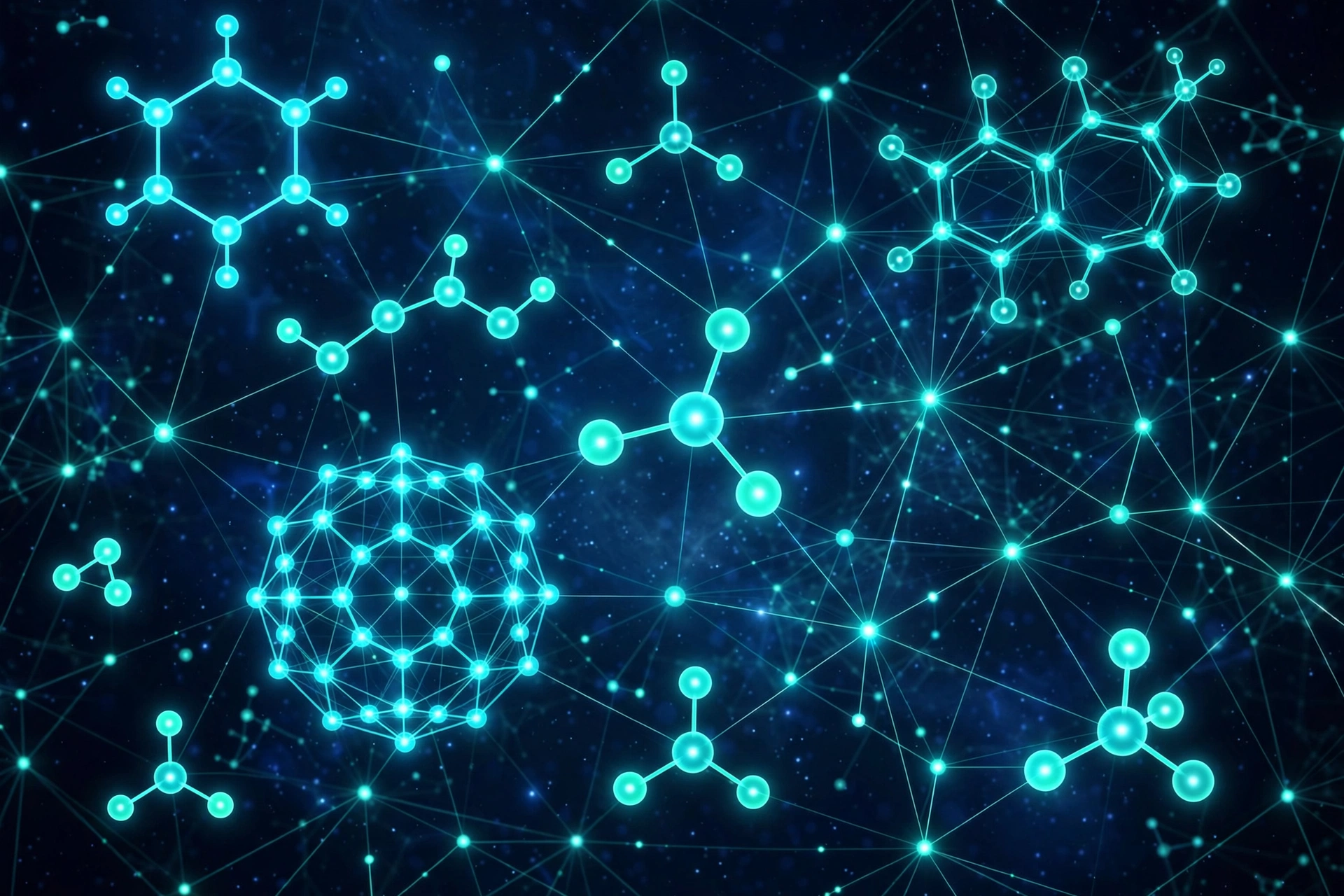
The dataset is arguably the most important part of the announcement, because data — not model size — is the bottleneck for scientific AI. A general model trained on the internet has read plenty about chemistry. It has rarely been tested on whether it can predict a molecule’s properties correctly, and it has almost never been trained with answers that can be checked automatically.
LitmusBench v0.2 is built for exactly that kind of checking. CDO Magazine’s report on the launch notes that the dataset draws on molecular properties and experimental drug-discovery data, and its questions cover behavior such as solubility and how the human body processes molecules. Because the answers are recorded values for known molecules, a model’s predictions can be scored objectively — right or wrong, no debate. That makes it useful both for evaluating models and for reinforcement learning with verifiable rewards, where the model improves by getting verifiably correct answers more often.
The licensing is deliberately open. ChEMBL-derived questions carry a CC-BY-SA-4.0 license, and the rest of the dataset is under OpenMDW-1.1. That matters for labs and companies that want to build on the data without negotiating access, and it is a sharp contrast with the closed-weight approach of some of this year’s headline models — including Alibaba’s Qwen4-Max, which launched the same weekend as a closed model despite its strong benchmark scores.
There is a limit worth stating plainly. Checking answers against recorded values for known molecules does not verify a model’s predictions about unknown compounds or untested experiments. LitmusBench can prove an agent is good at chemistry reasoning on known ground. It cannot certify that the agent is right about the next experiment. The dataset is a measuring stick, not a guarantee — and any lab using these agents will still need to validate results in the real world.
What Researchers Are Already Doing With It
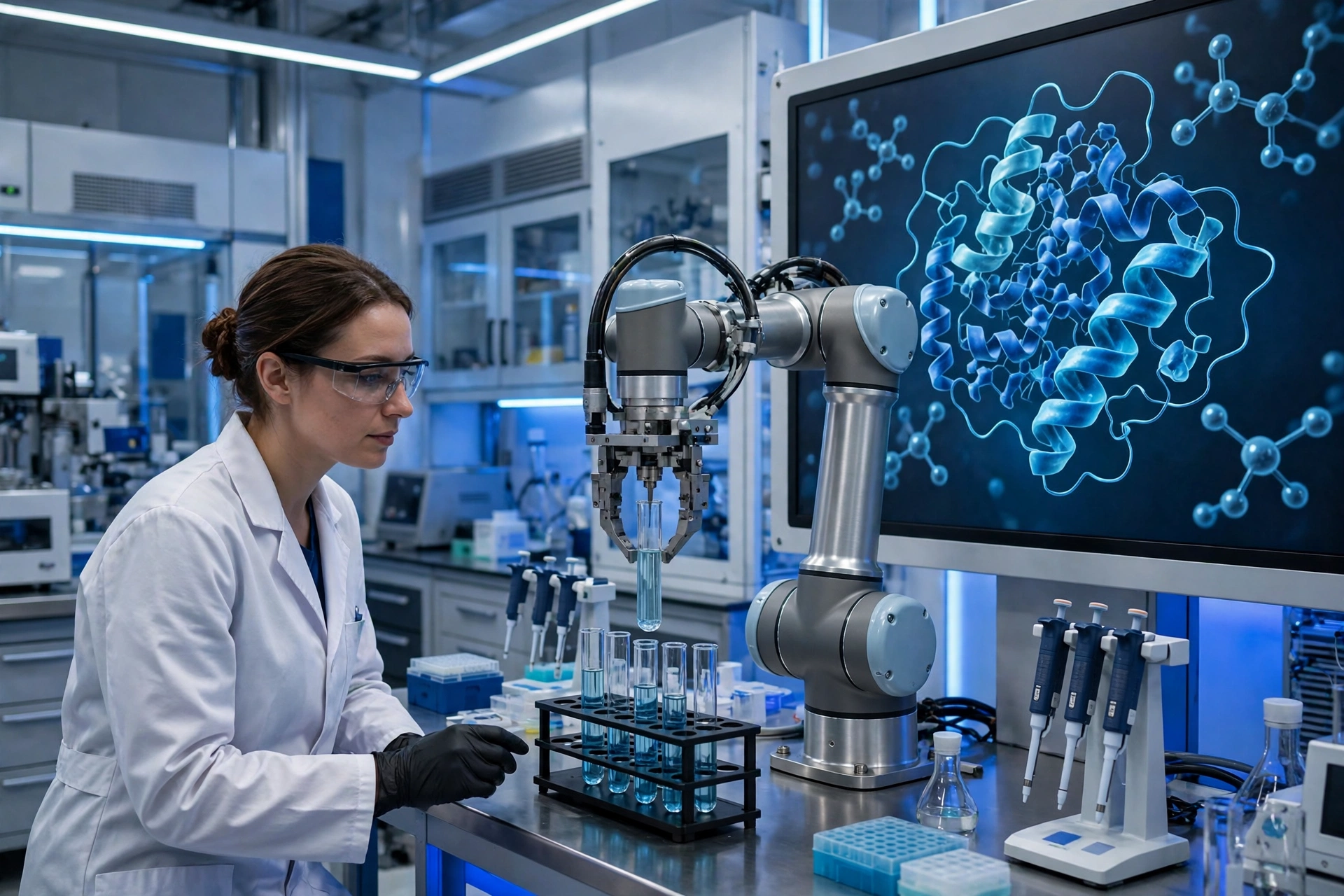
NVIDIA’s announcement is backed by early users, and the examples are concrete enough to show what “science agents” actually means in practice.
In drug discovery, Terray Therapeutics post-trained Nemotron to extract reactants, products, and reaction conditions from scientific diagrams — the kind of dense, visual information that lives in papers and patents and is painful to transcribe by hand. Lila Sciences used the model to design execution-ready protocols for its automated laboratories, turning a research plan into instructions a lab robot can follow. Therna collaborated with NVIDIA on agentic mRNA therapeutic design.
At the national-lab scale, Argonne National Laboratory, part of the U.S. Department of Energy, is integrating Nemotron into StructBioReasoner, a multi-agent system for designing and evaluating protein-based therapeutic candidates for cancer and other diseases. The Jülich Supercomputing Centre in Germany is integrating the model into its drug and scientific discovery agents, and RIKEN in Japan has made Nemotron models available on its RIKYU AI supercomputing platform through its RiVault inference gateway.
One of the most telling examples comes from KTH Royal Institute of Technology in Sweden, where researchers built an agent that repairs broken GROMACS molecular dynamics setups. NVIDIA says an overnight run on a single DGX Spark fixed 81% of the test cases with reasoning enabled, with GROMACS itself independently checking each fix. That is the pattern Nemotron for Science is built around: the agent proposes, and a scientific tool verifies. The verification loop is what separates a research agent from a chatbot with a lab coat on.
NVIDIA also cites a 61% accuracy figure for predicting quantum dot synthesis — a genuinely hard materials problem. But these performance numbers come from NVIDIA’s own announcement and partner reports, not from independent verification, so treat them as the company’s claims rather than settled results.
The Same Conference, Bigger Hardware
Nemotron for Science was not NVIDIA’s only SC26 announcement, and the rest of the slate shows where the company thinks scientific computing is headed.
Techstrong’s SC26 coverage reports that NVIDIA also unveiled Rubin HPC, a new GPU for scientific computing with more than 50,000 CUDA cores on a single chip, expected to be available in 2028, along with 192-CPU Vera racks for simulation work due in early 2027. New CUDA-X libraries were also announced, including cuSpa and a GPU-accelerated HMMER library, now open source.
The hardware and the software point in the same direction: AI agents that do not just answer questions but operate the instruments of science — simulations, molecular dynamics, protein design — with the compute to back them up. The model is the brain, the dataset is the training ground, and the hardware is the lab bench.
Why Open Matters Here
The most interesting strategic choice in Nemotron for Science is that it is open. The model, the dataset, and the recipes are all available on Hugging Face, free to download and adapt. That is a deliberate contrast with the direction much of the AI industry has taken, where the most capable models sit behind APIs and the training data is a trade secret.
For science, openness has a practical argument behind it. Research is reproducible or it is not research. An agent whose model, data, and training recipe are all inspectable can be checked, challenged, and improved by other scientists. A closed agent can only be trusted on the vendor’s word. NVIDIA is betting that labs would rather build on tools they can see inside — and that the ecosystem of specialized science agents that results will be worth more than keeping the pieces proprietary.
There is also a defensive logic. The enterprise agent race of 2026 — ServiceNow’s autonomous engine that redesigns CRM deployments, Zoho’s blended agents that act on real orders — is about agents grounded in real business data. Science is the same pattern in a different domain: agents grounded in real experimental data, checked by real tools. NVIDIA is staking a claim to the scientific version of that race before someone else does.
The risk is the same one every open release carries. Once the model and data are public, NVIDIA cannot control what they are used for. Chemistry data and protein design tools have legitimate research uses and obvious dual-use concerns, and open distribution means the safeguards are the licenses and the community, not a gatekeeper. That is a trade-off the research community has debated for years, and this release will add fuel to it.
The Bigger Picture: Agents That Can Be Checked
Step back from the SC26 announcements, and Nemotron for Science fits the defining shift of AI in 2026: agents are moving from conversation into work — and the agents that survive are the ones whose work can be verified.
A support agent’s answer can be checked against an order record. A CRM agent’s plan can be checked against a real deployment. And now a science agent’s prediction can be checked against a dataset, a simulation, or a lab instrument. The verification loop is the product. The model is just the part that proposes.
That is also why this launch matters beyond chemistry. If the pattern works — open model, open verifiable data, post-training recipes, tool-checked outputs — it becomes a template for every field where being wrong has consequences: materials science, biology, climate modeling, engineering. The labs that learn to build checked agents first will move faster than the ones still asking a chatbot for answers.
For anyone watching AI’s effect on work, the message is the same one this year’s other launches keep sending: the jobs that change first are the ones where AI can be checked. As AI keeps reshaping what skilled work looks like — and how AI is reshaping careers is now a question every worker is asking — the winners will be the people and labs that learn to build agents they can verify, not just agents they can prompt.
Frequently Asked Questions
What is NVIDIA Nemotron for Science?
Nemotron for Science is a package NVIDIA introduced on November 16, 2026, at SC26 in Chicago. It combines the open Nemotron 3.5 Super VL model, scientific evaluations, the LitmusBench v0.2 open chemistry dataset, and post-training recipes to help researchers build specialized AI agents for scientific discovery.
What is LitmusBench v0.2?
LitmusBench v0.2 is an open dataset of nearly 50,000 questions — 47,118 for training and 2,056 for testing — for training and evaluating language models on chemistry reasoning. It draws on the ChEMBL database and datasets from ExpansionRx and Biogen, covering 126 molecular properties and 12 biological assay endpoints.
What is Nemotron 3.5 Super VL?
Nemotron 3.5 Super VL is an open vision-language model with 120 billion total parameters and 12 billion active parameters, a context window of up to one million tokens, and text, image, and video inputs. It was first published on Hugging Face on October 15, 2026, under the OpenMDW-1.1 license, and NVIDIA says it is optimized to run locally on a 128GB DGX Spark system.
How are researchers already using it?
Life sciences companies Lila Sciences, Terray Therapeutics, and Therna are using or customizing the model for lab protocols, extracting reaction data from diagrams, and mRNA therapeutic design. Argonne National Laboratory is integrating it into StructBioReasoner, a multi-agent system for protein-based therapeutic candidates, and KTH built an agent that repairs broken GROMACS molecular dynamics setups.
Where can I get the model and dataset?
NVIDIA says Nemotron 3.5 Super VL and the LitmusBench v0.2 chemistry dataset are available now on Hugging Face, along with the post-training recipes.
Is Nemotron for Science a finished AI scientist?
No. It is a toolkit — an open model, open data, and training recipes — for researchers to build their own specialized agents. The agents it enables are designed to work with scientific tools that verify their outputs, not to replace laboratory validation.
The Bottom Line
NVIDIA’s Nemotron for Science is not another chatbot launch. It is an open toolkit for building AI agents that can reason about chemistry, run scientific tools, and have their work checked against real data — with a 50,000-question dataset to prove it.
For researchers, the offer is practical: download an open model, train it on your own data with published recipes, and build an agent for your own field. For the industry, it is a bet that the future of scientific AI belongs to open, verifiable tools rather than closed black boxes — and that the labs that learn to build agents they can check will be the ones making the discoveries.

