Tesla has finally put a price on the future — and a monthly fee on top of it. On Friday, November 13, Tesla’s Robotaxi account announced that “select customers are now being invited to purchase Cybercab for personal use,” opening orders for the steering-wheel-free two-seater at $29,990. It is the first time private buyers have been able to order the car Tesla unveiled in October 2024 with a promised sub-$30,000 price tag.
There is a catch, and it is a big one: the car will not move without a $299-a-month Autonomy Subscription. Stop paying, and the Cybercab in your garage becomes a very expensive piece of modern art. Here is everything the order page and the fine print actually say — and what it will really cost you.
What Tesla is actually selling
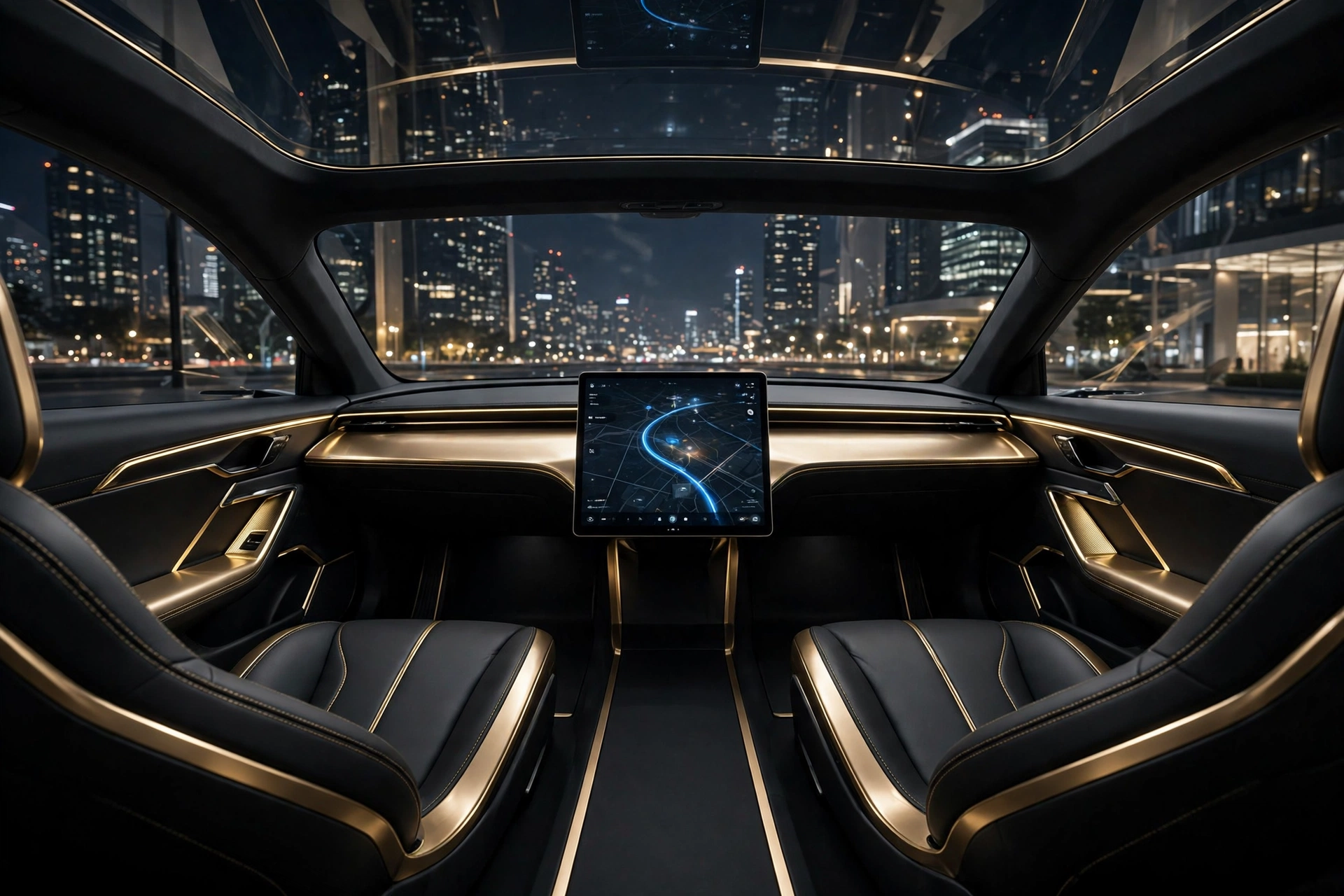
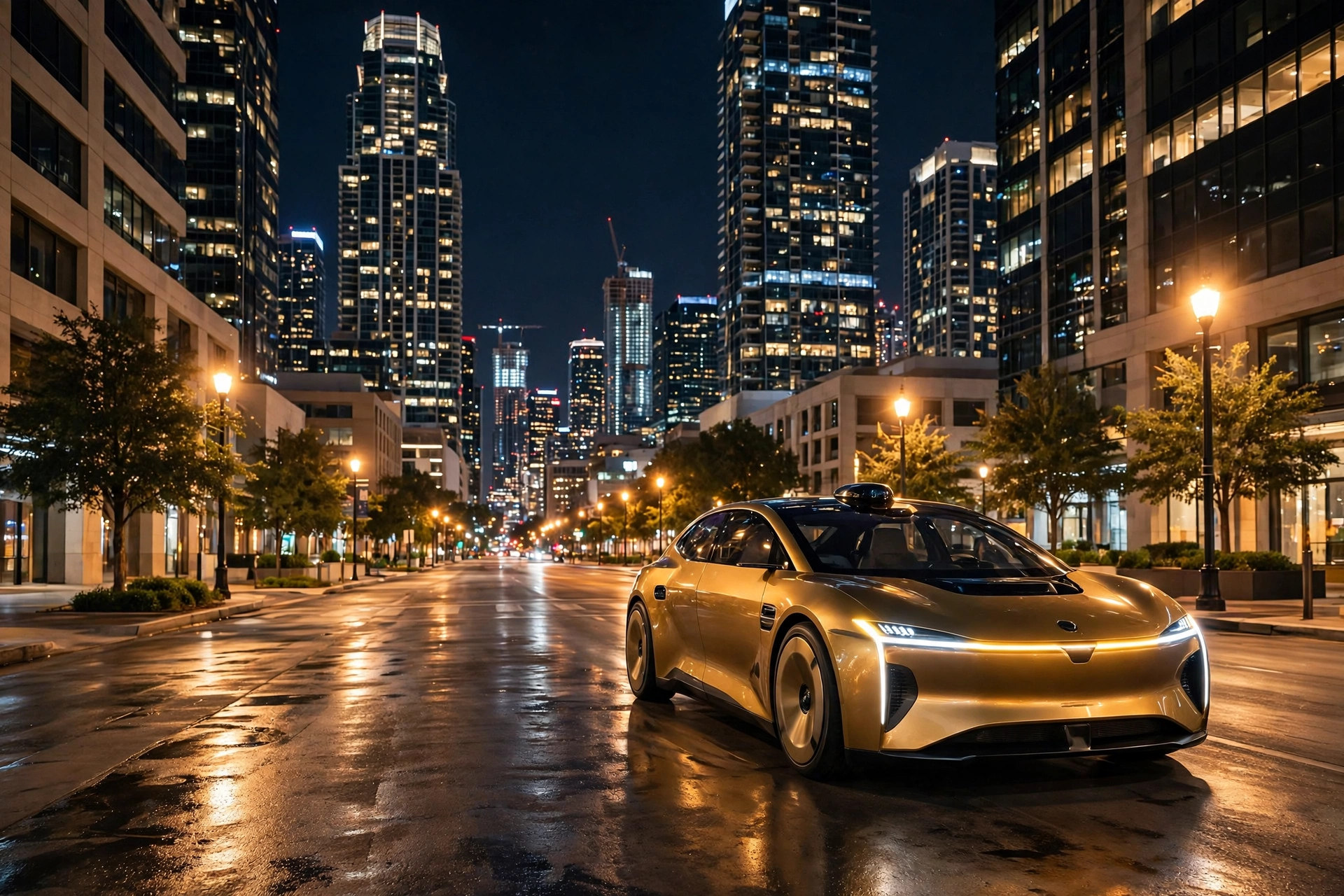
The Cybercab is a two-seat, fully autonomous electric car with no steering wheel and no pedals. Riders manage everything through an app, and the cabin is built around a 21-inch center touchscreen, with 20.1 cubic feet of cargo space. It is the same gold two-seater Tesla already runs in its Robotaxi service, where, according to The Verge, 278 Cybercabs now make up about 40 percent of the fleet.
The order page lists an estimated purchase price of $29,990, before taxes. A $1,000 deposit is due at order, and it is marked non-refundable. Estimated delivery is December 2026, with the screenshot Tesla shared showing delivery in Austin, Texas. This is not a public sale: the invitation email is headed “Early Access, Limited Release,” and Tesla has not said how it chooses who gets invited or when invitations will expand.
That $29,990 figure matters because it is the number Elon Musk promised two years ago. When Tesla unveiled the Cybercab in October 2024, the pitch was a robotaxi anyone could buy for under $30,000. The headline price keeps that promise — just barely, and before taxes. Everything after the headline is where the deal gets complicated.
The $299-a-month catch
The Autonomy Subscription is pre-checked on the order page at $299 a month, with the first month included. The fine print is blunt: “Subscription and regular vehicle maintenance required to operate.” The invitation email is blunter still: “Only available in supported service areas. Subscription required for operation.”
The full agreement behind the subscription — version 20261112, posted to Tesla’s configurator hours after orders opened — is stricter than the order page suggests. Its key line reads: “Your Cybercab will not operate without an active Autonomy Subscription.” Because there is no steering wheel and no pedals, that is not a figure of speech. Without the subscription, the car cannot be driven on public roads at all.
Tesla also reserves the right to change the subscription price with one month’s notice, and to suspend or cancel it for unauthorized or inappropriate use. Three or more “strikeouts” for improper or unsafe use trigger a one-week suspension of autonomous driving, and the payment is not prorated. The subscription covers autonomous driving, maintenance and towing, according to The Verge — but it does not cover insurance.
For the full terms as reported, see Electrek’s breakdown of the Autonomy Subscription Agreement.
Where it can — and can’t — drive
A personal-use Cybercab only works inside Tesla’s Robotaxi service areas. Today that means eight cities: Austin, Dallas, Houston, Fort Worth and San Antonio in Texas, and Miami, Orlando and Tampa in Florida. Driving outside those geofences is prohibited, and Tesla says it “may expand, reduce, relocate, or otherwise modify the operating area at any time.”
That is a narrower world than the map suggests. Independent tracker Koby Pierce tested thousands of addresses in the Robotaxi app and found that actual pickup and drop-off coverage was only 59 to 78 percent of the advertised geofences in the six cities he checked. So even inside a “supported” city, the car may not reach your street.
It is worth remembering how quickly this space is moving. The same week Tesla opened Cybercab orders, the autonomy race kept accelerating — from robots that learn by watching humans to OpenAI’s GPT-5.2, the newest flagship AI model. And not every bet on physical AI is paying off: OpenAI disbanded its robotics team this week, a reminder that building machines that work in the real world is harder than building models that work on a screen.
The real five-year cost
The sticker price is only the down payment on the real cost. Here is the math, using Electrek’s figures:
- Purchase price: $29,990 (before taxes)
- Autonomy Subscription: $299 a month, first month included
- One year of subscription: $3,588
- Five years (59 paid months): $17,641
- Five-year total: $47,631, before insurance, registration, charging and taxes
The Verge did the same math and landed at about $47,600. Either way, the car Musk promised for under $30,000 costs closer to $48,000 over a typical five-year ownership period — and the monthly fee is not fixed. Tesla can raise it with 30 days’ notice, so that total can only go up.
There is also a curiosity in the pricing. The subscription alone costs $299 a month — the same $299 figure Apple charges for its first smart display. But where Apple’s $299 HomeView smart display is a one-time purchase, Tesla’s $299 recurs every month, for as long as you want the car to move. And gadgets are getting cheaper while this one gets more expensive to own: Google’s Gemini Glasses are up for pre-order at $395, a one-time price for a device you own outright.
You can’t earn money with it
If you were hoping the subscription would pay for itself, the terms shut that door. The order terms explicitly prohibit owners from using the vehicle for commercial purposes — no Uber, no DoorDash, and no putting it on Tesla’s own Robotaxi network. Personal use only, unless Tesla gives written authorization.
That is a sharp break from the original Cybercab pitch. When Tesla unveiled the car in 2024, the idea was that owners could send their cars out to earn fares while they were not using them. The version now on sale cannot earn a cent. You pay $29,990, then $299 a month, and the car only ever drives you.
Musk says the fee is too high
The most surprising critic of the $299 subscription is Elon Musk himself. Replying to YouTuber Marques Brownlee on X, Musk said the fee is “too high” and that it “should match the cost of Tesla [Full Self-Driving] and connectivity for other models, which is more like ~$115/month.” He also said the Cybercab “will be available nationwide, as we receive regulatory approval,” without giving any timing.
That was a comment, not a price change. Tesla’s order page still lists the Autonomy Subscription at $299 a month. But it is a remarkable admission: the CEO publicly undercut his own company’s price less than a day after orders opened — and put a number on what he thinks it should be.
The December delivery window also matters for a long-running public wager with Brownlee over whether Tesla could get a sub-$30,000 Cybercab into a customer’s hands before 2027. Musk weighed in on that too, calling Brownlee “a chicken” on X. Whether the first deliveries land in time to settle the bet, the rush to open orders in mid-November — seven weeks before the deadline — looks a lot like a company determined to win it.
For the original reporting on the orders, see Electrek’s coverage of the Cybercab order page.
The regulator hasn’t signed off yet
There is one more thing a buyer should know: the federal safety regulator has not finished its review. The National Highway Traffic Safety Administration opened Audit Query AQ26002 on September 3, 2026, covering an estimated 1,000 Cybercabs, to examine how Tesla self-certified a vehicle without a brake pedal — a piece of equipment federal safety standards require. Tesla sent its legal reasoning to NHTSA in October and asked for the entire response to be kept confidential. The audit is still open.
That means Tesla is taking $1,000 non-refundable deposits on a car whose certification the regulator has not yet ruled on. It may well pass — Tesla’s argument is that a car with no human driver does not need a brake pedal for a human to press — but buyers are putting money down before that question is answered.
For a plain-English summary of the order terms and the federal audit, see MakeTechEasier’s explainer.
Who should — and shouldn’t — take the invite
The Cybercab is a genuine milestone: the first steering-wheel-free car a private buyer can order, at the sub-$30,000 price Musk promised in 2024. For a Tesla enthusiast who lives inside one of the eight Robotaxi cities, has $30,000 to spend and $299 a month to keep spending, it is a chance to own a piece of the autonomous future months before anyone else.
For almost everyone else, the honest answer is to wait. The subscription can rise with 30 days’ notice. The geofence can shrink. The car cannot leave its home city, cannot earn money, and cannot be driven at all if you stop paying. And the regulator has not yet said the car is legal to sell as certified.
The Cybercab proves Tesla can build a $29,990 robotaxi. What it has not yet proved is that owning one makes sense. Until the subscription falls toward the $115 Musk himself suggested, or the geofence grows toward the nationwide rollout he promised, the smartest move for most buyers is the same one Tesla’s own CEO effectively recommended: wait for a better price.
Frequently asked questions
How much does a Tesla Cybercab cost?
The Cybercab costs $29,990 before taxes, plus a $1,000 non-refundable deposit and a mandatory $299-a-month Autonomy Subscription, with the first month included. Over five years, the car and subscription come to about $47,631 before insurance, taxes and charging.
Can I buy a Cybercab without an invitation?
Not right now. Orders are open only to select customers Tesla invites, on an early-access, limited-release basis. Tesla has not published how it chooses invitees or when ordering will open to the public.
What happens if I stop paying the $299 subscription?
The car stops working. Tesla’s agreement states the Cybercab “will not operate without an active Autonomy Subscription,” and because it has no steering wheel or pedals, there is no manual fallback.
Where can a personal Cybercab drive?
Only inside Tesla’s Robotaxi service areas — currently Austin, Dallas, Houston, Fort Worth and San Antonio in Texas, and Miami, Orlando and Tampa in Florida. Tesla can expand, shrink or move those areas at any time.
Can I use my Cybercab for Uber or rent it out?
No. The order terms prohibit commercial use, including ride-hailing, delivery work and adding the car to Tesla’s own Robotaxi network, without Tesla’s written authorization.