Apple has introduced its first-ever touchscreen MacBook Pro, featuring a stunning OLED display, powerful M5 Pro and M5 Max chips, and a redesigned, lighter body. But is this the MacBook upgrade users have been waiting for?
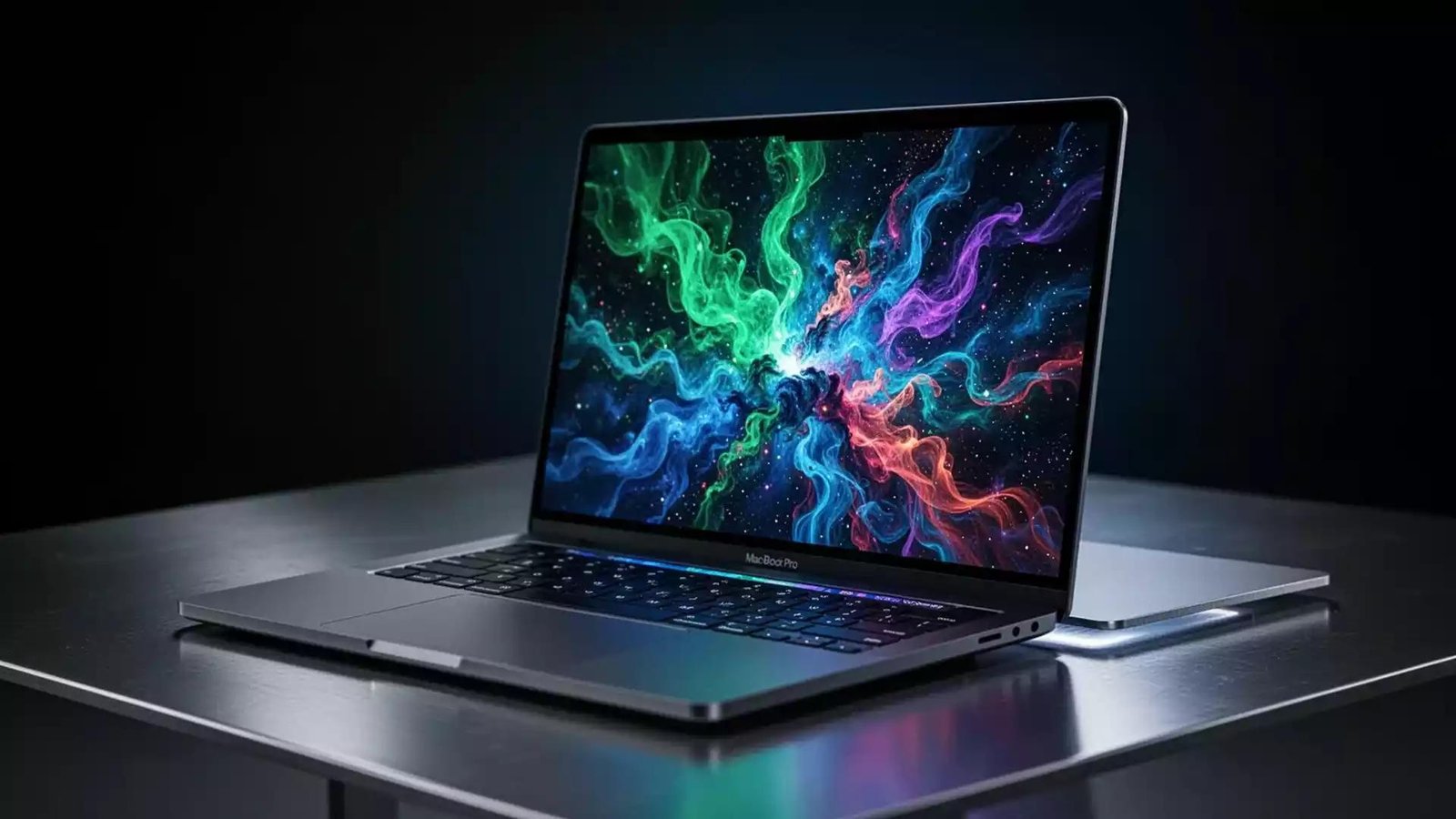
Apple has spent years building a reputation for doing things its own way. While Windows laptop manufacturers have embraced touchscreen technology for years, Apple has remained committed to its traditional MacBook experience.
That approach has now changed.
On October 28, 2026, Apple unveiled its new MacBook Pro with PROLED XDR Display, bringing touchscreen functionality to the Mac for the first time. The announcement has quickly become a major technology talking point, attracting attention from creative professionals, developers, Apple fans, and everyday laptop users.
But the touchscreen is only part of the story.
The new MacBook Pro also introduces tandem OLED display technology, improved portability, expanded storage options, and a collection of features designed to make professional workflows more intuitive.
For longtime MacBook users, this raises an interesting question: Is Apple simply adding a feature that competitors already offer, or is it preparing to change how people interact with their computers?
Let’s take a closer look.
Apple’s First Touchscreen MacBook Pro: What’s New?
The biggest headline is straightforward: Apple has finally brought touchscreen technology to the MacBook Pro.
For years, people have wondered whether Apple would ever introduce a MacBook that allows users to interact directly with the display.
The answer is now yes.
The new MacBook Pro lets users scroll through webpages, zoom into images, move application windows, and drag files between apps using their fingers.
Imagine working on a presentation and quickly moving a slide into position with a simple touch. Or opening a photograph and zooming into the details without reaching for the trackpad.
These are small changes, but they could make everyday computer interactions feel more natural.
Apple says the touch sensor is integrated directly into the display panel to reduce latency, helping interactions feel responsive.
However, there is an important detail worth understanding: this is still a traditional MacBook Pro.
It does not transform into a tablet, and the touchscreen is not intended to replace the keyboard or trackpad. Instead, Apple is adding another way to interact with macOS.
For users who prefer traditional laptop controls, that could be welcome news.
The New OLED Display Could Be the Real Star
While the touchscreen is attracting headlines, the display itself may be the most impressive upgrade.
Apple’s new PROLED XDR Display uses tandem OLED technology, designed to deliver deeper blacks, richer colors, and improved contrast.
Here are some of the headline display specifications:
- Display technology: Tandem OLED
- Peak brightness: Up to 2,000 nits
- Contrast ratio: 10,000,000:1
- Refresh rate: Up to 120Hz with variable refresh
- Color support: P3 and Adobe RGB color spaces
What does all of this mean in everyday use?
For photographers, it could mean more accurate color work. For video editors, it could mean a better experience when working with HDR footage. For designers, it could mean a display that makes visual details easier to evaluate.
Even for someone who mainly uses a laptop for browsing, watching movies, or working with documents, OLED technology can make the screen feel noticeably more premium.
The combination of OLED, high brightness, and a 120Hz refresh rate is particularly interesting.
Scrolling can feel smoother, motion appears more fluid, and dark scenes in movies can look more detailed.
Apple has also highlighted protections intended to reduce the risk of OLED burn-in, although the long-term performance of those protections will become clearer after customers begin using the devices.
MacBook Pro Specifications: M5 Pro and M5 Max
Apple is continuing to position the MacBook Pro as a high-performance machine for demanding professional work.
The new models feature Apple’s M5 Pro and M5 Max processors.
These chips are designed for workloads such as software development, video editing, 3D rendering, and AI-related tasks.
Here is a quick overview of the announced specifications.
| Feature | New MacBook Pro |
|---|---|
| Display sizes | 14-inch and 16-inch |
| Display technology | Tandem OLED |
| Processors | M5 Pro / M5 Max |
| Unified memory | Up to 128GB |
| Storage | Up to 16TB |
| Battery life | Up to 24 hours |
| Refresh rate | Up to 120Hz |
| Camera | 12MP Center Stage |
| Connectivity | Thunderbolt 5 |
| Operating system | macOS 27 |
| Touchscreen | Yes |
The availability of up to 128GB of unified memory is particularly relevant for professionals working with large datasets, demanding applications, and local AI workloads.
Developers experimenting with AI models or running multiple resource-intensive applications may benefit from the additional memory capacity.
The expanded storage option is another useful improvement.
With configurations reaching 16TB, users working with large video libraries, high-resolution photography, and extensive project files have more room to work without relying entirely on external drives.
Of course, these higher-end configurations can become expensive very quickly.
A Lighter and More Portable MacBook Pro
Performance is important, but portability matters just as much for people who work on the move.
Apple says the redesigned MacBook Pro is thinner and lighter than its predecessor.
The 14-inch model weighs approximately 3 pounds, while the 16-inch model weighs approximately 4 pounds.
For someone carrying a laptop between meetings, working from a coffee shop, or traveling regularly, even a modest reduction in weight can make a difference.
Apple also claims up to 24 hours of battery life.
That figure is impressive, especially for a professional laptop with a high-performance processor and an advanced OLED display.
However, actual battery life will depend on the workload.
Video editing, gaming, intensive development tasks, and sustained high brightness can all affect battery performance.
The 24-hour figure should therefore be viewed as Apple’s stated maximum rather than a guarantee of everyday usage.
Dynamic Island Comes to the MacBook Pro
Another interesting addition is Dynamic Island.
Previously associated with Apple’s iPhone lineup, Dynamic Island is now coming to the MacBook Pro.
The feature is designed to provide a convenient place for information such as:
- Live Activities
- Spotlight
- Siri AI interactions
- Relevant notifications and updates
The idea is to make important information accessible without constantly interrupting the user’s workflow.
For example, someone working on a document might be able to check an ongoing activity or interact with Siri without switching between multiple applications.
It is an interesting move because Apple is bringing an element of its mobile interface into the desktop environment.
Whether users find it genuinely useful or simply another visual feature will depend on how well it integrates into their daily routines.
How Much Does the New MacBook Pro Cost?
Here is where things become a little more complicated.
Apple’s new MacBook Pro is clearly positioned as a premium professional laptop.
The starting prices announced for the new models are:
| Configuration | Starting Price |
|---|---|
| 14-inch MacBook Pro with M5 Pro | $2,899 |
| 16-inch MacBook Pro with M5 Pro | $3,399 |
| 14-inch MacBook Pro with M5 Max | $4,499 |
| 16-inch MacBook Pro with M5 Max | $4,799 |
These are U.S. starting prices before applicable taxes and additional configuration upgrades.
The cost can increase significantly when users choose more memory or storage.
For example, someone purchasing a MacBook Pro for everyday office work may not need the highest-end processor or 128GB of memory.
However, professionals working with advanced video production, 3D applications, or demanding AI workflows may find those upgrades worthwhile.
The important question is not simply whether the laptop is expensive.
It is whether the additional performance and features will provide enough value for the person buying it.
Is the Touchscreen MacBook Pro Worth Buying?
The answer depends on what you currently use and what you expect from your next laptop.
For creative professionals
Photographers, designers, video editors, and digital artists may find the OLED display particularly appealing.
The touchscreen could also make certain creative interactions more intuitive.
However, users who need a full tablet experience or Apple Pencil support should carefully evaluate the device before purchasing it.
For software developers
The combination of M5 Pro or M5 Max performance, high memory capacity, and touchscreen interaction could make the MacBook Pro an interesting development machine.
Developers building applications for macOS, iOS, and iPadOS may find the touchscreen particularly useful when testing touch-based interfaces.
For students and everyday users
The new MacBook Pro may be more powerful than necessary for everyday browsing, online classes, office documents, and entertainment.
For these users, a less expensive MacBook could offer better value.
The touchscreen is exciting, but it does not automatically make every existing MacBook obsolete.
For current MacBook Pro owners
If you already own a recent MacBook Pro with an Apple Silicon processor, the decision becomes more complicated.
The OLED display and touchscreen are meaningful upgrades, but your existing machine may still provide excellent performance.
Unless you specifically need the new display or additional capabilities, waiting for independent long-term reviews could be a sensible approach.
When Will the New MacBook Pro Be Available?
Apple announced the new MacBook Pro on October 28, 2026.
Preorders began on the same day in the United States and other selected markets.
The official availability date is Friday, November 6, 2026.
Customers will be able to purchase the new models through Apple’s online store, Apple Store locations, and authorized retailers.
The launch arrives ahead of the holiday shopping season, when many consumers begin considering laptop upgrades.
What This Means for the Future of MacBooks
Apple’s decision to introduce a touchscreen MacBook Pro represents more than just another hardware upgrade.
It signals a shift in how the company thinks about the relationship between laptops, tablets, and touch-based computing.
For years, Apple maintained a clear distinction between the MacBook and the iPad.
The MacBook was designed around a keyboard and trackpad, while the iPad focused on direct interaction with the screen.
The new MacBook Pro does not completely eliminate that distinction, but it does make the two experiences feel closer together.
This could become especially interesting as AI-powered applications become more common.
Imagine interacting with a design tool, manipulating a 3D object, or organizing a complex project using a combination of voice commands, touch gestures, and traditional keyboard shortcuts.
That kind of workflow could become increasingly valuable for professionals.
Still, the real test will be how people use the technology after the initial excitement fades.
A touchscreen is useful only when it makes a task easier, faster, or more enjoyable.
Apple now has an opportunity to demonstrate that its approach to touchscreen laptops can offer something different from the competition.
Final Thoughts: A New Chapter for Apple’s MacBook Pro
Apple’s new touchscreen MacBook Pro is one of the most interesting developments in the Mac lineup in recent years.
The introduction of touch functionality, combined with tandem OLED technology, M5 Pro and M5 Max processors, improved portability, and expanded storage, makes this a substantial product announcement.
The display could be a particularly compelling upgrade for creative professionals.
The touchscreen, meanwhile, introduces a new way to interact with macOS without abandoning the traditional laptop design.
But the premium pricing means this is not necessarily a device for everyone.
For professionals who rely on their laptops every day, the new MacBook Pro could be a worthwhile investment.
For casual users and owners of recent MacBook models, waiting may be the smarter decision.
One thing is certain: Apple has finally entered the touchscreen MacBook conversation.
And now, the question is no longer whether Apple will make a touchscreen MacBook.
The question is whether users will embrace it.
Frequently Asked Questions (FAQs)
1. Does the new MacBook Pro have a touchscreen?
Yes. Apple’s new MacBook Pro with PROLED XDR Display is the company’s first MacBook to feature touchscreen functionality.
2. What processor does the new MacBook Pro use?
The new MacBook Pro is available with Apple’s M5 Pro and M5 Max processors.
3. Does the new MacBook Pro have an OLED display?
Yes. It features tandem OLED technology, which Apple markets as its PROLED XDR Display.
4. How much does the new MacBook Pro cost?
The 14-inch M5 Pro model starts at $2,899, while the 16-inch M5 Pro model starts at $3,399 in the United States.
5. When will the new MacBook Pro be released?
The new MacBook Pro is scheduled to become available on November 6, 2026.
6. Is the new MacBook Pro a convertible laptop?
No. It retains the traditional MacBook design. The touchscreen adds direct interaction, but the device does not convert into a tablet.
7. Is the new MacBook Pro worth upgrading to?
It may be worthwhile for professionals who need the OLED display, touchscreen capabilities, or additional performance. Users with recent MacBook Pro models may want to wait for further reviews.
About This Article
This article is based on Apple’s October 28, 2026, announcement and reporting from technology and news publications. Specifications, pricing, and availability should be confirmed with Apple before making a purchase.
Sources:
- Apple Newsroom – New MacBook Pro with PROLED XDR Display
- CNN – Apple Announces Its First Touchscreen MacBook
- ABC News – Apple’s New Touchscreen Laptop
- Ars Technica – Touchscreen MacBook Pro Hands-On
Written for InspireViralTimes.com | AI, Cloud & Digital Career Skills