
Google’s first AI glasses are finally something you can buy. On November 12, 2026, Google opened pre-orders for its Intelligent Eyewear collections — smart glasses with Gemini built in, designed by Warby Parker and Gentle Monster and engineered by Samsung. They go on sale December 10 in the United States and South Korea, with prices starting at $395.
The glasses are Google’s answer to a market Meta’s Ray-Ban glasses helped create, but with a distinctly Google twist: there is no display at all. Everything runs through voice, taps on the temple arm, and audio. You say “Hey Gemini,” and the assistant sees what you see through the camera and answers — no screen, no phone in your hand.
Two Collections, 30 Designs, Two Price Points
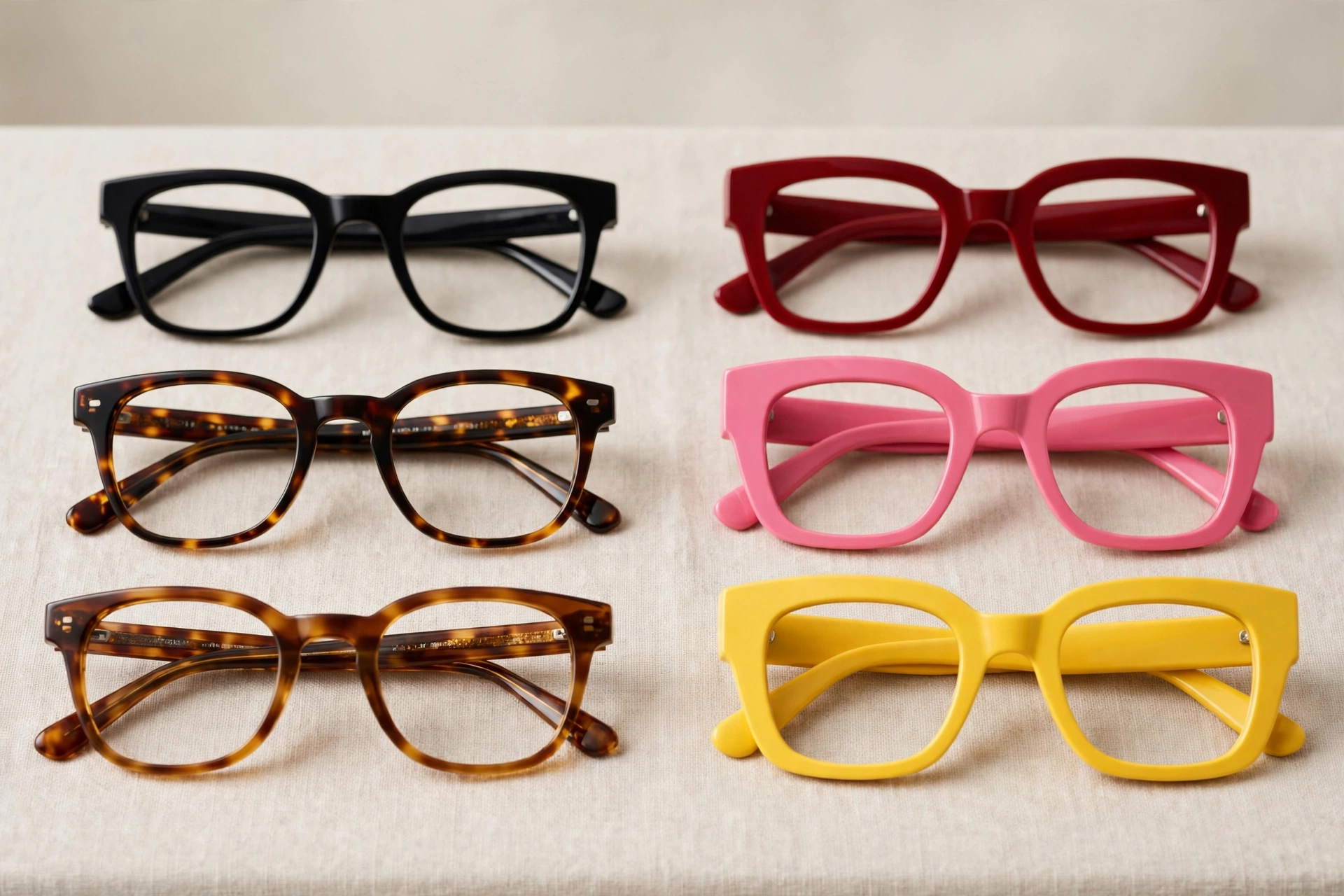
There are two collections, and they could hardly look more different. Warby Parker’s lineup has three refined styles — Alden, Reid, and Wren — inspired by the brand’s most popular silhouettes, in 14 variations with optical or sun lenses and a wide range of prescription, width, and lens options. Prices start at $395, and the collection is sold only in the United States.
Gentle Monster’s collection is bolder: six frame styles in 16 variations, in colors including dark red, pink, gray, and yellow, with tinted, clear, blue, or brown lenses and prescription options for most frames. Prices run from $449 to $489, and the collection is sold in both the United States and South Korea. Across both brands, that is 30 designs in total.
You buy through Warby Parker’s or Gentle Monster’s own online stores and shops — Google is not selling the glasses directly at launch. Hands-on demos start December 10 at select Samsung stores, 65 Warby Parker locations, and select Google Store locations.
What Gemini Actually Does in the Glasses
The glasses run Android XR, Google’s platform for glasses and headsets, on Qualcomm’s Snapdragon AR1 Gen 1 chip — a processor built specifically for display-free smart glasses. A 12-megapixel camera, an open-ear speaker array, and a microphone array handle the sensing, while the AI itself runs on your phone. Samsung’s engineering disclosures make that split-computing design explicit: the full Gemini experience needs a compatible Samsung Galaxy AI phone with an active data connection, though the glasses also pair with Pixel 7 and newer phones and iPhone 13 Pro and newer models. SamMobile’s report has a full rundown of the launch details for both markets.
With Gemini built in, the glasses can identify landmarks or objects and answer contextual follow-up questions about them, give turn-by-turn Google Maps directions as audio, translate conversations in real time, take photos and video hands-free, and handle calls, messages, music, and calendar checks — all while your phone stays in your pocket. Galaxy phone owners also get Bixby as a second assistant option.
The hardware numbers are modest but practical for all-day wear: the frames weigh about 41 grams, last up to nine hours on a charge, and come with a charging case that refills them up to seven times. There are two catches worth knowing before you order. You must be at least 18, and you need a Google account registered in the United States or South Korea — no other markets have been announced yet.
The Privacy Question Google Had to Answer First
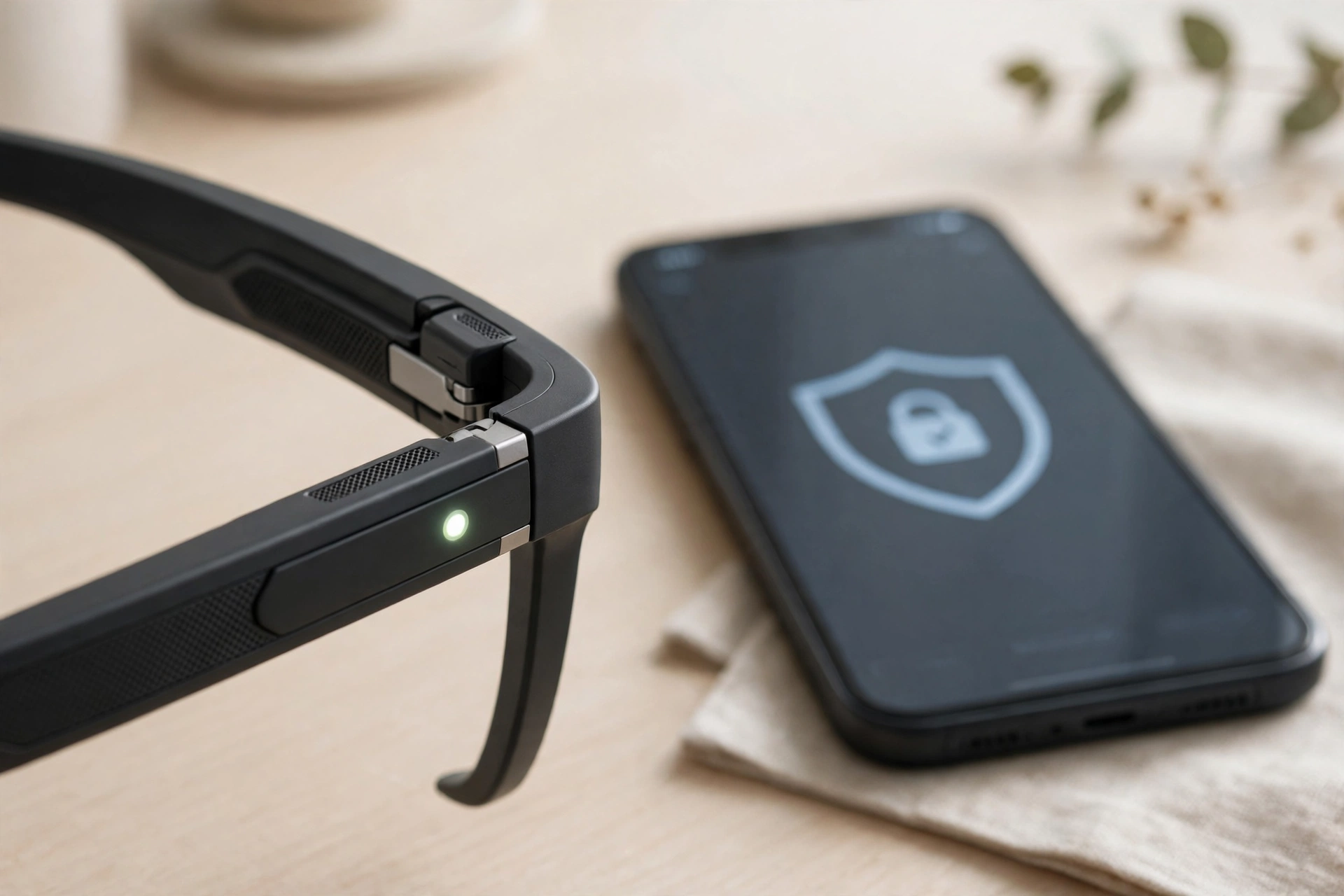
Smart glasses with a camera have always raised the same question: what happens to what the camera sees? Google published a separate privacy post on launch day, and the commitments are specific. Camera visuals sent to Gemini are not saved in your Gemini History, are not used to train AI models, and are not used for ad targeting. Bystanders’ faces are blurred before processing, there is an outward-facing indicator light, and a physical off switch cuts the camera.
That matters because the glasses are designed to be worn all day, in public, around other people. The privacy design is not a footnote to this launch — it is part of the product, and it will be tested in practice the moment the glasses reach real streets in December.
Why This Launch Matters Now
Google first showed the Intelligent Eyewear plan at Google I/O in May 2026 and previewed the frames again at Galaxy Unpacked in London in July. The November 12 announcement adds the three things that turn a demo into a product: a price, a date, and a privacy policy. And the timing is no accident. Gemini is now the connective tissue across Google’s hardware — the same assistant that powers the Gemini 4 family, from Gemini 4 Hydrogen, Google’s new execution model for coding agents, to the Gemini Decisions API, and the November Pixel Drop brought Gemini intelligence to the Pixel 10. The glasses put that same assistant on your face.
The bigger signal is the partnership model. Google supplies Gemini and Android XR, Samsung supplies the engineering, and two eyewear brands supply the frames people actually want to wear. That is a very different bet from building one pair of glasses in-house — and it is the bet that decides whether AI glasses become a normal accessory or stay a gadget for early adopters.
Should You Pre-Order?
If you are in the US or South Korea, already carry a compatible phone, and want hands-free Gemini without a screen in your field of view, the Warby Parker frames at $395 are the straightforward pick. The Gentle Monster collection costs more but buys the bolder designs. If you are anywhere else, or you want to see how the privacy promises hold up in the real world, waiting for the December 10 demos — or the next market announcement — costs nothing. Either way, December 10 is the day AI glasses stop being a demo and start being a purchase decision.

