Apple’s first smart display is finally a real product you can buy. HomeView went on sale on Friday, November 13, 2026, priced at $299 in the United States, a month after Apple introduced it at its “Welcome Home” event on October 13. The first full reviews landed on November 12, and they tell a consistent story: the hardware is genuinely good, the smart home controls are the star of the show, and the rebuilt Siri AI that is supposed to power the whole experience is still unfinished.
That split verdict matters because HomeView is not a minor accessory. It is Apple’s long-awaited entry into the smart display category, nearly a decade after Amazon’s Echo Show and Google’s Nest Hub established it. Apple is asking $299 for a device whose headline feature — Apple’s rebuilt Siri AI — ships in beta, in English only, with daily usage limits. Here is what the device actually is, what reviewers found after living with it, and whether it is worth buying now or waiting.
What Apple HomeView Actually Is
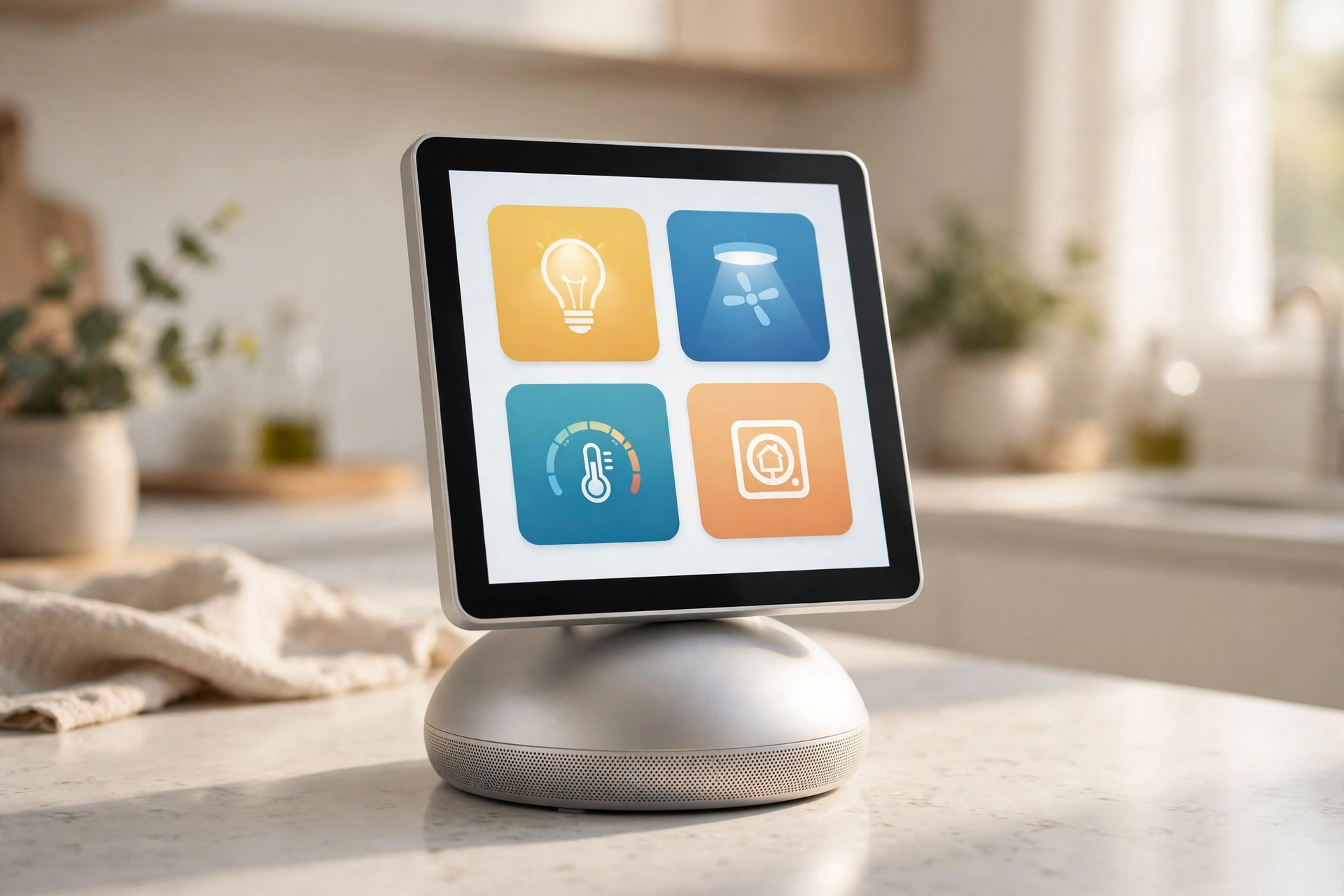
HomeView is a 7-inch square Liquid Retina display (1088 x 1088 resolution) mounted on a domed aluminum speaker base by a stainless steel hinge that lets you tilt the screen. Inside is Apple’s A18 chip — the same processor that debuted in the iPhone 16 line — along with a 12-megapixel Center Stage camera for FaceTime, four microphones, and ambient light, temperature and humidity sensors. It works as a full Apple Home hub, with Thread and Matter support, and it can stream up to nine HomeKit Secure Video camera feeds.
There are two versions, and both cost $299 in the U.S. The tabletop model sits on its speaker base and comes in silver, starlight, rose pink and space gray. The wall-mounted model comes in space gray and silver. The catch is in the box: the tabletop version includes a USB-C cable and power adapter, while the wall-mounted version ships with neither a mount nor a power adapter. Schneider Electric’s mounts cost $59.99 for a USB-C wall mount, $79.99 for a hardwired AC mount, and $129.99 for a power-over-Ethernet version — and with Apple’s $39 power brick, The Verge figures the wall version really starts at around $400.
HomeView is on sale in eight markets — the United States, Australia, Canada, India, New Zealand, Singapore, South Africa and the UK. It is not sold in the European Union, because Siri AI is not available in iOS there yet. You also need an iPhone on iOS 27.2 or an iPad on iPadOS 27.2 to use it.
The Idea: One Shared Screen That Knows Who Is Looking
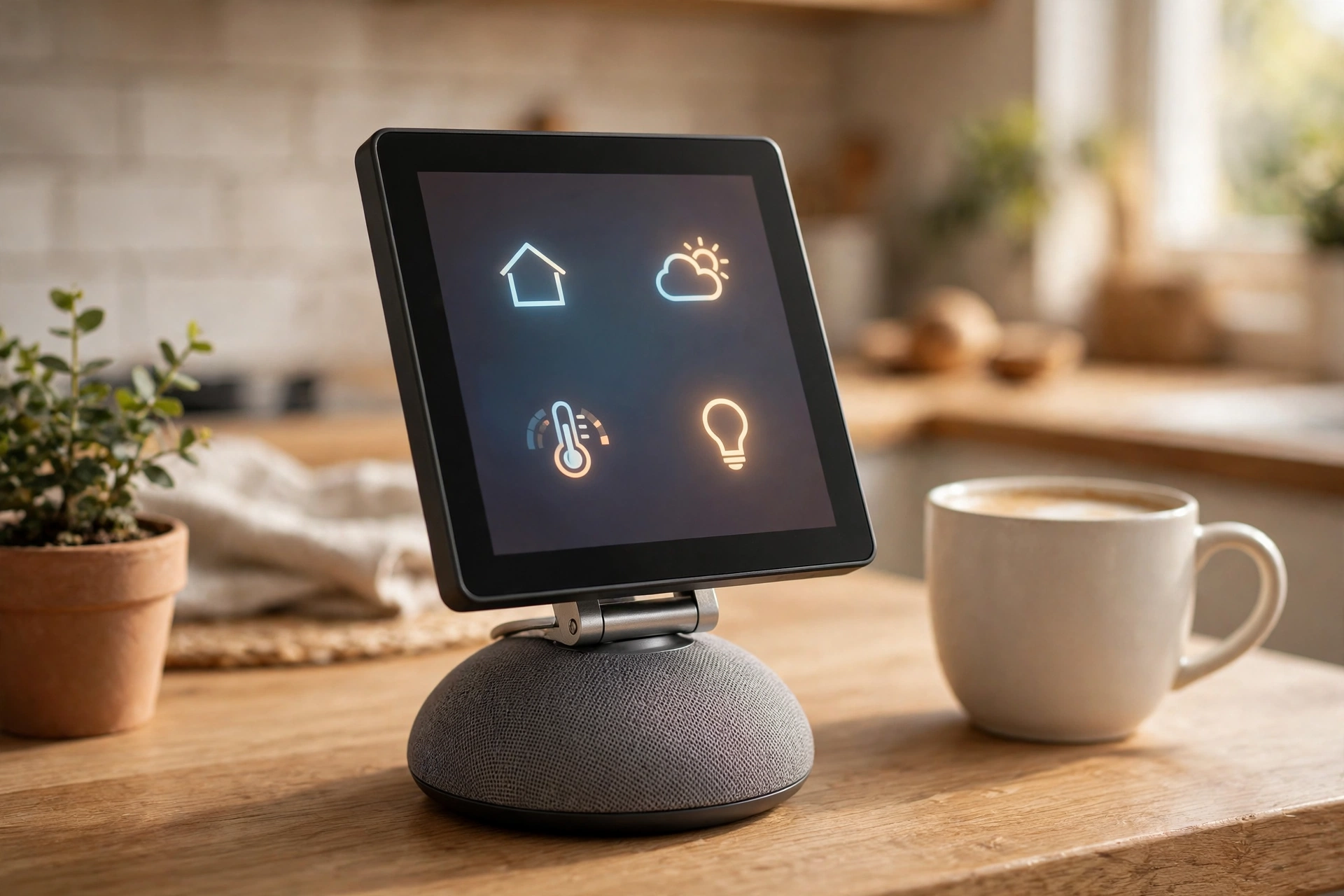
HomeView is built around a simple idea: a shared household screen that still feels personal. It recognises up to six people by face, and each person gets a personalised Home Screen with their own Messages, Calendar, Reminders and Find My content — but only when their iPhone or iPad is at home on the same Wi-Fi network. Apple pitches it as a kitchen companion, a music player with animated album art and lyrics, a digital photo frame, and a home-monitoring station, all in one device.
That personal layer is what separates HomeView from a wall-mounted iPad, and it is also where the first reviews found the most friction. The Verge’s Jennifer Pattison Tuohy, who tests Alexa, Google and Apple systems side by side, found that switching between shared use and personal data interrupts the hands-free experience: clunky authentication checks kept sending her back to her iPhone, and personal information could linger on screen after the person it belonged to walked away. In her testing, she could easily read her 15-year-old daughter’s text messages — and vice versa. Apple’s own pages say personal content appears only when the enrolled face and a paired, recently unlocked iPhone are both present, but reviewers found the boundary messier in practice.
What Reviewers Loved: Smart Home Control and Sound
On the core job — controlling a smart home — the reviews are enthusiastic. Tuohy calls HomeView “superb at controlling my smart home; it’s an excellent hands-free kitchen companion, a good speaker, and a gorgeous digital photo frame.” She found it switched her entryway lights about as fast as a physical wall switch, and the camera view can show up to nine HomeKit Secure Video feeds at once. The 1088 x 1088 screen drew praise for clarity, and the sound compares favourably with a HomePod mini 2, with a touch more bass.
Engadget’s Billy Steele gave HomeView 8.4 out of 10, praising its design and sound, while noting that it depends heavily on a nearby iPhone or iPad and is not great for watching videos. The Verge scored it 7 out of 10. The consensus: as a smart home controller, kitchen screen and speaker, the hardware delivers. As a video device or a standalone computer, it is not trying to be one — there is no App Store, so it runs Apple’s own home apps and the experiences Apple ships on it rather than the full iPad app catalogue.
The Problem: Siri AI Is Still in Beta

The bigger caveat is the assistant itself. HomeView features Siri AI, an entirely new version of Siri powered by the next generation of Apple Intelligence — but Apple’s own footnote says Siri AI is in beta in HomeView software version 27.2, that some server-based features have daily usage limits, and that expanded access will become a paid option in the future. Reviewers found the new Siri better than the old one, but slow: Tuohy found it frequently struggled with personal-context requests, sometimes responding slowly or failing altogether, and tech journalist Joanna Stern reported Siri refusing a smart home command during her review. One widely quoted line from the coverage sums up the frustration: if Siri AI were a human personal assistant, you would fire her for being too slow.
Apple reportedly plans a HomeView software update in December 2026 with a Siri fix, according to MacRumors coverage of the reviews. That is the pattern to watch: the hardware reviewers like is here now, while the software it depends on is still catching up. It is also a reminder that the AI assistant race is moving fast on every front — from ChatGPT Wallet letting AI agents pay for purchases to Gemini’s move into Google Wallet — and the assistant that lives on your kitchen counter is now judged against assistants that live everywhere else.
The Real Price: $299, or Closer to $400 on the Wall
The $299 sticker price is only the starting point for one of the two models. The tabletop HomeView is genuinely $299 out of the box. The wall-mounted version is $299 for the panel alone — then you add a mount and a power adapter, which pushes the real cost to roughly $400, for a version with one fewer speaker than the tabletop model (the tabletop has speakers in both the display and the base). Third-party mounts will likely bring that down, but at launch the wall version is the worse deal of the two.
There are smaller hardware gripes too. There are no physical volume or mute buttons on any version — to adjust the volume quickly or mute Siri you have to tap the display or pull out your phone. And because the device leans on a nearby iPhone for personal features, households that are not already deep in Apple’s ecosystem will get far less out of it. That ecosystem lock-in is also the backdrop to Apple’s wider smart home push: the new fourth-generation Apple TV 4K launched the same day, November 13, also at $299, and Apple has opened pre-orders for the first accessories in its Apple Home Collection — two security cameras and a video doorbell made with LG. The company is clearly building a full smart home lineup, and HomeView is its centrepiece.
Should You Buy Apple HomeView Now?
Buy it now if you already live inside Apple’s ecosystem, you want a dedicated smart home controller and kitchen screen, and you are comfortable with a beta assistant that should improve with software updates. The screen, the sound and the home controls are the real thing, and reviewers agree they are good.
Wait if the new Siri is the reason you want it, if you need the wall-mounted version and do not want to pay around $400 for it, or if you live in the EU, where it is not on sale at all. A December software update is reportedly coming, and the first wave of third-party mounts should make the wall version cheaper. And if your household shares one kitchen counter — with teenagers whose messages you would rather not read by accident — the family-privacy rough edges are worth a close look before the device goes on the wall.
HomeView is a strong piece of hardware carrying unfinished software. That is a familiar Apple story, and the question for buyers is the same one it always is: do you want the hardware now and trust the software to catch up, or would you rather wait for the catch-up to happen first?
Frequently Asked Questions
How much does Apple HomeView cost?
$299 in the United States for either the tabletop or the wall-mounted model. The wall-mounted version needs a mount ($59.99–$129.99) and a power adapter sold separately, bringing its real cost to around $400.
When did Apple HomeView go on sale?
Friday, November 13, 2026, in the US, Australia, Canada, India, New Zealand, Singapore, South Africa and the UK. Apple announced it on October 13, 2026, and pre-orders opened the same day.
What can HomeView do?
It controls smart home devices as a full Apple Home hub (Thread and Matter), plays Apple Music with animated album art, handles FaceTime calls with a 12MP Center Stage camera, shows personal Messages, Calendar, Reminders and Find My content for up to six recognised users, and works as a digital photo frame and home-monitoring screen.
Is Siri AI finished on HomeView?
No. Siri AI is in beta in HomeView software version 27.2, English only at launch, with daily usage limits on some server-based features. Reviewers found it slow and occasionally unreliable, and Apple reportedly plans a software update in December 2026 with a Siri fix.
Why is HomeView not sold in the EU?
Apple says Siri AI is currently unavailable in iOS in the European Union, so HomeView is not available for sale there.
Sources: Apple Newsroom — Meet Apple HomeView (October 13, 2026); Skimwire — Apple HomeView reviews: pros, cons and should you buy it (November 13, 2026); MacStories — Apple HomeView Review Roundup (November 12, 2026). Review scores: Engadget 8.4/10, The Verge 7/10.