
Adobe and Google are no longer just partners who show up in each other’s keynotes. At Adobe MAX on November 10, 2026, the two companies announced an expanded strategic partnership that wires Adobe’s creative and document tools directly into Google’s products — and Google’s AI models directly into Adobe’s apps. It is a two-way swap of distribution, and it touches nearly every app a creative professional opens in a day.
The headline moves are easy to state: Acrobat is coming to Google Workspace, Adobe’s tools are coming to Gemini and to AI Mode in Google Search, and Google’s latest image and video models are coming to Firefly, Photoshop, Premiere, and Adobe Express. Underneath those headlines is a bigger shift — the line between “Adobe’s tools” and “Google’s AI” is about to get very hard to draw.
What Was Announced
The announcement, made on stage at Adobe MAX in Miami Beach, covers five areas. First, Acrobat will be available inside Google Workspace through Google Drive and Gmail, appearing as a recommended app with an “Edit with” entry point in file previews. Second, Adobe will expand its connectors in Gemini and Gemini Enterprise, adding Acrobat and additional creative tools. Third, Adobe is bringing its creative tools to AI Mode in Google Search, so a search for an idea can lead straight into making it.
Fourth, Google’s latest imaging and video models will come to Adobe Firefly, Photoshop, Premiere, and Adobe Express — models including Gemini Omni, Veo, and Nano Banana. Fifth, Google’s Gemini models will help power AI capabilities in Acrobat, including its AI Assistant for conversational PDF editing. Adobe and Google DeepMind will also collaborate on new AI-powered editing capabilities, starting with Photoshop.
The scale behind the deal is part of the story. Adobe counts more than 1 billion monthly active users, and Acrobat opens more than 400 billion PDFs a year. Google, in return, gets its models in front of the world’s largest professional creative audience without asking anyone to leave the apps they already use.
The Two-Way Swap
The clearest way to understand the deal is as a trade. Adobe gets distribution inside Google’s surfaces: your PDFs become editable from Gmail and Drive, your creative tools become reachable from Gemini and from Search itself. Google gets distribution inside Adobe’s surfaces: its models become the engines inside the tools where professional images and video are actually finished.
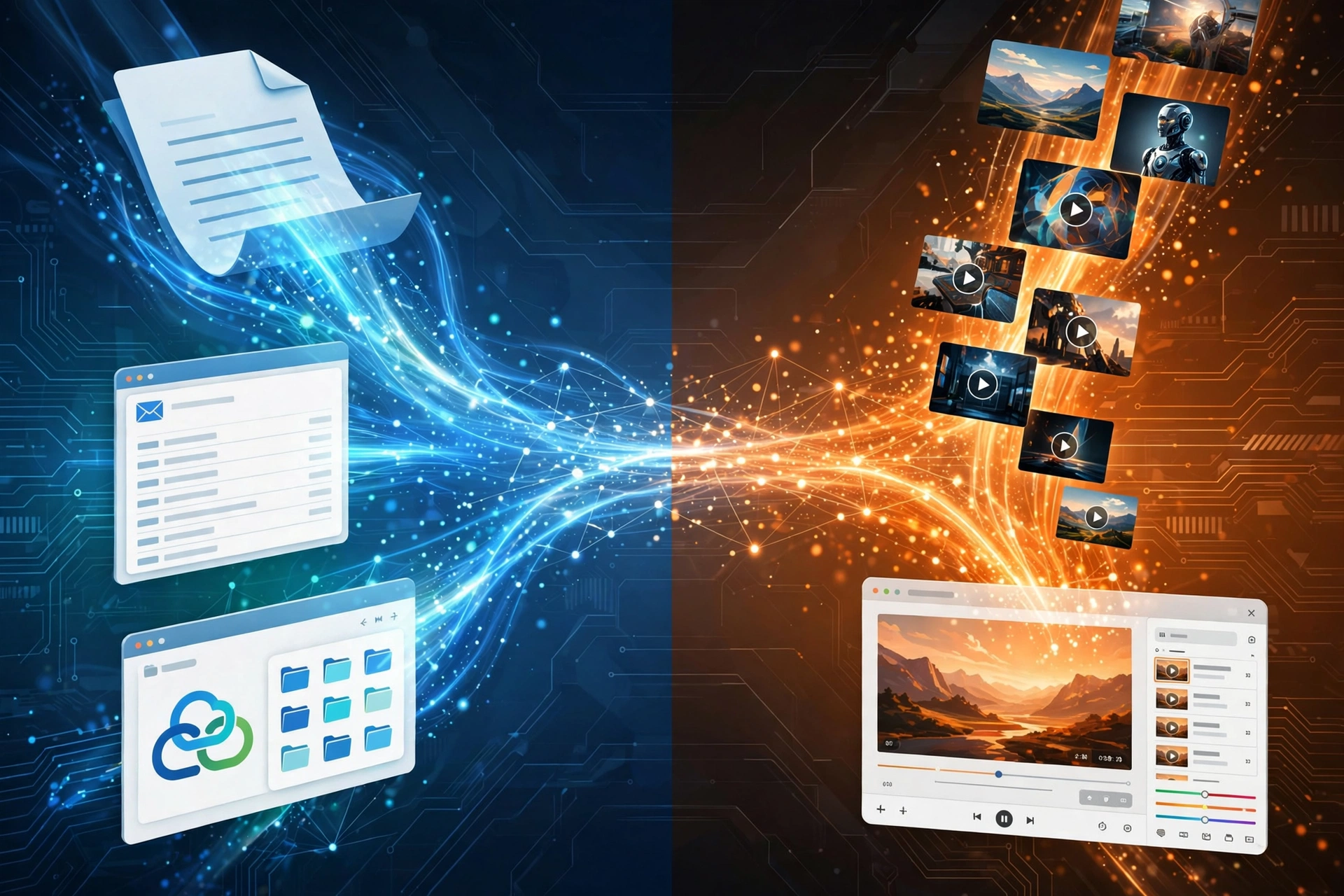
That symmetry is what makes this different from a normal integration announcement. Most partnerships move in one direction — one company’s feature appears inside another company’s product. Here both companies are opening their front doors to each other at the same time. Adobe’s connectors in Gemini mean a chat with an AI assistant can reach into your documents and creative work; Google’s models in Photoshop mean the editor itself gets smarter without Adobe having to build every model in-house.
It also fits a pattern Adobe has been building toward all year. At Adobe MAX 2026, the company opened Photoshop and Premiere to third-party AI agents and turned Firefly into a full AI creative studio. The Google deal is the same strategy at a larger scale: instead of pretending one company can build every model, Adobe is becoming the place where the best models from many labs meet the professional workflow.
Firefly’s Background Agents Are Coming Too
The partnership was not the only AI news out of MAX. Adobe also announced always-on AI agents for Firefly, planned for beta in early 2027. The idea is that agents work in the background — preparing assets, assembling rough cuts, and handling repetitive production steps — while the human creator directs and refines.

That matters because it shows where Adobe thinks the creative job is heading. The company is not pitching AI as a button that makes a finished image. It is pitching AI as a junior colleague that does the prep work: the same logic behind Gemini 4 Hydrogen, Google’s fast, cheap model built for coding agents, and behind the way Gemini’s move into Google Wallet turns an assistant into something that acts on your behalf rather than just answering. The creative suite is following the same arc — from tools you operate to agents you direct.
Why This Deal Matters
For creators, the practical payoff is fewer round trips between apps. Editing a PDF attached to an email without downloading it, generating a video variation without leaving Premiere, or asking Gemini to find and adjust an asset from inside a chat — each of these removes a small friction, and creative work is mostly friction. The partnership’s bet is that the tool that removes the most friction wins the workflow, even if it does not own every model inside it.
For Google, the deal puts Gemini where creative decisions are made, not just where questions are asked. A model that helps finish a Photoshop edit or a Premiere cut is far stickier than a model that only answers a prompt in a chat window. And for Adobe, it answers the hardest question facing every creative-software company right now: how do you stay the place professionals work when the most powerful models come from someone else? The answer, apparently, is to invite those models in.
There is also a competitive edge. The same week Adobe and Google deepened their ties, the best AI tools of 2026 are being ranked and re-ranked almost daily, and the winners are increasingly the tools that connect to everything else. A closed ecosystem is starting to look like a liability, not a moat.
The Catch: It Is an Announcement, Not a Rollout
The honest caveat is that almost everything in the announcement is a plan, not a product you can open today. Neither company shared dates for the individual rollouts, pricing details, or timelines for features like conversational PDF editing in Acrobat. The integrations will arrive one by one, and until they do, the practical benefit is zero.
That is worth stating plainly, because partnership announcements are easy to over-read. No new model architecture was unveiled, no benchmark was published, and the DeepMind collaboration on Photoshop is described as joint work beginning now — not a finished feature. What was announced is intent and direction, and the value will be decided by how fast and how well the pieces actually ship.
What to Watch Next
Three things will tell you whether this partnership is real or ceremonial. First, the Acrobat rollout in Drive and Gmail — the most concrete item announced, and the easiest to judge: does it appear, and does it work well? Second, which Google models actually land in Firefly and Photoshop, and whether professionals choose them over Adobe’s own Firefly models. Third, the DeepMind image model for Photoshop, promised to support near-real-time edits — if that ships, it will be the clearest sign the two companies are building together rather than just linking products.
The broader signal to watch is whether other creative tools follow. If Adobe’s multi-model, multi-platform approach becomes the template, the creative software market stops being a contest of who has the best model and becomes a contest of who has the best workflow around everyone else’s models. That is a very different industry — and this announcement is Adobe and Google placing their bet on it.
Frequently Asked Questions
When will Acrobat appear in Gmail and Google Drive?
No date has been shared yet. Adobe and Google announced the integration at Adobe MAX on November 10, 2026, saying Acrobat will appear as a recommended app with an “Edit with” option in file previews. Watch for the rollout to begin in the coming months.
Which Google AI models are coming to Adobe’s apps?
Google’s latest image and video models — including Gemini Omni, Veo, and Nano Banana — are headed to Firefly, Photoshop, Premiere, and Adobe Express. Gemini models will also power AI capabilities in Acrobat, including its AI Assistant.
What are Adobe and Google DeepMind building together?
The two are collaborating on new AI-powered editing capabilities, starting with Photoshop — including work on a customised Google image model designed to support near-real-time edits.
Is Adobe giving up on its own AI models?
No. Firefly remains Adobe’s own model family, and it is expanding into a multi-model creative studio that also offers models from Google, OpenAI, and others. The strategy is to let creators pick the best model for each job inside Adobe’s workflow, rather than forcing one model for everything.
Sources: Adobe Newsroom — “Adobe and Google Deepen Partnership to Bring Leading AI Models and Integrated Workflows to Creatives and Enterprises” · MLLLM — “Google and Adobe Swap Distribution” · Tech To Heart — “Adobe and Google Are Building the AI Content Loop Marketers Can’t Ignore”