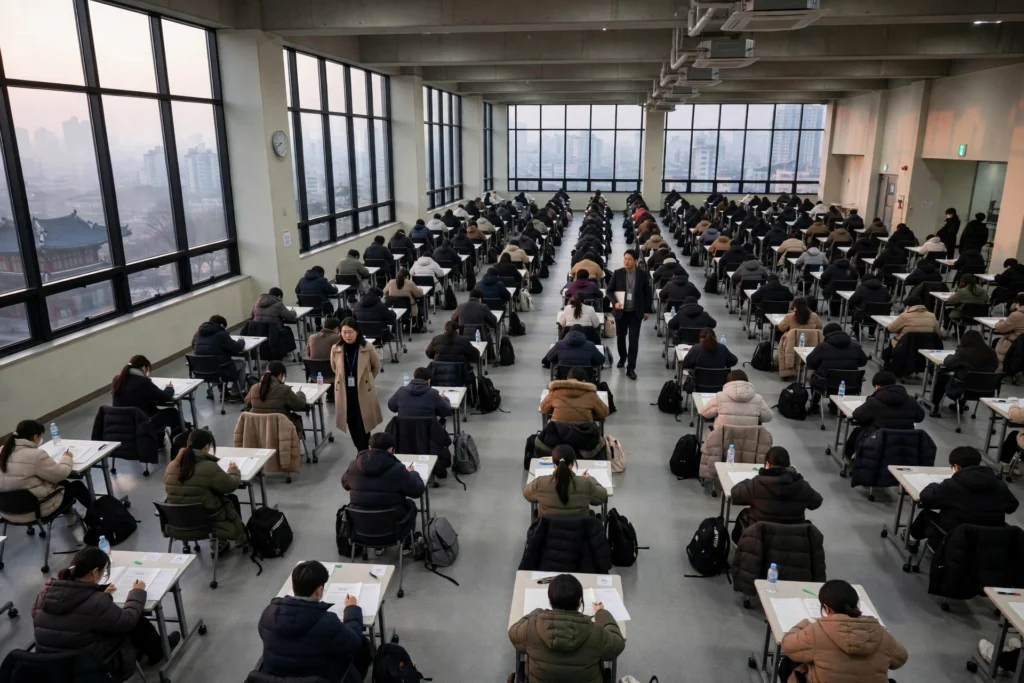
South Korea’s education minister has resigned after an artificial intelligence cheating scandal threw the country’s most important exam into chaos. Choi Kyo-jin, 72, stepped down on Sunday, taking responsibility for a week of last-minute rule changes that left students and exam officials scrambling — and President Lee Jae Myung accepted his resignation within an hour.
The scandal began with a confession, exploded into a national debate about AI and fairness, and ended with a minister falling on his sword. It also exposed a problem no exam system in the world has yet solved: how do you stop a student cheating with a camera the size of a button and an AI that answers in seconds?
The Confession That Started It All
Four days before the exam, the top scorer in South Korea’s national certified tax accountant examination admitted he had cheated. In a video posted on his lawyer’s YouTube channel on November 15, Han Won-seok said he had photographed the questions with a miniature camera, sent the images to an artificial intelligence tool, and read the answers on his smartphone.
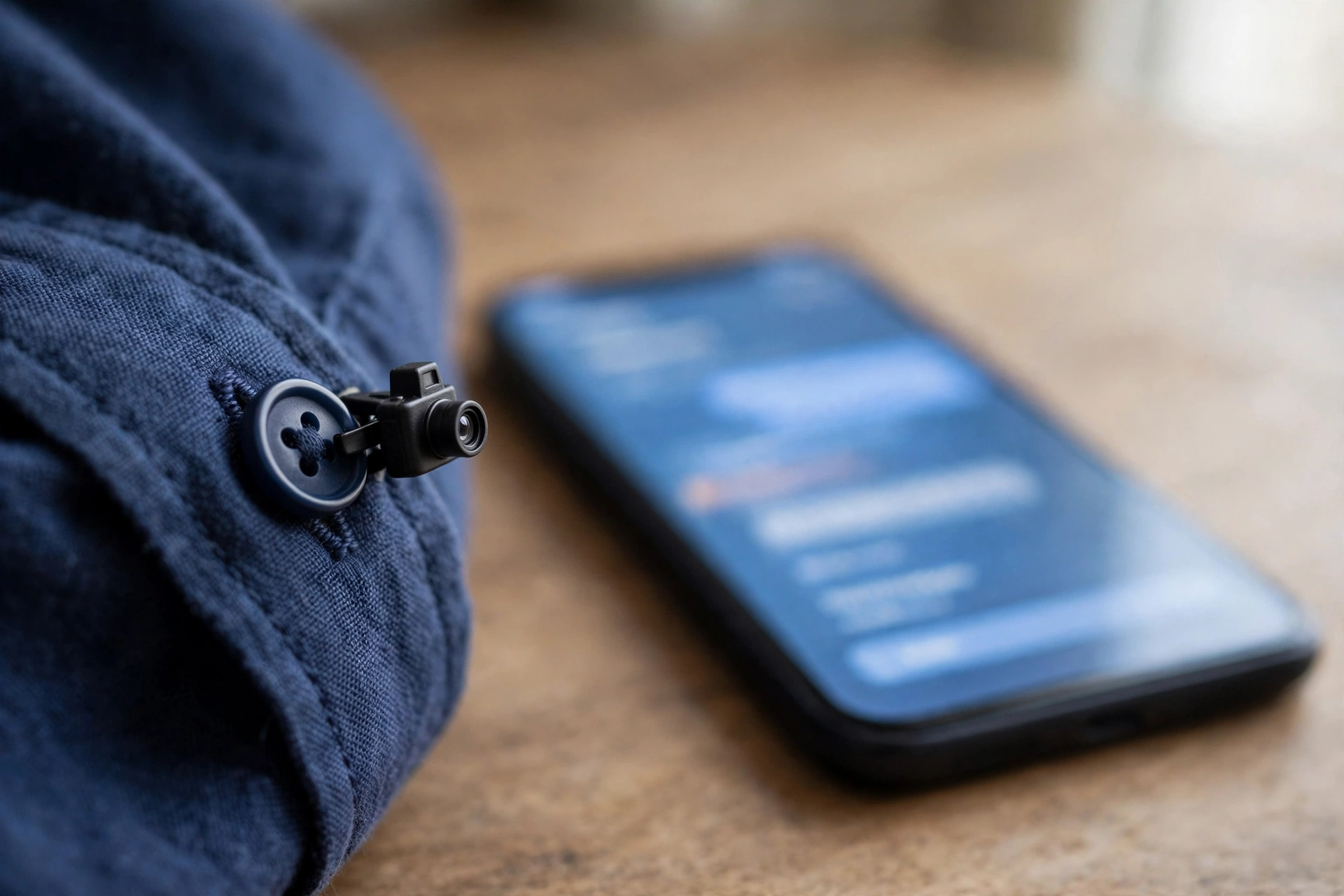
The numbers were startling. Han had answered 159 of 160 multiple-choice questions correctly in the first round of the tax exam — a near-perfect score — and later admitted he had cheated in both rounds. The confession landed just as the country was preparing for the Suneung, the College Scholastic Ability Test, the exam that largely decides which university a young South Korean can attend — and, in a country where university pedigree shapes careers, much of what comes after.
The alarm spread quickly. If a hidden camera and a phone could beat a professional licensing exam, what was to stop students doing the same thing in the Suneung? Allegations soon surfaced that another candidate, Lee Jin-woo, 32, had used AI to cheat on the Legal Education Eligibility Test, the entrance exam for South Korean law schools. The ministry’s original plan had focused on detecting smart glasses — suddenly, the threat looked far wider, and far harder to spot.
A Week of Last-Minute Rule Changes
With the exam four days away, the education ministry rushed out a string of emergency measures. Public Wi-Fi was restricted around test sites. Proctors were told to check students’ glasses and the buttons on their clothing for hidden camera lenses — and, two days before the exam, the government announced it would deploy about 8,400 additional staff and have proctors stick tape over the buttons on students’ clothes.
On the eve of the test, the rules changed again. Students were told the only writing instrument of their own they could bring was a black pencil. Personal erasers and correction tape, previously allowed, had to stay outside the exam room. Bags left in corridors would be checked for devices still switched on. And during the exam itself, the authorities sent out nationwide emergency alerts to mobile phones, hoping the sudden ringing would expose handsets students had not handed in.
For the more than 550,000 students registered across 1,312 test centres, and for their families, the shifting rules were bewildering. The ministry acknowledged as much. Choi later admitted that inadequate preparation and repeated rule changes had inconvenienced students and officials alike.
Exam Day: 111 Cases of Misconduct
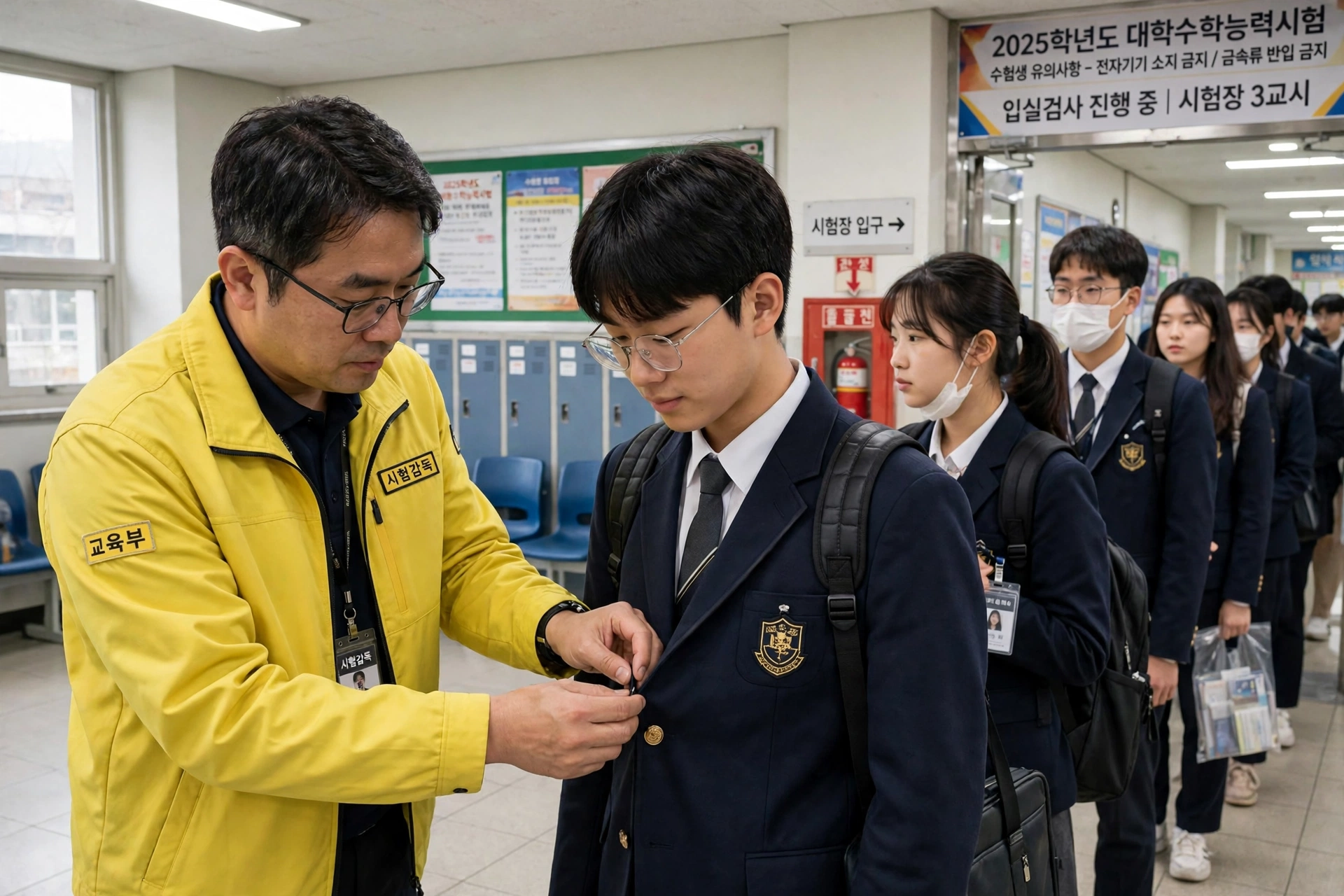
The Suneung went ahead on Thursday, November 19, under the tightest security the exam has ever seen. It ended, in the ministry’s words, without any major incident. But the new precautions also turned up what the old ones would have missed: officials identified 111 cases of misconduct involving electronic devices during the exam, and nearly half of them were detected only because of the emergency alerts.
It was unclear whether every phone found had been intended for cheating. But the scale of the haul — dozens of prohibited devices, found in a single day — showed how real the threat had become. The ministry’s task force, convened by the prime minister on Friday, is now analysing Wi-Fi and Bluetooth signals recorded at test sites during the exam, and suspicious cases will be referred to investigators. A ministry committee will rule on penalties before scores are released on December 11.
The government and the ruling Democratic Party have proposed a sharp deterrent: anyone caught using AI to cheat could be barred from retaking the exam for up to 10 years. President Lee has also pledged to close the legal gaps that allow AI-assisted cheating in the first place.
“I Don’t Think I Could” — the Remark That Haunted the Minister
Choi’s fate may have been sealed before the exam even began. At a National Assembly hearing the day after Han’s confession, an opposition lawmaker asked the minister whether he was confident he could detect every instance of AI-assisted cheating. “I don’t think I could,” Choi replied, citing his age and saying he was speaking about his own ability.
The ministry later explained that he had been acknowledging how hard it is for proctors to spot concealed devices. But the remark, from the minister in charge of the exam, landed badly — and it followed him through the week as the criticism mounted. Teachers’ unions called the government’s response belated. Parents and students complained about the confusion. By Sunday, with the exam over, Choi offered his resignation.
“The exam concluded without any major incidents,” he wrote on X. “However, as the minister in charge, I do not believe I am immune from public criticism that we failed to prepare adequately in advance. Now that the exam is over, I take full responsibility and hereby offer my resignation.”
President Lee accepted it within the hour, and ordered a comprehensive review of how national exams are managed and the laws around them. Prime Minister Han Seong-sook will oversee the government’s response.
What Happens Next
The immediate question is what happens to the 111 students caught with devices — and to any others the signal analysis turns up. Penalties will be decided before the December 11 results, and the proposed 10-year ban would be the toughest punishment the exam has ever carried. The longer question is how South Korea redesigns an exam built for a world before generative AI.
The problem is not unique to Korea. Classrooms everywhere are wrestling with AI tools that can answer questions faster than any student — and exam halls are where that tension is sharpest. As AI moves deeper into education, from guided learning tools in Google Classroom to AI-powered wearables like smart glasses that can see and hear everything around their wearer, the line between a study aid and a cheating device keeps getting thinner. The darker side of AI — its power to deceive at scale — is now a question for exam boards, not just ethicists.
South Korea’s answer, for now, is tougher rules and tougher penalties. Whether that is enough, when the cheating device can hide in a button, is the question the next education minister will inherit.
Why the Suneung Matters So Much
To understand why a cheating scandal can topple a minister, you have to understand the Suneung. The day-long exam is a national event in South Korea: more than half a million teenagers sit it on the same day, and the result largely determines which university they can attend — and with it, their job prospects and social standing for years to come.
That is why the stakes felt so high, and why the ministry’s scramble felt so damaging. When the exam that decides a young person’s future looks vulnerable to cheating, trust in the whole system wobbles. Young people are already making their voices heard across the world — from Gen Z protests sweeping Europe to debates about whether AI will replace their jobs — and in South Korea, the exam hall has become the latest front in that argument.
Choi’s resignation closes one chapter. But the underlying question — how to run a fair exam in the age of AI — is only just beginning, in Seoul and everywhere else.
Frequently Asked Questions
Why did South Korea’s education minister resign?
Education Minister Choi Kyo-jin resigned on Sunday, November 22, 2026, taking responsibility for the confusion caused by last-minute measures to prevent AI-assisted cheating in the Suneung college entrance exam. President Lee Jae Myung accepted the resignation within an hour.
What is the Suneung?
The Suneung is South Korea’s College Scholastic Ability Test, the high-stakes national university entrance exam. More than 550,000 students registered for this year’s test, held on November 19, 2026, at 1,312 test centres. The result largely determines which university a student can attend.
How did the cheating scandal start?
On November 15, Han Won-seok, the top scorer in the national certified tax accountant exam, confessed in a YouTube video that he had used a miniature camera and a smartphone to feed questions to an AI tool. He had answered 159 of 160 multiple-choice questions correctly in the first round.
How many cheating cases were found during the exam?
Officials identified 111 cases of misconduct involving electronic devices during the Suneung on November 19. Nearly half were detected through nationwide emergency alerts sent to phones to expose devices students had not handed in.
What punishment could cheaters face?
The government and the ruling Democratic Party have proposed barring anyone caught using AI to cheat from retaking the exam for up to 10 years. A ministry committee will rule on penalties before scores are released on December 11, 2026.
Sources
- TBS News: South Korea education minister resigns after AI-assisted exam cheating scandal
- Aju Press: Lee accepts education minister’s resignation over last-minute exam rules
- AnewZ: South Korea education minister quits over AI cheating row
Related reading on Inspire Viral Times
- Gentle Monster’s Gemini Smart Glasses Sold Out Before Launch — Samsung’s Android XR Eyewear Arrives December 10
- Google Guided Learning Goes Global in Classroom — and Schools Get a New Opt-In Switch
- The Dark Side of AI Nobody Talks About: 5 Hidden Truths
- Gen Z Protests Sweep Europe: “Money for Schools, Not War” as Youth Strike Hits 25 Countries
- Will AI Replace Your Job? Here’s What the Data Actually Says