
Smart glasses just had their first sellout moment. Gentle Monster’s first batch of its Gemini-powered Intelligent Eyewear sold out within days of pre-orders opening on November 12, even though the glasses do not reach stores until December 10. Built by Samsung in collaboration with Google and running on the Android XR platform, the eyewear is the clearest sign yet that AI glasses are moving from novelty to fashion item — and that demand is running ahead of supply.
A sellout before the launch date
Samsung announced the full Intelligent Eyewear lineup on November 12, 2026, with pre-orders opening the same day and general availability set for December 10 in the United States and South Korea. The collection pairs Samsung’s mobile engineering with 30 designs from two eyewear brands: Gentle Monster, known for bold and disruptive frames, and Warby Parker, known for classic styles. Gentle Monster’s opening batch, priced from $449 to $489, sold out by November 16, according to trackers following the launch, while Warby Parker’s models, starting at $395, were still available to pre-order with shipping estimates stretching into early January. For a product category that spent years being written off after Google Glass, a sellout in the first week is a notable vote of confidence.
What the Intelligent Eyewear actually is
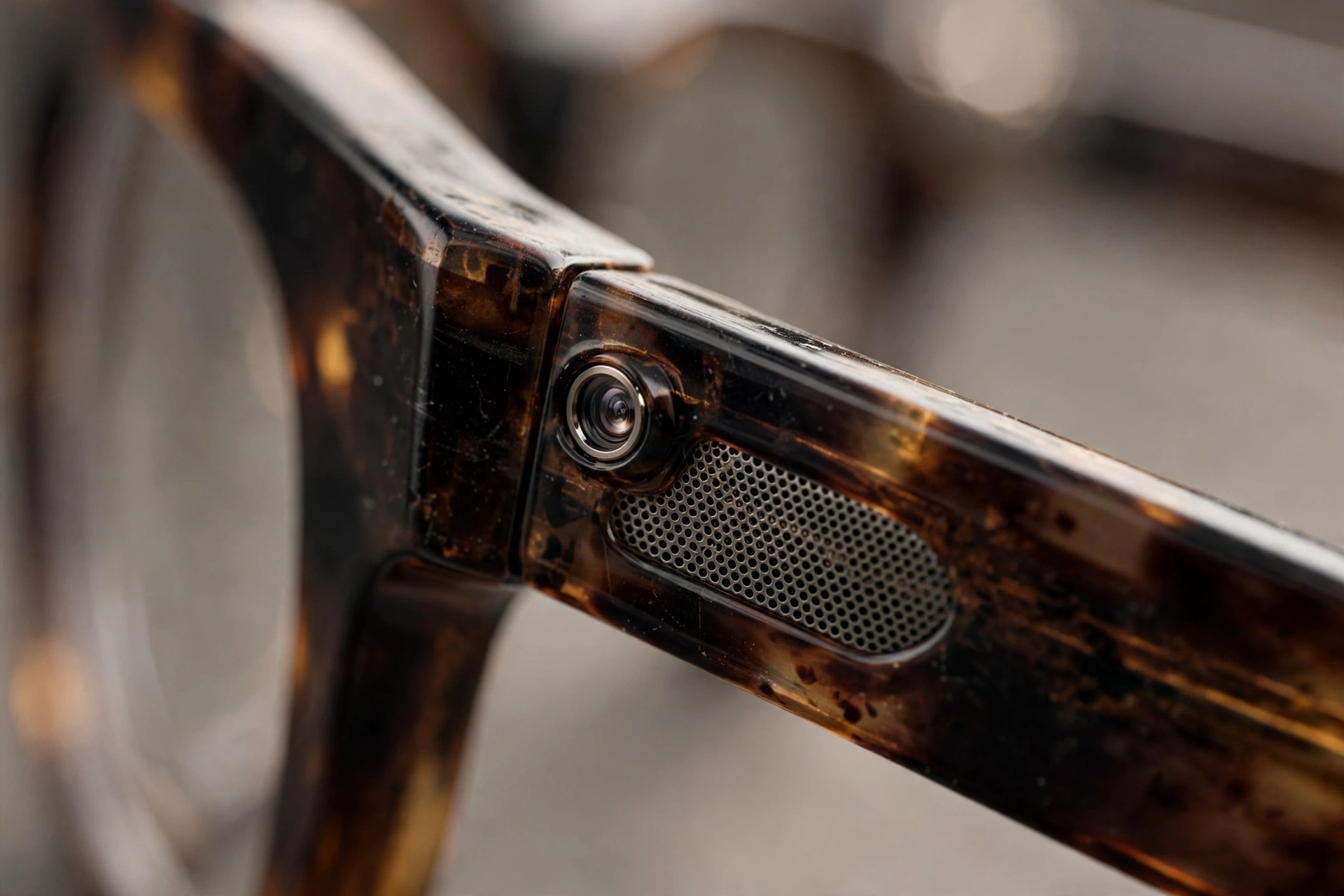
It is important to be clear about what these are not: they are not traditional augmented reality glasses. There is no display in the lens. Instead, they are display-free audio and camera glasses — a 12MP HDR camera, microphones and open-ear speakers, with Google’s Gemini assistant built in. The idea is hands-free help that keeps you looking at the world rather than at a screen. The glasses run on Google’s Android XR platform, the same software family behind Samsung’s Galaxy XR headset, but in a lightweight form factor designed for all-day wear. Gentle Monster even teased the collection with a short film starring Joaquin Phoenix and directed by Jonathan Glazer, a campaign that leans far more toward experimental cinema than a typical gadget advert.
Gemini on your face: what it can do
With Gemini built in, the glasses turn what the camera sees into something the assistant can reason about. Point the camera at a sign in another language and Gemini can translate it in real time, with automatic language detection across more than 70 languages. Ask about a landmark or a menu and it can answer from visual context. The open-ear speaker delivers turn-by-turn directions, reads out messages and takes calls without blocking the sounds around you. Google also built in a Guided Vision feature, designed to give intelligent assistance to people with low vision. The experience is conversational: talk to Gemini Live and the glasses filter surrounding sounds, including other people’s voices, to keep the exchange private. This is the same assistant-first direction Google is pushing elsewhere, from Gemini’s Computer Use on Mac to its agentic features across Workspace — the difference here is that the interface is your face, not your screen. ChatGPT Space is another sign of the same shift toward shared, assistant-led workspaces.

Specs that matter: weight, battery and camera
The numbers are deliberately modest, because comfort is the whole pitch. The glasses weigh around 41 grams, roughly the same as a regular pair of acetate frames, and they come in six Gentle Monster frame designs with 16 variations, plus three Warby Parker styles. Inside is Qualcomm’s Snapdragon AR1 Gen 1 platform — a different class of on-device AI chip from Nvidia’s RTX Spark AI PCs — and the 12MP HDR camera shoots photos at 3,024 by 4,032 pixels and video in up to 3K at 30 frames per second. Battery life is rated at up to nine hours on a charge, with the charging case extending that to as much as 72 hours. Because the glasses are so light, some of the processing is offloaded to the paired phone through a split-computing system — a trade-off that keeps the frames slim but means the experience depends on the phone in your pocket. Compatibility covers Galaxy S and Z series phones running One UI 9.0 or later, Pixel 7 and later on Android 17, and iPhone 13 and later with at least 6GB of RAM running iOS 26.6 or later, though some AI features are limited to Android. The eyewear is designed for users aged 18 and over, with age verification required for activation.
Price, pre-orders and where to try them
Warby Parker Intelligent Eyewear starts at $395, while Gentle Monster’s models range from $449 to $489 depending on the frame. Pre-orders are open through both brands’ online and retail channels, and hands-on demonstrations will be available at select Samsung stores from December 10, alongside guided demos at more than 360 Warby Parker locations. Gentle Monster’s collection launches in the US and South Korea, while Warby Parker’s is US-only at launch. If the first batch is any guide, anyone set on a Gentle Monster frame should not wait for the December 10 date — the pre-order queue is already the way in.
Who these glasses are really for
The obvious comparison is Meta’s Ray-Ban smart glasses, which proved there is a real market for camera glasses with an AI assistant. Other screen-free AI bets, such as Nothing’s screenless AI device and Oppo’s Heartball AI wearable, are chasing the same hands-free future. Samsung, Google and their fashion partners are betting that the next step is style and ecosystem: frames people would buy even without the tech, Gemini’s deeper integration with Google services, and a platform, Android XR, that can grow into full AR later. The sellout suggests the bet is landing. The open questions are practical ones — how good the translation and visual answers feel in daily use, how the split-computing link holds up away from a Galaxy phone, and whether the privacy design around the camera wins over sceptics. We will know more once the glasses are on faces in December. For now, the message from the first week of pre-orders is simple: AI glasses have an audience, and it is bigger than the first batch.
Gentle Monster’s sold-out first batch is the headline, but the bigger story is what it signals. Samsung and Google have turned Android XR into a pair of glasses that look like glasses, priced like premium eyewear, and powered by an assistant that already lives in hundreds of millions of pockets. December 10 will show whether the rest of the lineup sells through just as fast — and whether smart glasses are about to become the next everyday gadget.
Sources: Samsung’s official announcement, the Samsung Mobile Press release, and Thurrott’s launch rundown.