Oppo is best known for smartphones, but its first piece of AI hardware is something you wear on your shirt, not something you hold in your hand. The Oppo Heartball is a tiny clip-on wearable the company calls an "AI growth coach": a 9.8-gram ball that listens to your day, keeps track of what you promised to do, and then helps you judge how your decisions actually turned out. Oppo showed it off at its annual developer conference in September 2026, alongside ColorOS 17, and it is expected to launch in China later this year.
The pitch is a shift in what an AI wearable is for. Most of the screenless gadgets arriving this winter are built to answer questions or take notes. The Heartball is built to remember — and to hold you to account.
A Ball That Clips to Your Collar
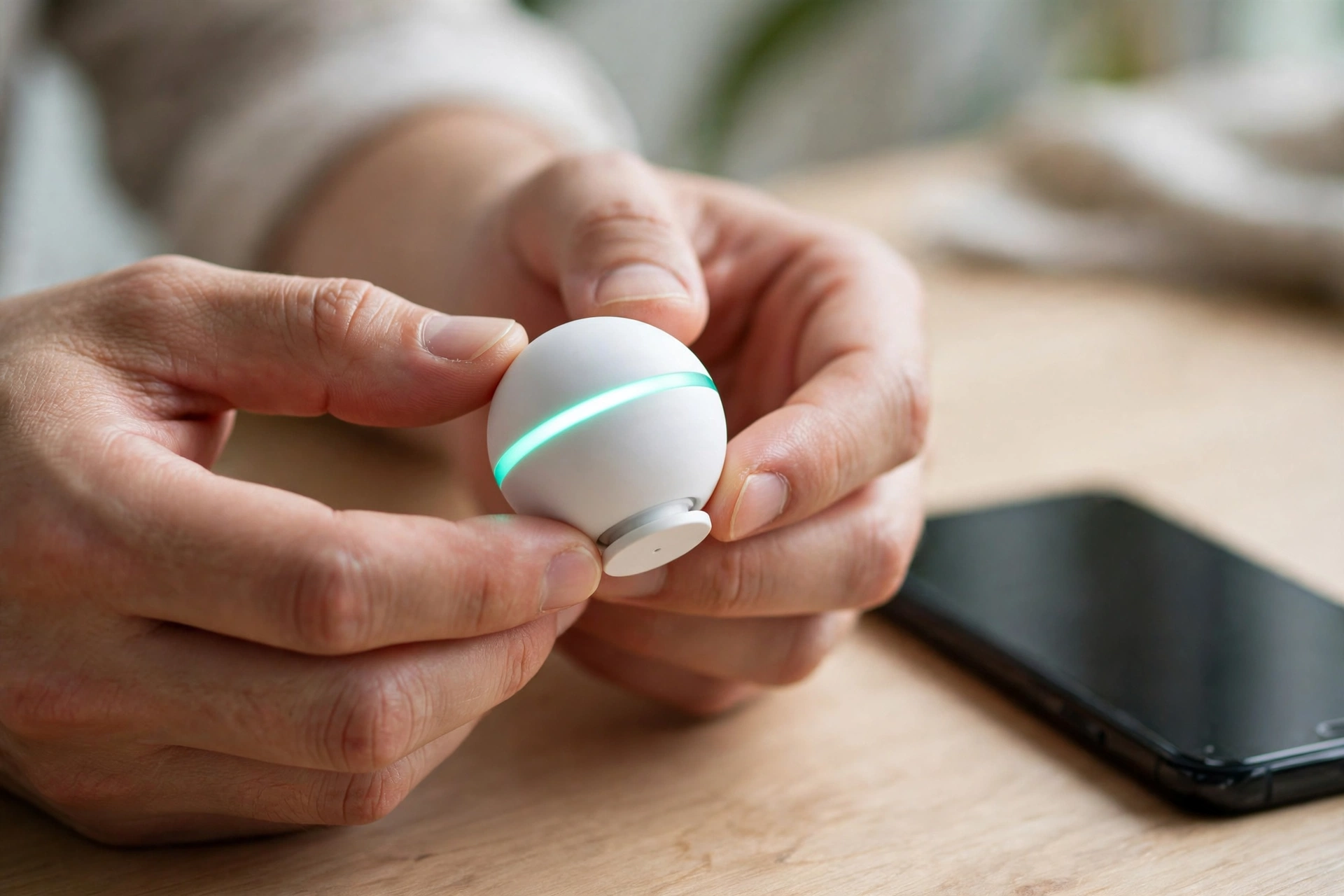
The Heartball looks nothing like a smartwatch or a fitness band. It is a small white ball with an LED ring light on the front, a cutout underneath that is believed to house the microphone, and a button on the side. A round base tucks behind your clothing, so the device clips to a shirt collar or lapel and stays out of the way.
At about 9.8 grams it is lighter than most wireless earbuds, and Oppo says it lasts up to 24 hours on a single charge — enough to cover a full working day without a top-up. Its microphone can reportedly pick up sound from as far as five metres away, so it does not need to sit close to your mouth to hear a conversation. The company also says it will work with office software and support live audio recording, which points squarely at meetings and the working day.

An "AI Growth Coach", Not Just a Recorder
What makes the Heartball different from a pocket voice recorder is what Oppo claims it does with what it hears. The device is powered by the company’s PersonaX Memory Symbiosis Engine, which combines voiceprint recognition with information association and what Oppo calls memory evolution algorithms, building a picture of your activities over time.
That picture is then put to work. The Heartball is designed to help you stay focused on tasks, remind you of commitments you have made, and flag risks it picks up on in your day. It can also go back over past decisions and their outcomes with you, so you can see where your judgement held up and where it did not. Under the hood, voice activity detection and an in-memory computing architecture process what it collects, and Oppo’s O-Mind bionic behavioural deep-thinking algorithm turns that into personalised suggestions and actions — rather than simply producing a transcript of everything you said.
Oppo is also opening the Heartball’s MCP ecosystem to developers, giving them access to some of the AI tools the device already uses so they can build additional experiences around it.
Privacy Built for an Always-Listening Device
A gadget designed to listen all day lives or dies on trust, and Oppo has put privacy at the centre of the pitch. The Heartball uses the company’s PCC private computing cloud, with end-to-end encryption covering data storage, transmission and processing. Oppo also says it does not retain user recordings, and the device reportedly supports low-fidelity recording modes, one-time text parsing with deletion after conversion, and private-key protection.
That matters more than the spec sheet. An always-on recorder raises obvious questions about consent — for the wearer and for everyone around them — and about how clearly the device signals that it is listening. The LED ring on the front of the Heartball is part of that answer, but the privacy architecture is the part that has to convince people to actually clip one on. As AI assistants gain the ability to hear more of our lives, moves like Signal’s new screenshot blocking show the same trust question is being asked across the whole industry.
Part of a Bigger Screenless AI Wave
Oppo is not entering this category alone. Nothing’s screenless AI device, a palm-sized gadget with a Talk button, is due to be fully unveiled on December 8, while Meta’s Muse Charm AI wearable is reportedly priced at $300 with a free year of Verizon 5G, and Google’s Gemini smart glasses are already open for pre-order at $395. If the Heartball turns out to be mainly a recorder, it will also meet devices like the Plaud NotePin S, which already occupies that niche.
The cautionary tale is the Humane AI Pin, the screenless gadget that promised to replace the smartphone and flopped. Oppo’s answer seems to be scope: rather than trying to do everything a phone does, the Heartball aims at one thing — helping you keep track of your own day and your own decisions. It is a narrower, more personal pitch than a general-purpose AI companion, and that may be exactly why it has a chance.
What We Still Don’t Know
Plenty. Oppo has not announced an exact launch date, a final price beyond the 499-yuan (about $75) trial programme that opened alongside the Find X10 series launch, or whether the device will ever be sold outside China. The full list of supported office software, how the AI features behave in everyday use, and how the device handles conversations with people who have not consented to being recorded are all still open questions.
Conclusion
The Heartball is a small device with a big idea behind it: that the most useful AI wearable might not be the one that answers your questions fastest, but the one that remembers what you said you would do — and tells you honestly how it went. At 9.8 grams, with a day of battery life and a privacy-first pitch, it is one of the most intriguing entries in the screenless AI race so far. Whether people are ready to clip an AI coach to their collar is the question its launch in China will answer first.