Signal has drawn a line in the sand against the AI agents now built into our phones. The encrypted messaging app announced on November 20, 2026 that it will block screenshots inside its app by default, so the AI assistants baked into iOS and Android cannot read your private chats by scanning your screen.
The move, announced by Signal president Meredith Whittaker in a blog post titled “Signal is Serious About Protecting Your Privacy,” targets a problem that did not exist a few years ago: operating systems now ship with agentic AI — Apple’s Siri AI and Google’s Gemini Intelligence — that can see whatever is on your display and use it to answer questions and act on your behalf. For an app whose entire promise is that nobody but you and your contacts can read your messages, that is a direct threat.
How the new protections work
On iOS 27, Signal now blocks screenshots inside the app by default and adds a setting called “Block Siri AI.” On Android, Signal automatically switches on its Screen Security feature when it detects an AI assistant trying to read the screen. In both cases, if you try to take a screenshot or an assistant tries to capture the screen, you get a pop-up offering the option to disable the block — with a warning that doing so can expose your messages, and your contacts’ messages, to these assistants.
The protection is not new to Signal’s playbook. Last year the app used the same technique on Windows 11 to defend against Microsoft Recall, the feature that takes screenshots of everything on your computer every few seconds and stores them in a searchable database. Signal set a DRM flag on its window so its content simply would not show up in Recall or any other screenshot tool — and it enabled that protection by default.
Why screen reading is the weak point
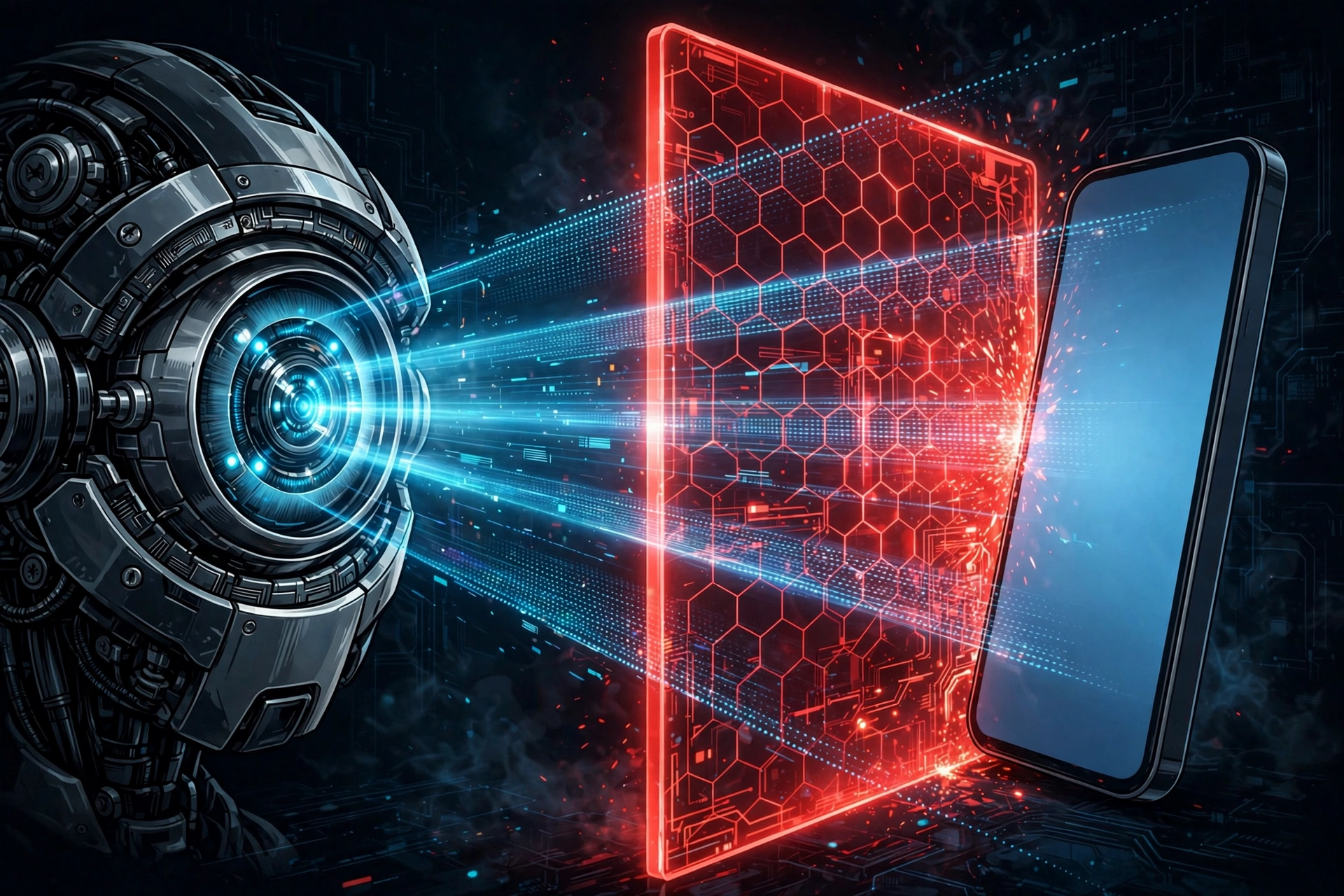
The reason screenshots matter is simple: to help you, an on-device AI agent has to see what you see. As Whittaker put it, these agents “scan” the information on your screen — and in doing so, your Signal data is captured and made available to the agent. Optical character recognition turns your chats into text the agent can store, summarize and act on, all without Signal ever being asked.
That is the same pattern Apple is pushing further with its own AI agent for the Mac, which can operate apps on your behalf, and the always-on ChatGPT assistants that now work across your devices around the clock. The convenience is real — but so is the privacy cost when the assistant’s view includes conversations that were never meant to leave the app.
Whittaker did not soften the language. She wrote that agentic AI integrations are “changing this environment in a way that’s making it increasingly hostile to privacy” and called it “an existential threat to Signal, and our ability to responsibly uphold our mission.”
What the block cannot do
Signal is unusually honest about the limits of its own fix — it calls the protections “incomplete” in the announcement itself. Blocking screenshots stops one route into your chats, but it does not stop an agent from reaching content already stored on the device through the file system. It also does not stop third-party agents that arrive with broad permissions granted during setup, including accessibility permissions that let them interact with other apps. Signal’s own reporting names Meta’s Muse agent as an example of that problem, and Reuters reported earlier this week that it was able to bypass its own official restrictions.
There are platform gaps, too. On Android, Signal says it can only detect screen-reading attempts on some versions, so the protection does not work everywhere. On macOS, Signal says it lacks the tools to block screenshots reliably at all — instead, it tells users to exclude Signal from Siri themselves in System Settings. And anyone who disables the protection in Signal’s settings, which requires confirmation and a warning, gives up the guarantee entirely.
Signal’s demand to Apple, Google and Microsoft
The second half of the announcement is a demand aimed at the operating system makers. Signal wants documented, robust tools that let app developers block AI agents from accessing sensitive data — the kind of granular controls Microsoft never provided when Recall launched, and that Apple and Google still have not offered for their on-device agents.
That is the deeper story here. Signal has now had to defend its users twice against the platforms its app runs on: first against Microsoft Recall on Windows, and now against the AI agents inside iOS and Android. Each time it has used whatever blunt tool was available — a DRM flag here, a screenshot block there — because no proper tool exists.
What it means for your privacy
For Signal users, the practical takeaway is straightforward: update the app, leave the new protections on, and think twice before turning them off for a screenshot. The trade-off is real — you will not be able to capture your own chats without a warning and a few extra taps — but that friction is the point. It is the same trade-off Signal accepted on Windows last year, and the company clearly believes a screenshot you cannot take is better than a chat an AI agent can read.
For everyone else, the announcement is a warning about where the industry is heading. As AI agents move deeper into operating systems — running your Mac, answering from your lock screen, working across your apps — the question of who gets to see your screen is becoming a privacy decision made by the OS, not by you. Signal’s answer is to block the view. The open question is whether Apple, Google and Microsoft will give every app the tools to do the same — or whether privacy will keep depending on each app fighting the platform it runs on.