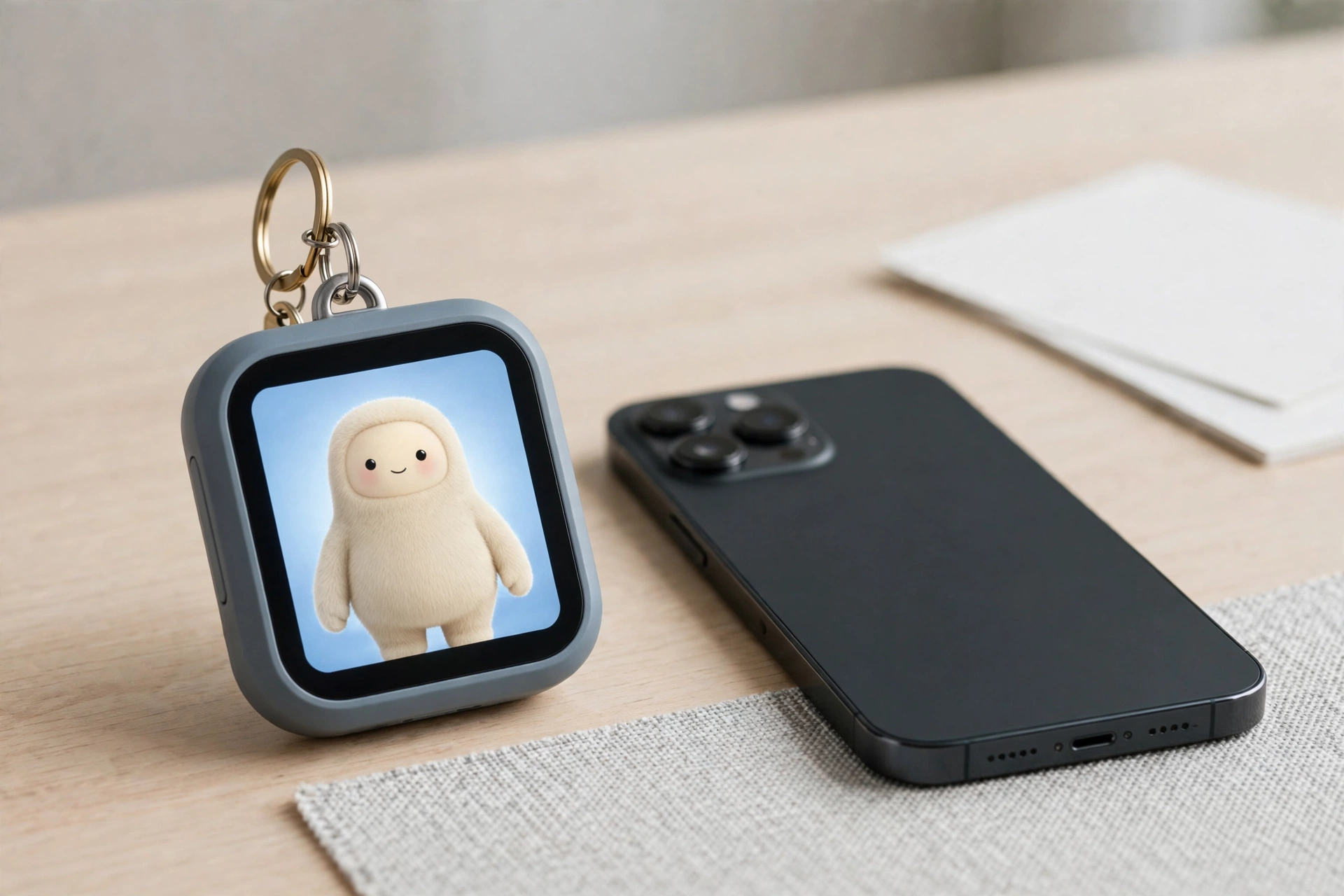
Meta’s pocket-sized AI gadget finally has a reported price — and a free data plan to go with it. According to a report from The Information on Thursday, November 19, 2026, Meta plans to price its Muse Charm device at $300 and bundle up to 12 months of free 5G data from Verizon. Meta has not confirmed either number itself: a company spokesperson, Tyler Yee, told The Information only that “we’re charmed by the interest in our AI devices, and we’ll have more to share soon.”
The report matters because, until now, the price was the biggest unanswered question about Charm. Meta unveiled the device at its Connect event in September 2026, and chief executive Mark Zuckerberg said it would be ready to ship in December, in time for the holiday season — but the company never announced what it would cost. If the $300 figure holds, Charm lands in an interesting middle ground: far cheaper than a flagship phone, but three times the price of the Rabbit R1, the last pocket AI gadget to try this idea.
For background on the device itself, see our earlier look at the Meta Muse Charm keychain AI gadget, which covered the September unveiling in detail.
What Muse Charm Actually Is
Muse Charm is a small, handheld device that fits on a keychain and gives you direct access to Muse, Meta’s personal AI agent. Zuckerberg described it at Connect as packing “the whole Muse experience, including the real-time voice and avatar stack into something that fits on a keychain and is always available to talk to.”
The hardware is deliberately simple. It has a roughly 2-inch OLED touchscreen navigated with a thumb, a fingerprint sensor in the corner, speakers and microphones, front- and rear-facing cameras, a USB-C port, and a built-in 5G modem. A customizable Muse character sits at the center of the screen — the design has drawn inevitable comparisons to a Tamagotchi — and the device is paired and synchronized through the Muse app on an iPhone or Android phone.
The key point is what Charm is not: a smartphone replacement. It cannot make calls, and it does not do anything Muse cannot already do from your phone. Its entire pitch is friction. As Zuckerberg put it on stage: “You just go ahead and tap here in the fingerprint sensor in the corner, and you can start talking without having to unlock a phone or open an app.” He added that, for people not wearing glasses, Charm would be “by far the fastest way to talk to your Muse and to show it what’s going on around you.”
Muse itself is the agent behind the device. It can delegate tasks such as shopping, travel booking and form-filling, and Meta has been extending what it can do — including Muse AI outbound calling for paid US subscribers, which lets the agent place phone calls on your behalf.
Why Free 5G Is the Real Story

The free Verizon 5G plan may matter more than the $300 price tag. A device like Charm is useless without a constant connection: every question it answers and every task it runs has to reach Meta’s servers. Wi-Fi covers the home and the office, but a keychain gadget earns its keep on the street, in the car and on a walk — exactly where Wi-Fi is not.
Bundling 12 months of 5G removes the two hidden costs that sank earlier AI gadgets. The Humane AI Pin cost $699 plus a $24 monthly subscription, and the Rabbit R1 needed a phone connection to do most of its work. Charm, by contrast, would arrive with its connectivity paid for, at least for the first year, and at a price that puts it in gift territory rather than flagship-phone territory. The open question is what happens in month 13: Meta and Verizon have said nothing yet about what the data plan will cost once the free year ends.
A Smartwatch Delayed to Make Room
The same report says Meta delayed the launch of its smartwatch — which had been targeted for this year — to 2027, so the company can focus on getting Charm out before Christmas. That is a telling trade. Meta’s wearables effort has been expanding all year, with a goal of selling 10 million wearable devices in the second half of 2026, and its AI glasses have been the focus until now. Pushing the watch back suggests Meta sees Charm, not the watch, as the device that best carries Muse into the holiday season.
It also fits a broader strategy. Charm underscores Meta’s push to reduce its reliance on Apple and Google’s operating systems by building its own AI platform, and the company recently released a Muse app for Wear OS and watchOS. The agent is meant to follow users everywhere — on glasses, on a watch, and now on a keychain.
Tap, Talk, Done: How Charm Works
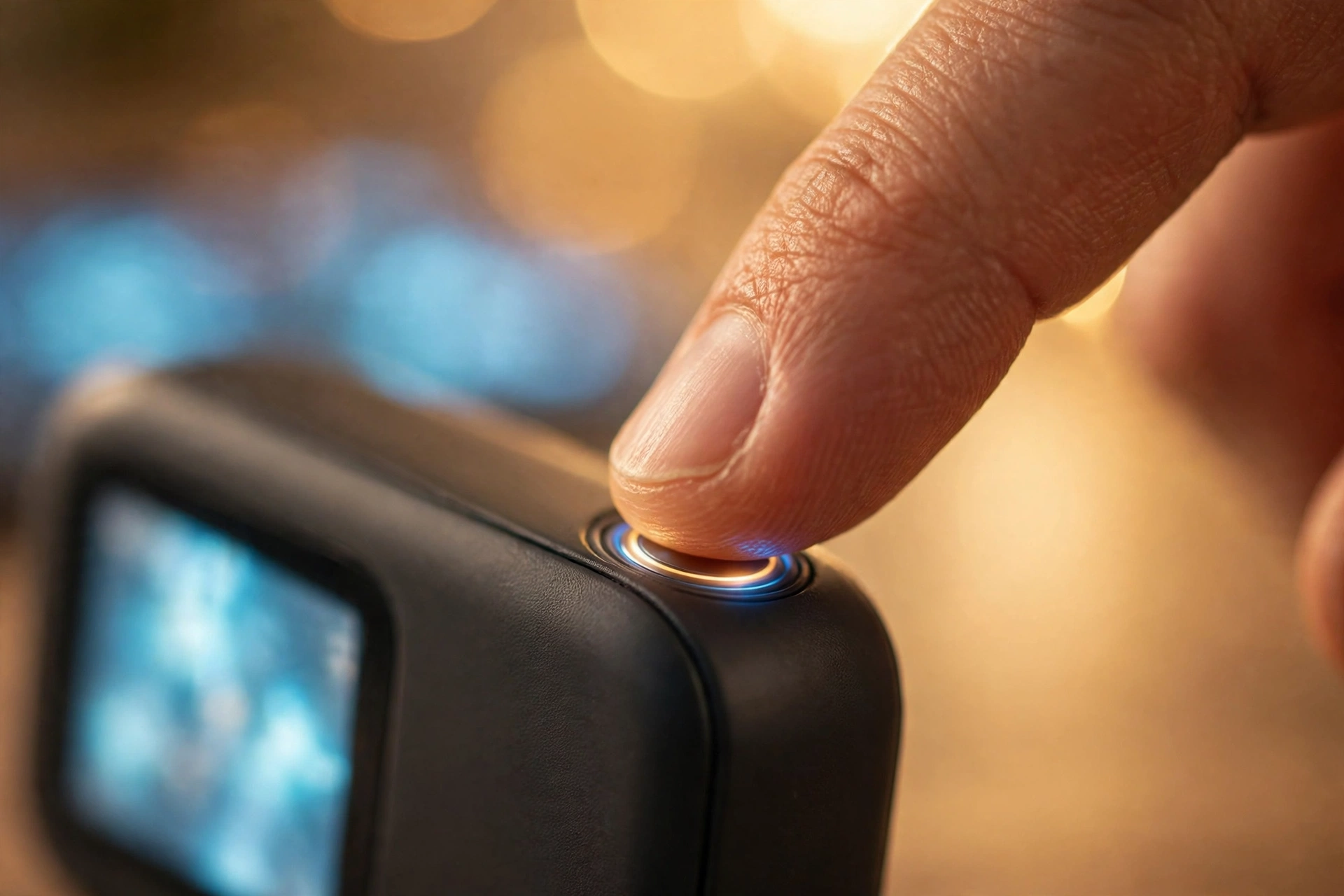
Using Charm is meant to take one second: press your finger to the sensor in the corner and start talking. No unlocking a phone, no opening an app, no wake word. The fingerprint check confirms it is you before the agent listens, and the front and rear cameras let you show Muse what is going on around you — a label, a street sign, a product on a shelf — while you ask about it.
That tap-to-talk design is the whole product idea. Muse already lives on phones, and the agent is spreading across the industry: Google’s Gemini can now use your Mac for you as a background assistant, and OpenAI’s ChatGPT dots are expanding to Plus users as an always-on assistant. Charm is Meta’s hardware answer to the same question — how to make an AI agent available without opening an app.
The Ghosts of AI Gadgets Past
Charm does not arrive in a vacuum. The pocket AI gadget category already has a graveyard. Humane’s AI Pin, which raised $230 million, was discontinued after slow responses, overheating and a price that asked buyers to pay smartphone money for a fraction of a smartphone’s abilities; HP bought its software assets for $116 million and the servers were switched off in February 2025. The Rabbit R1 sold out its first batch on viral hype, then disappointed reviewers, and Rabbit has since stopped making it to focus on software.
Charm has real advantages over both. It has a screen, which the AI Pin lacked; it is backed by one of the world’s largest tech companies rather than a startup; and it rides on Muse, an agent with real distribution across Meta’s apps, rather than a from-scratch ecosystem. But the core test is the same one its predecessors failed: can a dedicated gadget do something reliably enough, and fast enough, that people reach for it instead of the phone already in their pocket? A $300 price and free 5G lower the barrier to trying — they do not answer that question.
For a different take on local AI hardware, see our coverage of the NVIDIA RTX Spark compact desktops, which put a 128GB AI mini PC on your desk instead of in your pocket.
What to Watch Before December
Three things will decide whether Charm is a holiday hit or another curiosity. First, the price: $300 is still a report from a single unnamed source, and Meta has not confirmed it. Second, the free 5G terms: which Verizon plan, what data limits, and what it costs after 12 months. Third, the software: whether Muse on a two-inch screen, with voice as the main input, is genuinely faster than pulling out a phone — or just a charming novelty that ends up in a drawer by February.
If the report is right, Meta has priced Charm to be tried, not just admired. That is a smarter bet than the AI Pin ever made. Whether it is smart enough depends on what the little gadget can actually do when December arrives.
Sources: PYMNTS report | Engadget report | Reuters report