Meta has handed its Muse assistant the phone. The company’s consumer AI agent can now place outbound calls to businesses in the United States on behalf of paying subscribers — booking a table, querying an insurer, sorting out a cable bill, or dealing with the DMV, all without the user ever picking up the handset.
Meta Chief AI Officer Alexandr Wang announced the rollout on November 12, 2026, in a post on X. “Muse can make phone calls for you!” he wrote. “Insurance? Cable? DMV? Dinner res? Not your problem anymore.” The feature is out now for paid subscribers in the US.
It is the most practical upgrade Muse has received since Meta launched the agent in September — and a clear sign of where personal AI assistants are heading: from answering questions in a chat window to doing the errands that used to eat up your afternoon.
What Is Muse Outbound Calling?
Outbound calling lets you describe an errand in a chat with Muse, and Muse then rings the business, talks the task through, and reports back to you. You ask for a dinner reservation for two on Friday at 7 pm, and Muse handles the phone conversation — the hold music, the back-and-forth over times, the confirmation.
Meta has pitched the feature squarely at the mundane. The examples Wang listed are deliberately unglamorous: insurance calls, cable company queries, DMV appointments, and restaurant reservations. These are the calls most people put off for days, and that is exactly the point. Muse is being positioned as the assistant that absorbs the chores nobody wants, not just the creative work AI is usually praised for.
The capability was tested with a small group of early adopters from September 2026, who had to request access. What changed on November 12 is the audience: any paying Muse subscriber in the US can now use it. Free users are still locked out, and so is everyone outside the United States — at least for now. Meta has not said when calling will reach free users or subscribers in other countries.
How Muse Outbound Calling Works
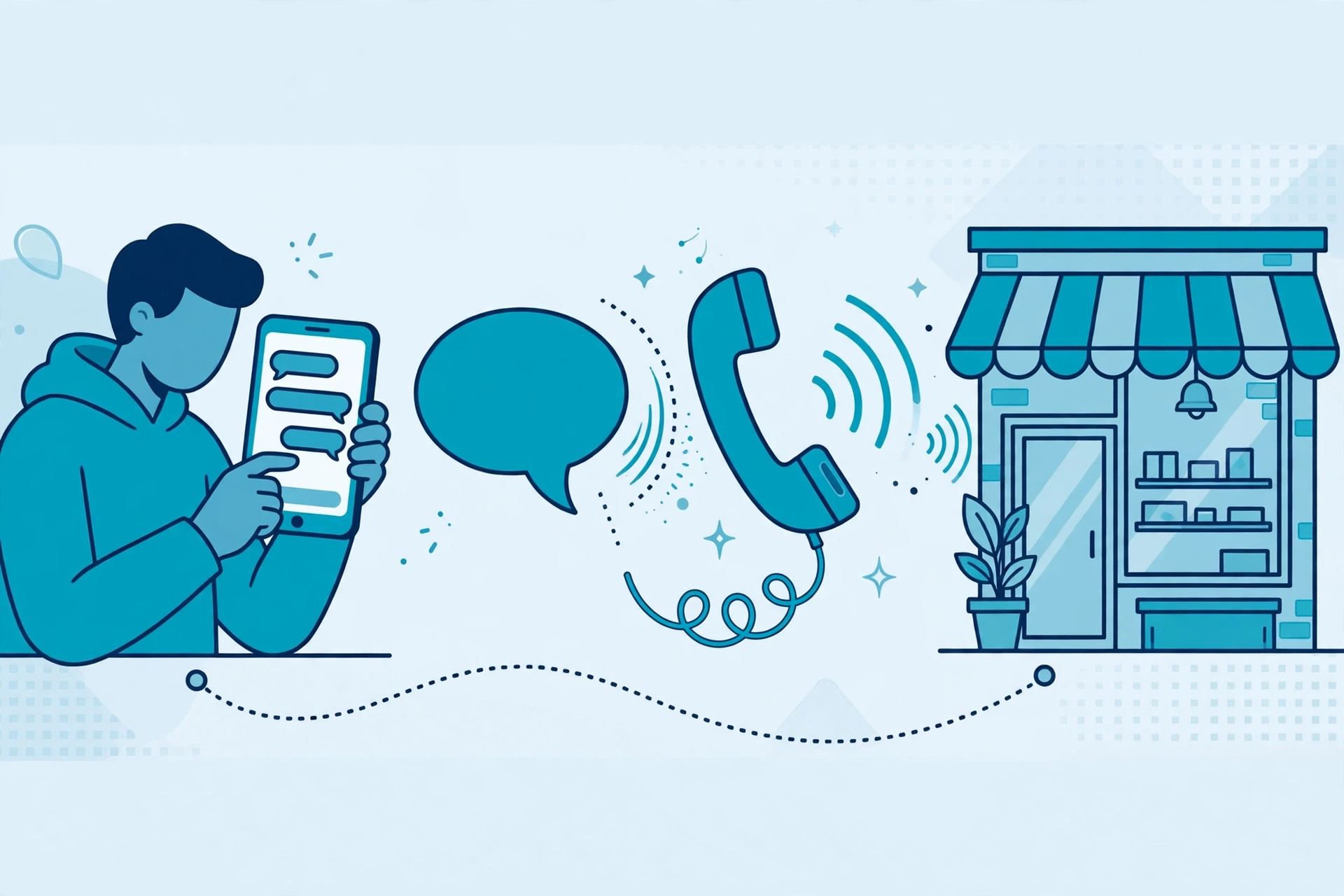
Using the feature starts the way most Muse interactions do: in a chat. You describe the task that needs a phone call — the business, what you need, and any details that matter, such as a preferred time, a policy number, or a date. Muse then places the call, conducts the conversation, and comes back with the outcome.
Meta says the agent will “handle the wait times while you get back some free time,” which is the part likely to matter most in practice. A call to an insurer or a cable provider can mean twenty minutes on hold before a human even picks up; handing that stretch to an AI is the real time saving, more than the conversation itself.
What has not been spelled out publicly is how the call itself is conducted. Meta has not said whether Muse identifies itself as an AI when the business answers, whether calls are recorded, or whether businesses can opt out of receiving AI callers. Those details matter, and they are the questions Meta will need to answer as the feature reaches more people. For now, the announcement covers the what and the who — not the fine print of the call experience.
What Muse Outbound Calling Costs
Calling sits behind Muse’s paywall, so the feature is only available if you already pay for a subscription. Muse plans start at $20 a month for the Power plan, which includes 500 million Muse tokens per week. A heavier Maximum plan at $100 a month raises that to 3 billion tokens per week.
There is no published per-call price, and Meta has not said whether heavy callers hit a separate limit beyond their token allowance. That is worth checking before subscribing with the expectation of unlimited calling: the subscription buys you a token budget, and Meta has not explained how much of that budget a long phone call consumes.
It is also worth remembering that Muse subscriptions themselves are still in limited testing and are not available in all locations. Meta’s own help centre notes that subscription benefits and availability may vary by region and account — so even a paying subscriber should confirm the calling feature is switched on for their account.
The pricing puts the feature behind a fairly low but real paywall. Twenty dollars a month is a modest price for someone who dreads phone calls, but it is a real one — and it means the people who would benefit most, such as older users or anyone who finds phone calls stressful, may not be the ones who already pay for an AI subscription.
Muse Is Becoming a Do-Things Agent, Not Just a Chatbot
Outbound calling is part of a rapid expansion of what Muse can do. Meta released its first consumer AI agent in September 2026, and it has been adding capabilities steadily ever since — including a cheaper model for agent work and a keychain gadget that puts the assistant in your pocket.
The new Muse Ember model, for example, is built for exactly this kind of agent work at a low cost, and the Muse Charm keychain gadget shows Meta wants the assistant with you everywhere, not just on your phone screen. Outbound calling fits the same pattern: Muse is moving from a chatbot you talk to, into an agent that acts on your behalf in the real world.
That shift is where the whole AI assistant market is heading. The newest flagship models from other labs are increasingly judged on what they can do, not just what they know — and the price war between them is making agent features cheaper to run. Alibaba’s Qwen4-Max, which launched this week at a fraction of the price of leading Western models, is another sign that capable AI is getting dramatically cheaper, which is what makes features like phone calls affordable to offer at scale.
The fastest cheap models are also getting better at the kind of sustained, multi-step work a phone call requires. Claude Haiku 5.5, for instance, is built for speed and long-running tasks at a low price — the same qualities an AI caller needs to stay on the line, remember the details, and finish the job.
How Muse Calling Compares With Google and Grok
Meta is not the first to let an AI make your calls. Google already offers a similar feature through its Gemini-powered Call for Me, which lets eligible users delegate business calls to the AI assistant — though that feature is limited to eligible Pixel smartphone owners in the US. Grok Bot also supports outgoing calls to businesses and individuals in the US, and Anthropic’s Claude offers similar functionality through third-party integrations.
The difference is distribution. Muse already has more than 10 million users, a figure Meta disclosed in October 2026, and it lives inside Meta’s apps rather than on a single phone brand. If calling works well, Muse could bring AI phone calls to a far larger audience than the Pixel-only approach — though it still has to prove it can handle a real conversation with a busy restaurant or a sceptical insurance agent.
The comparison that matters most is the everyday one: can Muse actually complete the call, or does the business hang up on an AI voice? Early reporting suggests some businesses do hang up on AI callers, and better voice mimicry may make detection harder rather than easier. That tension — between sounding human enough to be served and being honest about being an AI — is the central design problem for every AI calling product, and Meta has not yet explained how Muse handles it.
The Trust Question

The convenience is obvious. The questions are about trust, and they are the ones users should ask before handing their phone calls to an AI.
First, disclosure. When Muse rings a business, does the person who answers know they are talking to an AI? Many jurisdictions require AI systems to identify themselves in phone calls, and businesses have a legitimate interest in knowing whether the “customer” on the line can actually make decisions. Meta has not said what Muse tells the business, and that silence is the biggest gap in the announcement.
Second, your information. To book a table or query a policy, Muse needs your name, and often more — a phone number, an address, a policy or account number, a date of birth. Users should check what Muse shares on a call, and whether that information is stored afterwards. Meta’s help centre is the place to verify this before handing over sensitive details.
Third, accuracy. A misunderstood time, a wrong date, or a misheard policy number can create a real problem — a missed reservation, a lapsed policy. Users should treat Muse’s report-back as the moment to verify, not as a guarantee: check the confirmation, the time, and the reference number before assuming the job is done.
None of this makes the feature a bad idea. It makes it a feature worth using carefully, the way you would use any assistant you have just hired: give clear instructions, check the result, and keep the important details to yourself until you know how they are handled.
Who Should Try It — and Who Should Wait
Outbound calling is a genuine time saver for a specific group: paying Muse subscribers in the US who hate phone calls, juggle a lot of admin, or run a small business and spend too much of the day on hold. If you already pay for Muse, the feature costs nothing extra to try, and a single avoided call to the cable company may be worth the experiment.
Everyone else should wait. Free users cannot access it at all, and there is no word on when that changes. Users outside the US are excluded for now. And if you were considering subscribing to Muse mainly for the calling feature, hold off until Meta clarifies the per-call limits, the disclosure question, and how much of your token budget a call consumes. A $20 subscription that only covers a handful of calls is a different proposition from one that covers as many as you need.
The sensible way to try it is small: start with a low-stakes call, such as a restaurant reservation, check the confirmation carefully, and only then hand Muse the calls that matter more.
The Bottom Line
Muse can now make your phone calls — if you pay, and if you live in the US. It is a small feature with a large implication: AI assistants are leaving the chat window and starting to act in the world on your behalf. The errands are mundane, the technology is not, and the questions it raises about disclosure, privacy, and accuracy are ones the whole industry will have to answer.
For Meta, the bet is that the convenience outweighs the questions. For users, the test is simpler: try it on a call you do not mind losing, check the result, and decide whether the assistant has earned the next one.
Frequently Asked Questions
Can Meta Muse make phone calls for me?
Yes — if you are a paying Muse subscriber in the US. Muse can place outbound calls to US businesses to handle tasks such as restaurant reservations, insurance queries, cable company calls, and DMV appointments. The feature rolled out on November 12, 2026, after testing with a limited group since September.
How much does Muse outbound calling cost?
There is no separate per-call price. Calling is included with a paid Muse subscription, which starts at $20 a month for 500 million Muse tokens per week, with a $100 a month tier offering 3 billion tokens per week. Meta has not said how much of your token allowance a call uses.
Is Muse outbound calling available outside the US?
No, not yet. The feature is limited to paid subscribers in the United States. Meta has not announced when it will reach free users or subscribers in other countries.
Does Muse tell businesses it is an AI when it calls?
Meta has not said. Whether Muse identifies itself as an AI on the call, whether calls are recorded, and whether businesses can opt out are all unanswered questions at the time of writing — worth checking in Meta’s help centre before you use the feature for sensitive calls.
How is Muse calling different from Google’s Call for Me?
Google’s Gemini-powered Call for Me offers a similar service but is limited to eligible Pixel smartphone owners in the US. Muse is available to any paying US subscriber through Meta’s apps, and Muse already has more than 10 million users. Grok Bot also offers outgoing calls in the US.
What else can Muse do besides making calls?
Muse is Meta’s consumer AI agent, launched in September 2026. Recent additions include the Muse Ember model for low-cost agent work and the Muse Charm keychain gadget, which puts the assistant in your pocket. Outbound calling is the latest step in turning Muse from a chatbot into an agent that acts on your behalf.