A missile fired by Yemen’s Houthi rebels struck the tallest skyscraper in Riyadh on Thursday, November 19, damaging several floors of the tower that houses the headquarters of Saudi Arabia’s sovereign wealth fund. It was the second time in less than two weeks that a Houthi attack damaged a landmark in the Saudi capital’s financial district — and the attacks did not stop there. On Friday morning, Saudi air defenses intercepted more missiles and drones, including one aimed at Riyadh itself.
No one was injured in the tower strike, Saudi authorities said, but the damage to one of the kingdom’s most recognizable buildings marks a sharp escalation in a conflict that has been intensifying for months.
What Happened in Riyadh’s Financial District
The projectile hit the Public Investment Fund Tower, an 80-story skyscraper standing 385 metres (1,263 feet) tall at the heart of the King Abdullah Financial District. The tower is the headquarters of the Public Investment Fund, Saudi Arabia’s sovereign wealth fund and one of the largest in the world.
The strike blew out windows across seven to eight floors of the tower and bent parts of its metal facade, according to Reuters, citing three sources familiar with the matter. Saudi Arabia’s Civil Defense said a tower in the financial district and neighboring buildings sustained material damage, but reported no injuries. The state news agency SPA published a photograph showing the damage to the tower, which it did not name — though the image clearly showed the PIF Tower.
The Saudi-led coalition fighting the Houthis initially said it had “dealt with a missile threat” launched toward Riyadh and that its first assessment pointed to damage from falling debris. Coalition spokesman Major General Turki al-Maliki later said air defenses had intercepted and destroyed four ballistic missiles aimed at the kingdom’s southern region bordering Yemen, and that the coalition had destroyed a launchpad used in the attempted attacks on Riyadh.
The Houthis claimed the attack hours later, saying they had caused significant damage. According to Reuters, the group said it had targeted Riyadh’s financial district twice on Thursday, first at dawn and again in the evening.
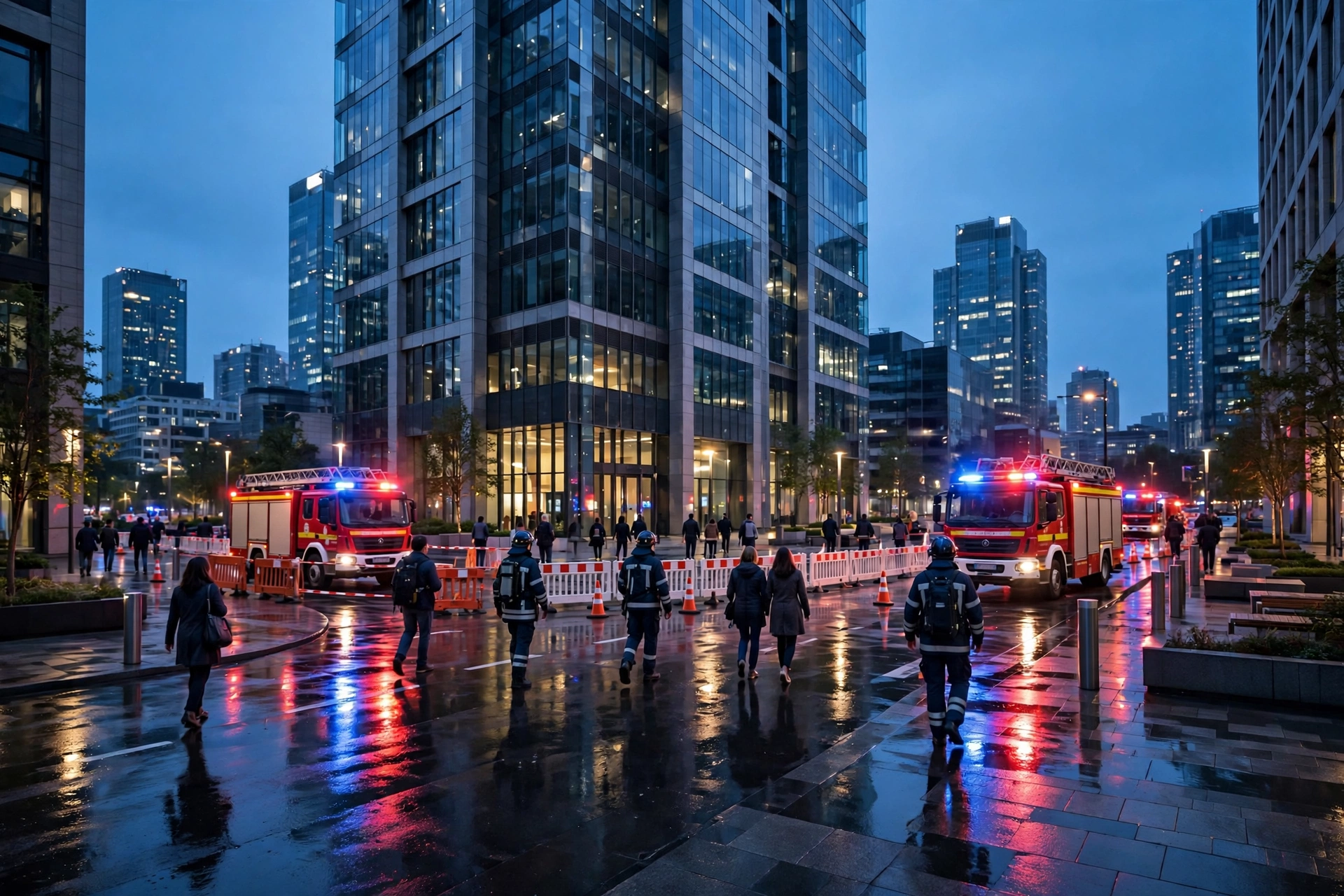
Entrances to the King Abdullah Financial District were closed and people inside were evacuated, while ambulances and fire trucks rushed to the scene. The district was closed to visitors following the attack.
A Second Strike in Less Than Two Weeks
Thursday’s strike was not an isolated incident. On November 8, a Houthi attack damaged a building in the same financial district housing offices belonging to Saudi Aramco, the state oil giant. That building, also known as Villas in the Sky, sits in the same neighborhood that is home to some of the world’s biggest financial firms.
The back-to-back strikes on the King Abdullah Financial District show the Houthis can now reach the symbolic heart of the Saudi economy — a district the kingdom has spent years building into a global financial hub. The PIF Tower is not just an office building: it is the headquarters of the fund bankrolling Crown Prince Mohammed bin Salman’s Vision 2030 transformation of the Saudi economy.
Saudi Arabia strongly condemned the attacks, describing them as strikes on civilian and economic facilities. The Civil Defense described the attack on civilian infrastructure as a “flagrant violation of international humanitarian law.”
The Attacks Did Not Stop on Thursday
Less than a day after the tower was hit, the attacks continued. The Saudi-led coalition said on Friday morning, November 20, that the kingdom had intercepted five drones and one ballistic missile fired by the rebels, and that Riyadh was among the targets.
Saudi Civil Defense issued early-warning alerts in Riyadh at about 5:14 a.m. and in the southern Najran region shortly after 6:20 a.m., before announcing that the danger had passed in both places. Alerts were also sent to residents in the southern areas of Jazan, Abha and Khamis Mushait. No damage or injuries were reported from Friday’s attacks.

The coalition also said on Friday that it had targeted Houthi operations to smuggle and transport weapons and ballistic missiles in Hodeidah, Yemen’s main Red Sea port. The strikes came days after Saudi Arabia launched a major air campaign across Houthi-controlled parts of Yemen.
Why the Houthis Are Targeting Saudi Arabia
The Houthis are an Iran-backed armed movement that controls much of northern Yemen, including the capital Sanaa. They have repeatedly launched missiles and drones toward Saudi territory during periods of heightened confrontation, and the tempo of attacks has risen sharply since hostilities escalated in July.
The strikes on Riyadh are unfolding against the backdrop of a wider regional war. The United States and Iran have been at war since February 28, 2026, and the fighting has spread across the Gulf: the US destroyed five Iranian oil tankers in the Gulf of Oman earlier this week, and Iran struck back at a US base in Jordan. Just on Thursday, the US Senate rejected a war powers resolution that would have directed President Trump to end the Iran war or win congressional approval to continue it, voting 48-51 in the first Senate vote on the issue since the midterm elections.
The same week, Trump, Xi and Putin held their first-ever trilateral summit in Shenzhen, though their joint declaration did not mention Iran.
The Houthis, as Iran’s allies in Yemen, have positioned their campaign as part of that wider confrontation — striking at Saudi Arabia, Iran’s regional rival and a US partner, while the war with Tehran continues.
What Happens Next
The immediate question is whether Saudi Arabia’s air campaign in Yemen and its missile defenses can stop the attacks — or whether the Houthis will keep finding ways through. The November 8 Aramco strike and the November 19 PIF Tower strike show that at least some projectiles are getting past the kingdom’s defenses, even as the coalition reports intercepting others.
The escalation comes as wars multiply elsewhere, including Russia’s massive overnight missile attack on Ukraine that damaged three bridges in Kyiv.
For now, the King Abdullah Financial District is counting the cost of a strike on its tallest tower, and Riyadh is bracing for more. The coalition’s Friday strikes on Hodeidah suggest Riyadh intends to hit back at the source of the attacks — but the Houthis have shown no sign of backing down.
Frequently Asked Questions
Was anyone hurt in the PIF Tower strike?
No. Saudi Civil Defense said the attack caused material damage to several floors of the tower and neighboring buildings, but no injuries were reported.
How tall is the PIF Tower?
The tower is 80 stories tall and stands 385 metres (1,263 feet), making it the tallest skyscraper in Riyadh and the centerpiece of the King Abdullah Financial District.
What is the Public Investment Fund?
The Public Investment Fund is Saudi Arabia’s sovereign wealth fund, one of the largest in the world. It funds many of the kingdom’s biggest projects under the Vision 2030 plan to diversify the economy beyond oil.
Have the Houthis attacked Riyadh before?
Yes. The November 19 strike was the second attack on Riyadh’s financial district in less than two weeks, after a November 8 strike damaged a building housing Saudi Aramco offices. The Houthis have launched missiles and drones at Saudi targets for years, with attacks intensifying since July 2026.