Your AI assistant can plan your trip, compare fares and pick the perfect window seat. But if you fly United, it can no longer buy the ticket for you.
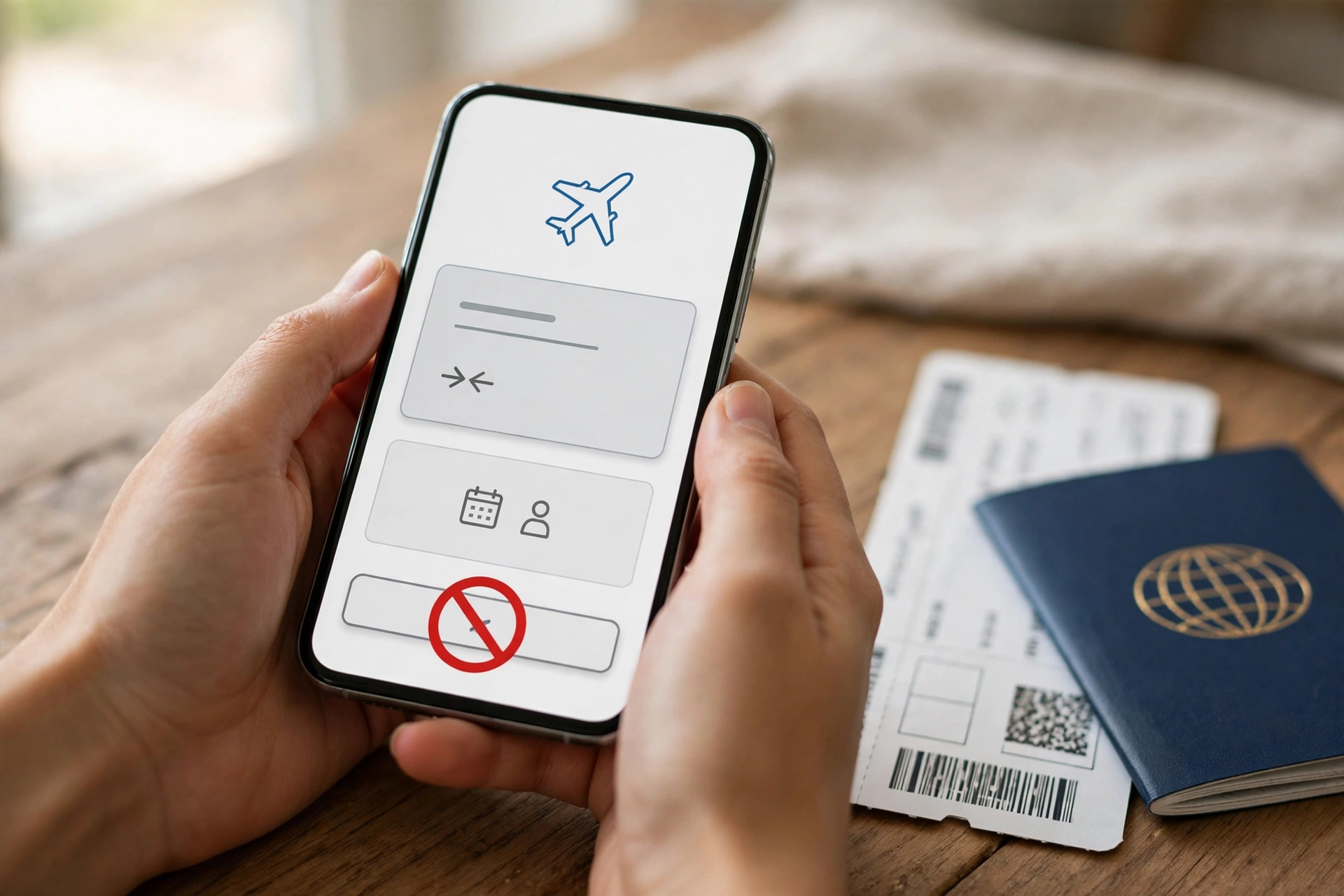
On Wednesday, November 11, 2026, United Airlines became the first major US carrier to formally ban third-party AI agents from booking, changing or servicing its flights, as covered in Simple Flying’s report. The airline revised its Contract of Carriage — the legal agreement between United and every passenger — to put AI agents on its list of prohibited ticketing practices, right next to hidden-city and throwaway ticketing. And the rule has teeth: United says it can cancel any reservation an AI agent made, without notice.
The move lands at the exact moment AI agents are getting good enough to actually book travel. That collision — between airlines that want to own the customer relationship and AI assistants that want to own the task — is now the travel industry’s biggest fight. Here is what United changed, why it says it did it, and what it means for the way you will book flights.
What United actually banned
The change lives in two clauses of United’s revised Contract of Carriage, which is headed “revised November 11, 2026.”
Rule 6.J.6 adds “the use of AI Agents to make, modify or service a Ticket, and/or to purchase any service or product” to the airline’s list of prohibited practices. United’s definition of an AI agent is deliberately broad. It covers standalone AI assistants, AI agents built into browsers, and AI tools offered through travel agencies. The ban reaches beyond the ticket itself: an unauthorized agent also cannot buy paid seats, upgrades or other extras.
A companion clause, Rule 5.H, gives United the right to cancel “reservations made, modified or serviced by AI Agents” without notice. That is the part travelers should take most seriously. A booking an AI agent made on your behalf — even one you watched, approved and paid for yourself — can be cancelled by the airline.
Three details matter most:
First, supervision does not save a booking. The ban applies even if a passenger is overseeing the agent or approves every step it takes. A design that pauses for human approval at checkout is still covered.
Second, the ban reaches indirect routes. It applies on united.com and in the United app, and also through travel agencies and aggregators. An assistant bolted onto a third-party booking site is covered too, although enforcement there is harder: the seller’s name does not always reveal who used its website.
Third, there is a grace period for the past, not the future. United says it will not cancel a booking solely because an AI agent made it before November 11, 2026. But it recommends that travelers review recent reservations to confirm they were ticketed correctly.
Why United says it did this
United gave three reasons in its announcement, and they mix genuine security concerns with regulatory ones.
The first is data security. Handing your United account login to a third-party AI assistant means handing over your credentials, your payment details and your MileagePlus account. United warned that sharing account login details with third-party AI assistants could put sensitive information at risk, and that an assistant’s actions “may result in unintended purchases, account changes, or use of MileagePlus miles.” An agent that misunderstands an instruction could book the wrong flight, change a reservation or spend miles a traveler never meant to spend — and the traveler, not the agent, owns the consequences.
The second reason is federal compliance. Online check-in requires a passenger to personally acknowledge rules on prohibited items such as explosives. Under 49 CFR 175.25, airlines must tell passengers about the dangerous goods they are prohibited from carrying, both when they buy a ticket and when they check in, and passengers must acknowledge they received that information. United’s argument is that letting an AI agent complete check-in on someone’s behalf could bypass a legally required acknowledgment. Business Traveller notes an important nuance here: the federal rules do not themselves prohibit AI bookings — United’s restriction is a separate company policy layered on top of them.
The third reason is commercial, and United’s chief executive said it out loud. At a Chicago event, Scott Kirby said of AI booking agents: “To be honest, I don’t want to create another middleman.” Travel agencies and fare-comparison sites already steer customers toward particular flights. An assistant authorized to choose an itinerary and buy the ticket could gain even more influence over the sale — and eventually charge referral fees or favor airlines willing to accept its terms.
Aviation analyst Henry Harteveldt of Atmosphere Research Group, speaking to CBS News, added a cost angle: flight searches cost airlines money. If personal agents begin searching thousands of flight combinations on behalf of users, airlines could face a surge in automated traffic without necessarily generating additional bookings. “United is saying they don’t want to add yet another, and potentially even more powerful, intermediary than they already face in terms of Google search, price-comparison metasearch sites, and online travel agencies,” Harteveldt said.
There is also a backdrop of scrutiny over how airlines use data. The Federal Trade Commission recently ordered Delta, United and JetBlue to explain how they set their fares and whether personal data plays any role — the “surveillance pricing” debate. Against that background, United is drawing a line around who gets to touch its booking flow.
The security stakes of autonomous agents are rising across the industry, as shown by OpenAI’s Daybreak red-team agents.
What travelers can still do with AI
The ban is narrower than it first sounds. It targets the transaction, not the research.
AI tools can still search United fares and show availability. Online providers like Kayak, Hopper and Google Flights will continue to display United prices, and travelers can use AI to research destinations, compare options and plan an itinerary — as long as those tools do not touch United’s site or app. The purchase itself, however, has to be completed by the customer.
United says it does not yet work with any third-party AI agents, but it wants to build “standardized, secure technology integrations” with privacy, authorization and accountability protections first. The airline is also adding account-security advice and help for unwanted transactions to its Digital Trust Center. In other words, this is a “not yet, and not like this” rather than a permanent “never.”
Delta Air Lines was reported last month to be blocking similar tools, though it has not made a formal announcement like United’s. Rival carriers are watching closely: if United’s hard line holds up with customers and regulators, expect others to follow before the holiday travel season peaks.
Personal agents are becoming everyday carry items — Meta’s Muse Charm keychain, which puts a personal AI agent in your pocket, is the latest example.
The bigger fight over agentic commerce
United’s ban is the most visible move yet in a much larger contest over who controls agentic commerce — the emerging world in which AI assistants don’t just answer questions but take actions and spend money on your behalf.
The timing is no coincidence. On the very same day United announced its ban, November 11, OpenAI acquired Odessia, a startup building an AI travel agent. The industry’s biggest AI company is now directly in the business of booking trips, and the industry’s biggest airlines are deciding whether to let it in the door.
The same week, the infrastructure for agents to pay was also advancing: Brave’s x402 protocol that lets AI agents pay for things online shows how quickly the plumbing for agent transactions is being built. And Google’s Agent Development Kit, which just made agent-to-agent communication stable, is making it easier for developers to build agents that hand tasks to each other — including booking tasks. The technology is arriving faster than the rules for it.
That is why United’s move matters beyond aviation. Business Insider is already keeping a list of companies that ban AI agents, and United is the first airline on it. The pattern is familiar from earlier platform shifts: incumbents that control a customer relationship — airlines, hotels, retailers — will resist any intermediary that sits between them and the buyer, while AI companies will argue that the assistant works for the user, not the seller.
Both sides have a point. An assistant that books your flight while you sleep is genuinely useful, and a world where every purchase flows through a handful of AI gatekeepers is genuinely worrying for the businesses being disintermediated. The open question is who sets the terms: the airline, the AI company, or the traveler in the middle.
For now, the practical answer for United flyers is simple. Let your AI assistant do the homework. Do the buying yourself.
AI assistants are also moving onto the phone itself, with Huawei’s new OSTA AI phone brand built around an on-device assistant.
What to do if an AI agent already booked your United flight
If you used an AI assistant to book or change a United trip recently, take three steps now.
First, check the reservation directly on united.com or in the United app. Confirm the flight, the dates and the ticket number, and make sure the booking was actually ticketed — not just reserved.
Second, pay attention to the November 11 cutoff. Bookings an AI agent made before November 11, 2026 will not be canceled solely because an agent made them. Bookings made on or after that date can be cancelled without notice under the revised contract.
Third, watch your MileagePlus account and payment method for changes you did not authorize, and use United’s Digital Trust Center guidance if anything looks wrong. If a booking was made by an agent and something is off, rebook it yourself rather than asking the agent to fix it — the fix could itself be a violation of the new rule.
And if you are planning a trip for the holidays, build in a buffer: book directly, keep the confirmation email, and don’t assume an assistant’s “all set” message means the ticket is safe.
Frequently asked questions
Can an AI agent book my United flight?
No — not anymore. Since November 11, 2026, United’s Contract of Carriage prohibits using AI agents to make, modify or service a ticket, or to buy any service or product, even under human supervision. United can cancel reservations made in breach of the rule without notice.
Can I still use AI to search United fares?
Yes. AI tools can still look up United flights and prices, and sites like Kayak, Hopper and Google Flights continue to show United fares. What the ban blocks is the agent completing the purchase or managing the booking on United’s platforms.
Will United cancel bookings an AI agent made before November 11?
No. United says it will not cancel a booking solely because an AI agent made it before November 11, 2026, but it recommends reviewing those reservations to confirm they were ticketed correctly.
Do other airlines ban AI agents too?
Delta was reported last month to be blocking similar tools, but United is the first major US carrier to formally announce such restrictions. Other airlines have not yet published equivalent bans.
Can I use United’s own AI tools?
Yes. The ban targets unauthorized third-party AI agents and assistants, not United’s own digital tools. United says it wants to build standardized, secure integrations with third-party agents in future, with privacy, authorization and accountability protections.
The bottom line
United’s AI agent ban is less about the technology than about control. The airline is telling the AI industry that the booking — the moment money changes hands and a legal contract is formed — still belongs to the passenger and the airline, not to the software in between. Whether that line holds will depend on what travelers do next: if they keep booking directly, United’s bet pays off; if they demand their assistants handle it, the pressure to build the secure integrations United says it wants will only grow.
One thing is certain: the agent era is not going away. It is just learning, flight by flight, where it is welcome — and where it is not.