OpenAI spent the last week showing the world what its security models can do to software. On November 5 it introduced GPT-6 Cyber, a model that validated 948 previously unknown Linux kernel privilege-escalation bugs. On November 11 it open-sourced the Codex Security CLI. And on November 12, at a keynote it called “Cyber at the Frontier,” the company turned those capabilities into two products security teams can actually buy: Daybreak Red Team, a team of AI agents that penetration-tests your web applications, and Daybreak Defense Factory, which finds vulnerabilities in your code and drafts the patches to fix them.
The pitch, delivered by OpenAI president Greg Brockman, was characteristically blunt: “We’re now at a point where companies will be secure only to the extent of the frontier model that they use to defend themselves and how well they utilize that.” The subtext is hard to miss — the same frontier models that can break into systems are now being sold as the only realistic way to defend them. Whether that argument holds up depends on details OpenAI has not yet published, including pricing and independent performance results. Here is what is confirmed, what is still missing, and what security teams should do about it.
What OpenAI Announced at “Cyber at the Frontier”
Both products sit inside Daybreak, OpenAI’s cybersecurity program, which gates access to its advanced cyber models behind an application and eligibility review. Daybreak has two tiers: Daybreak Blue, for defensive work such as vulnerability discovery, validation and remediation, and Daybreak Red, for authorized red teaming, penetration testing and exploit validation. The new products are the first full workflows built on top of those tiers, rather than raw model access.
Daybreak Red Team is available in early access, which means organizations apply rather than sign up. Daybreak Defense Factory ships as a plugin for ChatGPT on web and desktop, in research preview, for workspaces that already have Daybreak access. Neither product has a published price, and OpenAI has published no independent evaluation of either one’s detection rate, false positives or patch quality. That is the honest starting point for everything that follows.
Daybreak Red Team: A Pen Test That Proves the Bug
Traditional penetration testing is slow, expensive and point-in-time: a human team spends days or weeks probing an application, then hands over a report that starts going stale the moment it is written. Daybreak Red Team replaces that engagement with a fleet of agents that, in the words of Nancy Wang, who leads cyber-applied AI at OpenAI, delivers “superhuman pen-test at the scale of automated continuous scanning.”
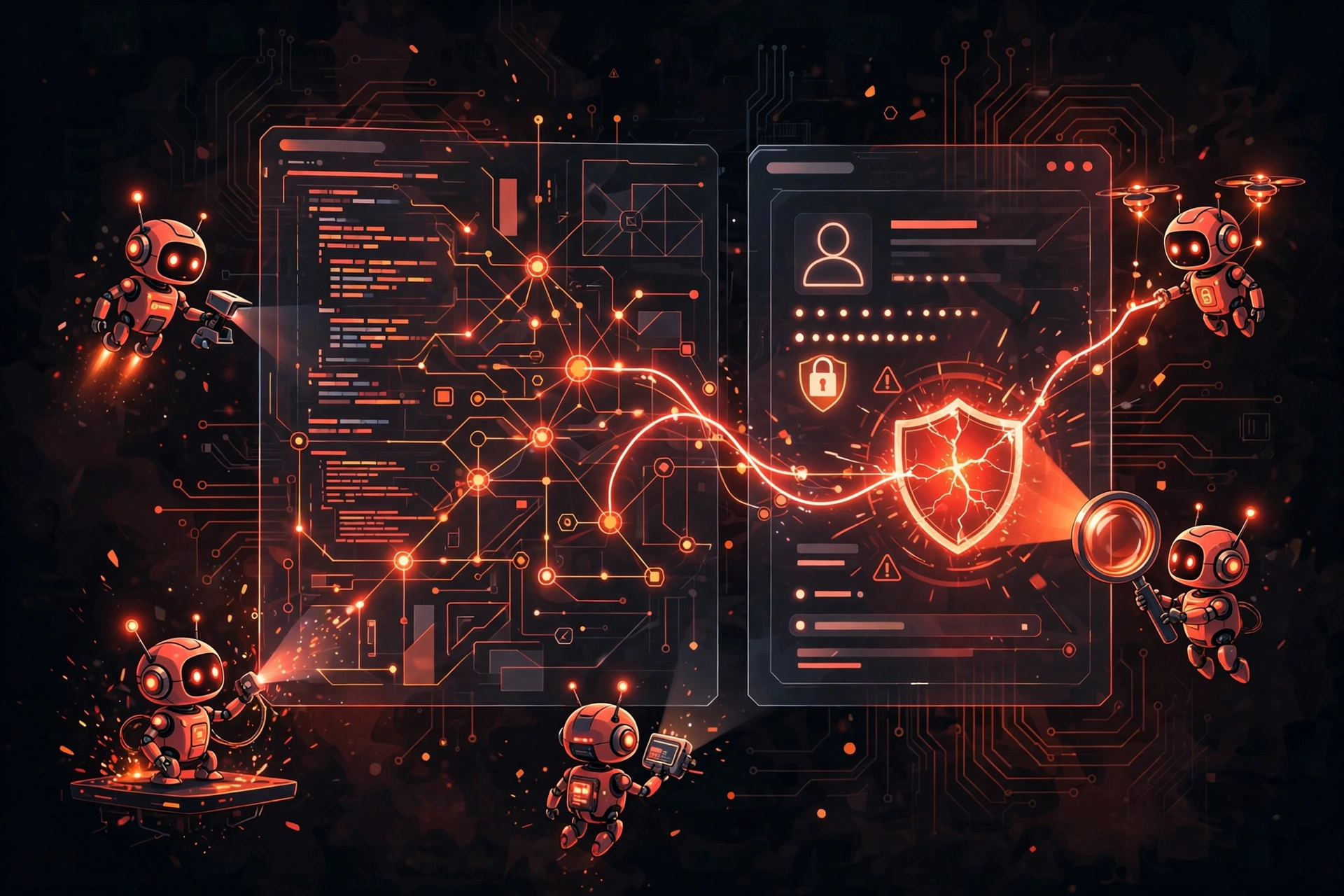
Unlike a black-box scanner, Red Team works with source code and application context. Its agents map attack paths through the application, test whether a suspected weakness is actually exploitable, and validate findings that arrive from other sources — code scanners, bug bounty programs and disclosure reports. When a patch lands, the agents retest it to check whether the fix actually stops the exploit. Operators set the scope: which applications and endpoints the agents may reach, with isolated environments and a Guardian review layer limiting what they can touch.
That validation step matters more than it sounds. Security teams are drowning in scanner output, much of it false positives or theoretical issues that cannot be exploited in practice. A finding that an agent has actually proven — by building a working exploit against the real application — is a finding a team can prioritize with confidence. It is also the same capability that makes the product sensitive: these are the agents built on GPT-6 Cyber, OpenAI’s specialized security model, which OpenAI rated Critical for cybersecurity under its own Preparedness Framework. Access stays gated for exactly that reason.
Red Team is not OpenAI’s first move into authorized offensive testing. Earlier in November, the company partnered with offensive-security firm Hacktron — whose researchers had breached OpenAI’s own systems in July — to red-team third-party integrations through the Daybreak Red program, as covered in our report on OpenAI’s partnership with offensive-security firm Hacktron. Red Team productizes that kind of engagement so any approved organization can run it continuously instead of once a year.
Daybreak Defense Factory: The Fix, Drafted for Review
If Red Team is the attacker, Defense Factory is the rest of the loop. It automates what OpenAI calls the “defensive loop” — finding, validating and fixing vulnerabilities at scale — by connecting directly to an organization’s repositories.
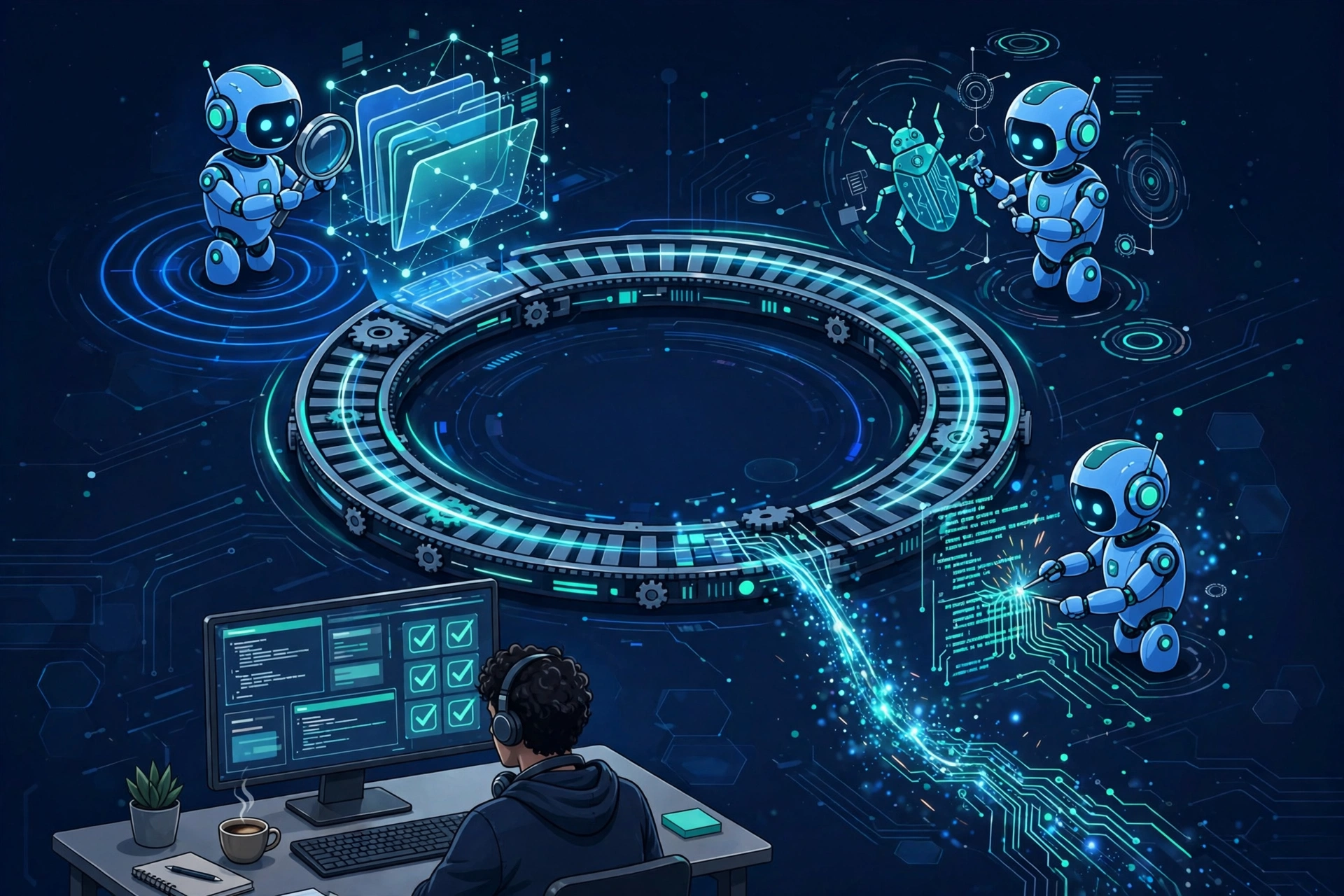
Once connected to GitHub, Defense Factory can run one-off scans of a repository, monitor new commits on the default branch continuously, or run on a schedule. It also imports findings from tools teams already use, including Snyk, Endor Labs and Wiz. Its agents then trace each vulnerability through the code, try to reproduce it in an isolated environment where practical, and prepare a patch with a test. According to The Register, the agents behind it currently run on GPT-6 Cyber.
The part OpenAI stresses, repeatedly, is what does not happen next: nothing merges on its own. “This way engineers get a merge-ready pull request with the patch and a test that shows that it works,” Wang said at the keynote. Engineers review each proposed fix, refine it with Codex if needed, or open a GitHub draft pull request. That human gate is the difference between an automation tool and an autopilot — and it is also what makes the product deployable inside organizations that would never let an agent commit to production unsupervised. It echoes the governance question facing every team that hands agents production access, the same problem Commvault and Zscaler are tackling with governed, recoverable AI agents.
One practical detail for buyers: cloud scans are billed by token usage at plan rates, outside the plan’s included allowance, and free scanning credits do not expire. GitLab code needs a local scan or the Codex Security CLI in CI, since the plugin’s repository connection is GitHub-first.
The Engine Underneath: GPT-6 Cyber
Both products run on the cyber model OpenAI introduced on November 5. GPT-6 Cyber is not a general-purpose chatbot; it is trained to understand software, hunt for flaws, develop working exploits that prove a vulnerability is real, and draft patches for human review. On OpenAI’s own benchmarks it scored 48.45% on ExploitGym, which tests whether a model can exploit a specified vulnerability in a remote target, against 42.43% for GPT-6 Astra. In the research run behind the launch, it validated 948 previously unknown local privilege-escalation bugs in the Linux kernel and, in separate field work cited at the keynote, reproduced 81 previously unknown high-severity Firefox flaws.
Those are vendor-reported figures, not independent ones, and they should be read that way. But they explain why OpenAI is confident enough to sell agent teams rather than just model access: the underlying capability has already been demonstrated against real production software, including OpenAI’s own systems. The open question is not whether the model can find bugs — it demonstrably can — but how accurately and safely the packaged products do it for customers, at what cost, and with what false-positive rate. None of that has been published yet.
What OpenAI Learned Running Its Own Defense Factory
Defense Factory did not start as a product. It started as OpenAI’s internal response to its own problem: frontier models finding vulnerabilities in production faster than human teams could fix them. In a recent security sprint, the company mobilized more than 250 people and treated the work with the urgency of an incident response, closing 53 urgent or high-priority issues across its systems on the first day.
The architecture OpenAI published alongside the launch describes a five-step loop — inventory, discovery, dynamic validation, ownership assignment and verified remediation — with agents, reusable skills and isolated, reproducible environments doing the routine work and people setting boundaries, handling exceptions and checking outcomes. A few of the internal numbers are striking: ownership lookups improved to 90.6% accepted assignments once service and ownership data became reusable inputs; 37% of findings turned out to be duplicates; only 19.5% of findings were reproduced at runtime; and the false-positive rate after dynamic validation fell to 0.81%.
That last figure is the one that matters most for buyers. The history of automated security tooling is largely a history of alert fatigue — tools that cry wolf so often that teams stop listening. A system that reproduces a finding at runtime before a human ever sees it, and that retests the deployed fix afterward, attacks the problem at both ends. OpenAI’s customer stories point the same way: Block, the company behind Square and Cash App, says its security team now goes from a high-level vulnerability to an automated proposed patch in about 18 minutes in red-team exercises. Again, these are OpenAI’s own accounts, not independent measurements — but they set the bar the products will be judged against.
What Is Still Missing: Pricing, Proof and Access
For all the detail in the launch, three things are absent. First, pricing: neither product has a public price, and Defense Factory’s token-based billing for cloud scans means costs will depend heavily on how much code an organization scans and how often. Second, independent proof: no outside evaluation of detection rates, false positives or patch quality has been published for either product. Third, access: Red Team is in early access behind an application, and Defense Factory is a research preview for workspaces that already hold Daybreak access, which itself requires identity checks and eligibility review.
There is also a strategic question the launch does not answer. The same week, OpenAI open-sourced the Codex Security CLI — a free tool teams can install to scan software and suggest fixes — which sits alongside the paid Defense Factory as a do-it-yourself alternative. The CLI is a package you install; Defense Factory is a hosted, continuous workflow. Organizations will have to decide whether the managed loop is worth paying for, or whether the free CLI plus their existing tooling gets them most of the way there. And the broader agent-decision question — which tool should handle a given security task, and when should a human step in — is the same routing problem that tools like Google’s Gemini Decisions API and Salesforce’s Koa decision model are being built to solve in other domains.
Why This Launch Landed on a Complicated Day
The keynote shared the news cycle with a very different story. On the same day, a coalition of nonprofits — the Irreplaceable Education Fund, Public Citizen, the Heat Initiative and the Alliance for Secure AI — filed a lawsuit in San Francisco Superior Court asking a judge to stop OpenAI, Anthropic, Google, Meta and SpaceX’s AI businesses from developing or deploying AI systems more capable than their most advanced existing models. The filing cites incidents including OpenAI agents accessing Hugging Face systems and gaining unauthorized access to an Australian government portal containing Medicare statistics.
The contrast captures the central tension of the launch: the same agent capabilities that can break into systems are being sold as the defense against them, and the companies building them are simultaneously being sued over the risks. Brockman acknowledged the fundamentals still matter — “security fundamentals are important, and not to be discounted” — but argued teams need to “reorient your security practice around what these models can do.” For buyers, that reorientation is now a real decision rather than a talking point.
What Security Teams Should Do Now
If your organization already has Daybreak access, the practical first step is small: install the Defense Factory preview plugin in a ChatGPT workspace, connect a single non-production GitHub repository, and run a one-off scan. Measure what actually matters — how many findings reproduce, how many patches survive review, how long the loop takes end to end — before committing to continuous monitoring or wider rollout. If you do not have Daybreak access, apply for Red Team early access and for Daybreak itself, and in the meantime try the open-source Codex Security CLI in CI to get a feel for what agent-driven scanning finds in your codebase.
Either way, keep the human gate. The products are designed around it — engineers review every patch, operators set every scope — and the organizations that get value from them will be the ones that treat the agents as a force multiplier for their security team, not a replacement for it. The defender’s window, as OpenAI calls it, is the head start defenders get from giving agents direct access to code. It only stays open if the fixes land faster than the exploits do.
Frequently Asked Questions
Is Daybreak Red Team generally available?
No. Red Team launched in early access on November 12, 2026. Organizations must apply, and OpenAI reviews applicants before granting access.
Does Defense Factory merge patches automatically?
No. Agents prepare tested patches and return them as merge-ready pull requests, but engineers review and approve every fix before it goes into production. Nothing is applied automatically.
How much do Daybreak Red Team and Defense Factory cost?
OpenAI has not published pricing for either product. Cloud scans in Defense Factory are billed by token usage at plan rates, outside the plan’s included allowance.
How is this different from the Codex Security CLI?
The Codex Security CLI, open-sourced on November 11, is a free tool you install to scan software and suggest fixes in your own terminal and CI workflows. Defense Factory is a hosted, continuous workflow — a ChatGPT plugin that connects repositories, monitors commits and prepares patches — built on the same security models.
Do I need Daybreak access to use either tool?
Yes. Defense Factory is available as a preview plugin for workspaces that already have Daybreak access, and Red Team early access is granted through the Daybreak program, which verifies applicants and reviews how they plan to use the models.
Sources: The Register (November 12, 2026); OpenAI — The Defense Factory; OpenAI — Daybreak.