AMD is turning up the pressure on NVIDIA. On November 12, the chipmaker announced a new Instinct MI450X GPU for its Helios rack-scale AI systems and published measured inference results for the flagship MI455X — results AMD says beat NVIDIA’s Vera Rubin platform by up to 30% on a popular open AI model. It is AMD’s most direct challenge yet to NVIDIA’s grip on the AI accelerator market, and it comes with an important caveat: the headline number comes from AMD’s own labs.
What AMD announced on November 12
The update covers three parts of AMD’s Instinct MI400 Series portfolio, the company’s 2026 generation of data-center GPUs. First, new measured inference results for the MI455X running on the AMD Helios rack-scale solution. Second, a brand-new chip, the Instinct MI450X, giving Helios customers a second GPU option. And third, fresh details on the MI430X, a GPU aimed at high-performance computing and AI for science.
Helios is the system at the center of all of it: a rack-scale design that packs 72 MI455X GPUs together with sixth-generation AMD EPYC 6 Venice server CPUs, ROCm software and Pensando networking into a single rack, built to run very large AI models that no single GPU can hold.
Meet the MI450X: 288 GB of HBM4, same muscle as the MI455X
The MI450X is the most practical part of the announcement. It offers 288 GB of HBM4 memory per GPU while delivering, according to AMD, the same core compute, memory bandwidth and scale-up and scale-out connectivity as the MI455X. The MI455X keeps the larger memory — 432 GB of HBM4 with up to 23.3 TB/s of bandwidth — for bigger models, longer contexts and heavier concurrency.
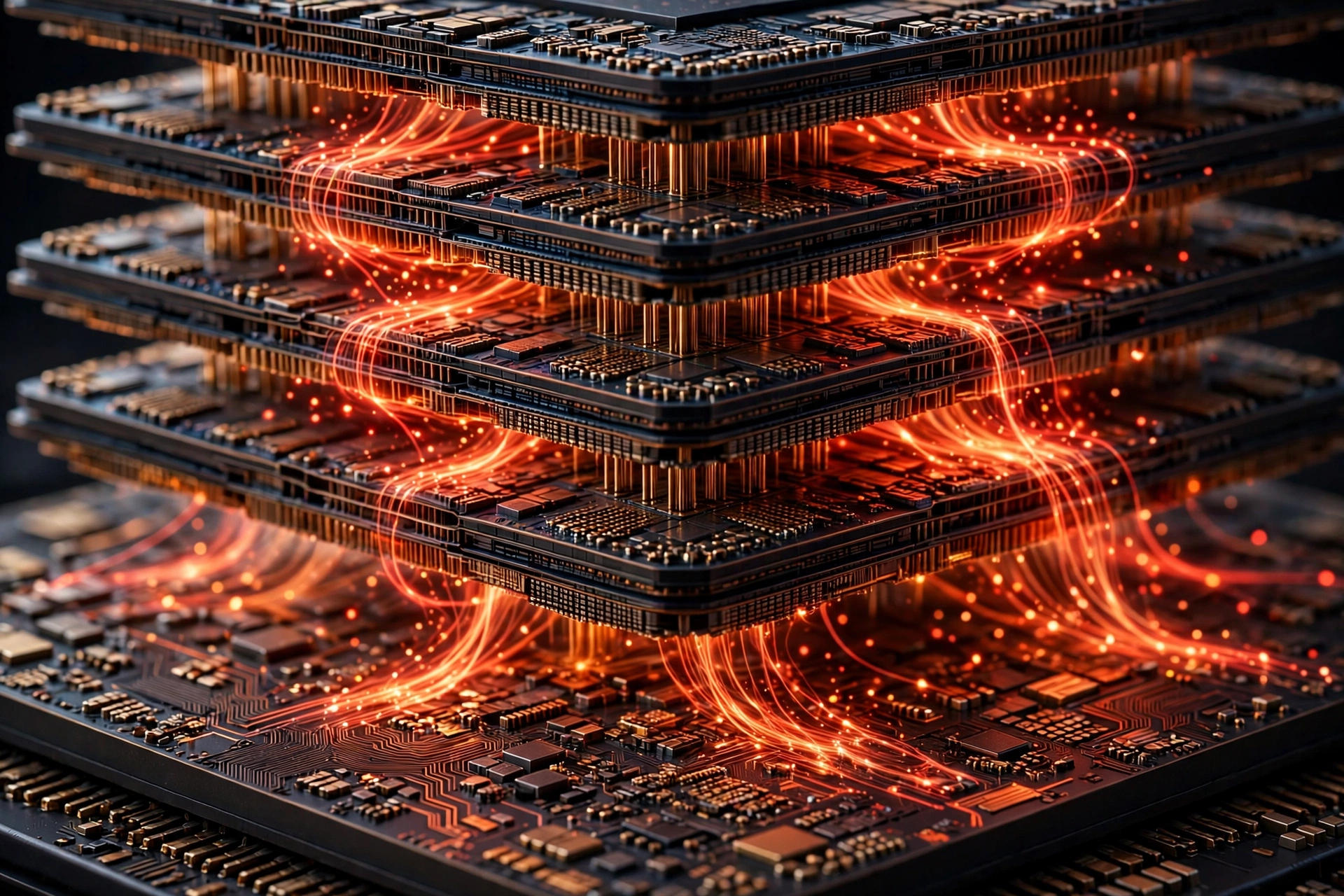
That choice matters because memory capacity decides which models a system can run at all. A model that does not fit in GPU memory either runs slowly, split across more hardware, or does not run. By offering two memory options on the same Helios architecture, AMD lets customers match the GPU to the workload instead of paying for memory they will not use — and, for workloads that fit in 288 GB, the MI450X targets the same throughput and response-time goals at a lower operating cost.
Both chips share the same Helios architecture and the same ROCm software foundation, so customers can mix and match within their deployments rather than qualifying a new platform.
The headline number: 21,333 tokens per second on DeepSeek-R1
The benchmark is the part of the announcement that will travel furthest. AMD says its MI455X, running inside a Helios rack, processed 21,333 tokens per second per GPU on DeepSeek-R1, a widely used open AI model, in an MLPerf Inference Offline configuration. AMD claims that is up to 30% higher throughput than the published MLPerf Inference v6.1 result for NVIDIA’s Vera Rubin NVL72 system.
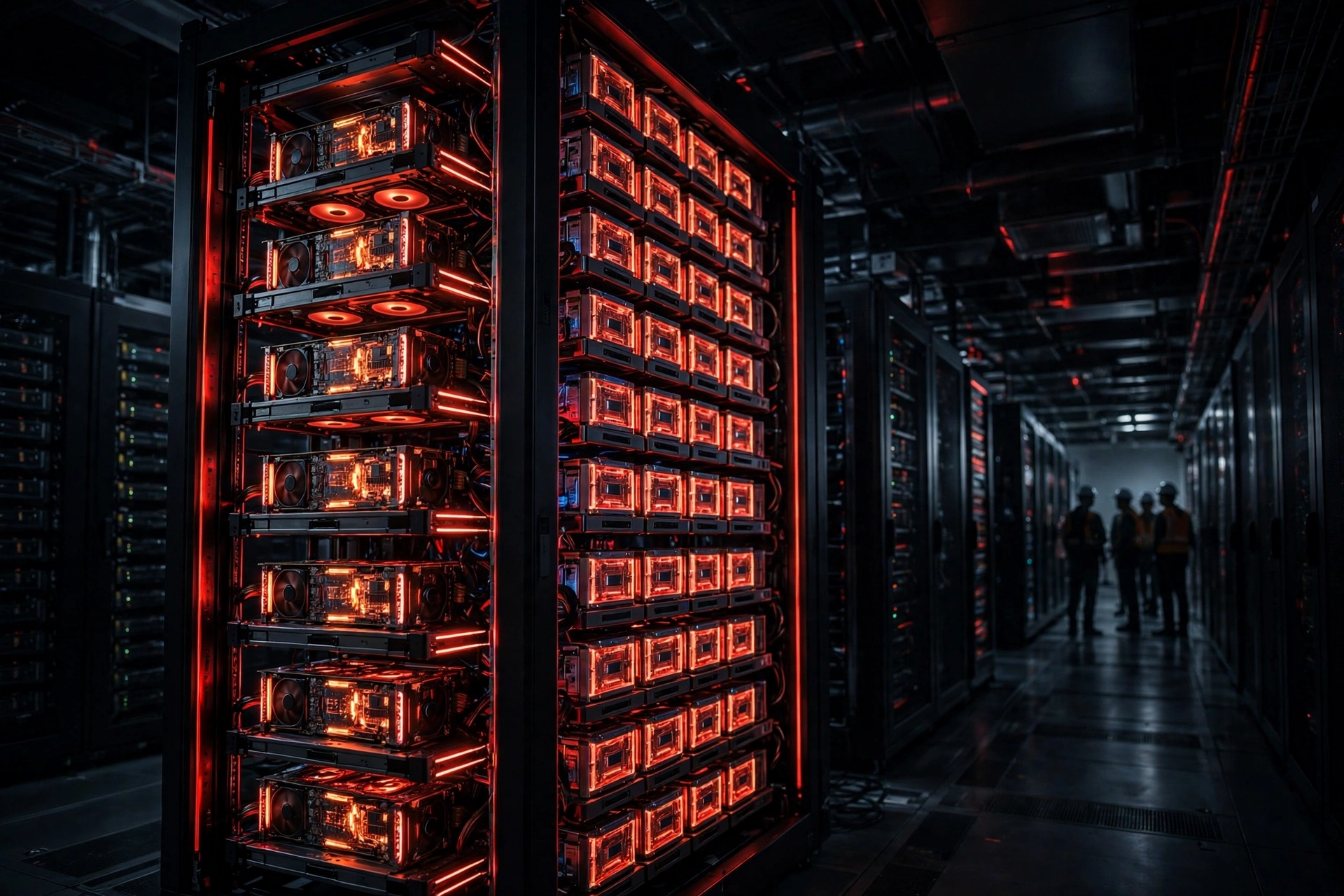
DeepSeek-R1 is a demanding test: a large reasoning model where inference speed directly decides how many users one rack can serve and how much each answer costs. If AMD’s number holds up in independent testing, it would make Helios a serious option for the cloud providers and AI labs that run these models at scale — the same buyers NVIDIA has dominated for years.
There are already signs of commercial traction. Cloud provider Vultr has said it will offer MI455X GPUs and Helios-based systems on its platform, and is taking preorders for hardware arriving in the fourth quarter of 2026.
Reading the 30% claim carefully
The 30% figure deserves a close look before anyone treats it as settled. The test was conducted by AMD Performance Labs in October 2026, using an AMD-tested MLPerf Inference Offline configuration. The NVIDIA number it is compared against is the published MLPerf Inference v6.1 result for the Vera Rubin NVL72 in the Closed Division, retrieved from MLCommons on November 11, 2026.
That comparison is legitimate in one sense: both numbers come from the same benchmark family, running the same model. But it is still AMD’s own test, run on AMD’s own system, compared against a published NVIDIA result rather than a head-to-head run on identical terms. It is not an independent MLPerf-certified AMD submission, and it is not proof that AMD’s chips are faster on all workloads. AMD’s own footnotes add that results may vary based on model, configuration, software and other factors.
The honest takeaway is narrower — and still significant. On this model, in this configuration, AMD’s flagship rack is now posting numbers in the same league as NVIDIA’s latest, and AMD is confident enough to publish them. Independent benchmarks and real customer deployments will decide how much of that gap is real.
MI430X: the sibling built for science
The third piece of the announcement is easy to overlook but matters for a different audience. The MI430X targets high-performance computing and AI for science, with native double-precision (FP64) compute, 432 GB of HBM4 memory and up to 23.3 TB/s of memory bandwidth. It is aimed at national labs, universities and research centers running simulations and scientific AI — workloads where precision matters more than the low-precision math that dominates chatbot inference. AMD says the MI430X is expected to be available in 2027.
What it means for the AI chip race
AMD’s message is not just about one benchmark. The company is building a full alternative stack: GPUs, CPUs, rack-scale systems, networking and open software, with open inference software like SGLang now running across AMD, NVIDIA and other hardware. At the same time, rivals are not standing still — Google’s new TPU systems target confidential inference and massive context windows, and NVIDIA’s sovereign AI push keeps expanding its reach. NVIDIA is also in the middle of a leadership transition after Jensen Huang’s resignation this week, which adds uncertainty to the competitive picture.
For buyers, more credible competition means more choice and more negotiating leverage. Cloud providers have been eager for a second source of high-end AI accelerators for years, and a Helios rack that can genuinely keep up with Vera Rubin on flagship models would be the strongest second source yet.
What AMD did not announce
Just as notable is what was missing: AMD gave no price and no shipping date for the MI450X. The announcement also says nothing about which customers have ordered Helios systems with the new GPU, or when volume shipments begin. Until pricing and availability land, the MI450X is a promise on a spec sheet — an encouraging one, but still a promise.
Sources: AMD Newsroom (November 12, 2026); Engineering.com (November 13, 2026); DaySec (November 13, 2026).