Google has added two new systems to its eighth-generation Tensor Processing Unit lineup, and the pair says a lot about where AI infrastructure is heading. Announced on November 9, 2026, the TPU 8tx targets secure and confidential inference, while the TPU 8i Max is built for the massive context windows that AI agents now demand. Neither is a brand-new chip. Both are new systems assembled around existing eighth-generation silicon — a deliberate strategy that lets Google ship specialized hardware in months instead of years.
The announcement, posted by Amin Vahdat, Google’s senior vice president and chief technologist of AI and infrastructure, makes 2026 the first year Google has introduced four TPU systems. At Google Cloud Next in April, the company launched the TPU 8t for large-scale training and the TPU 8i for real-time reasoning. The two new systems complete the set, giving customers a purpose-built accelerator for every stage of the agentic AI lifecycle.
Four TPU systems in one year — a first for Google
Google designed its first TPUs more than a decade ago for its own internal workloads, including voice recognition and language translation. Eight generations later, the use cases have exploded: training and serving Gemini models, running agentic workloads, delivering services to Google Cloud customers, and now letting customers deploy TPUs directly in their own data centers. Google says the TPU business now has nearly 100 customers, spanning frontier labs, trading firms, retailers and universities.
The eighth-generation baseline is already strong. Google claims the TPU 8t delivers up to 2.7 times better training performance than the previous generation, while the TPU 8i offers 80% better inference price-performance. The two new systems build on that foundation by specializing in the two problems customers keep raising: keeping sensitive data safe while it is being processed, and giving agents enough memory to reason across enormous contexts. The same sovereign AI impulse driving deals like NVIDIA’s collaboration with Rebellions and SK Telecom is visible here too — read our coverage of NVIDIA, Rebellions and SK Telecom teaming up on Korea’s sovereign AI backbone.
TPU 8tx: confidential inference, built into the hardware
The TPU 8tx is Google’s third eighth-generation system, optimized for secure and confidential inference and also suited to small-scale training. It is built for regulated enterprises and governments running frontier or proprietary models and autonomous agents alongside their most sensitive data.
The problem it solves is a gap in conventional encryption. Data is normally encrypted while stored or traveling over a network, but it has to be unlocked in memory for a computer to process it. The 8tx builds security directly into the hardware layer, keeping sensitive data and model weights protected and isolated even while in active use. It uses the same silicon as the training-focused TPU 8t, paired with 5th Generation AMD EPYC CPU hosts, and adopts the low-latency Boardfly optical network Google created for real-time reasoning. Google reports up to 2x lower latency than the TPU 8t, with a near-zero performance penalty.
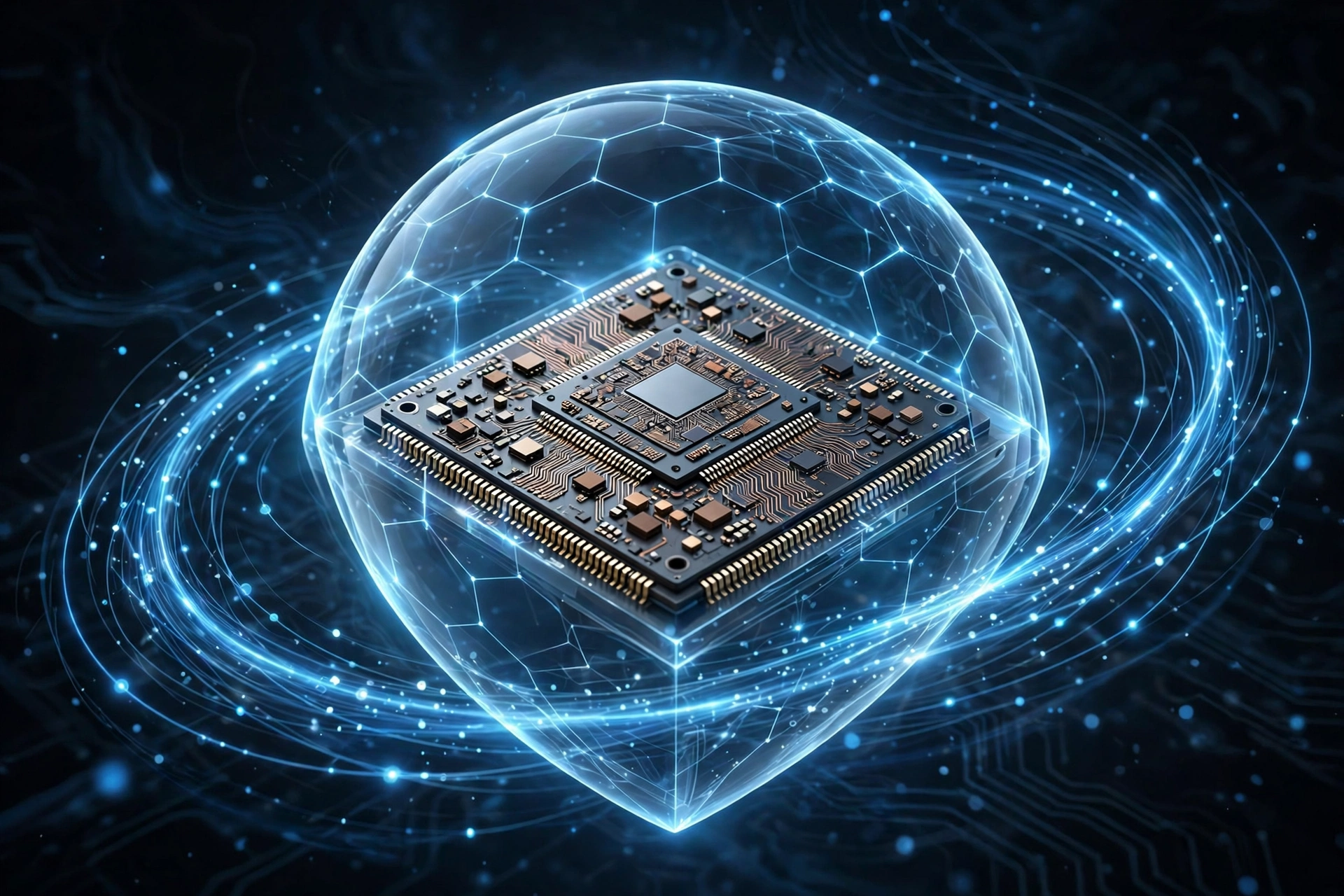
Pairing training-grade compute with a fast inference network also means organizations can run and customize their models on a single system. Teams can fine-tune models using private data, distill large models into smaller ones, and train their agents through reinforcement learning — all without migrating sensitive data between separate clusters. That matters for banks, hospitals and government agencies, where moving data between systems is often the riskiest step in the whole pipeline. It is the same security-first thinking behind the hardware platforms in our coverage of NXP’s unified robotics platform for trusted physical AI.
One honest caveat: Google’s announcement describes the security boundary in broad terms and publishes no attestation design for independent review, so security architects should treat the confidential-computing claim as a vendor statement until the details and independent testing arrive.
TPU 8i Max: breaking the memory wall for agents
The TPU 8i Max attacks a different bottleneck. When dozens of AI agents work together across an entire software codebase or hours of video at once, memory bandwidth — not raw compute — becomes the limiting factor. Google’s answer is to put two low-latency TPU 8i chips onto a single package.
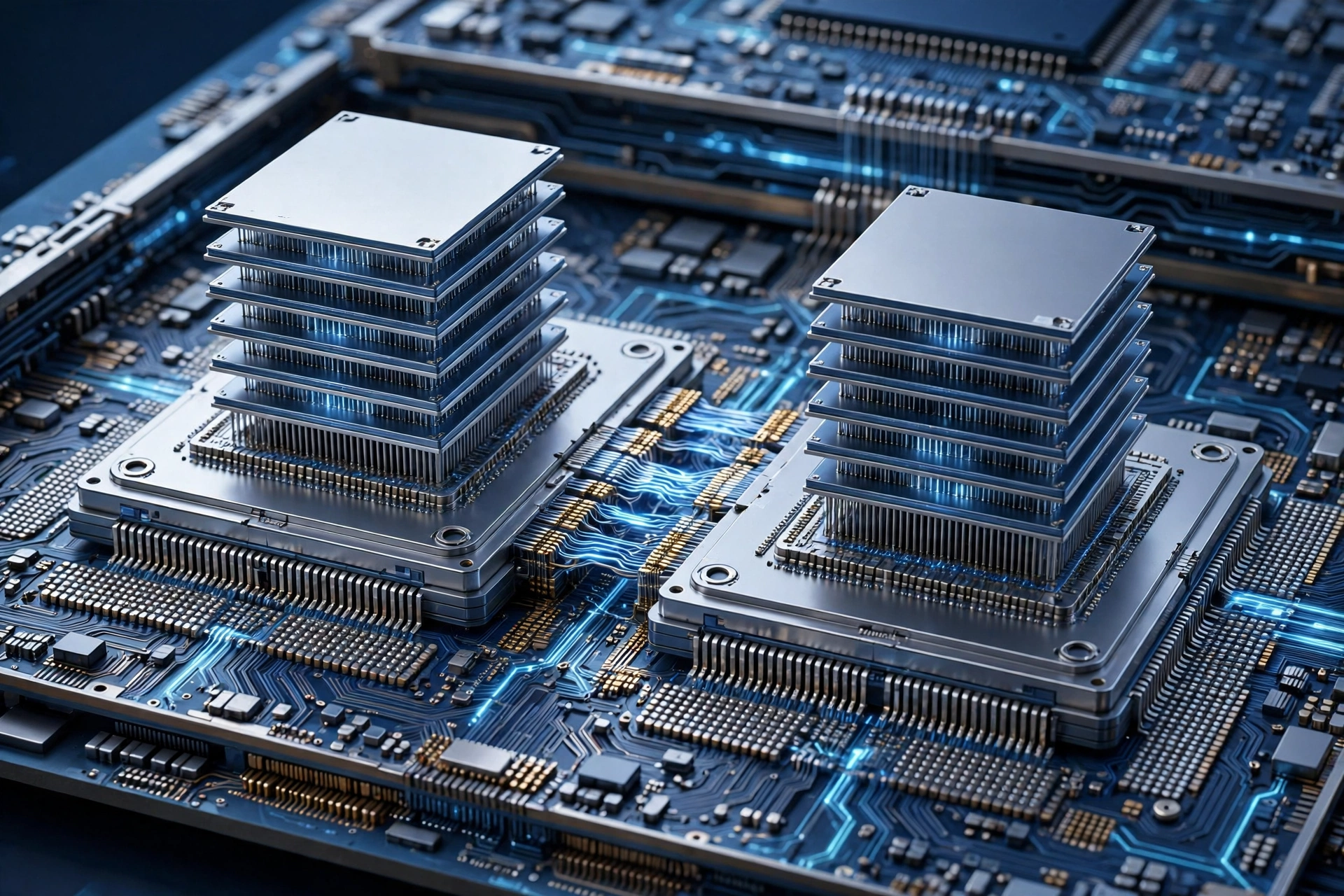
The package delivers double the compute, double the on-chip SRAM and double the high-bandwidth memory (HBM) bandwidth of a single TPU 8i. That works out to 768 MB of on-chip SRAM and 17.2 TB/s of HBM bandwidth, against a baseline of 288 GB of HBM and 384 MB of SRAM on the original 8i. Because the 8i Max fits twice the silicon within the existing rack footprint, data centers can deploy significantly more computing power per square foot and per watt for context-heavy workloads — the kind of long-context agent work that Google’s own ADK framework is now built for, as we covered in Google ADK 2.14.0.
A system, not a new chip — why Google is reconfiguring silicon
Google is careful to distinguish these launches from the arrival of new base chips. Designing a new chip means laying out billions of transistors through a multi-year design and manufacturing cycle. A system, by contrast, is about how compute, networking, storage, packaging and security are assembled around the chip — and that can be changed in months.
That distinction is the core of Google’s modular AI Hypercomputer approach. TPUs are treated as building blocks whose memory, optical networking, packaging and security can be adjusted, so engineers can deliver specialized supercomputers quickly. The two additions apply the method differently: the 8tx changes the hosts, network and security around training silicon, while the 8i Max changes the package around inference silicon. External organizations are increasingly shaping the requirements — the massive context windows and specialized encryption in these two systems came directly from customer requests.
The software stack: PyTorch, TPU Sync and Cloud Pathways
Hardware is only half the announcement. Google is also working systematically to make TPUs as easy to use as general-purpose hardware. Last month it open-sourced TorchTPU, so PyTorch code and Hugging Face models now run natively on TPUs, alongside out-of-the-box backends for inference engines like vLLM and SGLang. A new open-source TPU agent suite, now in preview, plugs into coding tools such as Claude Code, Cursor and Google Antigravity to automate TPU onboarding, diagnose bottlenecks and autotune kernels using plain language.
Two more open-source pieces target the memory wall directly. TPU Sync, the model-state layer for TPU clusters, turns chip HBM, host DRAM, shared storage and the data center network into a single co-designed memory hierarchy — Google says it cuts KV transfer latency and time to first token by more than 90%. And the Agent Compute Engine automatically suspends idle agent sessions and shifts working memory off the chip in milliseconds, cutting infrastructure costs for agents that pause while waiting on tools or human feedback.
On the orchestration side, Cloud Pathways is now generally available on Google Kubernetes Engine, bringing the Google DeepMind runtime behind Gemini to every Google Cloud customer, and GKE dynamic slicing — which assembles TPU topologies on demand — is also generally available, with Google claiming job startup times up to 5x faster and fault recovery up to 4.5x faster.
What is still missing: availability and pricing
The honest gap in the announcement is timing. Google provided no availability date and no pricing for either new system, and no eighth-generation TPU has a published price. Amin Vahdat told Bloomberg both new versions are expected to launch next year, in 2027, and Oracle’s cloud is expected to start offering TPUs the same year. The earlier 8t and 8i systems are still due to go online by the end of 2026.
That means the performance claims — double the memory bandwidth, half the latency, near-zero penalty — are Google’s own numbers, with no independent test published so far. Enterprises planning 2027 capacity should treat the 8tx and 8i Max as a roadmap, not hardware they can order today. The pattern is familiar from other recent AI security stories, including the DeepMind agents that found weaknesses in legacy 1024-bit RSA encryption — vendor claims deserve verification before they become procurement decisions.
What it means for enterprises
For regulated industries, the 8tx is the more consequential of the two systems. Confidential inference has so far mostly meant NVIDIA GPUs in confidential VMs; a TPU option gives Google Cloud customers a second accelerator family and keeps sensitive workloads on the same platform that trains their models. For teams running multi-agent systems, the 8i Max addresses the real bottleneck those workloads hit first — memory — rather than adding compute they cannot feed.
The broader signal is that AI hardware competition is no longer just about peak chip speeds. With roughly two-thirds of AI compute now going to inference, specialization in inference hardware, memory systems and security boundaries is where the differentiation lives. Google shipping four TPU systems in a single year shows it intends to compete on system design, not just silicon — and on an open software stack that makes those systems usable without rewriting PyTorch code.
Bottom line: The TPU 8tx and TPU 8i Max are not new chips, and they are not available yet. But they are a clear statement of Google’s AI infrastructure strategy: package existing silicon around the two hardest problems in production AI — keeping sensitive data safe while it is used, and feeding agents enough memory to reason at scale. Enterprises in regulated industries and teams running long-context agents should watch the 2027 launch closely, and ask for the security and performance details in writing before committing.
Sources
- Google’s official announcement: Introducing TPU 8tx and TPU 8i Max
- Unite.AI analysis: Google Adds TPU 8Tx and TPU 8I Max to Eighth-Generation Lineup
- TechTarget: Google specializes TPUs for agentic, confidential computing