On November 9, 2026, NVIDIA, Korean AI chip startup Rebellions and SK Telecom announced a collaboration to build Korea’s sovereign AI infrastructure — a deal that puts a Korean-designed processor at the heart of the country’s AI ambitions. Rebellions will connect its next-generation Rebel R200 neural processing units to NVIDIA’s platform through NVLink Fusion, and SK Telecom will deploy the resulting systems in its AI data centers. Backed by Korea’s Ministry of Science and ICT, the project aims to give Korea AI services built on its own language, models and silicon, with the first R200 systems expected to be ready for deployment in 2028.
What the three companies announced
The joint announcement, issued from Seoul on November 9, 2026, has three moving parts. Rebellions plans to adopt NVIDIA NVLink Fusion to connect its Rebel R200 NPUs to NVIDIA’s open infrastructure platform for rack-scale inference, and to use the NVIDIA MGX rack architecture for system development. SK Telecom plans to deploy those systems in its AI data center, combining them with its proprietary foundation models — including A.X K2 — and public-facing services under the government’s “AI for All” project. And Korea’s Ministry of Science and ICT (MSIT) is supporting the collaboration as the start of broader work between NVIDIA and Korean NPU companies.
The tone from the top was unambiguous. “Korea has the talent, technology and industrial ambition to become a world leader in AI,” said Jensen Huang, founder and CEO of NVIDIA. “Sovereign AI gives nations the power to turn their language, culture and expertise into intelligence.” Rebellions cofounder and CEO Sunghyun Park called the announcement “a turning point, opening a new chapter for sovereign AI by connecting Korea’s AI silicon and models with global systems technology.” SK Telecom president and CEO Jung Jai-hun said the deal validates “the potential of next-generation sovereign AI infrastructure by combining global AI infrastructure technology with Korean AI semiconductors.”
NVLink Fusion: the glue between Korean silicon and NVIDIA racks
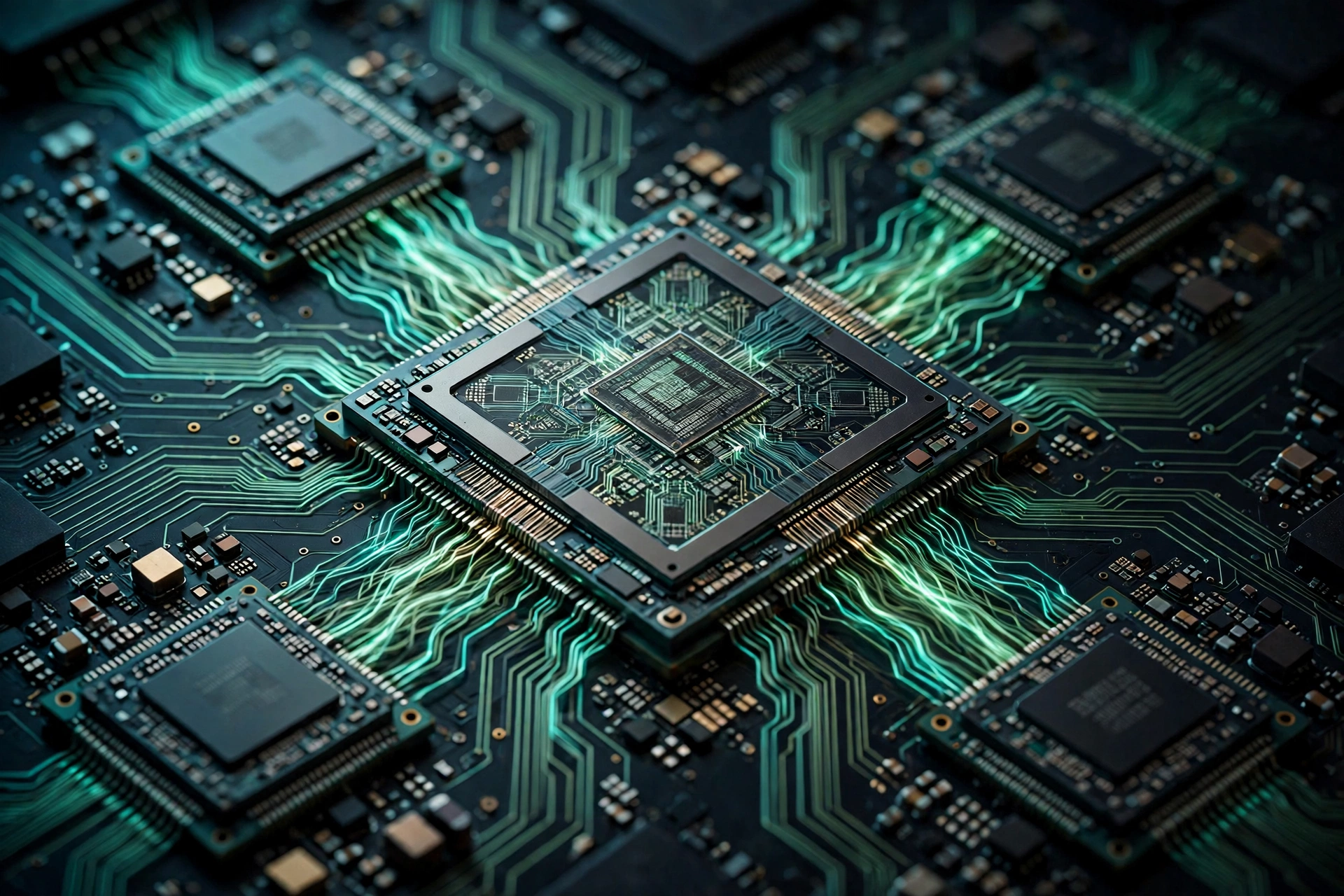
The technical core of the deal is NVLink Fusion, which extends NVIDIA’s platform to custom XPUs. It lets chipmakers combine their own specialized silicon with NVIDIA’s high-bandwidth, low-latency scale-up networking and its established infrastructure ecosystem — improving performance, reducing deployment risk and speeding time to market, according to the announcement.
Rebellions is developing the R200 as an inference accelerator, optimized for low-latency and energy-efficient inference on frontier models, including multitrillion-parameter mixture-of-experts models. Through NVLink Fusion, the R200 NPUs will connect within a rack over NVIDIA NVLink scale-up networking. The MGX rack architecture and its reference designs support the system development, while the MGX ecosystem gives Rebellions access to an established supply chain of original design manufacturers and component suppliers — a practical shortcut for a startup that needs to ship real hardware, not just a chip.
The pattern is familiar from NVIDIA’s other recent work: the company keeps widening the set of partners that can build on its platform rather than compete with it. Just days earlier, NVIDIA released four open-weight Cosmos 3 Nano world models for robotics and autonomous driving — read our coverage of NVIDIA Cosmos 3 Nano: Four Open World Models That Let Robots and Cars Practice in Simulation — and the Korea deal extends the same platform logic from software to silicon.
Disaggregated inference: NVIDIA GPUs for prefill, Rebellions NPUs for decode
The partners also plan a specific engineering approach called disaggregated inference: assigning different stages of AI response generation to the processor best suited to each task. In the planned split, NVIDIA GPUs would handle prefill — processing the prompt — while Rebellions NPUs handle decode, the token-by-token generation that dominates serving cost. The goal is better inference throughput and power efficiency than either chip could deliver alone.
The MGX rack design makes that split practical. Because GPU and NPU systems share the same rack footprint, power delivery and cooling, SK Telecom can plan its data center build-out alongside Rebellions’ processor development instead of waiting for finished hardware. It is a bet that the hardest part of AI infrastructure is no longer raw compute, but getting different kinds of compute to work together in one rack.
The models and services: A.X K2 and Korea’s “AI for All”
Hardware is only half the story. Through the “AI for All” program, NVIDIA will work with three selected consortia and four Korean foundation-model builders, using its Dynamo inference-serving framework to optimize and scale inference. The accompanying deployment recipes cover SK Telecom’s A.X K2, LG AI Research’s K-EXAONE 2.0, Upstage’s Solar Open 2 and Motif Technologies’ Motif-3. NVIDIA reports the recipes, optimized for B200 GPUs, deliver up to 2x out-of-the-box performance, and they are intended to help developers move the Korean open models into production.
The workforce side matters too: NVIDIA training and certification programs, hackathons and technical seminars are part of the package, aimed at strengthening the GPU skills needed to run the infrastructure. Sovereign AI, in this telling, is not just a chip deal — it is models, services and people, all built for Korean language and Korean industries.
Agent security joins the deal

The collaboration also reaches into agent security. Hyundai Motor Group is exploring NVIDIA’s NemoClaw blueprints and the OpenShell runtime, and Korean security company AIM Intelligence is integrating its Starfort agent-control platform with OpenShell for employee-productivity and enterprise-workflow agents. OpenShell, part of NVIDIA’s Open Agent Safety Platform, provides sandboxed execution and policy-based controls for sensitive data, enterprise-tool access and autonomous agent actions — with Starfort adding detection of malicious instructions and data leakage.
That matters because the agents these racks will eventually run need somewhere trustworthy to act. The same logic drove OpenAI’s recent move to buy Pierre Computer, whose Code Storage gives AI-written code a Git home inside Codex — read our coverage of OpenAI’s acquisition of Pierre. Infrastructure, models and guardrails are converging into a single stack, and Korea’s deal covers all three layers at once.
Why this matters — and what to watch
Sovereign AI has become one of 2026’s defining infrastructure themes, and Korea’s deal is the most concrete version of it yet: a national chipmaker, a national carrier and the world’s dominant AI platform company, building a full stack together. The same impulse is visible elsewhere — Mistral Large 4 is pitched squarely as a foundation for sovereign AI that organizations can host and audit themselves, and Tencent Cloud Enterprise just launched a full-stack private cloud for sovereign agentic AI. What sets the Korea announcement apart is that it ties the model layer directly to domestic silicon.
Three things will tell us whether it delivers. First, the 2028 timeline: this is a partnership and engineering roadmap, not a chip developers can order today, and the R200’s performance claims are still unverified. Second, the integration itself — mixing GPUs and NPUs in one rack through NVLink Fusion is the kind of thing that looks clean in a press release and gets complicated in a data center. Third, the software: the deployment recipes for Korean models are being released now, so developers will be able to judge quickly whether the promised 2x gains hold up in real workloads.
Bottom line: NVIDIA, Rebellions and SK Telecom are not announcing a product — they are announcing a national AI supply chain. If the R200 ships on schedule in 2028 and the mixed GPU-NPU racks work as planned, Korea will have AI infrastructure that runs its own models, on its own chips, in its own data centers. That is the whole point of sovereign AI, and it is now being built in public.
Sources
- NVIDIA’s official announcement: NVIDIA, Rebellions and SK Telecom Announce Collaboration to Advance Sovereign AI Infrastructure With NVIDIA NVLink Fusion — https://nvidianews.nvidia.com/news/nvidia-rebellions-and-sk-telecom-announce-collaboration-to-advance-sovereign-ai-infrastructure-with-nvidia-nvlink-fusion
- GlobeNewswire press release (via TradingView): https://www.tradingview.com/news/globenewswire:a02cf44a6094b:0-nvidia-rebellions-and-sk-telecom-announce-collaboration-to-advance-sovereign-ai-infrastructure-with-nvidia-nvlink-fusion/
- Unite.AI analysis: NVIDIA Deepens Korean Sovereign AI Work on Chips and Rack Systems — https://www.unite.ai/nvidia-deepens-korean-sovereign-ai-work-on-chips-and-rack-systems/