OpenAI is buying the company that already powers part of Codex. On November 4, 2026, OpenAI announced it will acquire Pierre Computer Company, Inc., the startup behind Code Storage, a Git infrastructure service built for AI applications, and the open-source Trees and Diffs libraries that developers already use every time they browse files or review a change inside the Codex app. The price was not disclosed, and the deal still needs regulatory approval before it closes.
The move is easy to miss next to flashier model launches, but it may matter more than most of them. Codex can already write code; this deal is about giving that code somewhere to live, be reviewed, and be shipped from — inside Codex itself.
What OpenAI announced
OpenAI’s announcement is short and pointed: Pierre’s Code Storage will be brought into Codex, while Pierre’s open-source projects will remain open source and OpenAI will keep contributing to them. Customers can continue using Code Storage after the acquisition closes while OpenAI works to fold its features into Codex. Until closing, the two companies remain separate and independent.
What the announcement does not say is just as important. There is no closing date, no purchase price, no new Codex plan or price change, and no promise of a public Git hosting product to rival GitHub. For Codex users, nothing changed on the day of the announcement — the deal is a direction of travel, not a feature launch. OpenAI’s own framing gives the game away: it wants to make Codex “the place where developers and agents take on their most ambitious projects,” and that requires owning more of the workflow around the code, not just the writing of it.
What Pierre actually builds
Pierre was founded in 2023 by Jacob Thornton, a co-creator of the Bootstrap front-end framework, and Ian Ownbey, a former Twitter engineer. The company came out of Y Combinator and raised a $22 million Series A in November 2025, led by CRV and 01A. Its paid product, Code Storage, launched in October 2025 — roughly 13 months before OpenAI agreed to buy the company.
Code Storage is hosted Git infrastructure designed for software that writes code, not just people. It exposes native Git clone, push and fetch endpoints, SDKs in TypeScript, Python and Go, and webhooks, so applications and coding agents can create repositories, push changes, fetch history and hook storage into automated build workflows. Pierre lists a 99.99% uptime SLA and a 32 TB maximum repository size — vendor figures, but a useful signal of the scale the service is built for.
Then there are the two open-source libraries OpenAI singled out by name. Trees renders file navigation inside the Codex app; Diffs renders code changes for review. As OpenAI put it, anyone who has browsed files or reviewed a change in Codex has already used Pierre’s work. That is the quiet part of the deal: OpenAI is not buying an unfamiliar vendor, it is buying a team whose code is already load-bearing inside its flagship coding product.
Why Git broke first: the Pando story
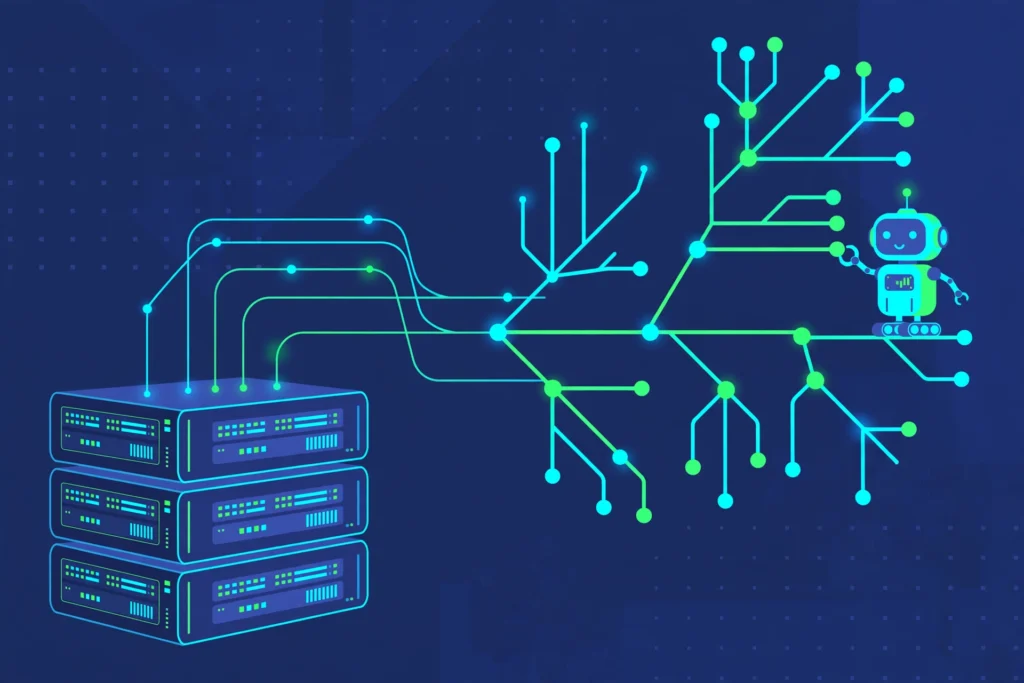
The acquisition makes more sense alongside something OpenAI published two days earlier. On November 2, 2026, OpenAI engineers Aaron Friel, Taylor Blau and Ted Nyman published “Scaling Git at OpenAI,” an engineering post describing Pando, the Git-compatible backend OpenAI built for its own monorepo after Codex pushed the old system past its limits.
The numbers in that post explain the urgency. Commits landing on OpenAI’s master branch grew 1,378% between the first quarter of 2024 and the third quarter of 2026, and the old system’s reliability at times fell below 90%, with slow fetches and pushes and failed merges. Pando, which keeps the Git protocol and client but changes what the server does, cut median push latency by nearly five times — about 80% — and now serves nearly a petabyte of Git data a day, including more than 57 terabytes of packs in a single hour. It went from kickoff to production in 10 weeks, with the core designed by a single engineer and implemented by teams of Codex agents, and has served production traffic since April 2026.
Pando is internal and OpenAI has not announced it as a product. But the Pierre deal is the external half of the same story: OpenAI learned first-hand that agent-scale development breaks conventional Git hosting, built its own fix, and is now buying the hosted Git service that can carry the same idea to Codex users. The agent wrote so much code that the plumbing had to be rebuilt — twice.
What changes for Codex users — and what doesn’t
In the short term, very little. Code Storage keeps running, its customers keep their access, and Codex subscriptions, plans and pricing are untouched. The integration work happens after closing, and OpenAI has given no timeline for when Code Storage features will appear inside Codex.
Longer term, the shape of the product is the interesting question. Today a typical Codex workflow still ends with code landing in a repository hosted somewhere else — usually GitHub. If Code Storage’s features land inside Codex, the agent’s output, its history and its review surface could all live in one place, with branches, diffs and merges handled where the code was written. That is also why Axios framed the deal as OpenAI taking aim at Microsoft’s GitHub: whoever owns the repository owns the workflow around it.
Developers should still keep expectations in check. OpenAI has not said Codex will offer public Git hosting, has not announced migration tools, and has not committed to a date for anything. The honest read is that this is infrastructure groundwork — the kind of acquisition that pays off in a year, not a week.
The bigger race: agents need a place to put code
OpenAI is not the only company buying in this direction. The same day the Pierre deal was announced, Meta bought Conductor, an app engineers use to run several coding agents side by side. And the pattern is visible across the industry: coding agents are getting voice interfaces, like Cursor’s new voice chat with coding agents, and phone-based supervision, like DigitalOcean’s Cuttlefish app for approving an AI agent’s next move from your iPhone. Every one of those experiences assumes the agent’s work lands somewhere trustworthy when the session ends.
That is the real shift. The first wave of AI coding tools competed on how well the model writes code. The next wave competes on the whole loop: task, code, review, storage, deployment. Storage is the unglamorous part of that loop, and it is exactly where agent workflows break first — too many branches, too many pushes, too many parallel agents touching the same repository. Whoever solves storage for agents owns the workflow, and OpenAI just bought a head start.
What to watch next
Three things will tell us whether this deal delivers. First, the closing itself: regulatory approval is a real condition, and the timeline is unknown. Second, the first visible Code Storage feature inside Codex — a repository view, a branch manager, or agent-created repos that persist between sessions would all be meaningful signals. Third, whether OpenAI says anything about a public hosting offering; silence there would suggest Code Storage stays a behind-the-scenes layer rather than a GitHub competitor.
For developers, the practical checklist is simple. Keep your code in your existing host — nothing about this announcement requires a migration. If you use Code Storage, note OpenAI’s commitment that you can keep using it after closing, and watch for integration announcements rather than assuming a cutoff. And if you build tools on top of Codex, the Trees and Diffs libraries staying open source is good news: the pieces you may already depend on are not going behind a wall. The deal is small, quiet and infrastructural — which is precisely why it is worth paying attention to. The companies that win the agent era may be the ones that fix the plumbing first.
Bottom line
OpenAI’s acquisition of Pierre is not about a model, a benchmark or a demo. It is about the layer underneath all three: where agent-written code lives. Paired with Pando, the in-house Git backend OpenAI built after Codex overwhelmed its monorepo, the deal shows a company systematically rebuilding version control for a world in which software writes software. The price was undisclosed and the payoff is unproven, but the direction is unmistakable — and developers who live in Git every day should be watching what Codex becomes next. The same week also brought new guardrails for AI output, with invisible watermarking now on by default for Grok API text, and new evidence of how far AI models are reaching into security work, as OpenAI’s GPT-6 Cyber security model found 948 Linux exploits while staying in scope.