Amazon’s AI shopping assistant has gone from a US-only experiment to a global product in six months — and it no longer needs your voice to work.
On Friday, November 13, 2026, Amazon expanded Alexa for Shopping to 15 countries and made shopping by text widely available to every customer who has it. The assistant launched in May 2026 for customers in the United States only. Now it is available in full in 13 countries — the US, the United Kingdom, Germany, France, Italy, Spain, Canada, Japan, India, Brazil, Mexico, Austria and Australia — and in beta in two more, the United Arab Emirates and Turkey.
The expansion matters because of what Alexa for Shopping actually is: not a voice gimmick, but Amazon’s bid to own the way people shop when an AI does the searching. It combines Rufus, Amazon’s product-discovery assistant, with Alexa+, the upgraded personal assistant that remembers your preferences and context across conversations. The result is an assistant that knows what you usually buy, what you can spend, and what you have already looked at — and can act on it.
From voice-only to text-first
The most practical change in Friday’s update is the text option. Amazon first let US customers text Alexa to shop earlier this month, but only for a select group invited by the company. The November 13 update says the ability to shop by text is now “widely available to all Alexa for Shopping customers.”
That matters more than it sounds. Voice shopping never quite took off: people do not want to read out a 16-digit card number or compare three washing machines by listening to a list. Text changes the interaction completely. When Alexa receives a text request, it gets to work finding products, building a shopping cart, making purchases and providing delivery updates — all in a conversation you can read, scroll back through and correct.
In India, where the rollout was announced on November 12, the assistant is available on select storefronts of the Amazon Shopping app and the Amazon.in website. Customers tap the Alexa icon in the bottom navigation bar of the app, or find it at the top of the screen on desktop. It is free for all signed-in Amazon.in customers, with no Prime membership or Echo device required. Amazon says more capabilities will arrive in India over the coming weeks and months.
What Alexa for Shopping can do
The assistant’s job is to compress the most tedious parts of shopping into a single conversation. Here is what Amazon says it can handle:
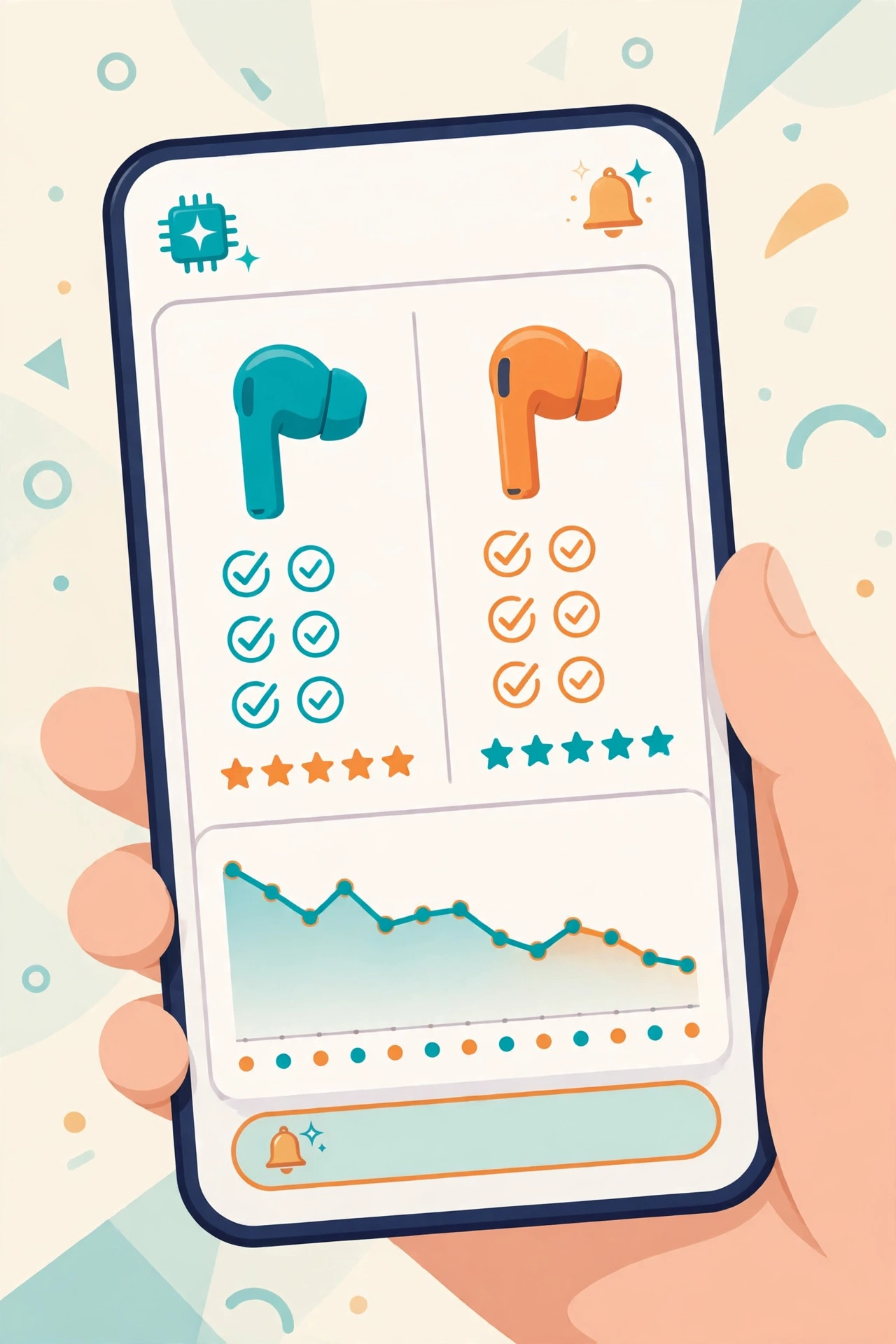
It researches and compares products. Ask it to compare two wireless earbuds and it gives a side-by-side summary of features, prices and review highlights, drawing on Amazon listings and public sources. It also surfaces AI-generated overviews at the top of search results and on product pages, summarising a category and what to look for before you start browsing.
It tracks prices over time. Tap Price History on a product page, or just ask, and you can see how a price has moved over 30, 60 or 365 days — useful for deciding whether a “deal” is actually a deal. You can also set deal alerts, and Alexa will let you know when a price drops or a relevant offer appears. Amazon says more than 4 million deal alerts were set by customers for the Amazon Great Indian Festival 2026.
It manages the basket. Tell it to add your usual items and it builds the basket from your past orders — “add my regular dog treats” or “add my usual cleaning products” — and you check out with a tap. You can also set scheduled actions, such as restocking household essentials each month if the price drops below a level you choose.
It helps with bigger decisions. For a large purchase such as a 55-inch smart TV or a gaming laptop, you can ask for a personalised shopping guide that compares options based on what matters most to you, rather than scrolling through hundreds of near-identical listings.
And it hands off when the question is not about shopping. Ask about smart-home controls, music or household tasks and it passes you to Alexa+ on the Alexa app or Alexa.com. Amazon has also built in controls over personalisation: you can view, update or remove what you have shared — shopping preferences, family members, pets, interests and dietary needs — simply by asking.
Why Amazon is moving fast
The timing is not accidental. We are heading into the biggest shopping weeks of the year, and Amazon has the data to show that AI-assisted shopping is already a large share of the market. A PYMNTS Intelligence report, “Will the 2026 Shopping Season Go Agentic?”, found that 59% of AI-assisted purchases are completed at Amazon. Amazon itself says more than 400 million customers worldwide have used its AI-powered shopping assistance in the past 12 months.
That scale is the point. Every other AI company is racing to put an assistant between shoppers and stores. Brave’s x402 protocol that lets AI agents pay for things online is building the plumbing for agents to transact directly. Meta’s Muse assistant, which can now place phone calls on your behalf, is heading for the same territory from the voice side. And the gadgets that carry these assistants are multiplying — from Google’s new Gemini smart glasses to Huawei’s new OSTA AI phone brand.
Amazon’s advantage is that it already owns the store. An assistant that can search, compare, buy and track delivery inside Amazon’s catalogue, with your order history and payment details already in place, has far less friction than a general-purpose assistant that has to negotiate with a retailer from the outside. The global rollout is Amazon turning that advantage into territory: 15 countries at once, in the local language of shopping, before the holiday season peaks.

What to watch
Three things will decide whether Alexa for Shopping becomes a habit or a novelty.
The first is trust. An assistant that knows your preferences, your family and your pets is useful — and also a lot of personal data in one place. Amazon’s pitch is that customers control what is shared and can edit it by chatting. Whether shoppers believe that, and use the controls, will shape how far personalisation goes.
The second is accuracy. A wrong recommendation costs a click; a wrong purchase costs a return. Price history and side-by-side comparisons are genuinely useful features, but they are only as good as the data behind them, and AI overviews have a habit of smoothing over the details that matter — a warranty clause, a regional variant, a model-year difference.
The third is the checkout moment. Text shopping removes the awkwardness of voice, but it still asks shoppers to let an assistant spend their money. Amazon’s bet is that a conversation you can read and correct feels safer than a voice command you cannot take back. The early numbers — 400 million users of its AI shopping help, 4 million deal alerts in one festival — suggest shoppers are willing to try.
Frequently asked questions
Can I shop by text with Alexa for Shopping?
Yes. Text shopping was first offered to a select group of invited US customers on November 6, 2026, and Amazon says it is now widely available to all Alexa for Shopping customers.
Which countries have Alexa for Shopping?
As of November 13, 2026, it is available in full in 13 countries: the US, UK, Germany, France, Italy, Spain, Canada, Japan, India, Brazil, Mexico, Austria and Australia. It is also in beta in the United Arab Emirates and Turkey.
Do I need Prime or an Echo device to use it?
No. In India, all signed-in Amazon.in customers can use Alexa for Shopping for free on select storefronts of the Amazon Shopping app and website, with no Prime membership or Echo device required.
What is Alexa for Shopping?
Alexa for Shopping is Amazon’s personalised AI shopping assistant. It combines the product knowledge of Rufus with the personal context of Alexa+ to help customers research products, compare options, track prices, set deal alerts and manage their baskets through conversation, by voice or by text.
How is it different from Rufus?
Rufus is Amazon’s product-discovery assistant. Alexa for Shopping builds on Rufus by adding the personal context of Alexa+ — your preferences, shopping history and conversations across Amazon.in and Alexa — plus shopping capabilities such as deal alerts, scheduled actions and basket management.
The bottom line
Amazon launched Alexa for Shopping in the US in May. Six months later it is in 15 countries, it takes text as well as voice, and it arrives just as the year’s biggest shopping season begins. The assistant is not trying to replace browsing entirely — it is trying to remove the parts of shopping nobody enjoys: the comparing, the price-checking, the reordering. If shoppers trust it with the small decisions, Amazon will have won the most valuable position in agentic commerce: the assistant that already knows where you shop.
Sources: PYMNTS reports on the 15-country expansion and text shopping; Amazon’s own announcement for India; FoneArena’s report on the India rollout.