Two Russian missiles and a suspected jet-powered drone came down in south-eastern Poland on Friday, in the middle of one of the largest Russian bombardments of Ukraine since the war began. Nobody was hurt and nothing was damaged — but the incident has set off the sharpest NATO-Russia confrontation in months, with Poland calling it a deliberate provocation, NATO’s chief flying to Warsaw to pledge the alliance would defend “every inch” of Polish territory, and the North Atlantic Council called into an extraordinary session on Monday.
The timing could hardly have been more pointed. The weapons crossed into Poland while European troops were taking part in military exercises in the country, preparing for a possible postwar mission in Ukraine — and just a day after President Donald Trump sat down with Vladimir Putin and Xi Jinping in China to talk about ending the war.
What Happened in South-Eastern Poland
The three objects came down in the early hours of Friday morning, during a Russian overnight attack on Ukraine involving more than 400 drones and over 110 missiles, 27 of them ballistic. According to Polish officials, one missile crashed around 35 kilometres (22 miles) from where the European military exercises were taking place. A Kh-101 cruise missile went down roughly 50 kilometres (30 miles) from the Ukrainian border, and what officials believe was likely a jet-powered drone hit about 30 kilometres (20 miles) from the border.
The impact sites were later identified as Nowy Lipowiec and Rudnik nad Sanem for the two missiles, with the drone coming down near Molodycz. Closed-circuit camera and mobile phone footage collected by Poland’s PAP news agency showed a large, loud explosion and a bright flash, apparently in a wooded area, at one of the crash sites. The Kh-101 fell burning beside a forest at Nowy Lipowiec, a few hundred metres from buildings. Polish investigators later determined the missile had been manufactured near Moscow in the second quarter of 2026.
There were no immediate reports of injuries or structural damage in Poland, Defence Minister Wladyslaw Kosiniak-Kamysz confirmed. The picture of exactly what crossed the border was still being refined on Saturday: the initial assessment was two missiles and one jet-powered drone, though the governor of the Podkarpackie region later indicated the objects may have consisted of one cruise missile and two jet-powered drones.
It was not the first time Russian weapons have landed in the area. Another Kh-101 struck near Tarnawa-Kolonia on July 30 after a Polish F-16 scrambled to intercept it — making Friday’s missile the second to come down in Bilgoraj County in under four months.
Three Minutes to Decide: Why NATO Jets Held Fire
The most revealing detail of Friday’s incident is how little time NATO’s air defences had — and how close they came to firing. According to defence outlet SOFREP, the Kh-101 spent only about three minutes over Poland after crossing the border shortly after 06:30 local time. Polish commanders said 11 objects threatened Polish airspace that morning; three crossed it, all travelling faster than 800 kilometres per hour.
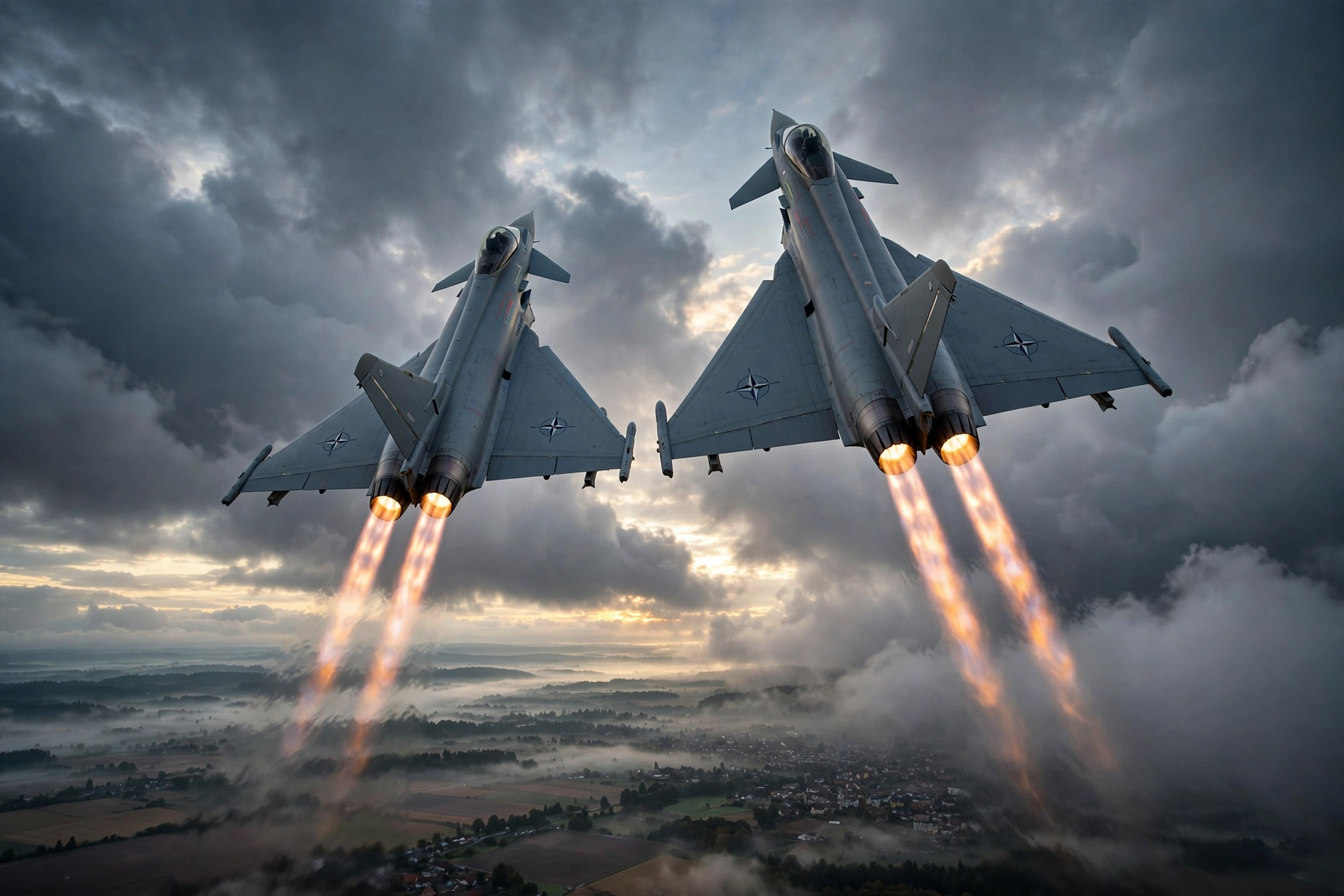
Polish and allied fighters were airborne, with Patriot batteries active. A Swedish Gripen closed on the object believed to be the Kh-101, but poor weather denied the pilot visual identification — and nobody fired. Polish rules require positive identification before engaging, to ensure a target is not civilian, and the firing chain had roughly three minutes to judge an uncertain track and the risk to people below.
Poland had rewritten its air-defence procedures less than two months earlier. The new rules let Polish and allied pilots engage without seeing a target when other evidence establishes positive identification — but on Friday, the conditions were not all met. The episode has now become a case study in the dilemma NATO faces on its eastern flank: how to defend allied airspace against weapons that cross it in minutes, without firing at something that might not be what radar says it is.
A Deliberate Provocation?
Polish Prime Minister Donald Tusk left little doubt about how Warsaw reads the incident, saying it appeared that “we are dealing with an intentional provocation” by Russia. The missiles came down as European troops took part in an unprecedented two-week military exercise that began on November 9 in south-eastern Poland. The forces are preparing for a possible postwar mission in Ukraine aimed at helping to stabilise the country and rebuild its military — a deployment Putin has said Russia would view as a legitimate target.
There was no immediate comment from Moscow on the missiles, the suspected drone, or Friday’s drills.
The attack on Ukraine that night also fits a familiar pattern. It came hours after Putin vowed to retaliate for Ukrainian strikes this week on the Kerch Bridge linking occupied Crimea with the Russian mainland. Russia’s defence ministry said it hit facilities where missiles are assembled, a plant making components for rocket fuel, and a facility where drones are assembled. Ukraine said the deadly attacks also hit apartment blocks, medical facilities, warehouses and three bridges, and extended the campaign to knock out the power grid ahead of winter — strikes on power plants, substations and transmission lines forced Ukraine’s three operational nuclear power plants to reduce generation, bringing emergency outages in 11 regions.
Britain’s chief of defence intelligence, Lt. Gen. Matthew Jones, said on Friday he was confident Russia “does not actively seek war with NATO” — but added that his greatest fear “is the risk of a significant miscalculation.” “There are too many recent examples of reckless Russian behavior where, if the incident had been slightly different, the results could have been extremely serious,” he said.
NATO’s Response: ‘Every Inch’ and a Monday Meeting
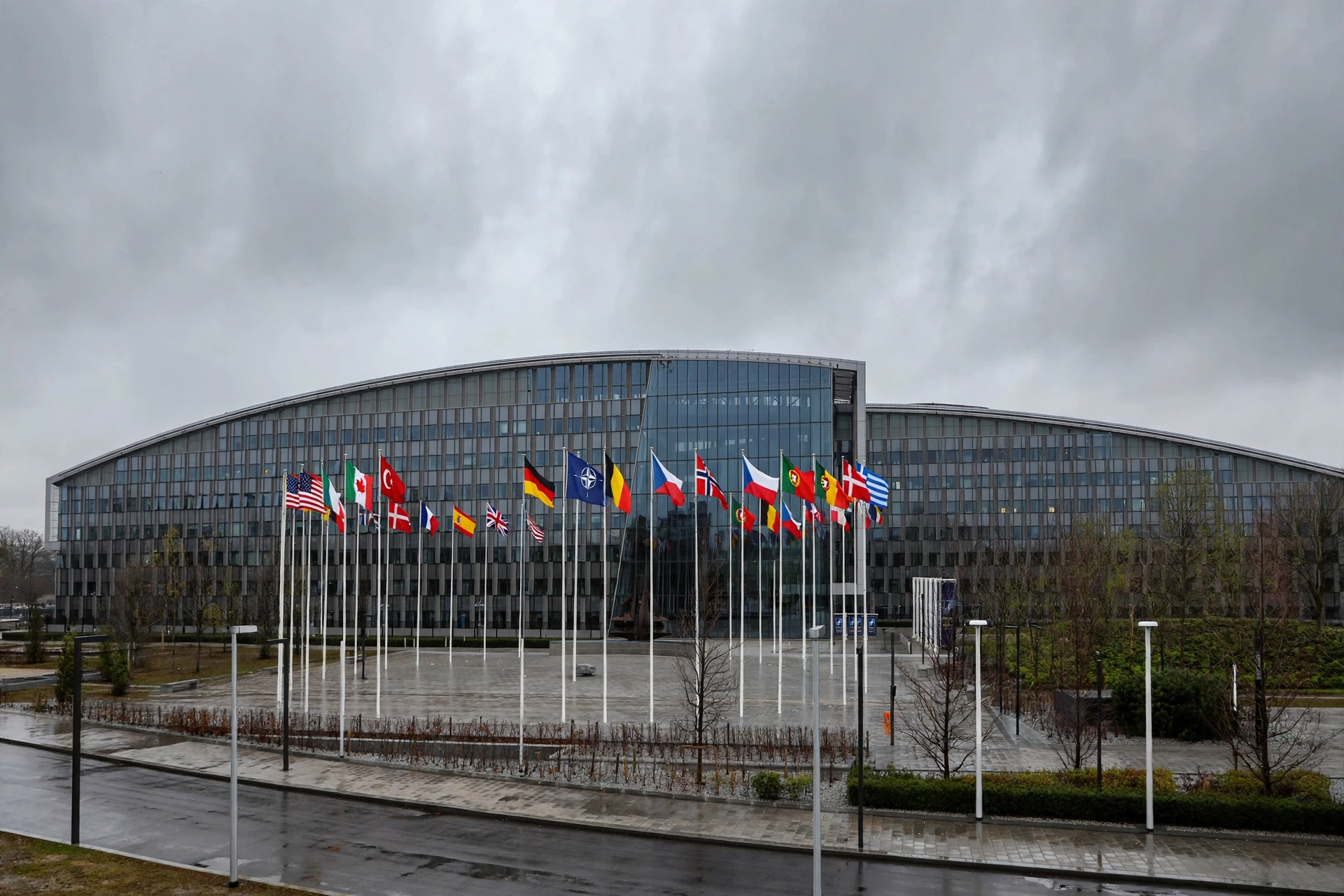
NATO Secretary-General Mark Rutte called the development a “grave violation” of Poland’s airspace within hours. “This incident is clearly dangerous — a consequence of Russia’s ongoing war against Ukraine,” he wrote on X. On Saturday he travelled to Warsaw, where he told reporters: “I can guarantee that NATO will defend every inch of Polish territory.”
Rutte added that Gen. Alexus Grynkewich, the head of NATO forces in Europe, would do everything necessary to identify any threats to defence and deterrence capabilities and implement appropriate adjustments if needed.
The condemnation spread quickly across Europe. British Prime Minister Andy Burnham described the incident as “utterly unacceptable.” European Council President António Costa said Russia “continues to spread (its) threats.” Germany’s Foreign Ministry called it “yet another example of Russia’s ongoing provocations.” Ukrainian Foreign Minister Andrii Sybiha said the incident “demonstrates the threats posed by Russian aggression to the whole of Europe and the trans-Atlantic community.”
On Monday, November 23, NATO will hold an extraordinary meeting of the North Atlantic Council at its Brussels headquarters to discuss the violation of Polish airspace. The meeting was confirmed by Poland’s Permanent Representation to NATO, and it will bring together representatives of all 32 member states.
Article 5, Article 4 — What NATO Can Actually Do
The incident has revived the question every airspace violation raises: could this trigger NATO’s collective defence clause? Under Article 5 of the alliance’s founding treaty, an attack on any ally should be considered an attack on all 32 members, obliging members to provide support — most likely military backup, but not limited to that alone.
But Article 5 is not triggered automatically. Ultimately, it is a political decision that all members must agree to, and analysts say an airspace violation does not necessarily meet the threshold for collective military action. The alliance would have to assess the circumstances and agree on an appropriate response.
Poland also has the option of invoking Article 4, which provides for emergency consultations when a member believes its territorial integrity, political independence or security is threatened. Poland did exactly that last year. Drones have repeatedly strayed into the airspace of countries on NATO’s eastern flank during Russia’s war in Ukraine, fuelling tension with the alliance and stoking fears that the conflict could spread.
Why This Matters
Friday’s incident matters for three reasons. First, it happened during exercises explicitly preparing for a postwar European mission in Ukraine — the very deployment Moscow has warned it would treat as a target. Second, it exposed how thin the margin for error has become: three minutes, bad weather, and a radar picture that could not distinguish a cruise missile from a jet-powered drone. Third, it landed in the middle of the most active peace diplomacy in months.
Just a day earlier, Trump had discussed the war at the summit in Shenzhen with Putin and Xi, according to his envoy Steve Witkoff. His son-in-law Jared Kushner told European leaders the United States believes Russia is “comfortable” with NATO-like security guarantees for postwar Ukraine, in what could be a step toward compromise. But on Friday, Russian Deputy Foreign Minister Sergei Ryabkov said even a quasi-membership in NATO for Ukraine would be unacceptable. Russia and Ukraine remain far apart on the possible terms for a peace deal.
That gap — between the language of summits and the reality of missiles crossing a NATO border — is now the central question facing Ukraine’s allies. Monday’s meeting in Brussels will be the first test of whether the alliance answers it with more than words.
Frequently Asked Questions
Did Russian missiles land in Poland?
Yes. Two Russian missiles and a suspected jet-powered drone came down in south-eastern Poland on Friday, November 20, 2026, during a large Russian attack on Ukraine. They landed near Nowy Lipowiec, Rudnik nad Sanem and Molodycz. No injuries or structural damage were reported.
What did NATO say about the incident?
NATO Secretary-General Mark Rutte called it a “grave violation” of Polish airspace and said it was “clearly dangerous.” Visiting Warsaw on Saturday, he pledged: “I can guarantee that NATO will defend every inch of Polish territory.” The North Atlantic Council meets in Brussels on Monday, November 23, to discuss the violation.
Does this trigger NATO’s Article 5?
Not automatically. Article 5 treats an attack on one member as an attack on all, but invoking it requires a political decision agreed by all 32 members, and analysts say an airspace violation does not necessarily meet the threshold for collective military action. Poland can instead invoke Article 4, which calls for emergency consultations — something it did last year.
Why did NATO jets not shoot the missiles down?
The Kh-101 spent only about three minutes over Poland, travelling faster than 800 km/h, and poor weather denied a Swedish Gripen pilot visual identification. Polish rules require positive identification before firing, and not all the conditions for engagement were met in the short window available.
Was the incident deliberate?
Poland’s prime minister, Donald Tusk, said it appeared to be “an intentional provocation,” noting the missiles came down near European military exercises preparing for a possible postwar mission in Ukraine. Moscow gave no immediate comment.
Sources
- Associated Press: Russian missiles land in Poland, as Europe held military drills nearby. NATO calls it a violation
- TBS News: Russian missiles hit Poland: What happened, and could Nato respond?
- EU Today: NATO Calls Emergency Brussels Meeting After Russian Missile Incursion into Poland
Related reading on Inspire Viral Times
- Russia Fires 110 Missiles at Ukraine Hours After Trump Calls Putin “Tired” and Ready for a Deal
- Denmark Accuses Russia of Plotting to Kill Ukrainian-American Rapper Kyivstoner
- Xi and Putin Meet in Shenzhen as Trump Lands for Historic Three-Way Summit
- Houthi Missile Hits Riyadh’s Tallest Tower: PIF Tower Damaged as Saudi Arabia Intercepts More Attacks
- Fourth Tanker Hit by Mine in Strait of Hormuz as Iran Says It Seized a US Drone