
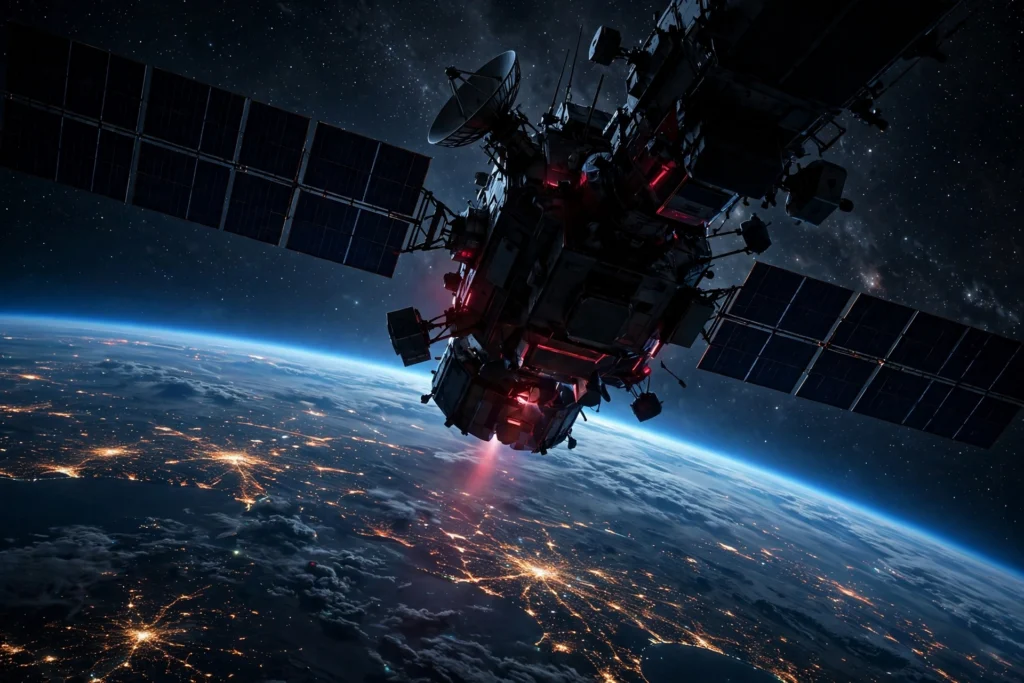
NATO intelligence services have concluded that Russia plans to launch a satellite armed with a nuclear weapon into space this year, according to a joint investigation by German media published on Monday. If the warning proves right, it would be the first nuclear weapon ever placed in orbit — and a direct breach of a treaty Moscow itself signed nearly 60 years ago.
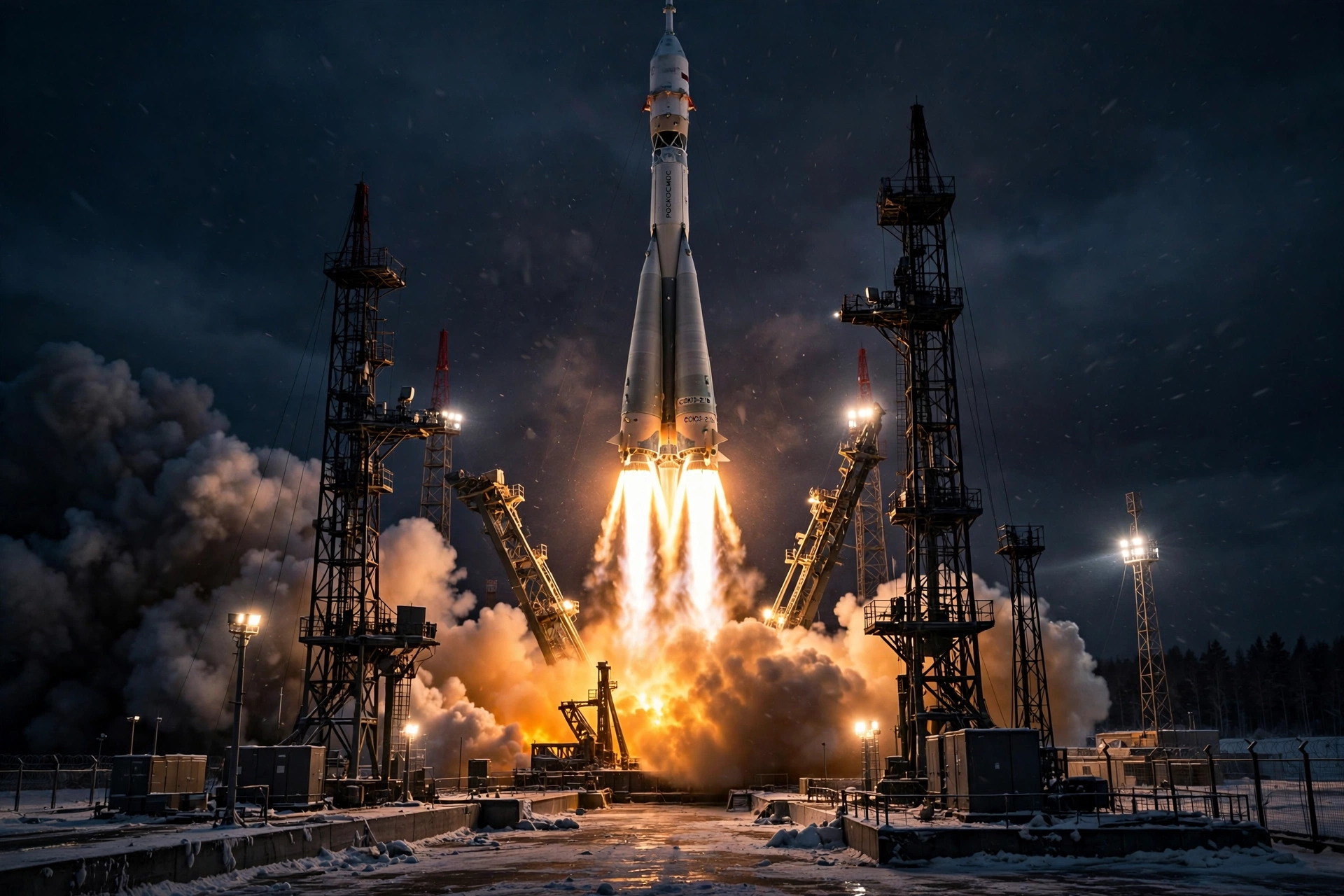
The report, by broadcasters WDR and NDR and the newspaper Süddeutsche Zeitung, says Western services — including Germany’s foreign intelligence service, the BND, and the German armed forces — have exchanged intelligence showing the satellite, named Sputnik-S, was assembled several years ago and is being kept in the Moscow region. Intelligence shared among NATO members in early November indicated it could be launched within 60 days, and Germany’s military Space Command considers a December launch possible.
What Western Intelligence Says About Sputnik-S
The details, as reported, are stark. Sputnik-S is described as a spacecraft designed to carry a nuclear warhead, built years ago and stored near Moscow while Russia waited for the right moment to use it. Warnings circulated among several NATO countries in early November said the satellite could be launched within 60 days of that point and would become operational shortly after reaching orbit.
German military officials have briefed senior government figures about the threat, including Defence Minister Boris Pistorius. The German Defence Ministry declined to answer questions about the reporting, citing confidentiality. NATO Secretary General Mark Rutte and German Chancellor Friedrich Merz both publicly addressed the reports on Monday, and Merz’s spokesman Stefan Kornelius said the government was taking them seriously.
It is important to be clear about what is — and is not — confirmed. No intelligence documents or satellite imagery confirming the reported Sputnik-S deployment have been made public, and the assessments have not been independently verified. What is on the public record is the US Defense Intelligence Agency’s October 2026 assessment, which stated plainly: “Russia is developing a satellite designed to carry a nuclear weapon.” The US intelligence community’s annual threat assessment in March 2026 said the same, and US officials have said publicly since 2024 that Moscow is working on such a capability.
A Weapon Aimed at Satellites, Not Cities
The reported weapon is an anti-satellite system, not one aimed at targets on the ground. Its purpose, according to the assessments, would be to detonate a nuclear explosive in orbit, flooding the space around Earth with radiation and electromagnetic energy that could disable or destroy thousands of satellites at once.
The stakes are hard to overstate. Modern life runs on satellites: GPS navigation, military communications, weather forecasting, banking, television and internet services all depend on them. US Space Command chief General Stephen Whiting has warned that a nuclear explosion in space could disable around one-third of satellites in low Earth orbit within hours or days. The Defense Intelligence Agency has warned there would be few effective countermeasures once such a weapon is deployed.
US officials have alleged for years that Russia has been developing a nuclear weapon capable of destroying entire satellite networks, such as SpaceX’s Starlink internet system that Ukrainian troops have relied on during the war. The reported Sputnik-S would turn that long-standing fear into a deployed reality.
The Treaty It Would Break
A launch would violate the 1967 Outer Space Treaty, whose Article IV bars states from placing objects carrying nuclear weapons or other weapons of mass destruction in Earth’s orbit. Russia is a signatory. The treaty has held for nearly six decades — no country has ever put a nuclear weapon in orbit — which is why intelligence officials describe the reported plan as a crossing of one of the last remaining red lines in space.
There is a backstory. Western suspicion has focused for years on Kosmos 2553, a Russian satellite launched in February 2022 into an unusual orbit about 2,000 kilometres up, in a region of intense natural radiation. German security sources now reportedly believe it was a dummy, used to test how well a satellite can fly and manoeuvre in heavy radiation — a rehearsal for the real thing. Russia calls Kosmos 2553 a scientific research satellite. In 2024, Moscow denied US assertions that it was developing a weapon that could destroy enemy satellites by setting off a nuclear explosion in space.
Moscow Denies It — and the Timing Is No Accident
The Kremlin dismissed the reports on Monday. Presidential spokesperson Dmitry Peskov questioned the credibility of the intelligence assessments, saying they contained numerous unsubstantiated claims. Russia’s embassy in Berlin separately dismissed the reporting as part of a propaganda campaign and maintained that Moscow’s space activities were peaceful and consistent with its international obligations.
The warning lands at a sensitive moment. It comes just four days after President Donald Trump met Russian President Vladimir Putin and Chinese President Xi Jinping at a high-profile summit in Shenzhen, China, where nuclear arms control was a central topic. The three leaders issued a joint declaration affirming that nuclear war should never be fought — but stopped short of announcing binding arms-control commitments. Trump, Putin and Xi’s Shenzhen meeting was the first time the three leaders had sat down together, and the satellite warning now hangs over whatever understandings were reached there.
The report also fits a wider pattern of confrontation between Russia and the West. Russian missiles have crossed into Polish airspace, prompting emergency NATO consultations, and Russia’s latest mass missile attack on Ukraine struck bridges in Kyiv and triggered Polish jets to scramble. Alleged Russian covert operations inside Europe, including an assassination plot uncovered in Denmark, have kept tensions high. A nuclear weapon in orbit would raise that confrontation to an entirely new domain.
Why the World Is Watching December

If Sputnik-S launches in December, the world will have only days — or hours — of warning, and there is no agreed playbook for what happens next. NATO has not said publicly how it would respond to a nuclear-armed satellite in orbit, and the United States has no known defence against one. The likeliest immediate steps would be diplomatic: an emergency session of the UN Security Council, pressure on Moscow through every available channel, and warnings that any detonation would be treated as an attack on the alliance itself.
For now, the warning is an intelligence assessment, not a confirmed plan — and earlier warnings about this programme did not lead to a launch. But the convergence of sources, the specificity of the December window, and the fact that senior NATO governments are now speaking about it publicly all suggest this is being treated differently from the warnings of the past two years. Space has been called the ultimate high ground. If the reports are right, someone is about to put a nuclear weapon on it.


کراتین بایوتک
از پودر کراتین مونوهیدرات میکرونیزه با درجه خلوص دارویی تهیه
شده است.