
Bangladesh has drawn a hard line over the possible homecoming of its former prime minister. If Sheikh Hasina sets foot back in the country, she will be arrested on arrival and taken straight to jail, Dhaka warned on Sunday — and the government would rather India hand her over first.
The warning, delivered by State Minister for Foreign Affairs Shama Obaed Islam in an interview with Reuters, turns a long-running diplomatic standoff into an open ultimatum. Hasina has lived in India since fleeing Bangladesh in August 2024, and she has signalled she intends to return in December. For the interim government in Dhaka, that return would end in a prison cell, not a political comeback.
“As soon as she tries to enter Bangladesh, she will be arrested. And she will be taken to jail, and the law will take its course,” Obaed said.
“She Will Have to Face the Music”
Dhaka is not waiting for Hasina to test the warning. The government is pressing New Delhi to extradite her under an existing extradition treaty, arguing that she is a convicted fugitive who must answer for the bloodshed that ended her 15-year rule.
“We would like India to honour the extradition treaty and return her as a convict, and the law will take its course. She will have to face the music,” Obaed said.
India has given no public sign it intends to comply. Its foreign ministry did not immediately respond to a request for comment, and in April it said only that it was examining Bangladesh’s extradition request. Obaed said there had been no official discussions with India about sending an aircraft to bring Hasina back.
The minister was blunt about what Dhaka expects from its giant neighbour. “India needs to decide what kind of foreign policy they need to adopt for Bangladesh,” she said, adding that Bangladesh wants balanced ties with India that do not compromise its “dignity, self-respect and interests.”
The Death Sentence Waiting at Home
Hasina is not facing ordinary criminal charges. On November 17, 2025, Bangladesh’s International Crimes Tribunal sentenced her to death in absentia for crimes against humanity committed during the crackdown on the student-led uprising of July 2024 — the first judgment the tribunal has delivered on the unrest that toppled her government.
The three-judge bench, led by Justice Golam Mortuza Mozumder, found her guilty on three counts, including incitement, ordering killings and failing to prevent atrocities. “We have decided to inflict her with only one sentence, that is sentence of death,” Mozumder said. Her former home minister, Asaduzzaman Khan Kamal, received the same sentence, while the former police chief was given five years in prison after cooperating with investigators.
Hasina, 78, has dismissed the court as a “rigged tribunal.” But the tribunal’s chief prosecutor, Md Aminul Islam, said on November 10 that there is no legal scope to issue her a passport as a convicted fugitive, that her death sentence would be enforced upon her return, and that she no longer has any legal avenue to appeal the verdict.
The United Nations has said as many as 1,400 people were killed during the 2024 unrest. Hasina fled Dhaka in August 2024 as protests demanding her resignation swept the country, ending a rule that had lasted 15 years.
Streets on Edge: Protests, Lockdown and Bomb Blasts
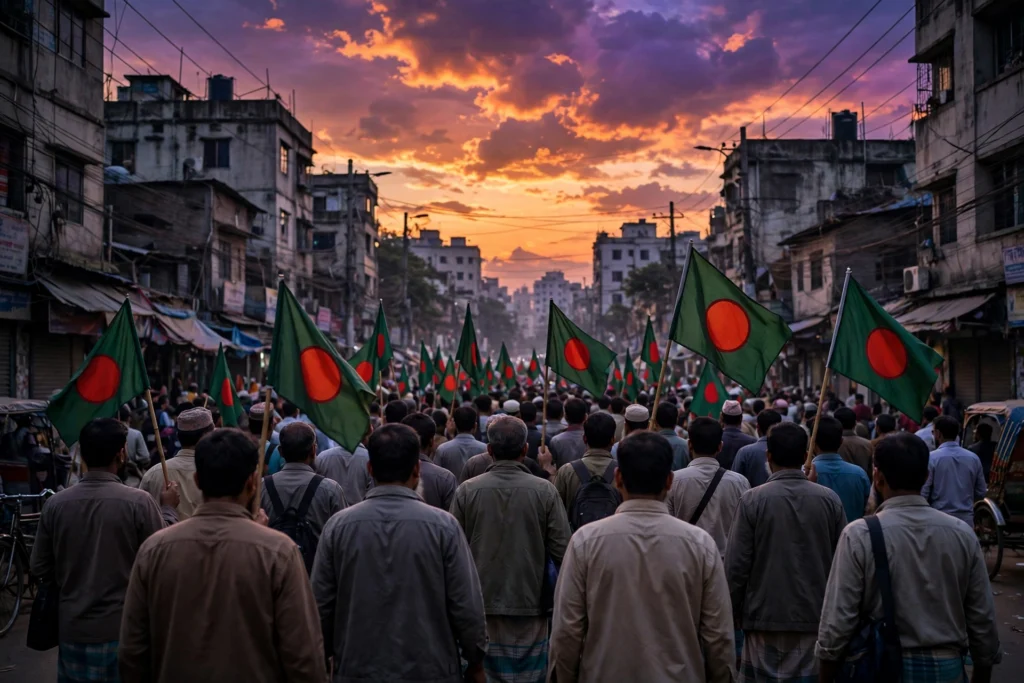
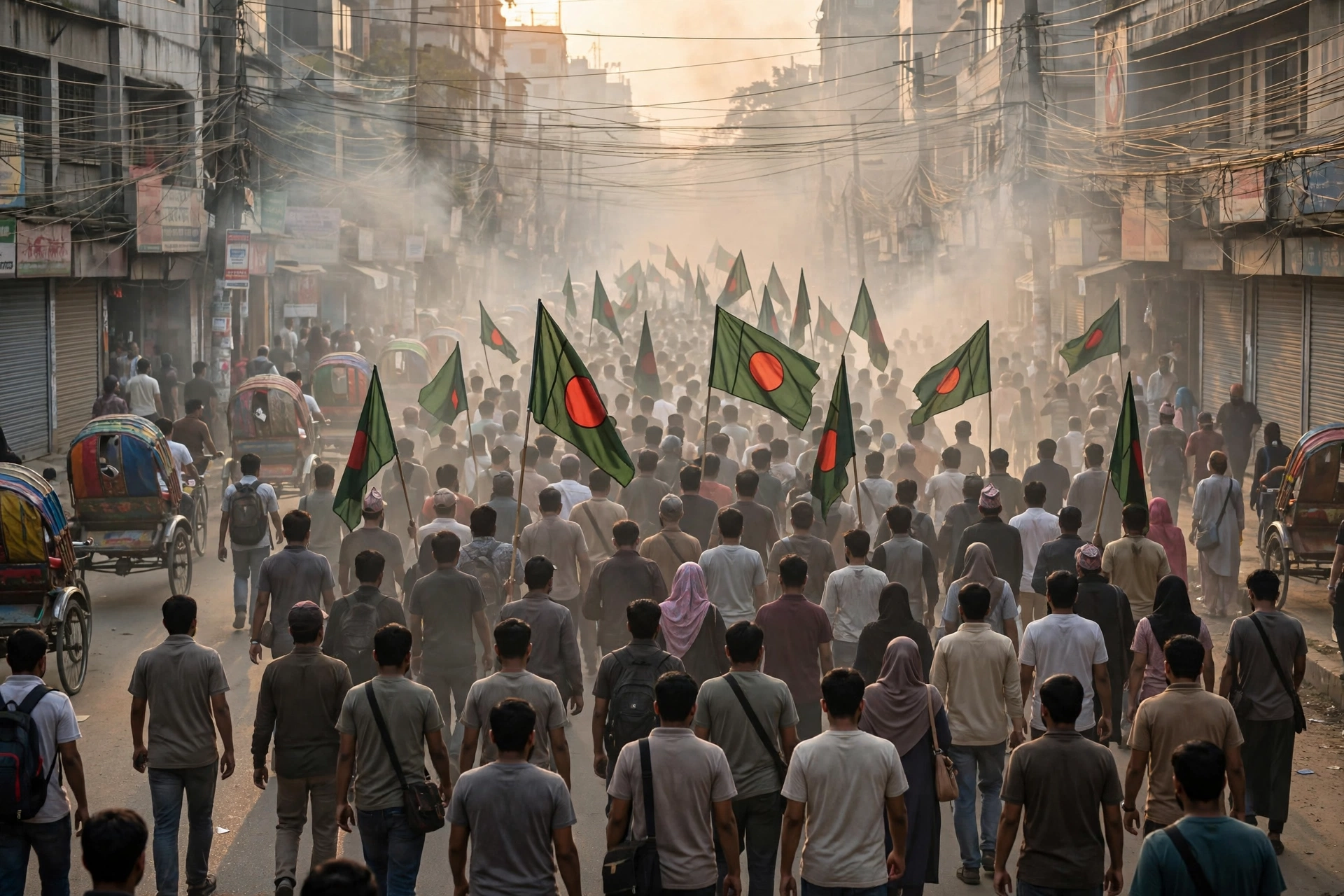
The standoff has already spilled onto Bangladesh’s streets. Hasina’s Awami League — banned since the uprising — announced a week of protests and rallies in support of her return this month, culminating in a nationwide lockdown on November 19.
Police have recorded dozens of crude bomb blasts and incidents of arson targeting vehicles in at least 28 districts over the past 10 days, with several police officers and civilians injured, according to local media. Obaed called the violence a survival tactic by Hasina’s “politically bankrupt political party.” A senior Awami League official, Khalid Mahmud Chowdhury, blamed the current political establishment for the unrest.
Hasina has also sought a new passport and identity card ahead of her planned return — requests the government has rejected, leaving her without valid travel documents even if she tried to come home.
The Rohingya Verdict Adds Pressure on Myanmar
Obaed used the same interview to turn up the pressure on a second front: the fate of the Rohingya refugees sheltering in Bangladesh. Dhaka is stepping up diplomatic pressure on Myanmar after the United Nations’ highest court ruled that thousands of killings and widespread sexual violence by Myanmar’s security forces against the Muslim minority in 2017 amounted to state-sponsored genocide. Read our coverage of the International Court of Justice ruling that Myanmar committed genocide against the Rohingya.
Myanmar has criticised the International Court of Justice ruling and said Rohingya would only be able to return “when situations permit.” Obaed said the verdict had given Bangladesh new strength. “Now, this verdict gives us, Bangladesh, the strength, the Rohingya community the strength to fight,” she said, adding that they deserved to return “with dignity and safety.”
About 1.2 million Rohingya live in Bangladesh after repeated repatriation attempts failed. Their return has been complicated by Myanmar’s civil war and the Arakan Army militia’s control of nearly all of Rakhine State, home to most Rohingya. Obaed called for greater international pressure on Myanmar and the Arakan Army. “Bangladesh did not create this crisis. Myanmar created this crisis, so Myanmar has to end it,” she said.
What Happens Next
Three clocks are now running at once. Hasina’s planned December return will test whether Dhaka’s arrest warning is carried out — and whether she can even travel without the passport and identity card the government has refused to issue. India’s decision on the extradition request will shape relations between the two neighbours for years. And Bangladesh heads toward national elections in February, the first since the uprising, with the Awami League banned and its leader in exile facing a death sentence.
For now, Dhaka’s message is unambiguous: come home, and face the courts. Stay in India, and face an extradition demand that New Delhi has so far left unanswered.
Frequently Asked Questions
Will Sheikh Hasina be arrested if she returns to Bangladesh?
Yes, according to the government. State Minister for Foreign Affairs Shama Obaed Islam said Hasina would be arrested as soon as she tries to enter Bangladesh and taken to jail.
Why does Hasina face a death sentence?
Bangladesh’s International Crimes Tribunal sentenced her to death in absentia on November 17, 2025, for crimes against humanity during the crackdown on the July 2024 student uprising. The UN says as many as 1,400 people were killed in the unrest.
Where is Sheikh Hasina now?
She has lived in India since fleeing Dhaka in August 2024, when mass protests ended her 15-year rule. She has said she plans to return to Bangladesh in December 2026.
Is India going to extradite Hasina?
India has not said so. Its foreign ministry said in April that it was examining Bangladesh’s extradition request, and it did not immediately respond to the latest comments from Dhaka.
What is the Rohingya ruling mentioned in the story?
The International Court of Justice ruled that Myanmar’s 2017 crackdown on the Rohingya amounted to state-sponsored genocide. About 1.2 million Rohingya live in Bangladesh, and Dhaka says the verdict strengthens its push for their return with dignity and safety.