Google is heading to Wyoming. On November 5, 2026, the company announced its first data center in the Cowboy State — a long-term, $17 billion investment in Laramie County that will be built with Tallgrass Energy, Black Hills Energy, American Electric Power (AEP) and Related Digital. A day later, Google moved again, acquiring the southeast Wyoming data center site it had been developing with AI infrastructure firm Crusoe.
The announcement is about more than a new building. It is a window into how the AI infrastructure race is being fought in 2026: not just with faster chips, but with bespoke power plants, carbon capture, water politics and community deals. Google’s Wyoming campus will be powered largely by a 702-megawatt fuel cell development with carbon capture and storage — which Google calls the largest planned project of its kind — and the company says it will pay for 100% of the power it uses.
What Google Announced
The project, announced by Steve Walter, Google’s vice president of global infrastructure and energy, is the company’s first data center in Wyoming and one of the largest single investments it has made in a single state. Google describes the $17 billion figure as a long-term investment, designed to deliver lasting benefits for Laramie County families and businesses.
The campus will sit in Laramie County, near Cheyenne, on a 716-acre site in the Switchgrass Industrial Park about eight miles south of the city, known locally as Project Tembo. Google has not given a construction timetable or an opening date for the data center itself, so the announcement establishes the investment and the contracting framework while leaving the facility’s delivery schedule open.
What Google has said clearly is that it will pay for all the power the campus uses and cover the infrastructure needs directly driven by its growth — a commitment aimed squarely at the debate now surrounding data centers in many American communities, where residents worry that new facilities will raise local electricity bills. The same week brought a reminder of why Google needs the capacity: the company released Google’s Gemini Omni 1.2 Flash video model, the latest in a rapid run of AI product launches from every major lab.
The 702 MW Fuel Cell Bet: Powering AI With Gas and Carbon Capture
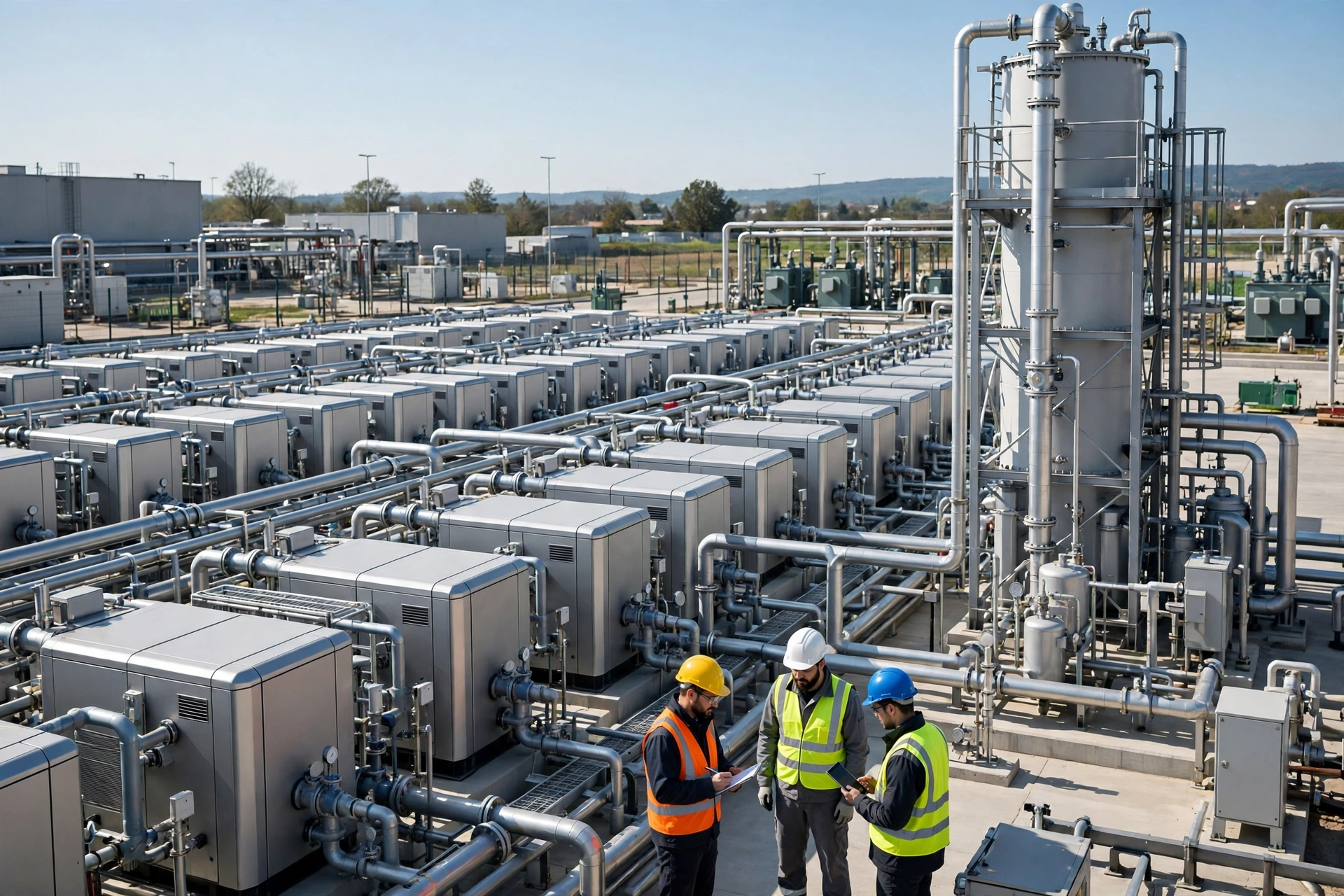
The centrepiece of the Wyoming plan is power. Google says the project is contracted with AEP to feature a first-of-its-kind, commercial-scale, 702 MW fuel cell development with carbon capture and storage (CCS) — the largest planned development of its kind to date. Fuel cells convert fuel, in this case natural gas, into electricity through an electrochemical reaction, and the fuel cells for this project will be made in America by Bloom Energy.
The carbon capture system is designed to capture a large majority of the plant’s carbon emissions and store them permanently underground at Tallgrass Energy’s nearby Eastern Wyoming Sequestration Hub. Google says the Wyoming contract brings its total contracted CCS capacity to nearly 1 gigawatt, building on its first US CCS project, announced in the fall of 2025.
The numbers behind the power deal are substantial. AEP disclosed on October 14, 2026, that it plans to invest approximately $4 billion in the 702-megawatt fuel cell project near Cheyenne under a 20-year power purchase agreement with Google. Google will buy power from Cheyenne Fuel Cell, LLC, which is approximately 92% owned and controlled by AEP and nearly 8% owned by funds advised by Basalt Infrastructure Partners. AEP and its partners plan to begin construction of the fuel cell facility in 2026 and expect it to be fully operational by the end of 2028.
Google is also sourcing power from gas generators operated by Tallgrass Energy and Black Hills Energy, and it is conducting a technical front-end engineering and design (FEED) study to evaluate fitting Tallgrass’s combined cycle turbines with CCS technology. That study is an evaluation, not a commitment — the turbine retrofit remains at the study stage while the fuel cell plant moves ahead.
A Day Later: Google Buys Crusoe’s Wyoming Site
On November 6, 2026, a day after the $17 billion announcement, Crusoe said Google had acquired its data center site in southeast Wyoming. The financial terms were not disclosed. Crusoe said it had completed its involvement in the project’s pre-development phase, which included site selection, government approvals and power strategy, and that the campus was initially developed by Crusoe and Tallgrass Energy.
The handoff clarifies how the project was put together: Crusoe handled the early development work, and Google is now taking the site forward. Crusoe chief executive Chase Lochmiller said the company has more than 6 gigawatts of contracted capacity and over 40 gigawatts in its development pipeline. Crusoe added that it is developing another Google data center campus in Armstrong County, Texas, which it announced earlier this year — a sign that the Wyoming deal is part of a much larger build-out between the two companies.
Air-Cooled by Design: The Water Question
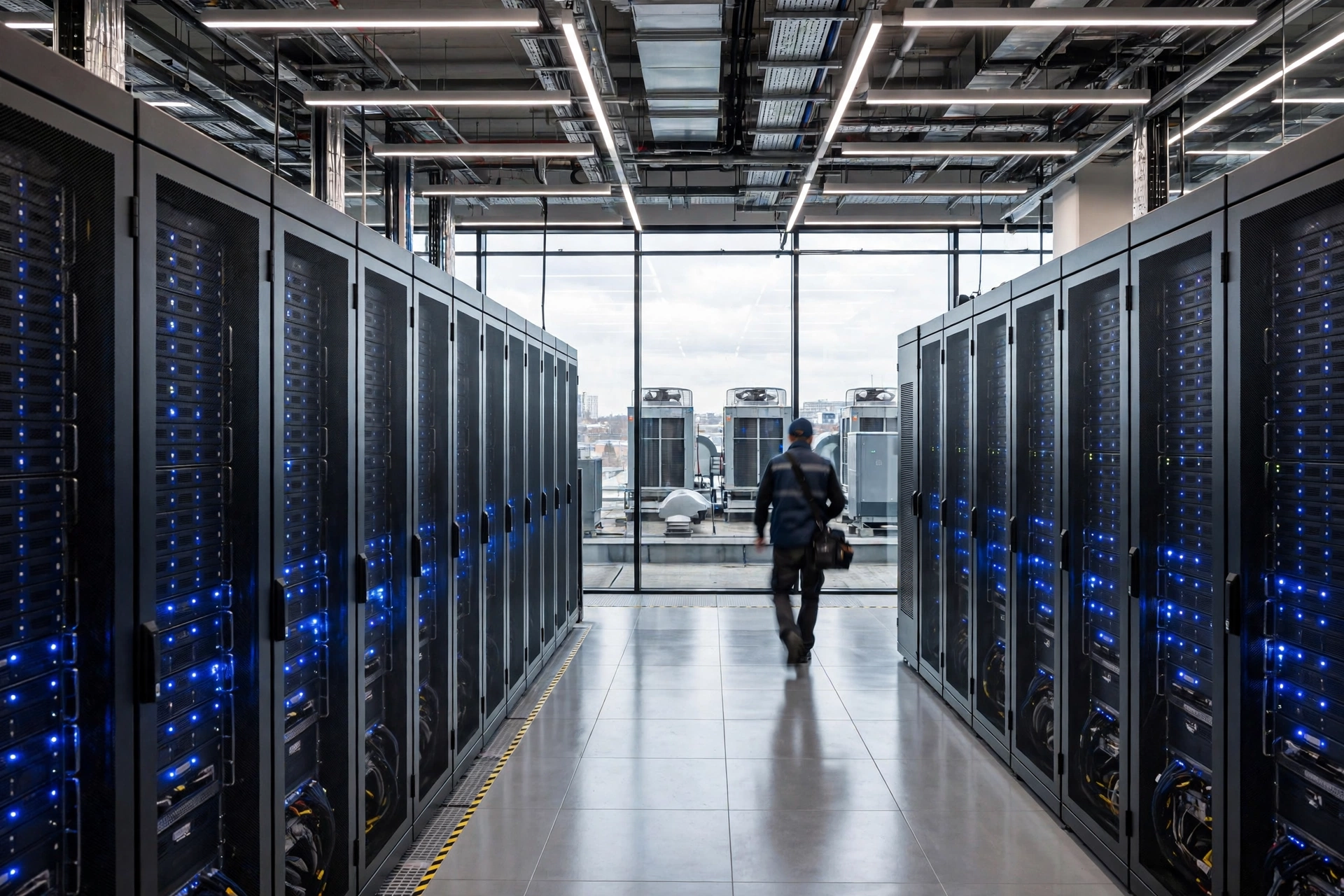
Water is the other resource at the centre of the Wyoming debate, and Google has made it a selling point. Consistent with its water stewardship commitments for local communities, the Wyoming data center will be air-cooled to minimise strain on local water resources, and Google says it will invest in local water replenishment efforts.
That matters in a state where water is scarce and where data center growth has become a live political issue. Google’s announcement acknowledged the concern directly: it noted that a key issue raised at its community meeting was how data center growth is affecting Cheyenne as a whole, beyond the boundaries of Google’s own project. Air cooling does not eliminate a data center’s environmental footprint, but it removes one of the most contentious local trade-offs — the millions of gallons of water that water-cooled facilities can consume.
The fuel cell approach carries a similar logic. By generating power on site from natural gas and capturing most of the carbon, Google is trying to sidestep the two bottlenecks that now slow hyperscale builds everywhere: grid interconnection queues that have stretched from months to years, and local opposition over power and water. Whether the carbon capture performs as described, at what cost per megawatt-hour, and on what schedule, is not yet proven — the operational claims are prospective, and the capture rate will only be known once the plant runs.
What Cheyenne Gets: Jobs, Taxes and a Community Council
Google’s pitch to Wyoming is economic as much as technological. The company expects the project to generate hundreds of millions of dollars in local property taxes for Laramie County and School District 1, and its projections put construction employment at more than 8,800 jobs statewide, including about 2,500 on site at peak, with more than 3,700 jobs a year once the campus is operating, of which 250 are direct roles. Those figures are Google’s projections, not delivered results.
The community investment plans focus on K-12 education, workforce development and pathways to accelerate Wyoming’s economy. Through targeted grants, Google says it is partnering with local institutions on STEM education, support for local entrepreneurs and expanded skilled trades training across the state. The company has already hosted a Community Day at the Cheyenne Children’s Museum.
The engagement has been hands-on. Google and its partners held numerous meetings with local and state stakeholders, and recently hosted a community meeting in downtown Cheyenne where they met more than 200 residents in Laramie County. To address the wider effects of data center growth on the city, Google, Tallgrass Energy, Black Hills Energy, Related Digital, AEP and Bloom Energy are standing up a Community Council designed to develop common-sense solutions to support Cheyenne through this phase of growth.
Why Wyoming, and Why Now
The Wyoming move fits a pattern that defined the AI infrastructure story of 2026. As AI models grew larger and more capable — from OpenAI’s Images 2.6 image model to Salesforce’s Koa Decisions model and Tencent’s sovereign AI private cloud — the companies building them hit the same wall: there is not enough power, in the right places, fast enough. Hyperscalers have responded by contracting their own generation, buying up sites, and striking deals with utilities that would have been unthinkable a decade ago.
Wyoming offers what those companies want: land, relatively permissive permitting, and natural gas. The fuel cell-plus-carbon-capture design is Google’s answer to the obvious objection — that a gas-powered AI data center is a climate problem — and the company is betting that capturing and storing most of the carbon will be enough to make the project defensible. It is also a bet on carbon capture itself: if the Wyoming plant works at commercial scale, it becomes a template Google and its partners can repeat elsewhere.
The political backdrop is complicated. Reuters noted that Google is expanding its AI infrastructure despite growing political opposition to such projects in parts of the US, and the company’s emphasis on paying for all its power, air cooling and community investment reads as a direct response to that opposition. The Community Council is an acknowledgement that the friction is real and local.
What to Watch Next
Three things will determine whether the Wyoming bet pays off. First, the fuel cell plant: construction is due to start in 2026 with full operation targeted for the end of 2028, and its cost, reliability and actual capture rate will be the first hard test of the model. Second, the data center itself: Google has given no timetable, so the pace at which the campus actually rises will show how quickly the company can convert a $17 billion commitment into working capacity. Third, the community: the property taxes, jobs and grants are projections, and the Community Council’s work will be judged on whether Cheyenne residents feel the benefits.
For now, the announcement stands as one of the clearest statements yet of where AI infrastructure is heading. The race is no longer only about who has the best model. It is about who can secure the power, the land, the water and the community consent to run it — and Google has just put $17 billion on the table in Wyoming to prove it can.
Related reading and sources
- Google blog — Google’s data center investment in Wyoming (November 5, 2026)
- Reuters — Google acquires Wyoming data center site from AI infrastructure firm Crusoe (November 6, 2026)
- Securities.io — Google Announces $17 Billion Wyoming Data Center Investment
- Google’s Gemini Omni 1.2 Flash video model
- Tencent’s sovereign AI private cloud
- Salesforce’s Koa Decisions model
- OpenAI’s Images 2.6 image model