OpenAI has released Images 2.6, the latest version of its image generation system, and it is available now in ChatGPT, Codex, and the API. The update focuses on three things: speed, motion, and more control for developers. Images now generate 50% faster than before, you can turn still images into animated GIFs, and the API gets two distinct models to choose from.
The scale of image generation on OpenAI’s platform makes even a speed improvement meaningful. According to OpenAI, people now create 4 billion images per week across ChatGPT, Codex, and the API — more than half a billion images every day. At that volume, cutting generation time in half changes how quickly creators and teams can iterate on visual ideas.
What is faster in Images 2.6
The headline number is simple: Images 2.6 generates images 50% faster than the previous version. For everyday users in ChatGPT, that means less waiting between a prompt and a finished image, and quicker rounds of edits when refining a result.
For developers, the speed story is more specific. In the API, OpenAI now offers two models, GPT-Image-2.6 Flare and GPT-Image-2.6 Sunburst. When quality is set to low, Flare can generate images in as little as six seconds. That makes it a good fit for fast drafts, thumbnails, and rapid prototyping, where turnaround matters more than maximum detail.
Speed is not the only improvement. OpenAI says the new version produces more polished, professional visuals, with better layout quality for posters, product imagery, and other design work. Characters, products, and brand details also stay more consistent across edits, which matters for anyone building a series of images around the same subject.
GIFs: your images can move now
The most visible new feature is GIF animation. Images 2.6 can bring motion to still images, turning a static picture into a short looping animation. Marketers can animate a brand mascot for a campaign, creators can make reactions and memes for social media, and teams can build animated storyboards to explore how a character moves before committing to full video production.
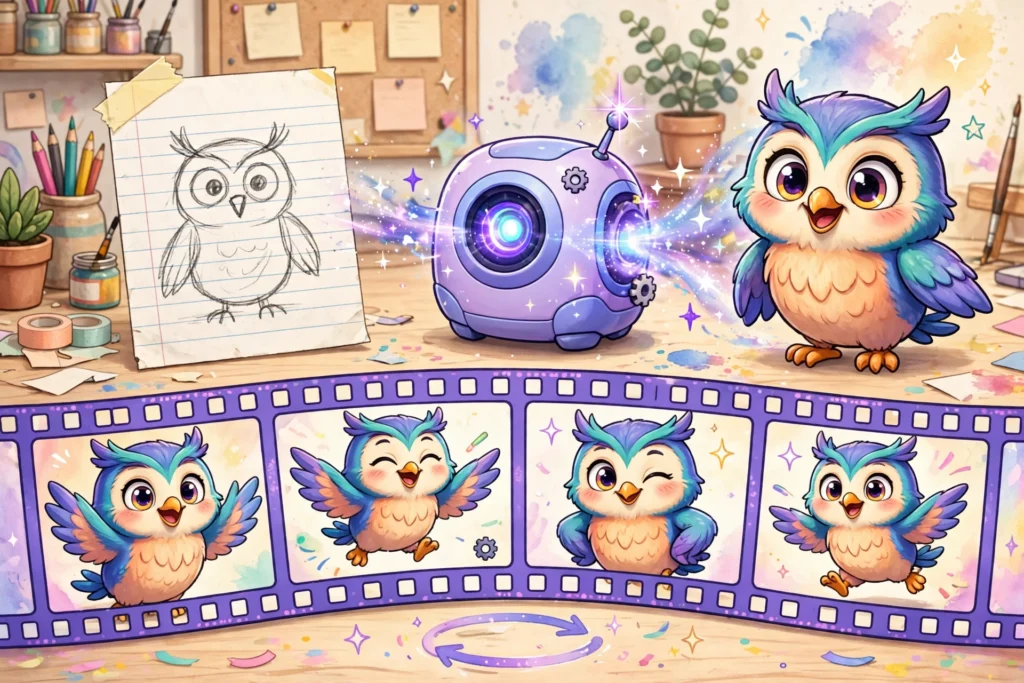
You do not need a polished design to start. OpenAI’s announcement shows even a simple pen sketch — an owl drawn on lined paper — becoming an expressive animated character. That lowers the barrier for people who have an idea but no design skills: a rough drawing is enough for the model to work with.
The GIF feature fits a broader pattern in AI tools this year. Static image generation is becoming a starting point rather than the finished product, with animation, editing, and video increasingly built into the same workflow. For small businesses and solo creators,
a looping GIF is also a practical format: it works everywhere on social media, needs no video player, and catches the eye in a feed full of still images.
Flare vs Sunburst: two models for the API
The API now offers a choice between two models, and the difference is a trade-off between speed and fidelity. Flare is the faster option. It is built for quick generation and improved layout quality, and at low quality settings it can return an image in as little as six seconds.
Sunburst is the detail-oriented option. It delivers higher-quality image generation and even greater consistency across edits when quality is set to medium or high. If you are producing final artwork, product shots, or a set of images that must keep the same character looking the same from one edit to the next, Sunburst is the model to pick.
Both models share the same pricing: $8 per million image-input tokens, $30 per million image-output tokens, and $5 per million text-input tokens, according to OpenAI’s pricing page. That makes the choice between them a question of what the job needs, not what it costs.
For implementation details, see OpenAI’s Images and vision API guide.
More control for developers
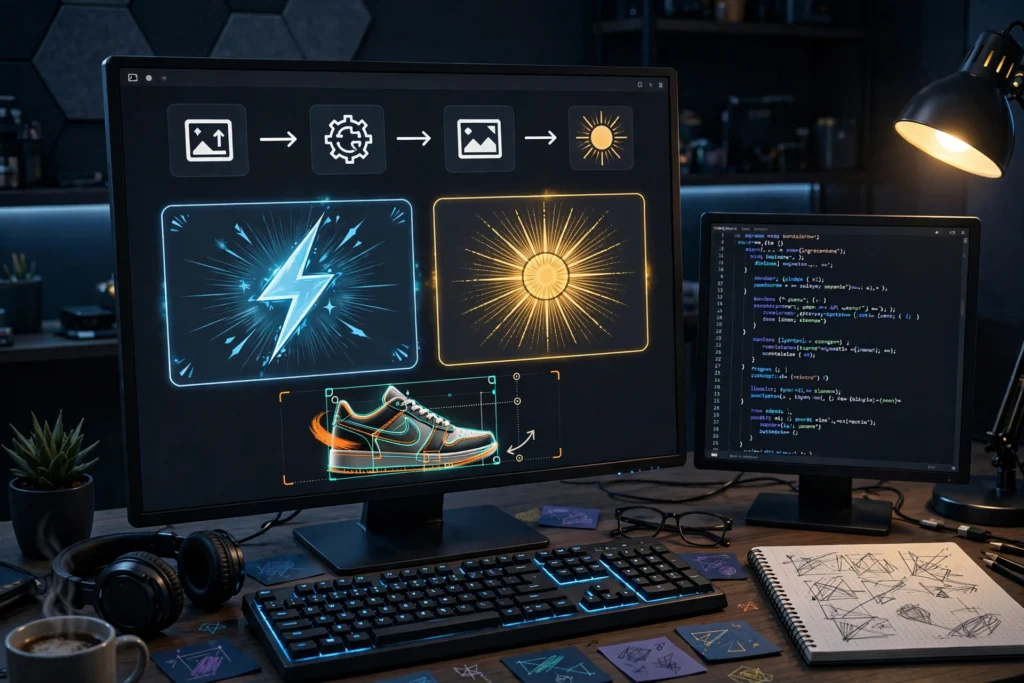
Images 2.6 also gives developers finer control over how images are created and edited. Image markup, already available in ChatGPT, now comes to the API, so teams can pinpoint exactly where in an image a change should happen instead of describing the region in words.
SVG exports are another practical addition. Designs can be exported as scalable vector graphics, ready to use across websites, apps, and print without losing quality when resized. For product and brand work, that closes a gap between AI-generated visuals and production-ready assets.
A new complexity parameter lets developers adjust how much planning the model does for a request. Lower settings suit quick edits, while higher settings handle scenes with many elements or tight constraints. OpenAI recommends low complexity for most editing tasks, paired with the image quality the workflow requires, and medium or high complexity when a scene is dense or demanding.
Pricing and availability
Images 2.6 is available globally now in ChatGPT and Codex across all subscription tiers, on desktop, mobile, and web. In the API, GPT-Image-2.6 Sunburst and GPT-Image-2.6 Flare are available for developers to use today.
The release lands in a busy week for OpenAI. The company also published research this week showing an AI pipeline that found and reproduced hundreds of Linux kernel vulnerabilities, a reminder that the same generation of models is being pushed hard in both creative tools and security work.
Why Images 2.6 matters
Images 2.6 is an incremental release, but the pieces add up. Faster generation shortens the creative loop, GIFs open a new format without leaving the image tool, and the Flare/Sunburst split gives developers a real choice instead of a single compromise. The consistency improvements matter most for professional use: a model that keeps a brand character or product looking the same across dozens of edits is far more useful than one that produces a great image once.
If you already use ChatGPT’s image tools, the update is already there — try a GIF from a sketch, or ask for a poster and see how the layout holds up. If you build with the API, the new models and controls are worth testing against your current workflow, especially if image speed or edit consistency has been a bottleneck.
Related reading: Moonshot AI’s Kimi Hosted Agents, Perplexity Teammates, Box’s NVIDIA-powered context layer, and Serve Robotics’ Physical AI Services.