On November 5, 2026, Moonshot AI formally launched Kimi Hosted Agents, a managed cloud service that runs AI agents for enterprises and developers without requiring them to build or maintain the underlying agent framework. The launch follows a beta that opened in September 2026 for domestic enterprise-verified users, so the November announcement turns a tested service into a generally available offering. It is the latest step in a fast-moving shift: AI agents are moving from demos that answer a single question to long-running workers that monitor systems, research markets and serve customers around the clock — and the companies selling them are now competing on who runs that work most reliably. Moonshot’s answer is to host the whole runtime layer itself.
What Moonshot AI launched on November 5
Kimi Hosted Agents packages the “agent harness” — the operational layer that manages sessions, tool execution, sandboxes and failure recovery — as a hosted service on Moonshot’s Kimi API Open Platform. Instead of wiring up their own orchestration, teams configure agents that run on Kimi’s infrastructure, available around the clock. Moonshot positions the service for two kinds of work: internal business monitoring and operations response, and customer-facing investment research and customer-service assistants. The distinction matters because both need the same thing — an agent that keeps going for hours, not seconds — and both break when the harness underneath them is fragile. TechInAsia reported the launch on November 5, noting that enterprises can now run AI agents without building or maintaining the underlying framework. TechInAsia’s report on the Kimi Hosted Agents launch
The timing is no accident. Moonshot released Kimi K3.1 Pro, a roughly 3-trillion-parameter model with a 1-million-token context window, earlier in the week, and Hosted Agents extends the product line from supplying a model to operating the environment in which an agent uses one. That mirrors a wider pattern in the industry: Snowflake’s always-on CoCo and CoWork Bots promise agents that keep working in the background, and Together AI’s Polymorphic Inference retunes the infrastructure behind models automatically. The model is becoming the commodity; the runtime is becoming the product.
The agent harness, hosted: what the service actually runs
An agent runtime keeps a task going between model calls: it passes work to tools, brings their results back and manages the session in which those steps happen. Kimi Hosted Agents makes that layer a prebuilt, configurable service. It stores complete session history as events, runs built-in tools in isolated cloud sandboxes, and handles execution retries and scheduling. If the platform fails mid-task, Kimi says it automatically takes over and resumes execution with behaviour consistent with its pre-interruption state — a claim that matters most for the long-running jobs the service targets, where restarting from scratch would waste hours of work. A direct model-inference API remains the alternative for organisations that want to build a custom harness and keep finer control.
Developers work through a web console, a REST API or the kha command-line interface. Console use requires an account login, while CLI and curl workflows use an API key. The service is stateful: session history, sandbox state and output files persist on the server, its event stream supports resumption with a Last-Event-ID header after a disconnected client reconnects, and delivered files can be listed and downloaded as artifacts. In practice, that means an agent’s work survives a dropped connection and a closed laptop — the session, not the developer’s machine, owns the state.
Multi-agent teams: a coordinator and up to 20 agents
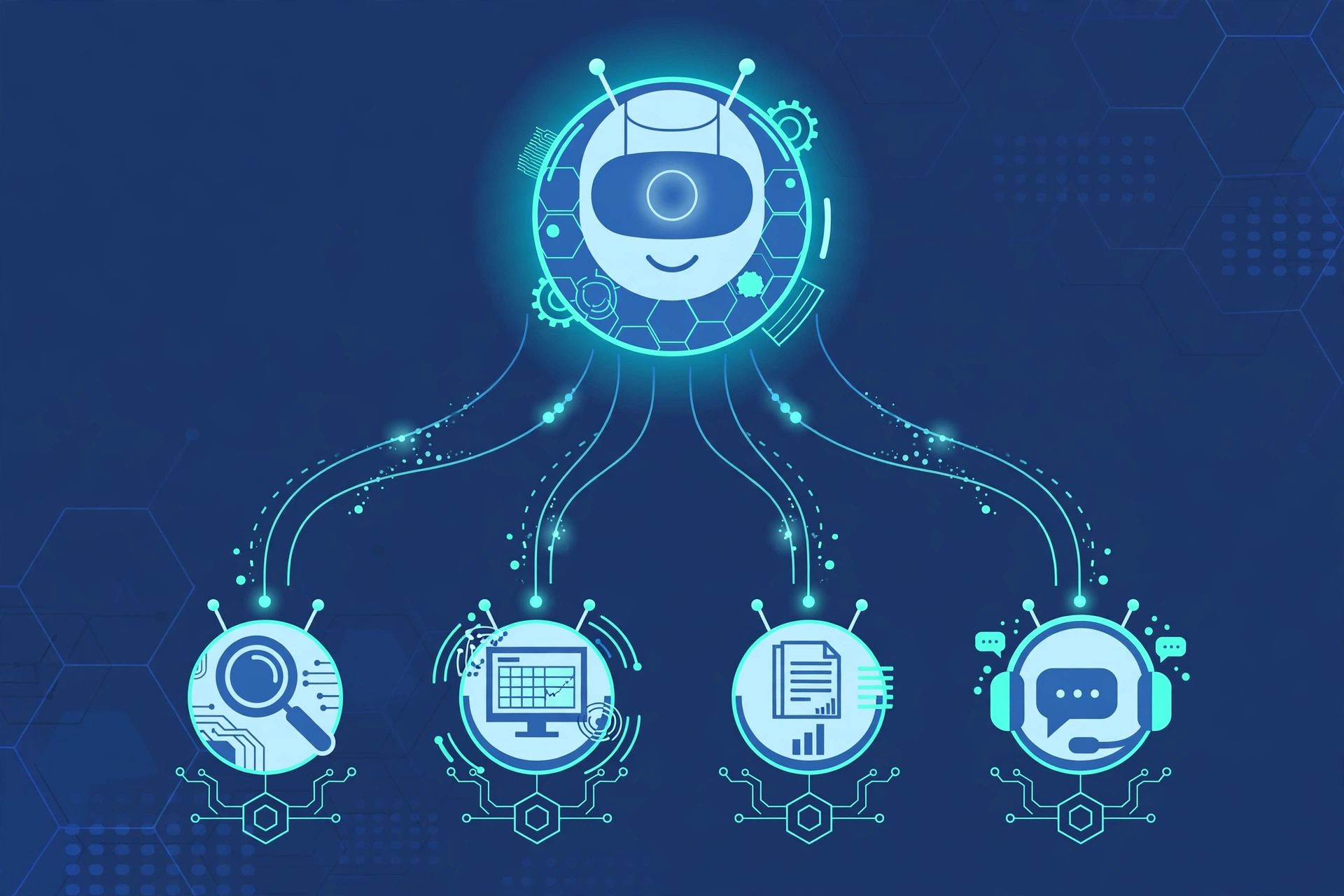
The most ambitious part of the launch is multi-agent execution. A coordinator agent delegates subtasks to child threads within the same session, with a delegation configuration that can contain between one and 20 agent entries. Synchronous delegation waits for a child thread to report back, become idle or terminate; asynchronous delegation returns as soon as the child starts, with the report delivered later. Child threads cannot create another level of child threads or communicate directly with one another, and each thread keeps separate status, history and event streams, so operators can inspect and audit individual subtasks.
That design is a deliberate trade-off: parallelism without the chaos of agents spawning agents. A morning research brief, for example, could split into parallel threads for market data, news and internal reports, each auditable on its own. It also echoes the direction of other recent launches — Tencent’s Hy4 open-source model adds computer use for long, multi-step tasks, and the industry is converging on agents judged by completed jobs rather than single answers. The open question for Kimi is how well the coordinator handles conflicting or partial results from its child threads, something only production use will reveal.
Sandboxes, the Inference Hook and the self-hosted option
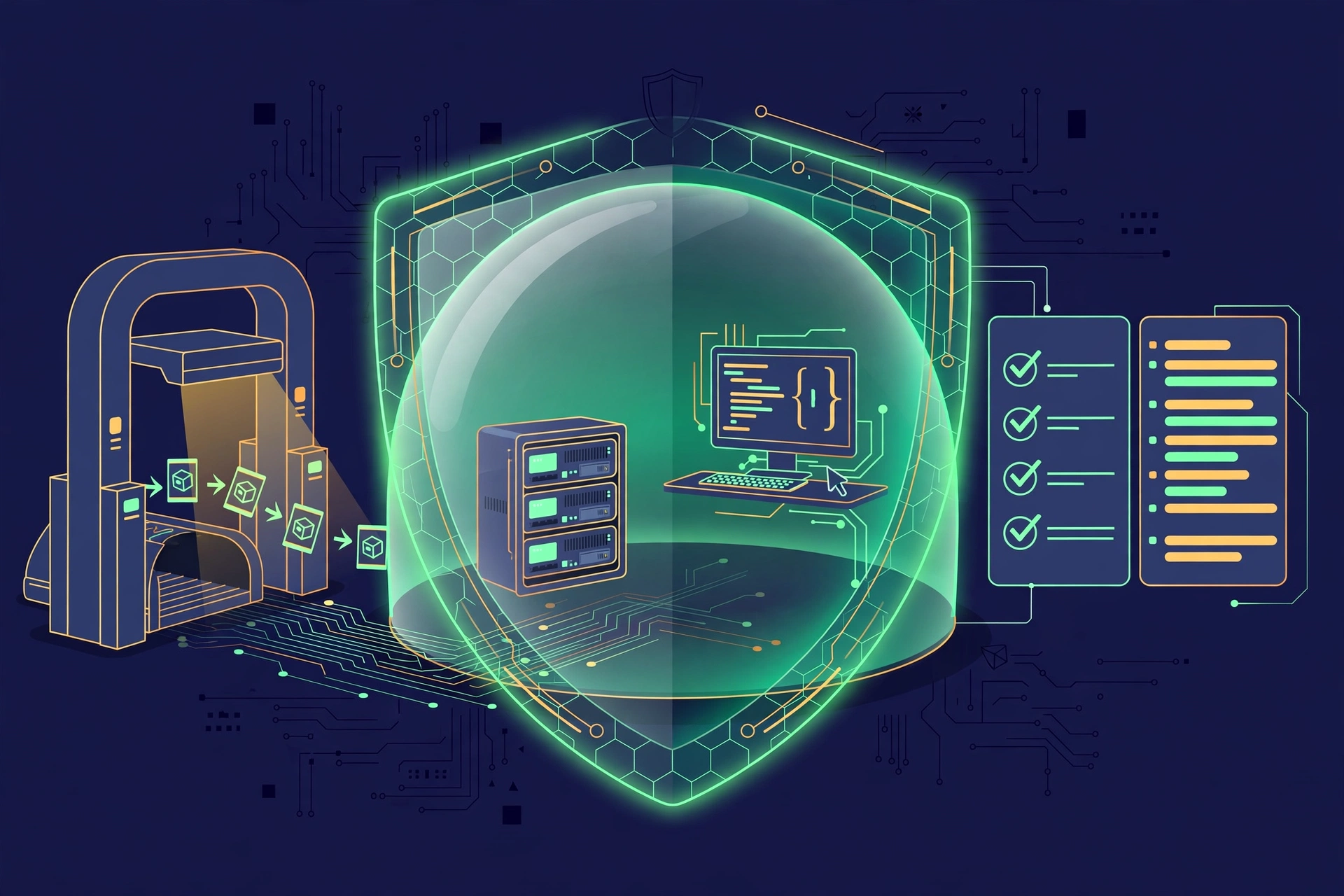
Letting agents run unsupervised raises an obvious problem: an agent that can browse, execute code and touch internal systems needs boundaries an operator can control. Kimi Hosted Agents answers with isolated sandboxes, network-access controls, configurable operating boundaries, session interruption, execution records and audit export. AI Affairs reported that the service gives enterprises controls over agent sessions, network access and execution logs, alongside a way to inspect material before each model call. AI Affairs’ report on Kimi Hosted Agents’ sandboxes and safety hooks
The Kimi Inference Hook is the most distinctive control. It lets an enterprise connect its own safety service — or one supplied by a third party — to inspect task inputs and tool returns before each model inference, allowing or rejecting content under the enterprise’s own rules. The hook is currently offered selectively to enterprise-verified users. Its placement matters: a tool might return text gathered during a task, and the hook inspects that text before it becomes part of the next model call, rather than only checking at the start of a session.
There is also a self-hosted option, in which sandbox tool execution moves to a customer-managed host while Kimi’s platform continues to handle model calls, orchestration and session management. Kimi is explicit that this is not equivalent to private deployment, because tool inputs and execution results still pass through the platform’s model-inference interface, and the self-hosted version does not support IPython, image-search tools or save_artifact. Uploaded files, skills and memory are not mounted on the worker host, and platform web search remains platform-executed and chargeable. Enterprises that need data to stay on their own machines should read that limitation carefully before choosing this route.
Templates, skills and usage-based pricing
Kimi says Hosted Agents includes more than 140 skills and more than 30 plugins covering web retrieval, professional data queries, office-document processing and content generation, and enterprises can add custom skills, plugins, MCP services and tools to connect their own systems and data sources. The documentation lists 12 official agent templates: eight financial templates covering modelling, deep research, morning reports, IPO tracking and portfolio reviews, plus game-development, player-advisor, SRE incident-response and Discord community-operations examples. Enterprises can copy templates into their own projects and connect internal systems and private databases — a morning brief template, for instance, could pull from internal reports and run inside a session that can be stopped, with an execution log exported afterwards.
Pricing is usage-based across three components: sandbox runtime at ¥0.072 per hour (roughly one US cent), model inference charged at the selected model’s token rates, and plugin charges based on call counts and each plugin’s unit price. Usage reports are designed to show resource consumption and costs by agent project. That makes the central enterprise trade-off concrete: Kimi takes on the harness and managed infrastructure, while custom execution, security policy, data paths and continuing usage charges remain part of the customer’s operating design. Unite.AI’s full report on the launch
What it means for enterprises — and what to watch next
Kimi Hosted Agents is best read as Moonshot’s bid to own the boring, essential layer of the agent economy: the runtime that keeps agents running, recovering and auditable. For enterprises, the practical appeal is clear — long-running and multi-agent work without building a harness, with session controls and a safety hook that fit how regulated teams already think about risk. The same logic is driving consolidation elsewhere in the stack, from OpenAI’s planned acquisition of Pierre Computer, which buys the Git infrastructure under its Codex coding agent, to the managed runtimes every major lab is now shipping.
Three things will decide whether the launch matters as much as Moonshot hopes. First, reliability in production: automatic resume after failure and multi-agent coordination are easy to promise and hard to deliver at scale, and the September beta gives only a partial track record. Second, access: the Inference Hook and self-hosted option are limited to enterprise-verified users, so smaller teams will get a less controlled version of the service. Third, cost: usage-based pricing across sandbox hours, tokens and plugin calls can quietly add up on always-on workloads, so teams should watch the per-project usage reports closely in the first month. If those three hold, the agent harness stops being something every team builds itself — and starts being infrastructure you rent.