Enterprise AI agents are only as good as the context they can find, and Box wants to fix the part where they dig through your company’s files. At its BoxWorks 2026 developer summit on November 5, 2026, Box expanded its partnership with NVIDIA and unveiled Box Context Retrieval, a new retrieval engine built on NVIDIA’s Nemotron models, alongside Box Architect, a tool that lets teams build agentic workflows by describing them in plain language. Box CEO Aaron Levie and NVIDIA CEO Jensen Huang presented the announcements in the opening keynote. The message is clear: the content layer is becoming the control layer for enterprise AI.
What Box Context Retrieval does for AI agents

Box Context Retrieval turns the messy content stored in Box — documents, images, audio and video — into a structured knowledge layer that AI agents can search and reason over. It is built on NVIDIA’s Nemotron Retriever embedding models, which create an index of unstructured content using multimodal and hybrid search, so an agent gets the passages that actually match its task instead of whole documents to wade through. Box says the engine can improve search accuracy by 20%, cut token usage by up to 90% and speed up question-answering by around four times. Those are vendor projections, not independent benchmarks, but the direction is unmistakable: retrieval is becoming the bottleneck for agentic AI, and whoever controls the index controls the answers. The same infrastructure logic is driving other NVIDIA partnerships this week — see Supermicro, IBM and NVIDIA’s shared KV cache storage for how long-context AI is being sped up at the storage layer. Box Context Retrieval is scheduled for general availability to Enterprise Advanced customers early next year.
Nemotron 3 Ultra comes to Box AI now
While the retrieval engine waits for early next year, the models behind it are arriving immediately. NVIDIA’s open-weight Nemotron models, starting with Nemotron 3 Ultra, are available now inside Box AI for Enterprise Advanced customers. That gives Box customers a lower-cost, open-weight option alongside the closed models Box AI already supports, and it matters because the retrieval engine and the models are designed to work as a pair: Nemotron embeddings index the content, and Nemotron models reason over what comes back. For teams already running always-on agents, the combination is part of the same shift as Snowflake’s always-on CoCo and CoWork AI coworkers and Kimi’s Hosted Agents managed runtime — the agent layer is moving from demos to always-on infrastructure, and the vendors are racing to own the plumbing underneath it.
Box Architect: build agent workflows in plain language
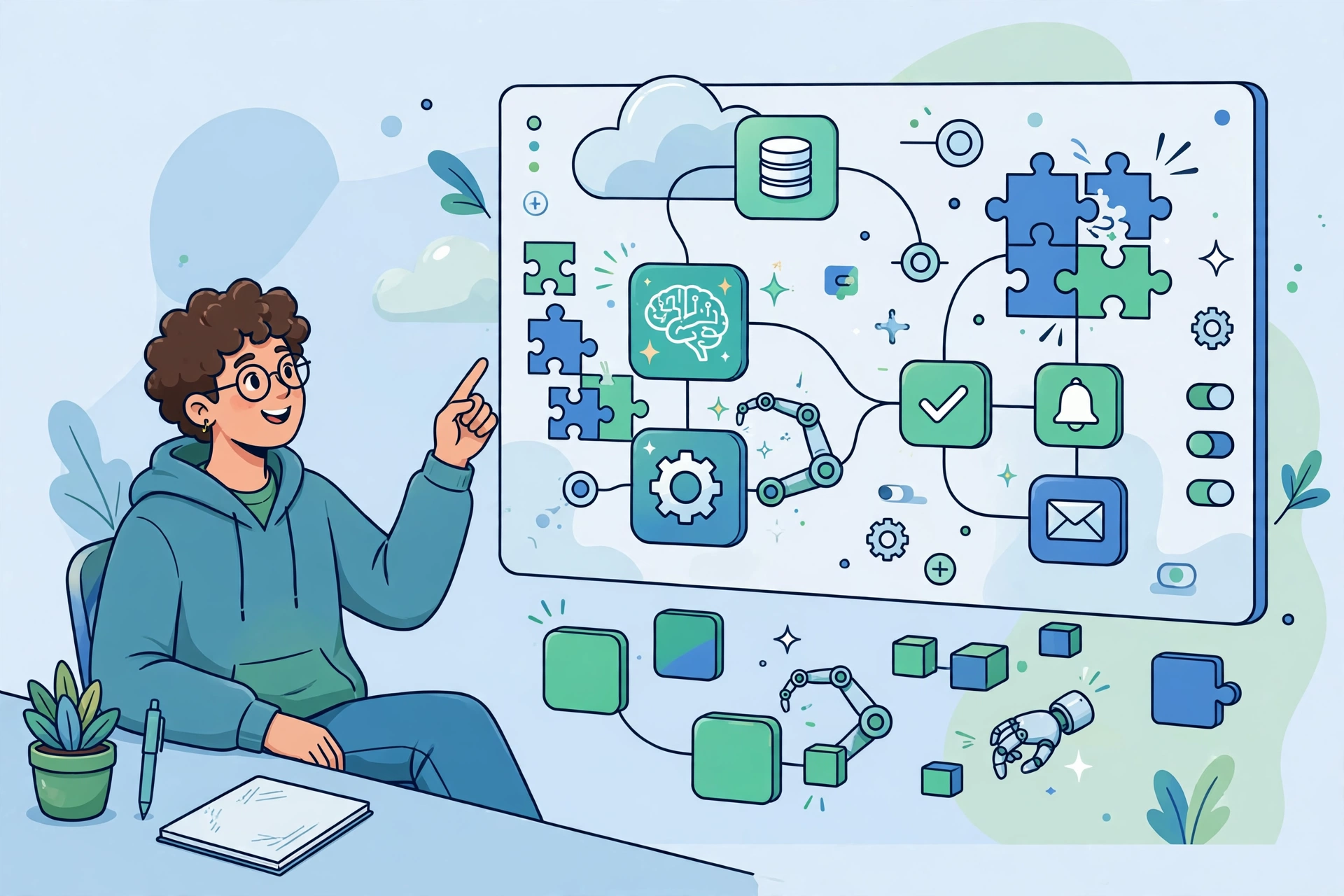
Box Architect is the other half of the announcement, and it does not depend on NVIDIA at all. It is a builder for designing, testing and deploying multi-step agentic workflows using natural language: describe a process, and Architect assembles it from Box’s own tools, including Extract, Automate, Apps and Forms, with a choice of open and closed models. Box’s example is contract review — a law firm can build a workflow that checks incoming contracts against its previously approved playbooks. Architect begins rolling out in beta to Enterprise Advanced customers in the fourth quarter of 2026. Read Reworked’s look at the Box Architect workflow builder for more on how the multi-model builder works, and Reuters’ report on the expanded Box-NVIDIA partnership for the announcement in full.
New guardrails for agentic AI — and what to watch
Giving agents the run of your files raises an obvious question: what stops a rogue agent from downloading everything? Box answered that with new threat protection aimed at bulk downloads and exfiltration, account takeovers, session hijacking and mass deletion, scheduled for Enterprise Advanced and Shield customers early next year. The controls matter because agentic AI multiplies the blast radius of a compromised account — a lesson the security side of the industry is already acting on, as in Fortinet’s FortiAIGate guardrails on Equinix. Before committing, buyers should note three things: the headline performance numbers are Box’s own projections and have not been independently tested; the two biggest pieces — Context Retrieval and the threat protection — do not arrive until early next year, so the announcement is partly a roadmap; and everything announced is aimed at Enterprise Advanced customers, so smaller Box plans may not see these features soon. Check SiliconANGLE’s coverage of Box’s NVIDIA-powered context layer for the technical detail, and confirm pricing and availability with Box directly before planning a rollout.