A powerful magnitude 6.7 earthquake shook the central Andes of Peru on Friday evening, killing one person, injuring 16 others and leaving hundreds of families displaced across the highland regions of Junín, Huánuco and Pasco. The tremor struck at 7:09 p.m. local time, rattled buildings in the capital Lima more than 200 kilometres away, and was followed by a series of aftershocks through the weekend.
Peru’s civil defence agency, INDECI, confirmed the casualty toll in an updated assessment published on Saturday evening, as rescue teams continued to reach remote Andean districts cut off by rockfalls. Officials warned the figures could still change as damage reports arrive from isolated communities.
What Happened in Junín
The earthquake’s epicentre was about 30 kilometres north-west of the city of Junín, in the department of the same name, according to Peru’s Geophysical Institute (IGP). The institute measured the quake at magnitude 6.7 and placed its depth at 129 kilometres. The United States Geological Survey (USGS) also measured magnitude 6.7, with a depth of 108 kilometres — after initially reporting the quake as magnitude 6.9 and revising it as seismologists refined their calculations.
The shaking reached a maximum intensity of V on the Modified Mercalli scale in Junín — strong enough to be felt by nearly everyone and to move furniture, but the quake’s great depth spared the region far worse destruction. The USGS estimated that more than 770,000 people felt the shaking across Peru.
One Death and 853 People Displaced
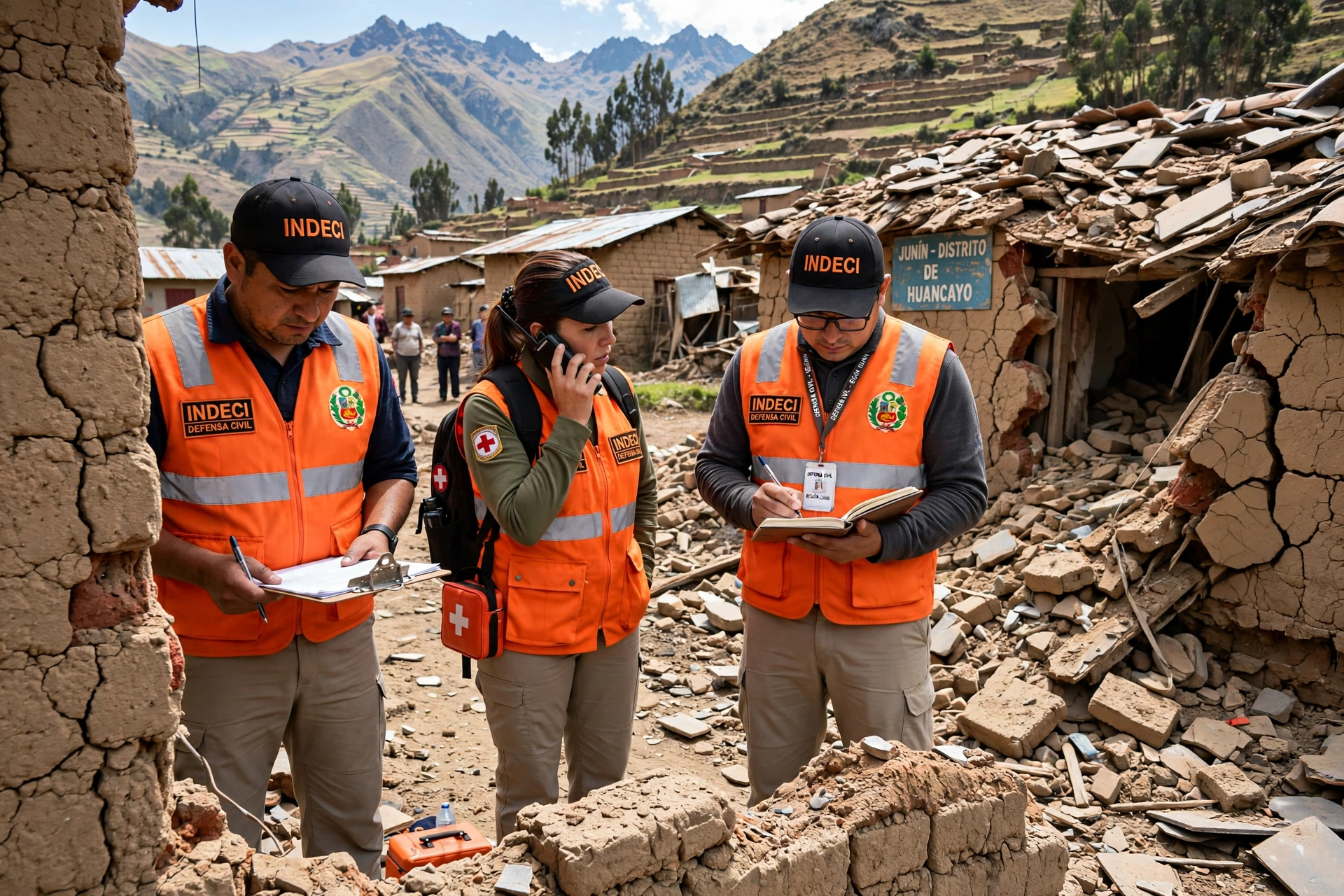
INDECI’s Complementary Report No. 16257, published at 6 p.m. on Saturday, recorded one death — a patient at a hospital in the Huánuco area — and 16 injured people, 12 of whom remained in hospital on Saturday. Most of the injured were in the area around the epicentre.
The assessment classified 853 people as damnificados — those whose homes were destroyed or left uninhabitable — and a further 531 as afectados, people affected by damage or disruption to services. Inspectors counted 152 homes as uninhabitable and 157 as damaged across Junín, Huánuco and Pasco, and more than 20 health facilities sustained damage, along with schools and churches, including the Temple of Nuestra Señora del Carmen in Ambo and the San Francisco Church in Huánuco.
Lima Felt It Too
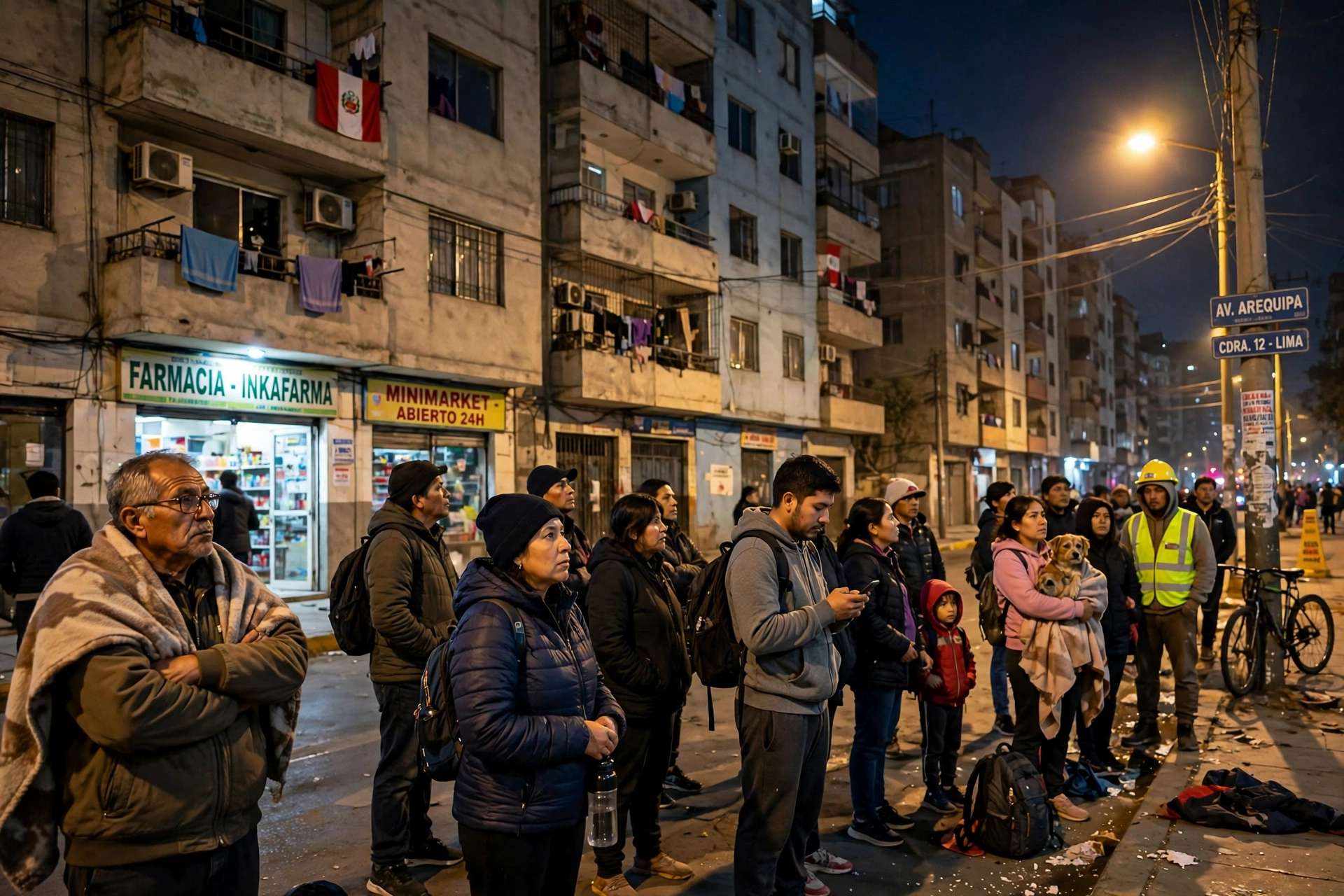
Although the epicentre lay deep in the Andes, the shaking was felt strongly in Lima, where residents rushed into the streets, lawmakers evacuated the Congress building and cinemagoers ran from theatres. No major damage was reported in the capital, but the tremor was a reminder of how far seismic waves travel from Peru’s mountain spine.
Roads Blocked and Power Cut
Rockfalls blocked stretches of the Carretera Central, the main highway linking Lima with the central highlands, and landslides closed sections of the coastal Costa Verde road near Miraflores. Emergency crews worked through the night to clear the debris, and the main routes were reopened.
Power cuts hit towns including Pichanaqui and Satipo, and the national energy regulator Osinergmin said nearly 93,000 users across four regions lost electricity. Airports at Jauja, Huánuco and Callao were reported operational, with no earthquake-related damage.
Aftershocks followed the main quake, including a magnitude 5.0 tremor near the same epicentre in the early hours of Saturday and a magnitude 5.1 earthquake in Ninacaca, Pasco, at 00:51 on Sunday.
Why Peru Shakes So Often
Peru sits on one of the most seismically active stretches of the planet. The country lies along the “Ring of Fire,” a 40,000-kilometre arc of volcanoes and fault lines around the Pacific Basin where most of the world’s earthquakes occur, as the oceanic Nazca Plate slides beneath the South American continent.
It has been a hard year for the Junín region. In August, a 6.7-magnitude earthquake in the Peruvian Andes left two people injured and damaged homes, health centres and schools. In July, a 5.5-magnitude quake in the same region killed six people and injured 30.
What Happens Next
Civil defence teams were continuing their damage assessments over the weekend, and officials cautioned that the figures could change as reports arrive from remote Andean districts. The priority now is shelter and support for the 853 people left homeless, repairs to damaged health centres and schools, and restoring power to the towns still in the dark.
The quake is the latest major story from Latin America this week, after Mexico captured FBI most-wanted cartel boss ‘El Chapo Isidro’ in a deadly Sinaloa gunfight, and Haiti launched its first major offensive in five years to retake the gang-held Martissant corridor. It also comes as COP31 climate talks in Antalya spill into overtime, with fossil fuels vanishing from the draft deal — a reminder of how natural disasters and climate policy are colliding on the world stage.
Peru Earthquake: Frequently Asked Questions
How strong was the Peru earthquake?
A magnitude 6.7 earthquake struck central Peru at 7:09 p.m. local time on Friday, 20 November 2026. The USGS initially reported magnitude 6.9 before revising it to 6.7.
Where was the epicentre?
About 30 kilometres north-west of Junín, in Peru’s central Andes, at a depth of 108 to 129 kilometres depending on the agency.
How many people were killed or injured?
One person died — a hospital patient in Huánuco — and 16 people were injured. A further 853 people were left homeless and 531 affected.
Was Lima affected?
The shaking was felt strongly in Lima, where residents evacuated into the streets, but no major damage was reported in the capital.
Are aftershocks continuing?
Yes. A magnitude 5.0 aftershock struck near the epicentre early on Saturday, and a magnitude 5.1 quake hit Ninacaca, Pasco, early on Sunday.
Sources
- Associated Press, “Magnitude 6.7 earthquake shakes Peru’s Andes, with no damage or casualties immediately reported“
- QNC News, “Peru Counts Cost of Junin Earthquake as One Death and 853 Displaced People Are Confirmed“
- Demócrata, “Earthquake in Peru: one dead and 16 injured in Junín“
More from our Global News coverage: earlier today, Denmark accused Russia of plotting to kill Ukrainian-American rapper Kyivstoner at a concert near Copenhagen — and across Europe, Gen Z protests swept 25 countries under the banner “Money for Schools, Not War”