Haitian armed forces launched an aggressive operation on Thursday, November 19, to drive powerful gangs out of Martissant, the strategic corridor linking Port-au-Prince with Haiti’s western and southern regions. It is the first significant attempt to retake the area in the five years since gangs seized control of it.
Haiti’s National Police said at least 34 suspected gang members were killed in the fighting in Martissant, in a video posted on X. Police said neither officers nor civilians were hurt, though that account has not been independently verified. Local media reported heavy gunfire and the use of explosive drones, and police released video of armoured vehicles rumbling through the neighbourhood.
A Corridor Closed for Five Years
Martissant sits along Route 2, the main road out of Port-au-Prince to important western and southern cities. Before gangs seized it more than five years ago, thousands of people travelled through it every day. Its loss disrupted the country’s economy, blocking goods from entering or leaving the capital, and gangs have since charged tolls or opened fire on cars and buses that dared to cross. Aid workers and civilians have been forced onto alternative routes and rural back roads ever since.
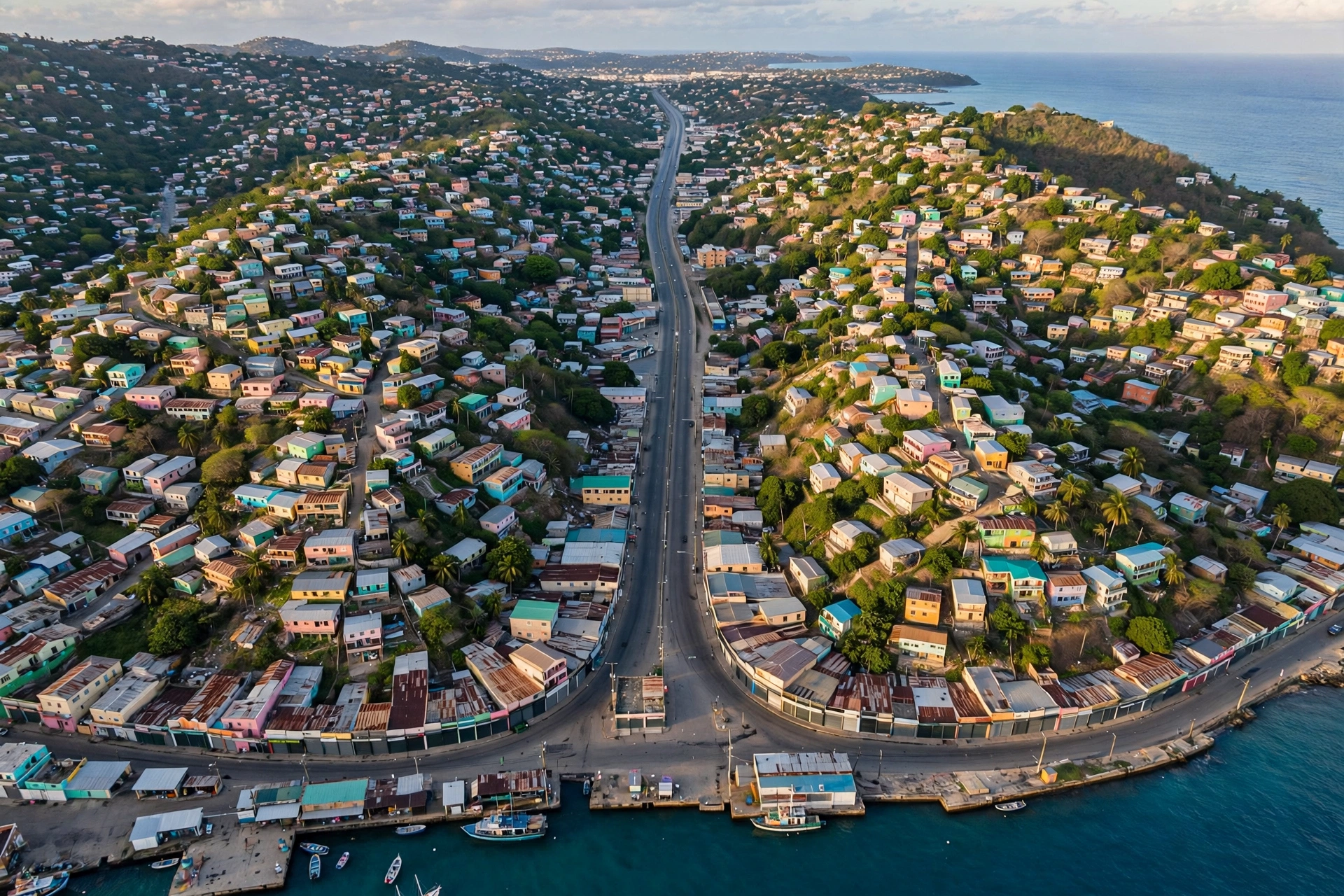
The fight for Martissant began in June 2021, when gangs from Grand-Ravine and Village-de-Dieu attacked the Ti-Bois gang. Armed men set fire to homes, killed families, destroyed businesses and seized the neighbourhood’s police station. The clashes forced at least 19,000 people to flee their homes and affected about 800,000 people overall, according to a July 2022 United Nations report.
The human cost of the closure kept growing. A 2023 UN report said gangs operating between Tabarre and Carrefour demanded about $380 from people transiting through Martissant. Last year, Haiti’s Center for Analysis and Research in Human Rights noted that since Martissant fell, hundreds of public and private institutions had been relocated and more than one million people forced to flee their homes.
Thursday’s Offensive: 34 Killed, Drones and Armoured Vehicles
The operation was run alongside the government’s Task Force, a unit that carries out operations using explosive drones with the support of a private military contractor run by Blackwater founder Erik Prince. Haiti’s police said officers fought alongside a task force that includes members of Vectus Global, a private security firm founded by former US Navy SEAL and Blackwater founder Erik Prince.
Police published video of a building collapsing under a large cloud of smoke; Reuters verified the footage was filmed in Martissant by matching road layouts, buildings and greenery to satellite imagery. Reports said the operation targeted a base of gang leader Ti Lapli. The southwestern part of Martissant is under the influence of the Gran Ravine, Ti Bwa and 5 Segond gangs, according to security analysts.
Police said no Salvadoran personnel took part in the operation, despite the presence of Salvadoran troops in the country.
El Salvador’s 2,500 Troops Join the Fight
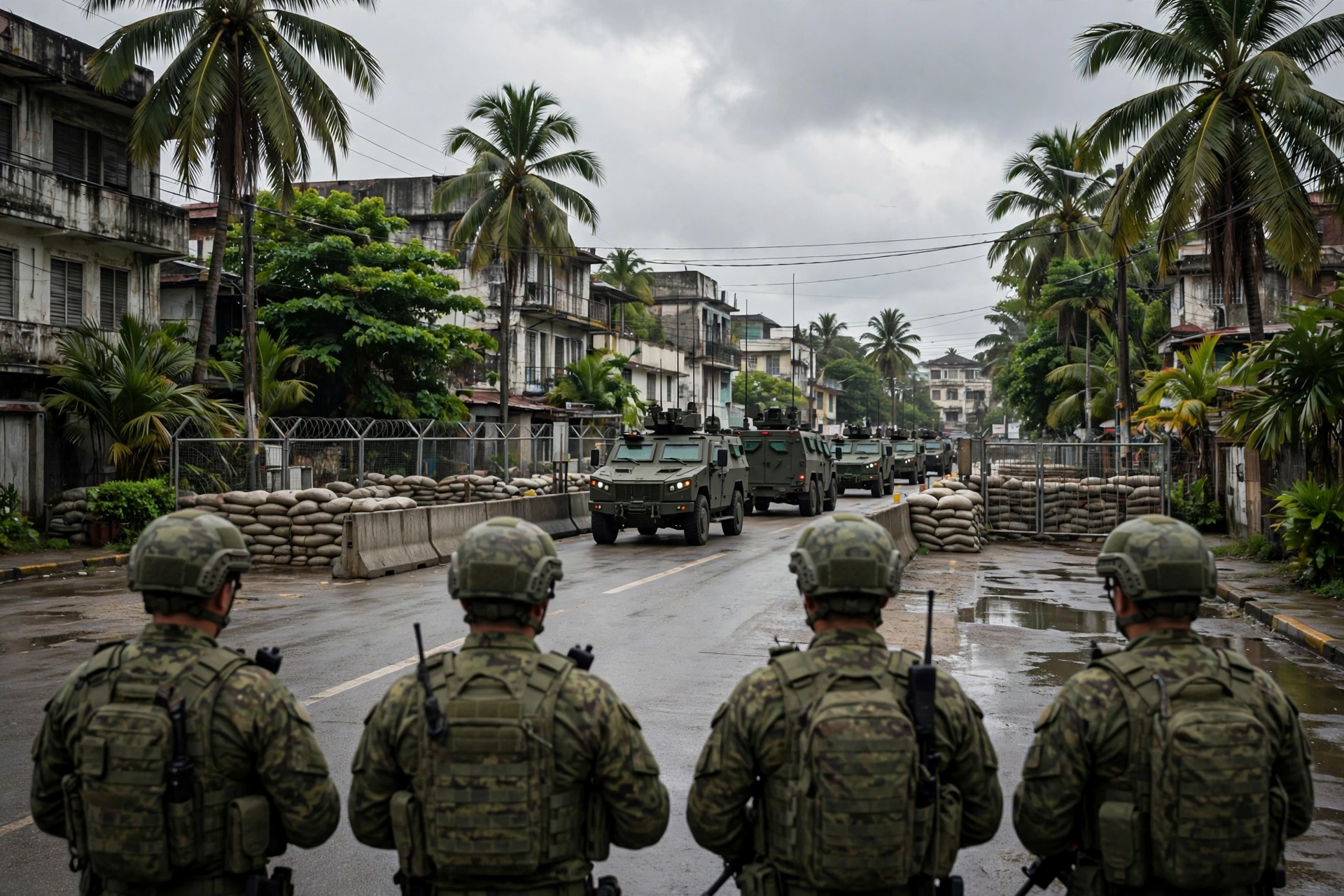
Also fighting gangs in Haiti are about 2,500 troops deployed by El Salvador last month, after four of their own went missing following an October 18 attack in the capital. Acting on orders from Salvadoran President Nayib Bukele, the troops have attacked the main homes of two of Haiti’s most powerful gang leaders, Jeff and Lanmo San Jou, this month. Neither was killed.
Thousands of Haitians poured into the streets of Port-au-Prince and beyond this week in support of Bukele, but experts have criticised the unilateral operations and noted that the use of explosive drones has claimed a growing number of innocent victims. A small group of Salvadorans is separately working with the gang suppression force.
In late September, El Salvador’s legislature passed a law authorising the participation of that group in Haiti for another 12 months, until October 2027. The law was championed by Bukele and overwhelmingly approved by a congress controlled by his party.
Latin America has seen a string of high-profile crackdowns on organised crime this month, including Mexico’s capture of FBI most-wanted cartel boss El Chapo Isidro in Sinaloa.
The UN-Backed Force Enters a New Phase
As the fight in Martissant continues, the UN-backed gang suppression force has also made recent inroads against gangs, in a push not only to displace them but to prevent their return. “Operations are entering a new phase: increasing pressure on gang networks, dismantling more strongholds, and extending control over strategic areas,” the force wrote on X on Thursday.
The force said it is working in places including Tabarre in Port-au-Prince and in Haiti’s central Artibonite region, which has come under repeated violent attacks. It said it has come under fire as it advances along Route 5, “removing obstacles established by gangs to isolate communities and control key routes.” It also said it cleared and secured a church and school that gangs had been controlling north of Gros-Morne.
“It is about restoring freedom of movement, reopening access to public institutions, and re-establishing State presence for communities that have endured years of gang control,” the force wrote on X.
The UN system has been unusually active on accountability this week — the International Court of Justice found Myanmar responsible for genocide against the Rohingya people.
A Country Without a President Heads Toward Elections
The clashes continue as Haiti prepares for its first elections in more than a decade. The country has not had a president since Jovenel Moise was killed in July 2021.
The scale of the violence was laid out by the UN human rights office this week: it has documented 4,595 people killed and 2,050 injured as a result of armed violence in Haiti since the start of the year until October 31, including 1,167 killed and 459 injured between July and September. The office also found that at least 514 people were killed and 235 injured during security operations conducted by national security forces against gangs in that period, at times with the support of a private military company.
The UN has warned that anti-gang operations must prioritise civilian protection, and said more than 5.94 million people — 53 per cent of the population analysed — are facing high levels of acute food insecurity between September 2026 and February 2027.
Haiti’s police are fighting with limited resources at a moment when security institutions across the Americas are under strain — the FBI is investigating an apparent hack of its national crime database — and Washington is debating the limits of military force abroad after the Senate rejected a war-powers resolution on Iran by 48 votes to 51.
Frequently Asked Questions
What is Martissant and why does it matter?
Martissant is a neighbourhood at the western tip of Port-au-Prince, along Route 2, the main road linking the capital to Haiti’s western and southern regions. Gangs have controlled it for more than five years, blocking the movement of people and goods and forcing civilians onto back roads.
How many people were killed in the Martissant operation?
Haiti’s National Police said at least 34 suspected gang members were killed on Thursday, November 19, and that no police officers or civilians were hurt. The police account has not been independently verified.
Who is Vectus Global and what is Erik Prince’s role?
Vectus Global is a private security firm founded by former US Navy SEAL and Blackwater founder Erik Prince. Haiti’s police said members of the firm are part of the task force that fought alongside officers in Martissant, and the task force runs operations using explosive drones.
What is the UN-backed Gang Suppression Force?
It is the UN-backed force in Haiti working to displace gangs and prevent their return, operating in Port-au-Prince and the Artibonite region. It says its operations are entering a new phase of increasing pressure on gang networks, dismantling strongholds and extending control over strategic areas.
Sources
- Associated Press, via BusinessMirror: “Heavy fighting erupts in Haiti as armed forces fight gangs to regain control of key corridor” — https://businessmirror.com.ph/2026/11/20/heavy-fighting-erupts-in-haiti-as-armed-forces-fight-gangs-to-regain-control-of-key-corridor/
- Reuters, via KTWB: “Haiti police operation kills 34 suspected gang members in capital” — https://ktwb.com/2026/11/19/police-operation-in-haiti-leaves-at-least-34-alleged-gang-members-dead/
- United Nations News: “Haiti: ‘Atrocious abuses’ continue as UN warns anti-gang operations must prioritise civilian protection” — https://news.un.org/en/story/2026/11/1168823