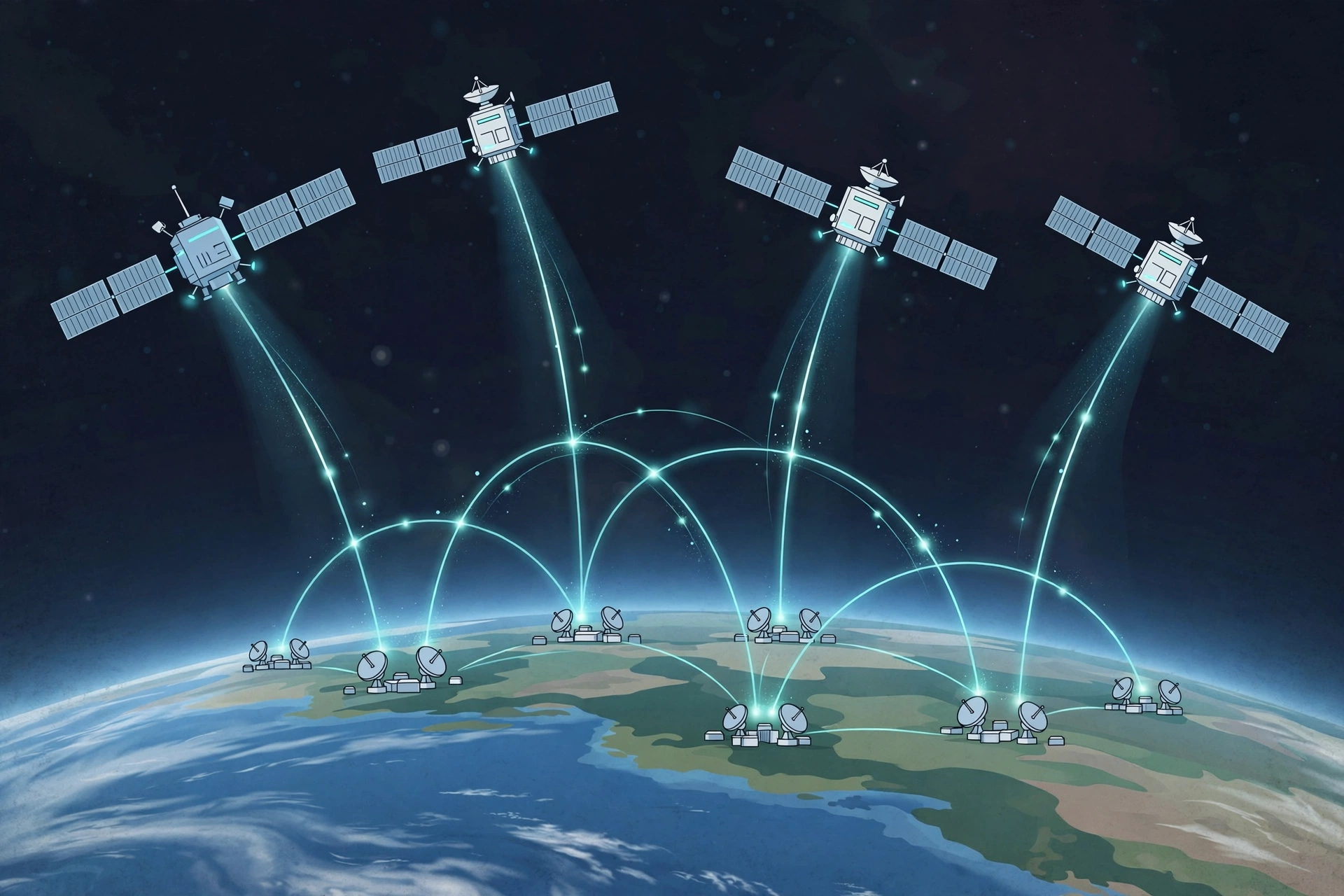
Satellites get the headlines, but every satellite still has to talk to Earth — and that last link is becoming the bottleneck. On November 2, 2026, Northwood Space closed a $375 million Series C round to expand the shared ground network it is building for satellite operators, a bet that the ground side of space deserves the same kind of shared, scalable infrastructure that cloud computing gave software. The same scaling pressure is visible elsewhere in AI infrastructure, as AI infrastructure is scaling fast across chips, networks, and clouds.
Why the ground is now the bottleneck
Northwood’s own announcement puts the scale plainly: active satellites grew from about 3,000 in 2020 to more than 14,000 by the end of 2025, with tens of thousands more projected by 2030. Ground infrastructure built for an earlier era of space — a handful of large, dedicated dishes per mission — has not kept pace. Missions now need more ground capacity, in more places, with support for multiple orbits at once. Without it, the company argues, the ground will limit what satellites can do, from communications and Earth observation to national security missions and exploration beyond Earth orbit. That framing matters because it reframes space infrastructure: the constraint is not only launch or satellite manufacturing, but the unglamorous work of receiving data and sending commands reliably, every pass, everywhere.
What Northwood actually builds: Portal and Prism
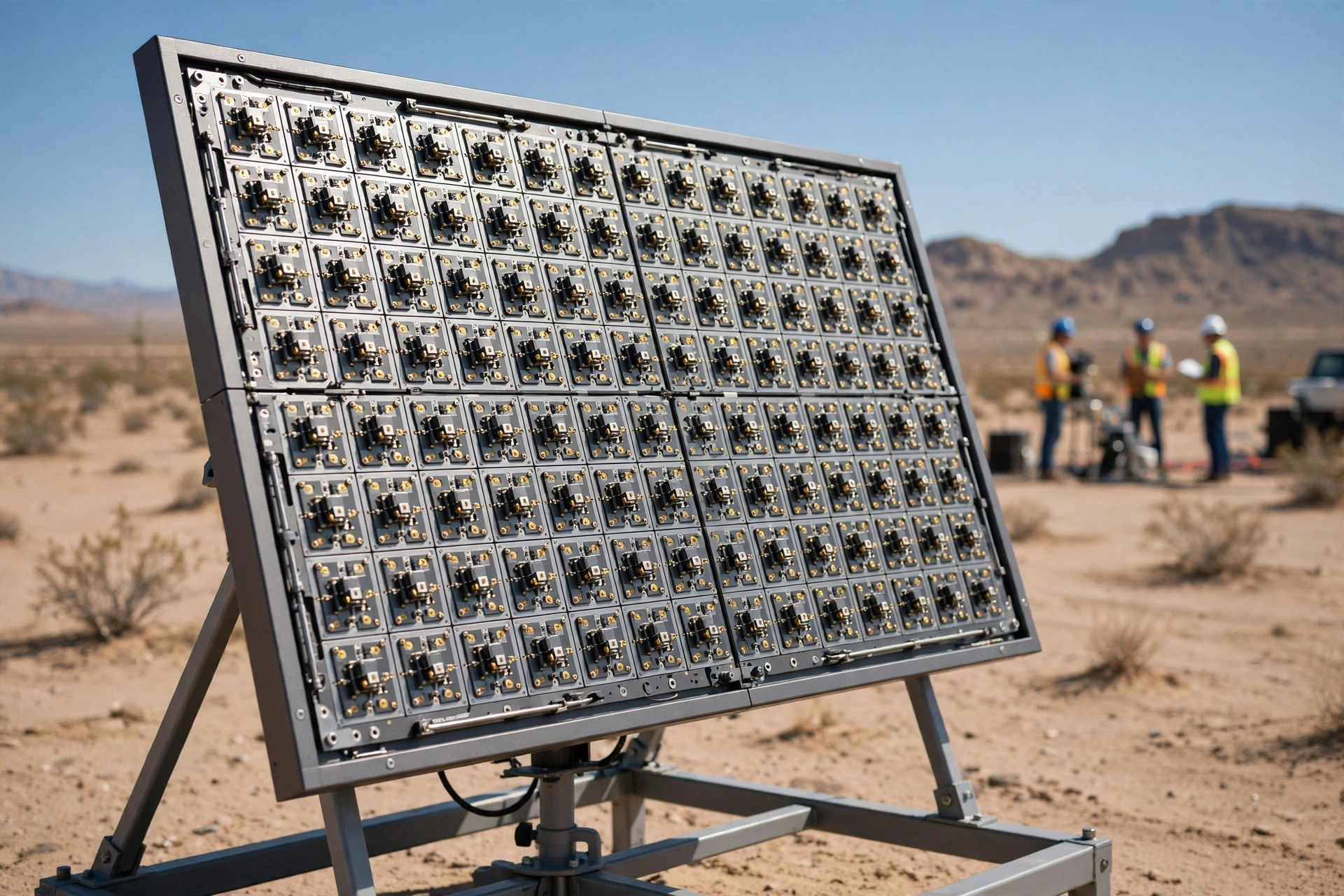
Northwood designs and manufactures its own modular antennas in Torrance, California, and runs them as a shared network rather than selling a one-off station per customer. Its Portal phased arrays handle satellite command and control and, according to Via Satellite’s coverage, can communicate with six satellites at once. Its Prism dishes are built for high-throughput payload data, moving large volumes of imagery and telemetry down at multi-gigabit rates. Together, the two products are meant to cover the full job: keep the satellite healthy and commanded, and get its data back to Earth fast. The company’s software combines multiple antennas into larger effective apertures — in one recent milestone, it arrayed 10 Portals to achieve the receive performance of a 20-foot dish — and lets operators search, reserve, update, and cancel satellite passes through a modern API. That hardware-software pairing echoes trends in edge AI hardware, where efficient, specialized silicon matters as much as the model running on it.
What the $375M round changes
The Series C was co-led by Andreessen Horowitz (a16z) and DFJ Growth, with participation from Alpine Space Ventures, Washington Harbour Partners, Stepstone Activate, In-Q-Tel, and others, plus a separate multi-year credit facility from HSBC Innovation Banking whose amount was not disclosed. Northwood says the money will accelerate delivery on existing contracts, fund hiring, and speed the global buildout of its network for commercial, U.S. government, and allied customers. Since its Series B less than nine months earlier, the company says it has deployed six multi-orbit-capable sites on two continents, demonstrated geosynchronous command capacity from a commercial phased array in live tests, launched its high-throughput antenna system, and opened a 185,000-square-foot headquarters and factory in Torrance that expands its manufacturing footprint more than fivefold. It has grown to more than 140 employees and plans to add 400 jobs in Torrance and Washington, DC over three years. One figure to treat carefully: a $2 billion valuation has been reported by Payload and Via Satellite, but Northwood’s own announcement does not state a valuation, so treat that number as reported, not company-confirmed.
The cloud analogy — and where it breaks
Northwood CEO Bridgit Mendler has compared the model to cloud services: instead of spending millions on dedicated ground stations, operators book capacity on a shared network. The analogy works for the economics — shared infrastructure, booked on demand, instead of capital-heavy builds — and for speed: Northwood says a new site takes about three months rather than years, and new antennas go from truck arrival to live links in three to four hours, shipping by standard freight and needing only flat ground, power, and fiber. But space is not software. A missed pass cannot always be retried like a failed API call, spectrum and site licensing still vary by country, and government customers will keep demanding dedicated capacity and security assurances that a purely shared model cannot always offer. The honest test of the cloud analogy will be whether shared capacity stays reliable when constellations, weather, and geopolitics all stress it at once. As cloud providers are racing to supply AI compute, shared infrastructure models are becoming the default in more than one part of tech.
What to watch next
Northwood says sites capable of more than 100 gigabits per second in high-demand regions are planned by the end of 2027, with several site and network expansions to be announced in the first half of 2027. Watch three things: whether antenna production really scales from 29 units built over the past year to hundreds, whether international sites arrive on the promised three-month cadence, and whether the U.S. Space Force work — including a $49.8 million contract earlier in 2026 to support the Satellite Control Network — expands from demonstrations into sustained operational capacity. If those milestones land, Northwood will have done something rarer than raising a large round: it will have made the ground segment boring, standardized, and fast — which is exactly what a satellite industry heading toward tens of thousands of spacecraft needs.