A new report says Apple is working on a household robot that could cost $1,000 or more, possibly arriving in 2027 or slipping to 2028. It is not an Apple announcement — it comes from reporting by The Information, based on people who worked on Apple’s robotics projects. The device carries the internal codename J595 and could be called HomeView Ultra, tying it to Apple’s new stationary smart display. Here is what the report actually says, what remains unconfirmed, and why the price and the timing both deserve scepticism.
What the Report Claims
The core claim is a tabletop robot, not a roaming floor robot: a roughly 9-inch screen on a motorized, swiveling arm that can turn to follow a person around a room or face whoever is speaking. The design has been compared to a Pixar-style lamp and to Apple’s vintage iMac G4. Cameras and environmental sensors would let it understand its surroundings and act on its own, within limits.
New Apple chief executive John Ternus is reportedly pushing robotics more seriously, according to The Information’s reporting. Former chief executive Tim Cook originally approved early prototypes around 2018 or 2019. The standard Apple’s $299 HomeView display was announced October 13, 2026 with a 7-inch screen for $299 and reaches stores November 13, 2026, making the rumored robot a much more expensive sibling, not a replacement.
From Video-Call Gadget to Household Robot
The project reportedly began in 2019 with a narrower idea: a video-call device whose arm followed the caller. Over time, executive ambitions expanded it into a broader autonomous AI device, and that scope growth is part of why it has taken so long.
Reports say it may run a new operating system blending Apple TV and Apple Watch-style interfaces with widgets, though Apple has confirmed none of this. The lesson is familiar in AI hardware: a focused first product is easier to ship than a device that must be a phone, a hub, a camera and a robot at once.
What It Would Actually Do
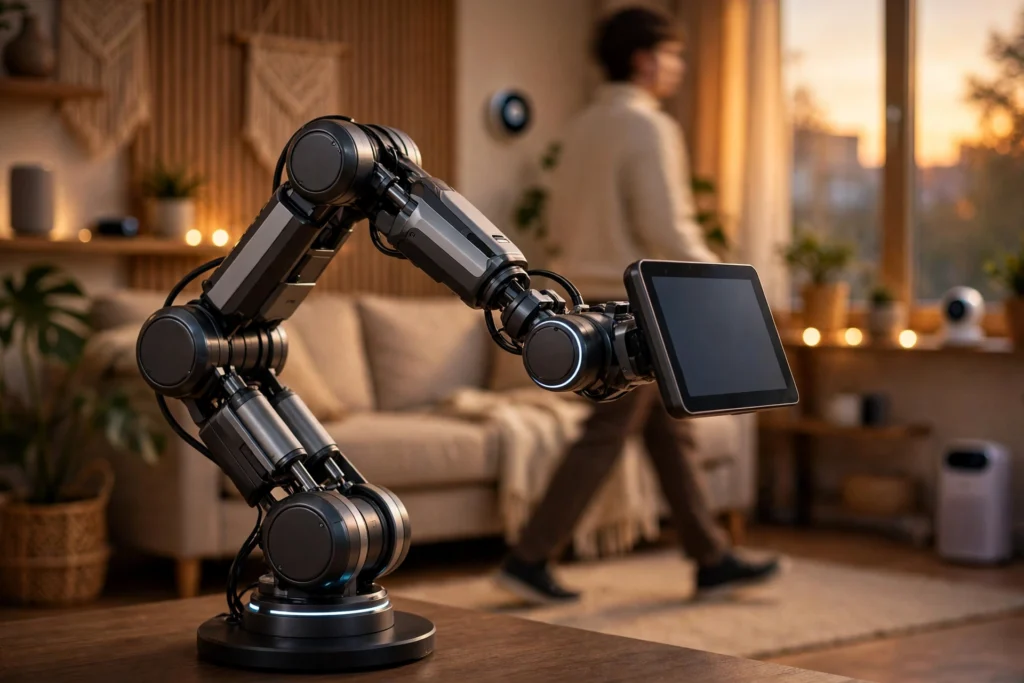
The reported capabilities are practical rather than futuristic: follow occupants during FaceTime video calls so they stay in frame, turn toward whoever is speaking, switch on room lights when someone enters, avoid obstacles, and even try to shoo pets off tables. The screen is said to rotate up to 360 degrees.
None of these features is confirmed, and the software team has reportedly argued for narrowing the first version to core video calling and basic home automation — a sensible trade, since a robot that does a few things reliably beats one that promises everything and stumbles.
Why Software, Not Hardware, Is Holding It Back
Strikingly, the hardware is reportedly largely finished — sources say it has been essentially complete for about two years. The bottleneck is software: delivering the broader suite of autonomous AI capabilities, deciding which features belong in generation one versus generation two, and making spatial awareness feel natural rather than gimmicky.
Elsewhere, voice AI agents are already handling real customer calls, which shows how far conversational AI has come — and how high the bar is for a device that must also see, move and decide in a shared home.
The $1,000 Question: Price and Timing
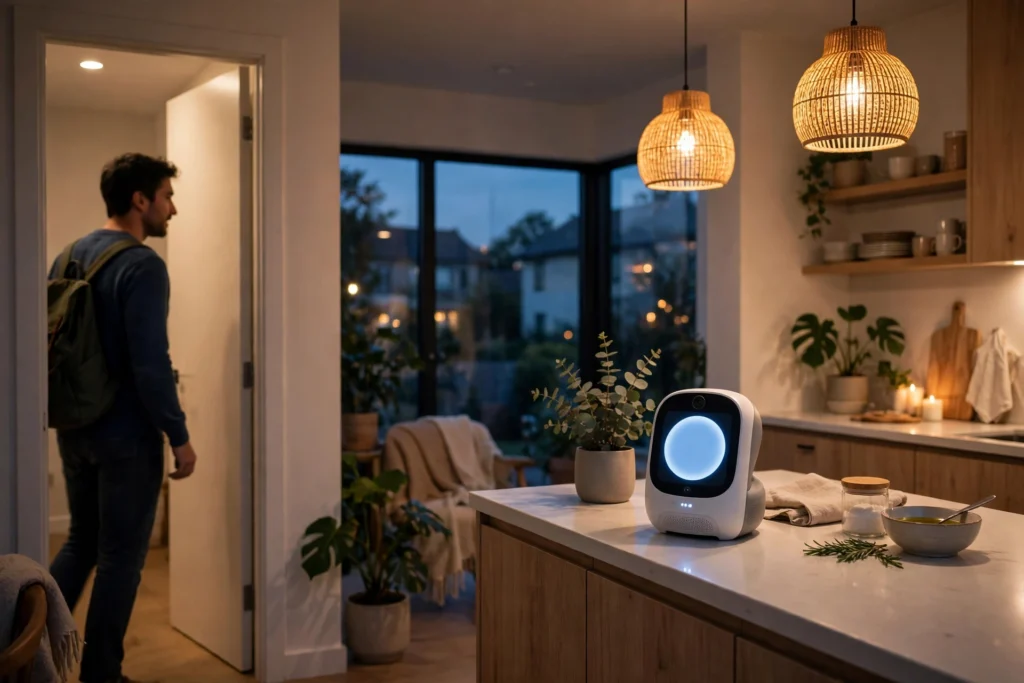
The reported price is around $1,000, possibly more depending on component costs such as memory — more than three times the $299 standard HomeView. That price tests whether buyers will pay a premium for a moving screen when a stationary display does most of the same jobs.
Timing is equally uncertain: Apple reportedly hopes for 2027, but delays could push it to 2028, and some coverage calls 2028 the more likely outcome. Treat both the price and the date as targets in a report, not as a launch plan. Buyers increasingly judge gadgets by whether one device genuinely replaces two, as shown by devices that are expected to do two jobs.
Privacy and the Camera in Your Living Room
A camera that watches a room and a screen that turns to follow people raises obvious privacy questions, and Apple would need strong answers before launch: clear on-device indicators when the camera is active, household-only access, and controls that cannot be switched on silently from elsewhere.
Apple has not described any such safeguards for this unannounced product, so this section is about what buyers should demand, not what Apple has promised. Anyone uncomfortable with a moving camera in a shared living space should wait for those details, not pre-judge a product that does not exist yet.
Should You Wait for It?
Do not wait, and do not budget, for a product Apple has not announced. If you want a smart display now, buy on the merits of the announced $299 HomeView. If the robot arrives, judge it then on three things: whether its software feels reliable on day one, whether its privacy controls are explicit and local, and whether the moving screen earns its roughly $700 premium over the stationary model.
Until Apple speaks, the J595 story is best read as a signal of intent — Apple, under a new chief executive, wants robotics to be a serious category — rather than as a product you can plan around.