

From today, millions of people in the UK can hand their shopping list to an AI agent and let it do the work. Meta has launched Muse, its personal AI agent, in the UK — and it arrives with 14 of Britain’s biggest retailers already signed up, just in time for Black Friday and the Christmas shopping season.
Muse is not another chatbot that answers questions and stops there. It is built to get things done: search for products, compare prices, fill a basket, monitor stock, and complete a purchase — with your approval at every step. Here is what the UK launch includes, how the shopping actually works, and why the controls around it matter as much as the convenience.
What Is Meta Muse?
Muse is Meta’s personal AI agent, first launched in the United States on September 8, 2026, and since rolled out to Canada, Mexico, Japan, Australia and Singapore. The UK is its latest market, and the first time a Big Tech company has rolled out an AI agent product in the country.
The idea is simple to describe and hard to build: instead of answering your question, Muse carries out your task. You chat with it in the Muse app or directly in WhatsApp, tell it what needs doing in everyday language, check what it produces, and it takes action — sending an email, booking travel, filling in a web form, or chasing a refund.
Under the hood, Muse runs on Muse Spark, the first model from Meta Superintelligence Labs, built specifically for real-world agentic work. Each user gets their own dedicated virtual computer in the cloud, where the agent works in an isolated environment. It can keep working on longer tasks after you close the app, and check back when it needs a decision from you. You can also give your Muse a name, an appearance and a personality, and choose which apps and services it is allowed to touch.
Muse is free for most uses in the UK, with optional paid subscriptions for heavier usage. It is available to anyone aged 18 and over on iOS, Android, muse.ai and WhatsApp, and Meta says it is coming to its AI glasses in the months ahead. The iOS app was also updated at launch to add Apple Watch support.
The 14 Retailers on Board at Launch
The shopping side of the launch is what makes it a milestone for British ecommerce. Fourteen UK partners are connected at launch: Marks & Spencer, Debenhams Group, Currys, Ocado Retail, Trainline, Argos, Sainsbury’s, ASOS, Jet2, LOOKFANTASTIC, MyProtein, JustPark, easyJet and JD Sports. Global brands including Spotify and OpenTable are also available as connectors.
The supermarket partnerships go deepest. Sainsbury’s is one of the first major UK supermarkets to connect directly with Muse, letting customers plan meals, compare offers and build a grocery basket through the assistant. Shoppers can give Muse a weekly budget or a meal plan and ask it to find suitable products, taking into account Nectar Prices, Aldi Price Match and other promotions. It can suggest recipes based on dietary requirements before adding the ingredients to the basket, and can shop for Tu clothing too.
The retailers are not all connected in the same way. With some, customers can link their own account so Muse can reorder a usual grocery shop or pull up an existing booking. With others, Muse navigates the retailer’s website on the shopper’s behalf from day one. Sainsbury’s said it chose to work directly with Meta rather than leave an agent to find its own way around its website — a sign that retailers want a say in how agents shop with them.
How Shopping With Muse Works
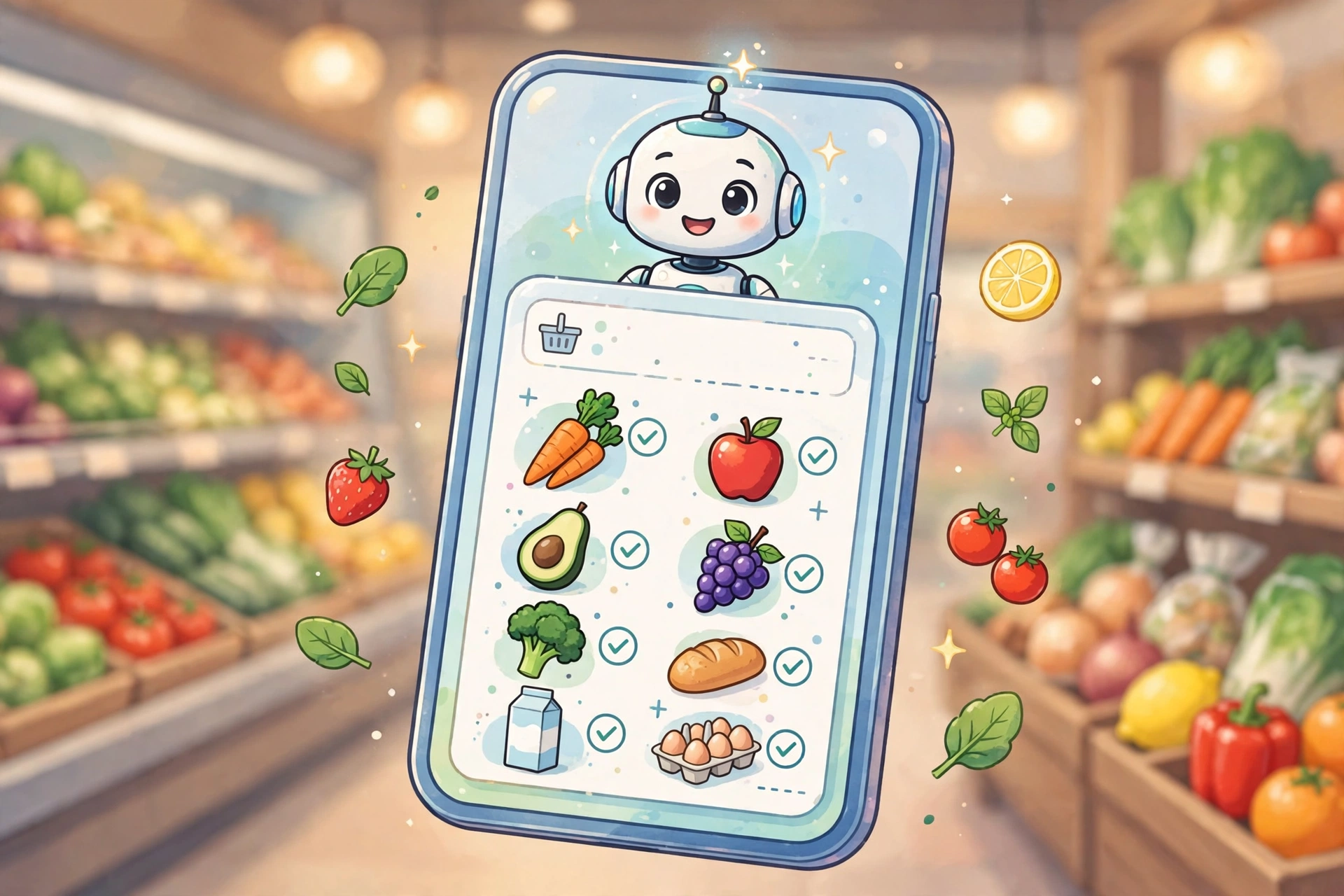
The flow is deliberately conversational. You tell Muse what you need — a weekly shop within a budget, a Christmas present for someone, the cheapest price on a specific product — and it searches participating websites, identifies suitable options and presents them without you visiting each store yourself.
Unlike a traditional chatbot, Muse can navigate websites, fill baskets, monitor price changes and complete purchases once you have given approval. It can also keep working in the background: checking stock availability or watching a price, then returning when something changes or when it needs your go-ahead.
Payment runs through two mechanisms. Link by Stripe acts as a card-like credential the agent can present to merchants, and Shop Pay — Shopify’s stored-payment product — works at supported stores. Meta says PayPal integration is coming soon. Purchases go through the retailer’s own checkout, with the usual confirmation and the chance to amend or cancel — Sainsbury’s confirmed shoppers see their basket contents and total before anything is ordered.
Beyond Shopping: What Else Muse Can Do
Shopping is the headline, but Muse is pitched as a general-purpose personal agent. Meta’s launch examples range from doing the Christmas shopping and searching for a cheaper energy deal, to sorting the school calendar or turning saved travel Reels into a holiday itinerary.
It can send emails, book travel, manage a calendar, fill in forms and chase outcomes such as a refund or a lower bill. It can also keep working after the app closes, returning only when it needs permission. That persistence is the real difference from a chatbot: Muse is designed to own a task from start to finish rather than answer a single question.
The agent keeps evolving quickly. Muse can now make phone calls for you for paid US subscribers, it recently gained real-time voice calls and expressive avatars, and Meta is even building the Muse Charm keychain gadget to put the agent in your pocket. The UK launch is the next step in turning that agent into something millions of people use every day — and the race is on, as Google’s Gemini can now control your Mac too.
The Controls That Keep You in Charge

Handing an AI the keys to your wallet is a big ask, and Meta has built the UK launch around a set of controls — some of them shaped by the regulator. The Competition and Markets Authority confirmed that Meta changed the assistant’s terms and conditions following discussions with the watchdog.
The headline control is simple: purchases need your approval every time. Meta says Muse cannot complete a purchase without the shopper seeing the details first, and agents do not accumulate standing authority through repeated use. You choose which apps Muse can access and what it can do with each of them.
Behind the scenes, a separate security agent inspects Muse’s actions and outgoing information against the permissions you granted. Passwords sit in a credentials store the model itself cannot see, and Muse ignores one-time codes and password-reset links found in email. Each user’s dedicated cloud virtual computer keeps the agent’s work isolated from Meta’s other services, and conversations with Muse are not shared with Meta’s advertising systems.
There is one default worth knowing about: using your Muse interactions to train Meta’s AI is switched on by default at setup. You can turn it off in Settings, and private messages such as emails and Instagram DMs are excluded from training regardless. It is a small setting with a big principle — check it before you start shopping.
The controls matter because the risks are real. Amazon blocked Muse from shopping on its site in September over security concerns, and Reuters reported last week that Meta staff had raised internal concerns about unwanted actions by the agent. The UK launch is the first large-scale test of whether those controls hold up with real shoppers and real money.
The Bottom Line
Meta Muse’s UK arrival is the moment agentic commerce goes mainstream in Britain. Fourteen major retailers, a free tier for most uses, and an agent that can plan a weekly shop, compare prices and check out — all landing days before Black Friday — make this the biggest real-world test yet of AI agents that spend money on your behalf.
The promise is genuine: less time browsing, better prices found for you, and chores handled while you get on with your day. But the test is whether the controls keep pace with the convenience. Approval on every purchase, a separate security agent, and passwords the model cannot see are a strong start — and the regulator is watching. If Muse earns shoppers’ trust this Christmas, expect every other AI company to follow it into the aisle. For the full picture, read Meta’s official UK launch announcement, Retail Gazette’s guide to the launch, The Grocer’s report on the supermarket partnerships and MacRumors’ coverage of the UK launch.