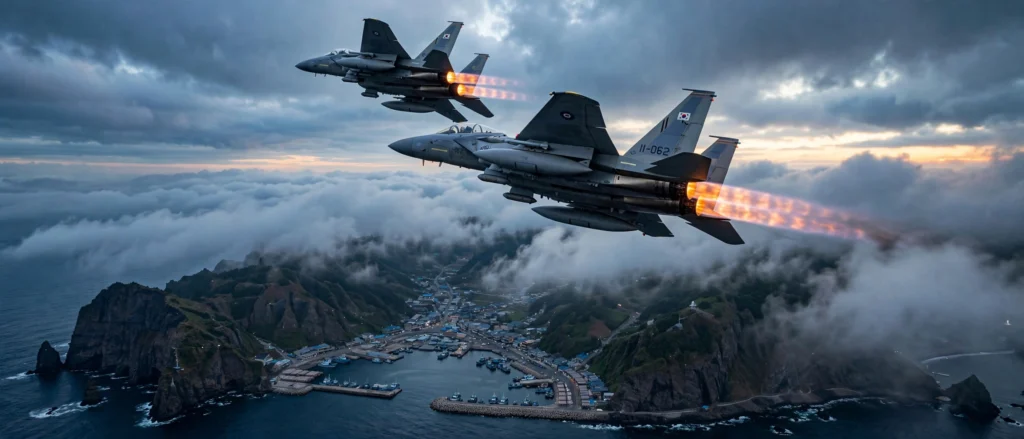
Residents of a remote South Korean island were ordered to take shelter on Tuesday morning after several Russian military aircraft flew to the very edge of the country’s airspace, prompting Seoul to scramble fighter jets and issue a rare civil defence warning. The alert lasted only a few minutes, but the confusion it caused — and the diplomatic protest that followed — showed how close Russia’s routine flights near the Korean Peninsula now come to triggering a real crisis.
What Happened Over Ulleung Island
Several Russian military aircraft entered South Korea’s air defense identification zone over the East Sea — the sea known in South Korea as the East Sea and in Japan as the Sea of Japan — on Tuesday morning, November 24, and approached Ulleung Island, a volcanic island of about 8,700 people roughly 120 kilometres off the country’s east coast.
South Korea’s military had been tracking the aircraft before they entered the zone and scrambled Air Force fighter jets in response. The jets conducted what the Joint Chiefs of Staff described as “tactical maneuvers” to prevent any incident as the Russian planes closed in.
According to the Joint Chiefs, the aircraft flew “to the point just before violating Ulleungdo’s airspace” — but in the end, no violation of South Korean sovereign airspace occurred. The Russian aircraft departed eastward during South Korea’s military response.
“Airspace intrusion was anticipated, therefore in order to protect the safety of our people, we issued a warning preemptively,” Joint Chiefs spokesperson Jang Do-young told a briefing, explaining why the shelter alert went out even though the jets never actually crossed the line.
A Warning That Lasted Only Minutes
The Ministry of the Interior and Safety issued the warning for Ulleung Island at 7:52 a.m. local time on Tuesday — 5:52 p.m. Monday on the US East Coast — followed a minute later by an emergency text message instructing residents to seek shelter in underground facilities or in buildings. The English portion of the message read: “EVACUATION, AIR RAID.”
Television broadcasts were interrupted by on-screen warnings telling residents to “prepare to evacuate to a nearby underground shelter facility and listen to broadcasting.” Sirens sounded across the island, and residents reported hearing the noise of fighter jets overhead.
The warning was lifted within minutes, once the aircraft had left the area. It was the speed of the whole episode — alert, scramble, stand-down — that made it so striking: an entire island was told to prepare for an air raid, and minutes later told to carry on as normal.
Life on the Island During the Alert
For the people of Ulleungdo, the alert was bewildering. Jeong Hae-seung, 41, who was working on a building site when the emergency text arrived, told the Hankyoreh newspaper he ran out of his workplace the moment it came through.
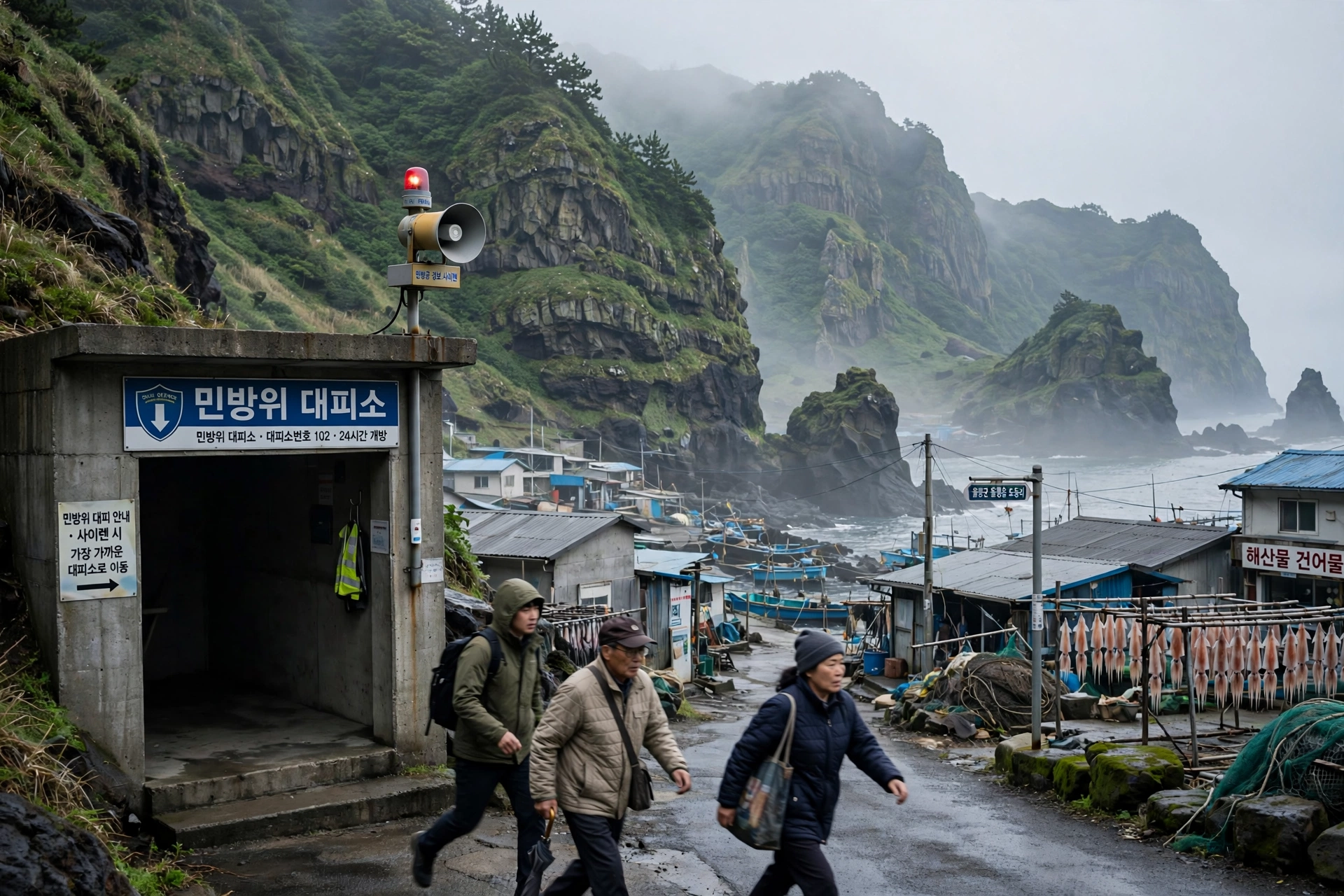
“I went outside wondering what on earth was going on, and the civil defence broadcast was playing, but I couldn’t make out what it was saying,” he said.
Baek Un-bae, who lives on the island, told broadcaster YTN that an elderly resident had telephoned him asking whether war had broken out. “Older people have no access to the media, so all they hear is the warning broadcast and they are too alarmed to know what to do,” he said.
Others said they did not hear the sirens at all, with windows shut against the cold and strong winds blowing. The episode exposed how blunt a tool the emergency alert system can be when the threat it describes is measured in minutes and the information behind it is still taking shape.
The Confusion: Russian Jets, Then a North Korean Mix-Up
The first official messages about the incident contradicted each other. The Interior Ministry’s emergency message initially stated that a Russian aircraft had violated South Korean airspace. Then North Gyeongsang Province, which administers Ulleungdo, sent a message announcing the warning had been lifted — but described a flying object “presumed to be a North Korean aircraft” that had left the danger zone.
The province later said it had mistakenly taken the wording from its routine drill messages, changed only the time, and sent it in error. The Joint Chiefs of Staff then clarified the record: the aircraft were Russian military planes, not North Korean drones, and no violation of South Korean sovereign airspace had occurred.
Jang described the alert as unusual but said he could not confirm whether it was the first of its kind. What is clear is that a civil defence warning telling residents to urgently take shelter is rare — even though Russian aircraft have entered South Korea’s air defense identification zone several times in recent months.
Why Russia Keeps Flying Into South Korea’s Air Defense Zone
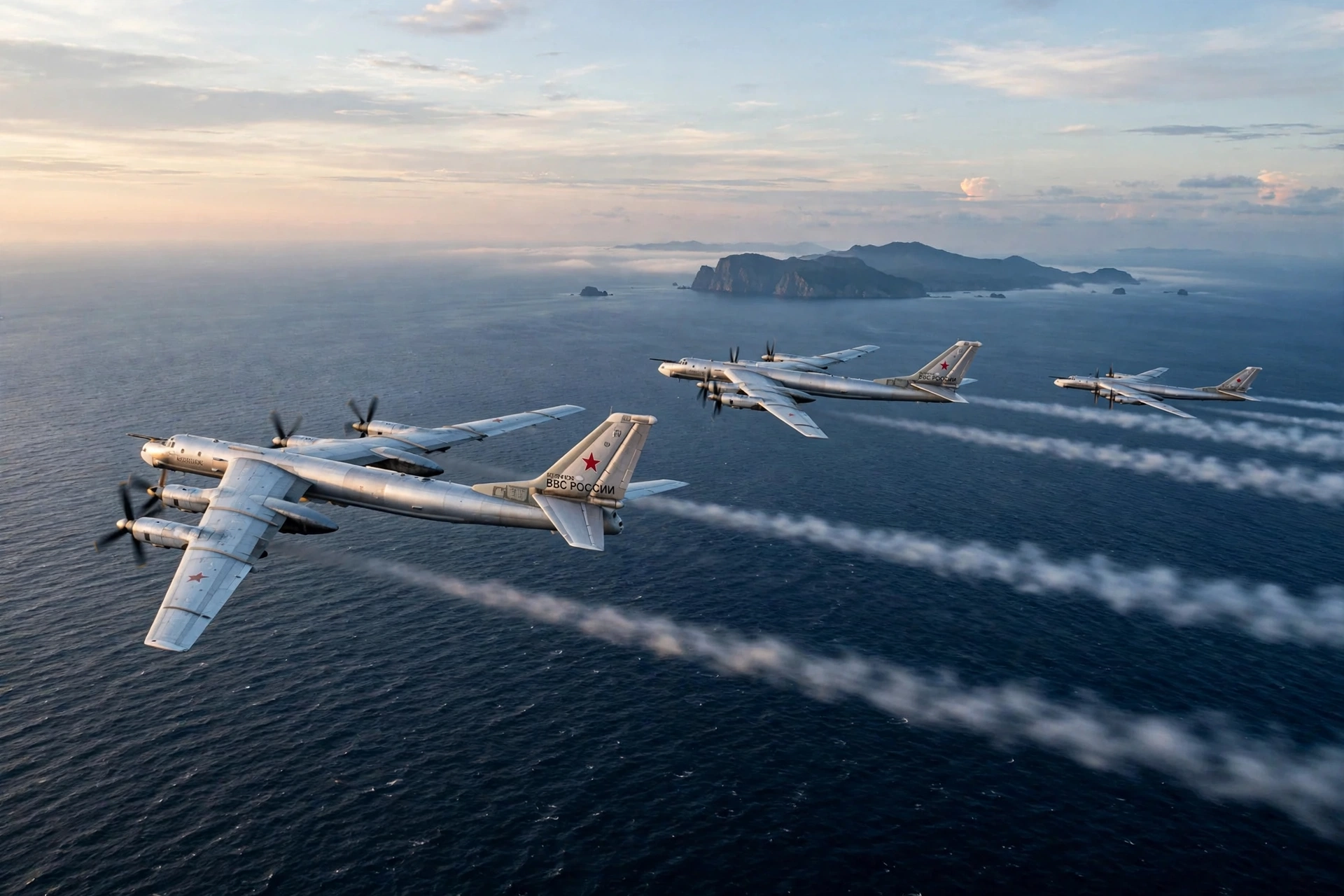
An air defense identification zone is not sovereign airspace. Countries establish these zones beyond their own airspace so they can identify incoming military flights early. Entering such a zone without prior notification does not in itself violate international law, although submitting a flight plan in advance is international practice.
Russia argues that South Korea’s zone has no basis in international law and does not recognise Seoul’s authority over it — and it has repeatedly flown into the zone without notice. According to data submitted to South Korea’s parliament, about 60 Russian entries without prior notification were recorded in the five years to 2024, compared with about 430 by Chinese aircraft.
The flights are part of a wider pattern of Russian military probing around its neighbours. Russian missiles landed in Poland earlier this month, drawing a warning from NATO that the alliance would defend “every inch” of its territory, and Western intelligence has warned that Moscow could launch a nuclear-armed satellite as early as December. The flights fit a wider pattern of Russian covert operations in Europe. The Ulleung incident shows the same pressure being applied in East Asia, where the margin for error is measured in minutes and kilometres.
A Pattern, Not a One-Off
Tuesday’s incident was the fourth known entry by Russian military aircraft into South Korea’s air defense identification zone this year — and the second in a week. Just last week, on November 17, several Russian military aircraft entered the zone over the East Sea, prompting South Korea to scramble fighter jets. No airspace violation was reported in that incident either.
On August 25, Russian military aircraft also entered the zone near Ulleung Island and Dokdo, the disputed islets also claimed by Japan, before departing. And on June 27, Chinese and Russian aircraft conducted a similar flight during a joint aerial exercise.
Seoul has protested before. In March 2025, it summoned Russia’s defence attaché after eight entries in ten days — the first such summons since a Russian aircraft violated South Korean airspace in 2019 and South Korean jets fired warning shots. Tuesday’s flight is likely to draw the same response.
What Happens Next
South Korea’s Defence Ministry said it would summon the Russian military attaché later on Tuesday to lodge a stern protest, ministry spokesperson Chung Binna said. The Russian embassy in Seoul did not immediately respond to a request for comment.
The protest is diplomatic, but the incident raises a sharper question: what happens the next time the warning is not lifted within minutes? The military’s own account is that the jets came “very close” to Ulleung Island’s airspace and that a violation was anticipated because military aircraft move so fast. A misread radar track, a delayed order, or a second wave of aircraft could turn a preemptive warning into something far more serious — and on an island of fewer than 9,000 people, there is little room for error.
For now, Ulleungdo is back to normal. But the island’s residents have had a reminder that the great-power tensions shaping the news are not abstract — sometimes, they arrive as a text message telling you to take shelter.
Frequently Asked Questions
Did Russian aircraft enter South Korean airspace?
No. The aircraft entered South Korea’s air defense identification zone and approached to the verge of the airspace over Ulleung Island, but South Korea’s military says no violation of sovereign airspace occurred.
What is an air defense identification zone?
It is an area beyond a country’s territorial airspace where aircraft are supposed to identify themselves as they approach. It lets a country spot incoming military flights early. Entering the zone without prior notification does not itself violate international law.
Why was a shelter warning issued if there was no airspace violation?
South Korea’s military said it anticipated a possible violation because the Russian aircraft were moving fast and had come very close to the island’s airspace, so it issued the warning preemptively to protect residents.
How often do Russian aircraft fly into South Korea’s air defense zone?
Tuesday’s incident was the fourth known entry this year and the second in a week, following a similar flight on November 17. About 60 Russian entries without prior notification were recorded in the five years to 2024.
What is South Korea doing about it?
The Defence Ministry said it would summon the Russian military attaché in Seoul to lodge a stern protest. Seoul took the same step in March 2025 after eight Russian entries in ten days.
Sources
- Reuters (via 979weve): https://979weve.com/2026/11/23/south-korea-briefly-issues-evacuation-warning-after-russia-aircraft-enters-airspace/
- Aju Press: https://www.ajupress.com/view/20261124090648002
- DailyFoxNews (Guardian-sourced): https://dailyfoxnews.com/news/13939/south-korea-tells-island-residents-to-take-shelter-after-russian-military