Amazon’s Ring has spent years promising a security camera that does not just sit on a wall — one that moves. On November 10, 2026, the company finally delivered on that idea, announcing Ring Robotics, a new line of autonomous, mobile security devices. The launch pair is the Ring Drone Cam, a $249.99 flying indoor camera, and the Ring Rover Cam, a $999.99 patrol robot built for businesses. Both are driven by a new navigation system called AI Pilot — but only one of them can actually be bought today.
Ring Drone Cam: Security Takes Flight
The Drone Cam is a small flying indoor camera — Ring says it weighs 165 grams — that lifts off from a dock, flies a preset route through your home, and returns to charge. It records in clear 2K video with a 148-degree field of view and can rotate 360 degrees, so a single flight can take in a whole room. Two built-in LED lights switch on automatically in low light, and the drone can fly between rooms and upstairs. You set the routes and the schedule, and the drone flies them automatically — or you can deploy it on demand at any time. When a Ring camera, sensor, or alarm is triggered, it automatically flies to preset patrol points to investigate what set it off. The main limit is flight time: around eight minutes per charge, a manufacturer rating for a quick inspection sweep rather than a night of airborne patrol. The price is $249.99, with U.S. shipping targeted for January 27, 2027 — but there is a catch, covered below. Amazon’s announcement
Ring Rover Cam: A Guard That Never Clocks Out
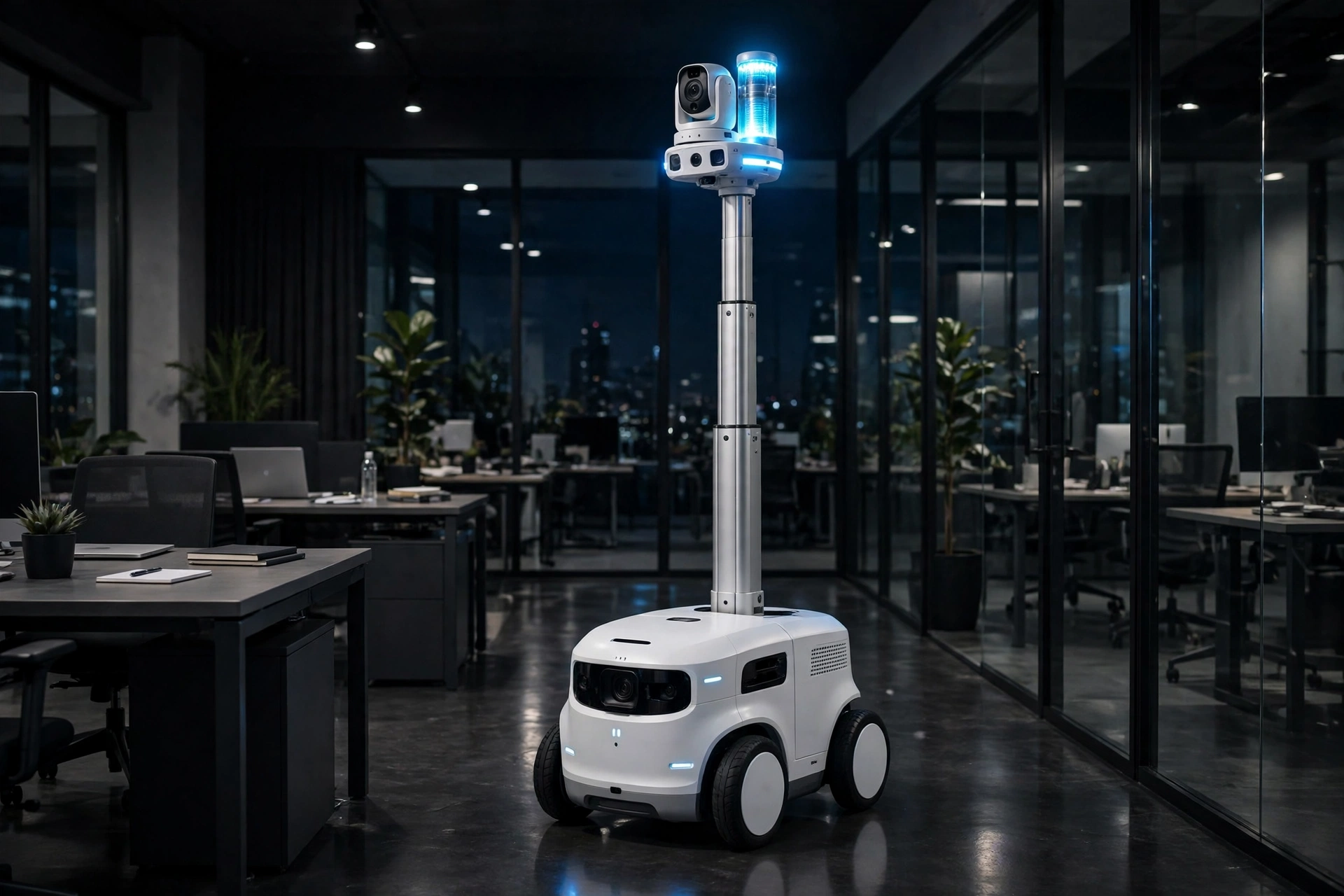
The Rover Cam is the business half of the launch: an autonomous security robot that patrols a store, office, or warehouse on a schedule, investigates disturbances, and streams video in up to 4K — continuously, while it is moving, not just at its stops. An adjustable periscope camera on a mast lets it see over counters and shelving, and a built-in siren, light tower, and two-way audio let it deter intruders and let you speak up from anywhere. Continuous person-motion detection means it can alert you and start recording the moment it spots movement, even while docked. Ring says the Rover grew out of feedback from Amazon Astro customers, who loved the roving security feature most — so the team built a purpose-built security robot instead of a home robot that also does security. It costs $999.99, is open for preorder now, and begins shipping in the U.S. on December 16, 2026. GeekWire reports — the Rover costs less than half what Astro for Business did.
AI Pilot: The Brains Behind Both Robots
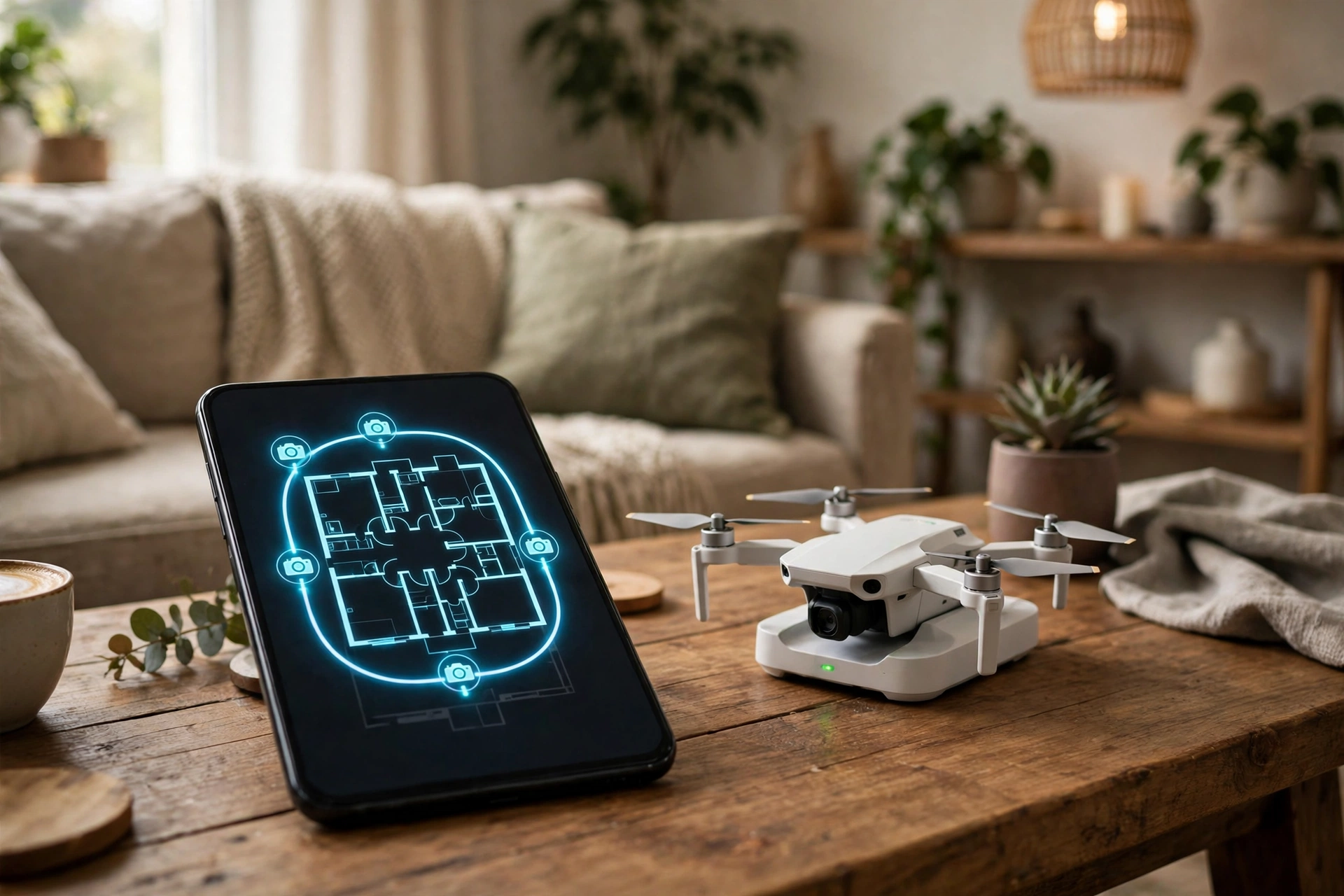
Both devices run on AI Pilot, a custom system that uses the devices’ cameras, vision models, on-device sensors, and cloud processing to see, think, and navigate on their own. Setup is simple: carry the drone through your space or let the Rover explore, and AI Pilot turns what it sees into a floor plan, identifies the rooms, and suggests patrol points — a side door, a register, a long corridor — while letting you add your own. On a patrol, it plans the most efficient route and steers around furniture, shelving, and other obstacles in real time. Both robots work with the Ring cameras, doorbells, sensors, and alarms owners already have, and can be controlled from the new Alexa Home Map. The same week Google made Gemini 4 Carbon its strongest model for long agent work, Ring is betting that autonomous agents can also be trusted to guard a building — a bet that raises the same questions about oversight that Commvault and Zscaler’s new tools for governing AI agents aim to answer.
Privacy by Default, With Stronger Encryption
Ring says privacy is the default, not an add-on. The drone powers down in its dock with its camera off, waiting until a flight is triggered. The Rover has a Sleep Mode that retracts the periscope and turns off the microphone with a single tap. Both have LED indicators so you always know when they are recording, and both are designed to be seen and heard — the drone’s propellers are audible and the Rover’s light tower is bright — so an intruder knows they have been spotted. Videos from both devices are protected by Throw Away the Key (TAKE) encryption, Ring’s strongest default encryption yet. One cost to budget for: scheduled routes and access to recordings require a compatible Ring Protect plan, and Ring has not yet announced what that will cost for these devices. New hardware is only half the security story — keeping the software behind it patched matters just as much, as the recent OpenSSH password bypass flaw hiding in Alpine Linux servers showed.
The Catch: The Drone Cannot Be Sold Yet
The January 27 ship date for the Drone Cam is conditional. The device has not yet received the required authorization from the U.S. Federal Communications Commission, and Amazon’s own fine print states it “is not, and may not be, offered for sale or lease, or sold or leased, until authorization is obtained.” For now Ring is only collecting email sign-ups for the drone, while the Rover — which needs no such approval — is already on preorder. The flight-time and patrol limits are also worth noting: eight minutes is the advertised ceiling on the flying camera. This is also Ring’s second attempt at a flying camera: the Always Home Cam concept shown in 2020 never shipped. The difference this time is a real product line, real prices, and a Rover that is weeks away from customers.
What to Watch Next
First, whether the FCC authorizes the Drone Cam in time for the January 27 target. Second, what Ring Protect will cost for scheduled patrols and recordings — the hardware price is not the full cost. Third, how the Rover performs once it starts shipping on December 16, and whether eight-minute flights are enough for a full sweep of a real home. Ring is not the only gadget maker with big news this month — SpaceX’s battery-powered Starlink Mini 2 cuts the cord for off-grid internet, and the Xiaomi 18 Pro goes global on November 17 — but Ring Robotics is the most ambitious bet in consumer security hardware in years: protection that patrols, investigates, and responds, instead of waiting on a wall.
If the FCC gives the green light and the first Rover patrols go smoothly, the fixed camera could start to look like the landline of home security — useful, but no longer the whole story. For now, businesses can preorder a robot guard for December, and homeowners can join a waiting list for a drone that may — or may not — take flight in January.