OpenAI is turning ChatGPT into a place where businesses can show up, be verified, and talk to customers directly. On Tuesday, November 10, 2026, the company launched Businesses in ChatGPT in beta, a new set of tools that lets companies claim their business profile inside the chatbot, keep its information accurate, and deploy an AI agent that answers shoppers’ questions without them ever leaving the conversation.
It is the clearest sign yet that OpenAI sees ChatGPT not just as an assistant for individuals, but as a discovery engine for the businesses people ask about. OpenAI says ChatGPT now reaches 1.2 billion people each week, and until now those people have mostly encountered businesses secondhand, through whatever the model happened to know. This launch gives companies a way to take control of that presence.
What is Businesses in ChatGPT?
Businesses in ChatGPT is a beta program built around two pieces: Business Hub, where companies manage their profile, and Business Agents, AI assistants that businesses can build to answer customer questions inside ChatGPT.
The idea is simple. When someone asks ChatGPT for a product recommendation or a service provider, the chatbot often names specific businesses. Until now, a business had no way to correct outdated details, add current prices, or respond to the person asking. With this launch, it can do all three, and it can do so in a way that is clearly labelled as coming from the business rather than from ChatGPT itself.
OpenAI describes the announcement as an early step rather than a finished product. The company plans to expand the program to more markets and business categories over time, and to build tools for organizations with more complex needs. The launch follows other recent AI releases, including OpenAI Images 2.6 and Claude Fable 5.2.
Business Hub: claim and verify your profile
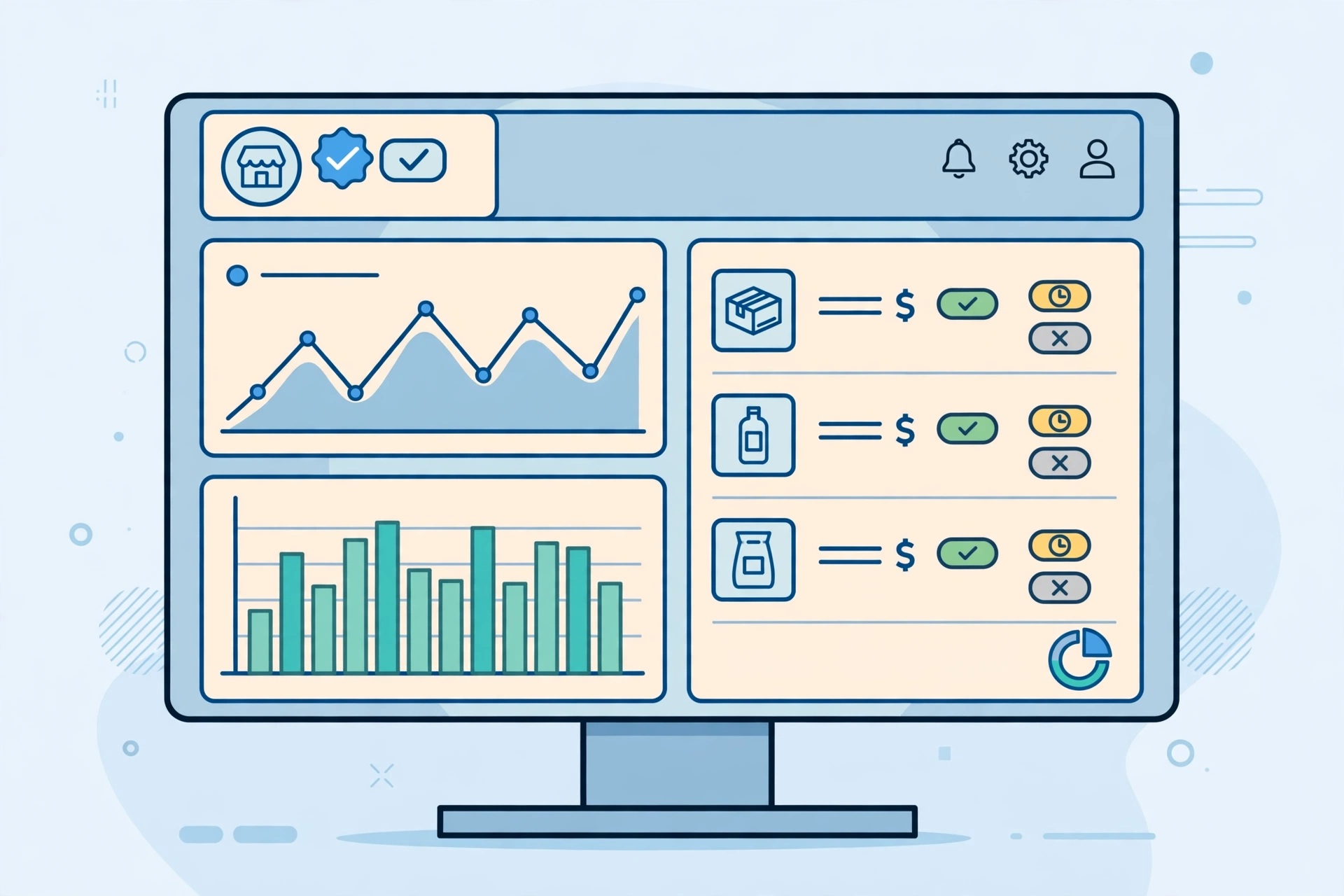
Business Hub is the management layer of the program. Eligible businesses can claim their organization in ChatGPT and, after completing verification, update key details such as their website, description, logo, and delivery and return policies. Retailers can also add product feeds containing pricing and availability, so the information ChatGPT shows about them stays current.
Shopify merchants get a shortcut: they can connect their stores through Business Hub or directly from the Shopify admin dashboard, and eligible Shopify products are already integrated into ChatGPT through Shopify Catalog.
A claimed profile displays a blue checkmark once the business passes identity verification. OpenAI uses verification firm Persona for this step, which can ask for a government ID, business registration details, and proof that the person claiming the profile is authorized to represent the company. Claiming a profile is open to eligible businesses wherever ChatGPT is available, though the exact verification options vary by business type and market.
One important caveat: claiming a profile does not guarantee higher placement in ChatGPT’s answers or more sales. OpenAI says the verified badge is about accuracy and trust, not ranking.
Business Agents: an AI assistant that answers shoppers
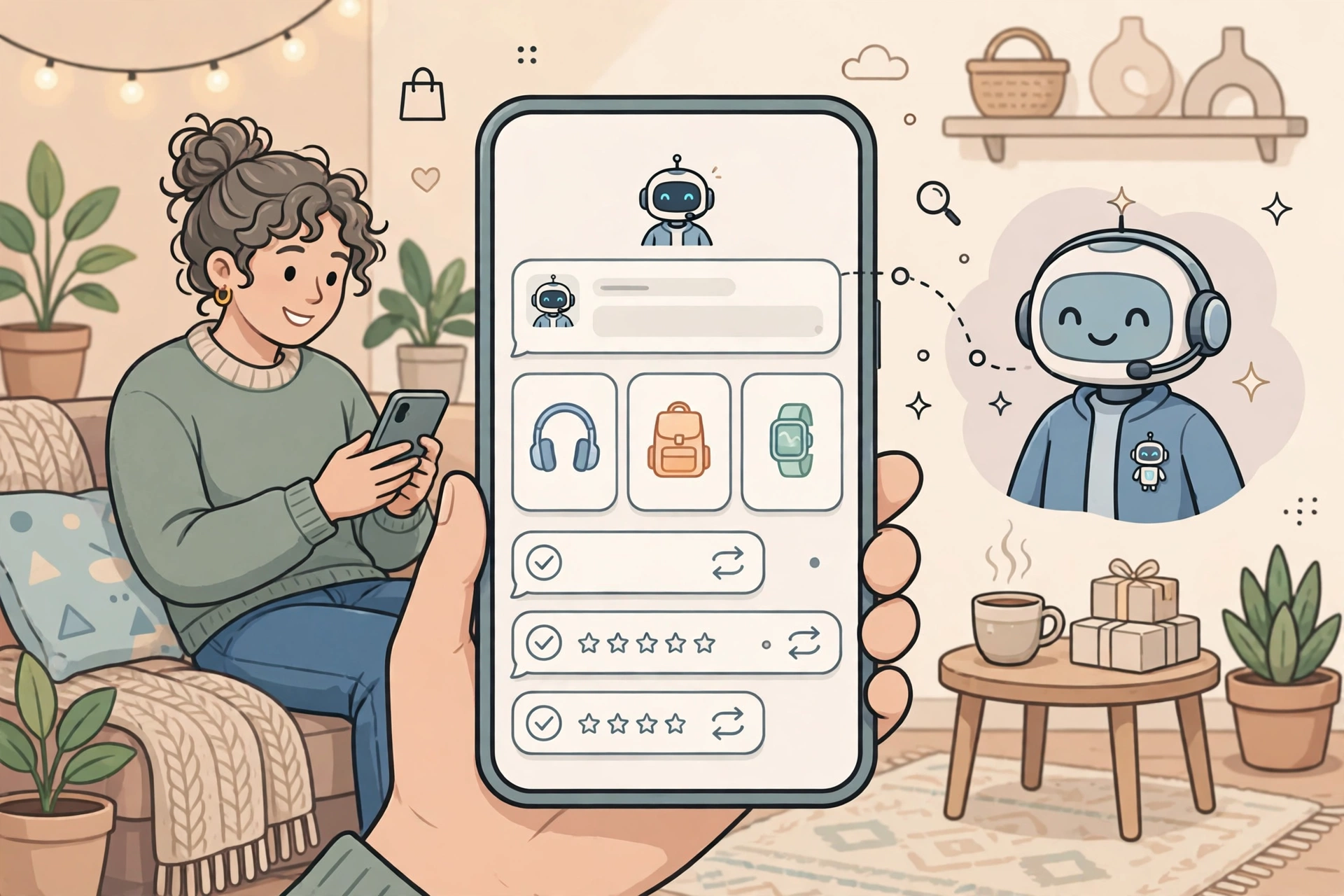
The most interesting part of the launch is Business Agents. After claiming a business, eligible organizations can build, test, and launch an AI agent that answers questions about their products and services. When a ChatGPT user encounters a participating business in a response, they can visit its profile and start a separate conversation with its agent to explore offerings and compare products.
The agent conversation is clearly identified as a conversation with the business, and it is kept separate from the user’s original ChatGPT conversation. OpenAI says the agent must be clear that it is AI, must not pose as a human or an independent adviser, and must not create false urgency or keep pushing a sale after a customer says no.
At launch, Business Agents are available only to eligible ecommerce and online service businesses in the United States, and the initial version is geared more toward small and midsize businesses. OpenAI says it plans to widen availability to additional markets and categories later. The tools themselves are free for now, though OpenAI has not ruled out charging in the future.
What businesses can see, and what stays private
Business Hub also gives companies aggregated insights into how people engage with them through ChatGPT. Businesses can see how often they are mentioned in ChatGPT responses, how many website clicks they receive, and the common discovery topics that bring their website into conversations.
The privacy boundary is explicit. Businesses do not get access to individual users’ conversations or chats with Business Agents, and engagement data is only provided once activity reaches specified volume thresholds. The figures cover the past 28 days, and OpenAI notes that reporting can be incomplete.
This matters because it answers the obvious concern about a chatbot that knows what millions of people are asking: the business sees the pattern, not the person.
How it makes money: sponsored agents and ChatGPT ads
The launch also builds on OpenAI’s advertising plans. Businesses can sponsor their Business Agent and use it as the destination for ChatGPT Ads, with sponsored placements clearly labelled. The free and paid versions of the agent are the same agent, according to OpenAI’s commerce chief Benji Shomair; the difference is distribution, not capability.
This follows OpenAI’s Sponsored Agents test, announced on September 16, 2026, which let select US advertisers offer business-sponsored conversations after users clicked ads. Businesses in ChatGPT turns that experiment into a self-service product any eligible business can use.
Who can use it now, and what is coming next
Here is the rollout picture at launch:
- Claiming a business profile through Business Hub is open to eligible businesses wherever ChatGPT is available, as long as the business has a website and can pass verification.
- Business Agents are initially limited to eligible ecommerce and online service businesses in the United States.
- Local stores and restaurants can currently claim only an existing US listing.
- Verification is required before a business can publish certain changes, connect product feeds, or access insights and agent tools.
OpenAI has not given a timeline for when Business Agents will reach other countries or categories. The company says expansion is planned, and that tools for organizations with more complex requirements are also on the roadmap.
Why this matters for small businesses
For a small business, the appeal is straightforward. A customer searching ChatGPT for a product is already deep in a buying decision, and until now the business had no voice in that moment. A verified profile with accurate prices and a working agent means the business can answer the question itself, at the exact point where the customer is deciding.
It also changes the competitive picture. The setup will feel familiar to anyone who has managed a Google Business Profile, but the difference is that the conversation happens inside the chatbot rather than on a search results page. Workplace AI competition is also heating up, with Anthropic’s new office suite bringing AI deeper into office work. For businesses that already rely on AI tools for small businesses to save time and money, adding a ChatGPT presence is a natural next step, and the early version is aimed squarely at them.
The risks are real too. An agent that answers badly can damage a brand faster than no agent at all, and OpenAI’s own policy warns that verification alone does not guarantee an agent will be approved: the company considers both the business category and the intended use before publication. Businesses will need to write careful instructions, test their agents, and keep their product feeds accurate.
Even so, the direction is clear. ChatGPT is becoming a storefront, a search engine, and a sales assistant at once, and Businesses in ChatGPT is the door OpenAI has opened for companies to walk in.
Frequently asked questions
What is Businesses in ChatGPT?
It is OpenAI’s beta program that lets businesses claim and manage a verified profile inside ChatGPT through Business Hub, and launch an AI Business Agent that answers customer questions.
How does a business claim its profile?
Through Business Hub, by finding the business, completing verification with Persona, and then updating its details and product feeds. Shopify merchants can also connect from their Shopify admin.
Who can launch a Business Agent?
Initially, eligible ecommerce and online service businesses in the United States. OpenAI plans to expand to more markets and categories later.
Does claiming a profile guarantee more visibility in ChatGPT?
No. OpenAI says claiming a profile does not guarantee higher placement in responses or more sales. The blue checkmark confirms the business is verified, not that it ranks higher.
Do businesses see users’ ChatGPT conversations?
No. OpenAI says it does not share users’ conversations or Business Agent chats with businesses. Businesses only receive aggregated insights, such as mentions and website clicks, once activity passes set thresholds.
How much does it cost?
The business tools are free for now, according to OpenAI. Businesses can also pay to sponsor their Business Agent as a destination for ChatGPT Ads.