Nordic Semiconductor has announced the nRF71 Series, a family of ultra-low-power chips that puts Wi-Fi, Bluetooth Low Energy, Thread and edge AI on a single device. Announced on November 3, 2026, the series is aimed at a problem that has held back battery-powered connected products for years: Wi-Fi has been too power-hungry for devices that are supposed to run for months or years on a battery. Nordic says the nRF71 Series delivers up to 20 times lower standby power than its current nRF70 Series Wi-Fi products, a claim that, if it holds up in real products, could change what kinds of devices can stay connected over Wi-Fi at all.
Why Wi-Fi has been the battery killer
For Bluetooth LE devices, sipping power is the norm. Wi-Fi, by contrast, was designed for mains-powered routers, laptops and phones that charge daily, not for a door lock or a sensor that should last for years. Nordic’s executive vice-president for Wi-Fi and power management, Kjetil Holstad, put it plainly in the announcement: “Edge AI will be part of every connected device, but for those that run on a battery, Wi-Fi has demanded a power budget they could not afford.” The nRF71 Series is built on the same ultra-low-power design, software and tools developers already use for Nordic’s Bluetooth LE products, which matters because it lowers the learning curve for teams that already build on Nordic hardware. For more on how on-device AI is reshaping everyday hardware, see our report on the Dell 14S laptop with its on-device AI features.
nRF7120 vs nRF7120E: what each chip offers
The series launches with two chips. The nRF7120 offers dual-band Wi-Fi 6 at 2.4 and 5 GHz, while the nRF7120E adds the 6 GHz band for tri-band Wi-Fi 6E and, crucially, the Axon neural processing unit for hardware-accelerated edge AI. The base chip has no dedicated AI accelerator, so buyers choose between a simpler connected chip and one built for on-device machine learning. Both parts share a 256 MHz Arm Cortex-M33 processor, 4 MB of on-chip non-volatile memory and 1 MB of user-accessible RAM. Independent coverage also notes up to 65 general-purpose input/output pins and tiny 4.9 by 4.6 mm packages, details that matter to engineers squeezing a design into a wearable or a compact sensor. See Nordic’s official nRF71 announcement.
Two radios that listen at once
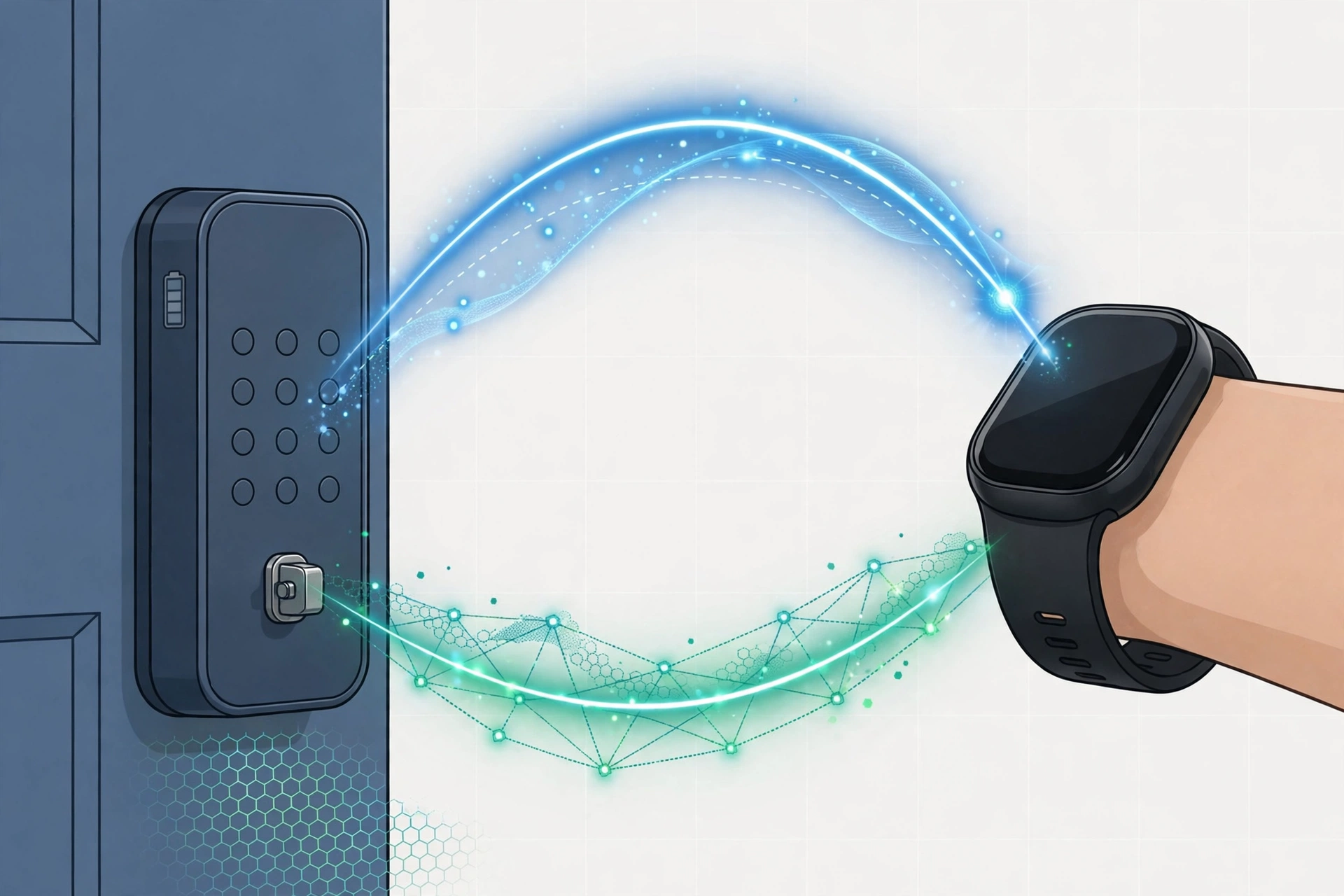
One of the most practical design choices is that the nRF71 Series uses two independent radios with separate radio-frequency and processing blocks: a Wi-Fi radio and a 2.4 GHz multiprotocol radio from Nordic’s nRF54 Series. Both receive simultaneously, so a device can hold its Wi-Fi connection to the cloud while still listening for Bluetooth LE or Thread traffic, without either protocol waiting for the other. That makes single-chip designs realistic for a battery-powered smart home hub, a Matter bridge or a Thread border router, as well as Matter-enabled smart locks, security panels, wearables and industrial sensors. The multiprotocol radio also supports Zigbee and Matter alongside Bluetooth LE and Thread. This multi-protocol approach echoes other recent chip launches aimed at practical, low-power AI at the edge, such as the low-power AI chips covered in our Dell 14S report linked above, and it fits a wider industry shift toward intelligence that lives on the device rather than in the cloud. For background on how large AI models are also moving toward on-device and agentic work, see Tencent’s Hy4 open-source AI model.
Edge AI on one chip, no extra processor
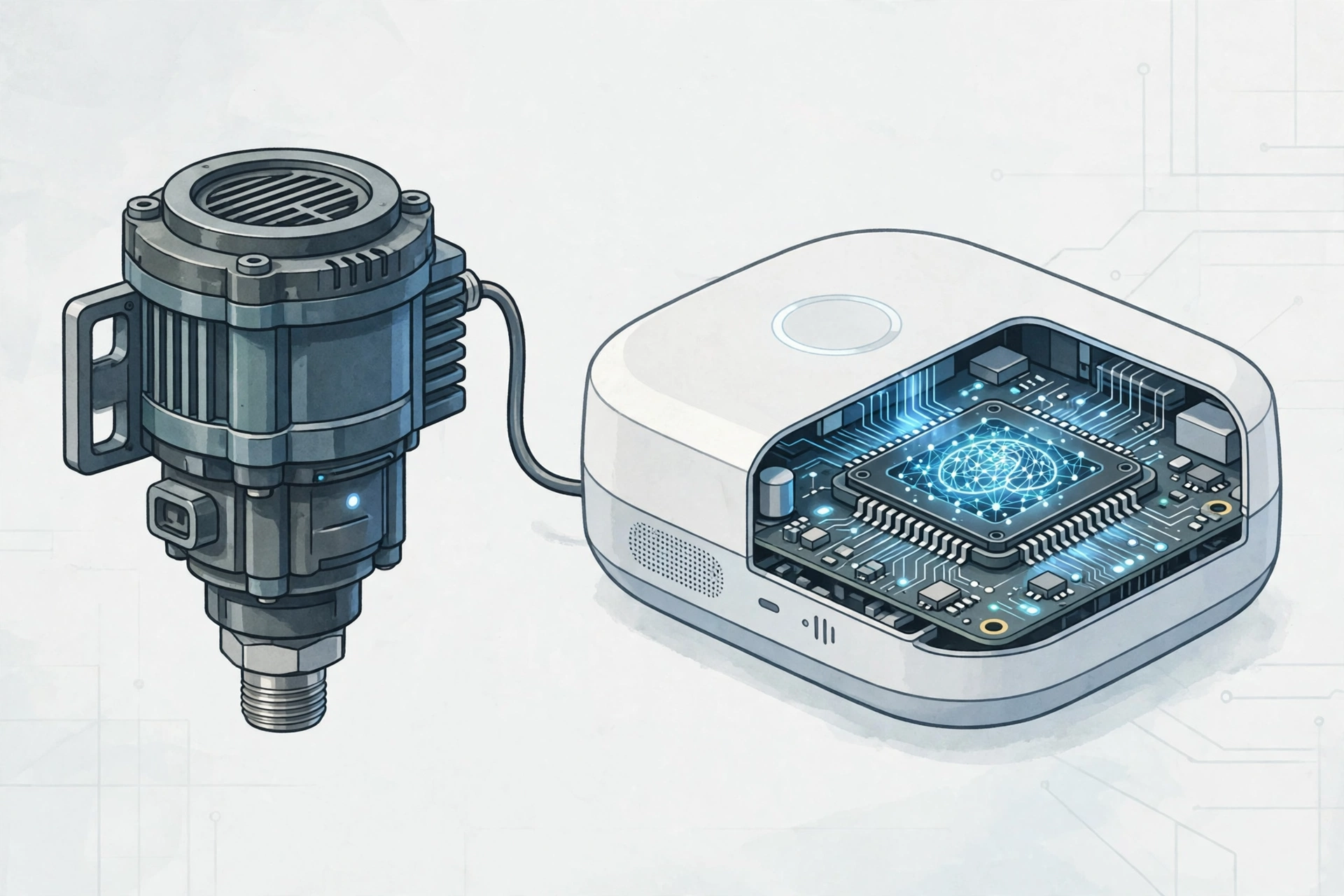
AI inference at the edge can now run directly on a single chip, with no external AI processor, according to Nordic. That means devices respond faster, use less power and need fewer components. Practical workloads named in the announcement include keyword spotting, anomaly detection and image classification. On the nRF7120E, the Axon NPU runs machine learning models 10 to 17 times faster than the Cortex-M33 processor alone. The series can also run ultra-small models that developers build from their own data with Nordic’s Neuton software, which is designed for running edge AI on the processor alone, and over-the-air model updates are handled through nRF Cloud. For independent detail on the chips’ specifications, see IoT Now’s nRF71 coverage and Hackster’s nRF71 analysis. As with any vendor benchmark, the 10x to 17x figure is a manufacturer claim until independent tests on shipping hardware confirm it.
What this means for smart homes, wearables and factories
The immediate winners are products where a battery change is a nuisance or a cost: smart locks, security panels, wearables, and industrial sensors that are hard to reach. A hub or bridge that previously needed mains power, or two chips, could now run on a battery with one chip handling Wi-Fi, Thread and Bluetooth LE together. In factories, anomaly detection running on the sensor itself can flag a failing motor or an unusual vibration pattern without streaming raw data to the cloud first, saving bandwidth and latency. In the home, keyword spotting and image classification on the device can keep more audio and video processing local, which is better for privacy as well as responsiveness. The same logic — small, practical AI close to the user — is visible in India’s homegrown EKA-1 and Dhīr AI models.
Availability, pricing and what to watch next
Nordic says the nRF71 Series is now sampling with selected customers, and developers should contact their local Nordic sales representative for availability. No general pricing or general-availability date has been announced, so product designers should treat this as an early-sampling launch rather than a chip they can order off the shelf today. Nordic will showcase the series, including a Nordic-branded module built around either chip with on-module shielding and antenna, at Electronica in Hall C6, booth 159. That module, which Nordic says is designed to be pre-certified, could matter as much as the chips themselves for smaller teams that want to skip separate host and communications processors. Watch three things next: independent power measurements on real hardware, especially in Wi-Fi-connected standby; the module’s certification and pricing; and which smart home, wearable and industrial products are first to ship with nRF71 inside. A related frontier to watch is lunar and space infrastructure, where power and connectivity constraints are even harsher, covered in our report on Astrolab’s LUMIS lunar node.