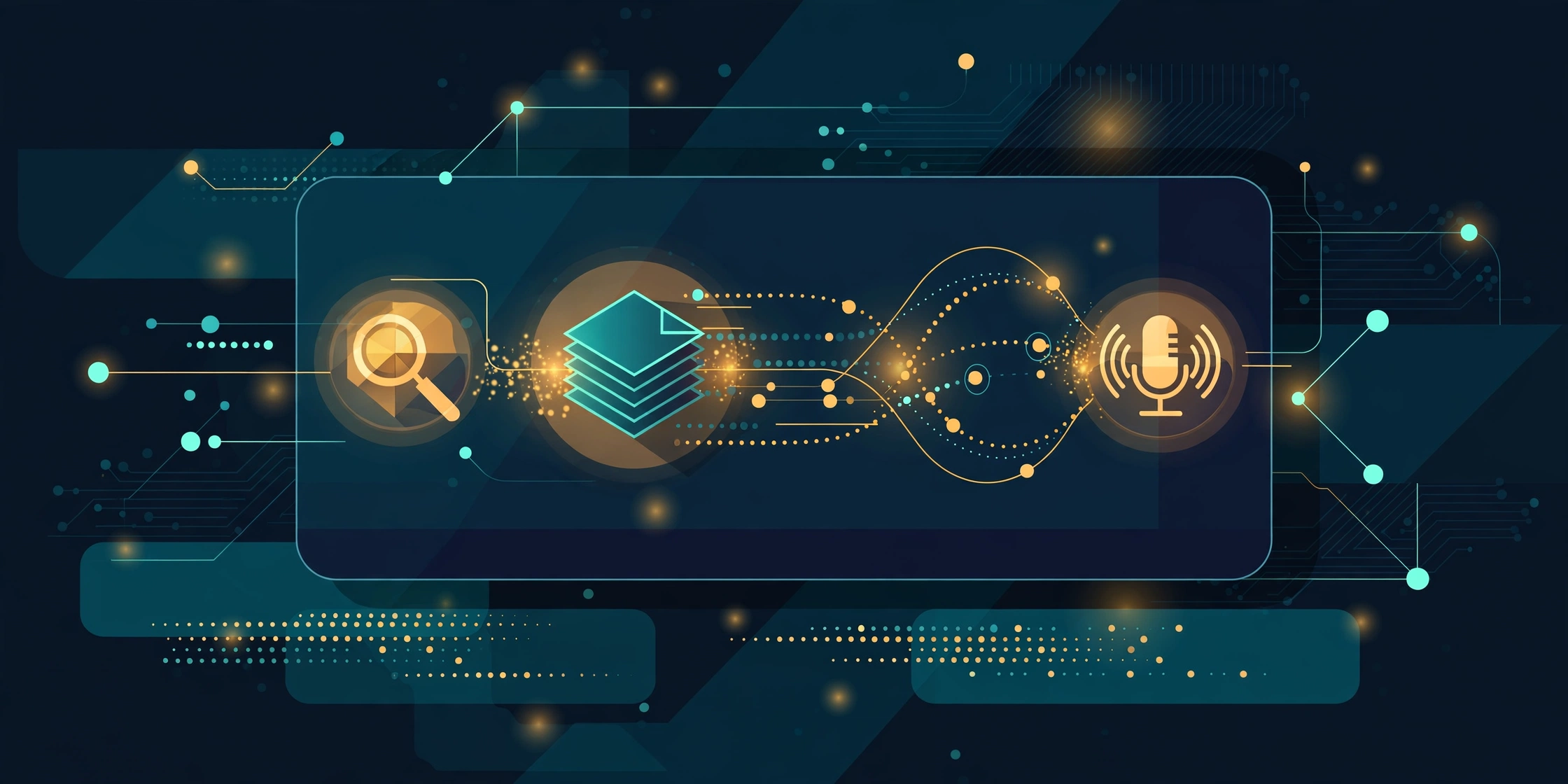
DeepSeek has spent the last year as the AI lab developers reach for when they want strong models at low prices. On November 13, 2026, it made a different kind of move: instead of shipping another model, it opened up the features behind its own chatbot app and handed them to developers through the DeepSeek API.
The release brings web search, URL reading, file analysis, content safety checks and voice tools into the API — the same capabilities that power the DeepSeek App. Some arrive as built-in tools the model can call on its own. Others are sold as standalone APIs with their own prices, so developers can use them with or without the model. And DeepSeek released an open-source demo chat client to show how the pieces fit together.
For anyone building AI apps, the practical question is simple: what exactly is new, what does it cost, and is it worth switching for? Here is the full picture.
What DeepSeek announced on November 13
DeepSeek announced the release on its X account on November 13, 2026, with a short summary that has become the release’s tagline: “Search, files, links, safety, and voice. The capabilities behind the DeepSeek App are now available through the DeepSeek API.”
The built-in features run on deepseek-flash, the API name for the DeepSeek-V4.1-Flash-1017 model, and work across the Messages, Responses and Chat Completions APIs. Developers switch them on with a few parameters in an existing request, and DeepSeek’s servers handle the tool calls and context assembly. In other words, there is no new endpoint to learn for the built-in tools — they are toggles on requests developers already make.
This follows an earlier step in the same direction: DeepSeek opened standalone Search and Fetch APIs on October 17, when it also updated the V4.1-Flash-1017 checkpoint. The November 13 release completes the picture by adding files, voice and safety to the same toolkit.
Web search and URL reading, built into the model
The headline feature is live web search. With thinking disabled and the deepseek_web_search tool enabled, the model can run web or image searches and answer with citations, so its answers are grounded in current pages rather than only in its training data. There is also a multi-step “deep thinking” search mode for questions that need more than one round of searching.
A companion tool, deepseek_read_url, lets the model fetch and read links that appear in a user’s message. A user can paste a link to an article, a product page or a document and ask the model about it, and the model reads the page itself instead of guessing from the URL.
That combination matters because it closes one of the most common gaps in chatbot apps: a model that cannot see the page you are talking about. For developers, it means search-grounded answers and link reading arrive as a parameter, not as a separate service to integrate and maintain.
It also puts DeepSeek in direct competition with other providers’ search offerings. OpenAI has built agentic commerce into ChatGPT, with its ChatGPT Wallet letting agents complete purchases with user approval, and Brave has opened its own Brave Search API to developers building agent payments. DeepSeek’s answer is cheaper and narrower: search as a tool, priced per call, with no commerce layer attached.
Files, OCR and safety checks

The second half of the release covers files. Developers can now let users upload documents and images inside an API chat, and the model can work with them. Supported formats include PDF, DOC, DOCX, PPT and PPTX, as well as images. DeepSeek offers two document-processing methods: text_recognition, which extracts text and suits documents that are mostly written content, and a layout-parsing mode for documents where structure matters.
Safety checks are part of the same package. DeepSeek says public-facing apps built on the API should turn on its safety checks, and reporting on the release notes that public-facing apps are required to include them. That is a sensible condition: once an API can fetch arbitrary URLs and read user-uploaded files, the surface for abuse grows, and DeepSeek is pushing the screening responsibility onto apps that face the public.
Standalone APIs: Search, Fetch, OCR, ASR and TTS
Alongside the built-in tools, DeepSeek split five capabilities out into standalone APIs, for pipelines where code — not the model — decides when to call a tool. Each has its own endpoint, limits and price:
Search API — runs searches through DeepSeek’s internal search engine and returns structured results for search applications and AI agents. It uses the /v1/tools/search endpoint and supports up to 100 requests per second. Image search is not currently supported through the standalone API.
Fetch API — retrieves the contents of a specific web page, the counterpart to search: one finds information, the other pulls a particular page.
OCR API — extracts text from images and PDF, Word and PowerPoint documents through /v1/tools/ocr, returning results page by page. Files processed through this API are not stored in the Files API or passed to the chat model. The maximum file size is 100 MB, with support for documents of up to 1,000 pages.
ASR API — converts audio files into text through /v1/tools/asr. It supports 21 languages with automatic language detection. Accepted formats include WAV with 16-bit PCM and Ogg Opus, and audio files can be up to 120 seconds long and 8 MB in size.
TTS API — converts text into spoken audio through /v1/tools/tts. It supports 10 languages and includes two voices: Stella, a female voice, and Tide, a male voice. Each request supports up to 10,000 characters, with streaming audio available through WebSocket.
What it costs
The tools are billed separately from tokens, and the prices are deliberately small. According to DeepSeek’s documentation, as of November 13:
- Search: $0.75 per 1,000 successful requests
- Fetch: $0.75 per 1,000 requests
- OCR: $0.225 per 1,000 pages
- ASR: $0.116 per hour of audio at list price, currently $0.058 with a 50% limited-time discount
- TTS: $0.45 per 10,000 characters at list price, currently $0.225 with a 50% limited-time discount
The model itself, deepseek-flash, costs $0.30 per million uncached input tokens and $1.20 per million output tokens at peak hours, with off-peak rates at half that. DeepSeek gives no end date for the voice discounts, so treat the halved ASR and TTS prices as introductory rather than permanent.
The pricing tells you who DeepSeek is aiming at. At 75 cents per thousand searches, a small app can add live web search for a few dollars a month. The OCR price — about two-hundredths of a cent per page — makes document-heavy workflows, like invoice or receipt processing, cheap enough to run at scale. The trade-off is that tool fees stack on top of token charges, so a chat that searches, reads files and speaks on every turn will cost more than the token price alone suggests.
Who this is for — and who should wait
This release is most useful for three kinds of builders. First, developers who already use the DeepSeek API and want their chatbots to answer from current information instead of training data — the built-in search and URL reading are nearly free to switch on. Second, teams building document workflows — support desks, finance tools, research assistants — that can now parse PDFs and scan images through the same provider as their model. Third, anyone prototyping voice features, since the half-price ASR and TTS make experimentation cheap.
There are reasons to wait, too. The standalone Search API does not support image search yet, ASR caps audio at 120 seconds per file, and the voice discounts have no published end date, so costs could rise without warning. And developers who need the deepest reasoning should note that these tools are tied to deepseek-flash, the fast model, rather than DeepSeek’s heavier reasoning models.
It is also worth remembering that DeepSeek is not the only lab opening up its app this way. The company previously open-sourced dsh-superagent, a coding agent that works for a whole team, and the wider agent-tooling market is moving fast — from Cowork, the open-source task queue that routes coding work across Claude Code, Codex and Gemini CLI, to LangChain’s LangSmith, which just raised $300 million to become an agent operating system. DeepSeek’s bet is that the cheapest way to win developers is to sell the tools themselves, a few cents at a time.
Frequently asked questions
When did DeepSeek release these API tools?
On November 13, 2026. DeepSeek announced the release on its X account and in its API change log the same day, with immediate availability across developer accounts.
Which model powers the new built-in tools?
The deepseek-flash model, currently backed by the DeepSeek-V4.1-Flash-1017 checkpoint. The built-in tools work across the Messages, Responses and Chat Completions APIs.
How much does DeepSeek’s Search API cost?
$0.75 per 1,000 successful requests. Fetch costs the same, OCR costs $0.225 per 1,000 pages, and ASR and TTS are currently half price at $0.058 per hour of audio and $0.225 per 10,000 characters.
Can I use the Search, OCR and voice APIs without the model?
Yes. They are standalone APIs with their own endpoints — Search at /v1/tools/search, OCR at /v1/tools/ocr, ASR at /v1/tools/asr and TTS at /v1/tools/tts — so your code can call them directly.
Do public-facing apps need to use DeepSeek’s safety checks?
DeepSeek says public-facing apps built on the API should turn on its safety checks, and reporting on the release notes they are required to include them.
The bottom line
DeepSeek’s November 13 release is not a new model, and that is the point. By turning its own app’s search, file and voice features into cheap, standalone APIs, DeepSeek is selling developers the plumbing behind its chatbot — and pricing it so low that trying it costs almost nothing. The built-in tools are the easy win for existing DeepSeek users; the standalone APIs are the longer bet, aimed at anyone building search, document or voice pipelines who would rather pay per call than build the infrastructure themselves. Whether it sticks will depend on reliability and on whether those introductory voice prices survive the new year — but for now, the cheapest search API in the market just got a lot more capable.
Sources: DeepSeek API Docs, Crypto Briefing, AI Affairs.