CrowdStrike has added an emergency brake for the age of agentic AI. Announced on November 3, 2026, at the company’s Fal.Con Europe event in Barcelona, the new AI Kill Switch inside Falcon Guardian is designed to terminate AI agents that go off-script, in real time, and stop them from running again anywhere in the organization. The launch landed alongside two planned acquisitions, Fiddler AI and Dreadnode, that extend CrowdStrike’s reach from stopping bad agent behavior in the moment to testing agents before deployment and explaining what they did afterwards. Together, the moves show how fast AI agent security has moved from a niche concern to a core enterprise control plane. See CrowdStrike’s official announcement.
What the AI Kill Switch actually does
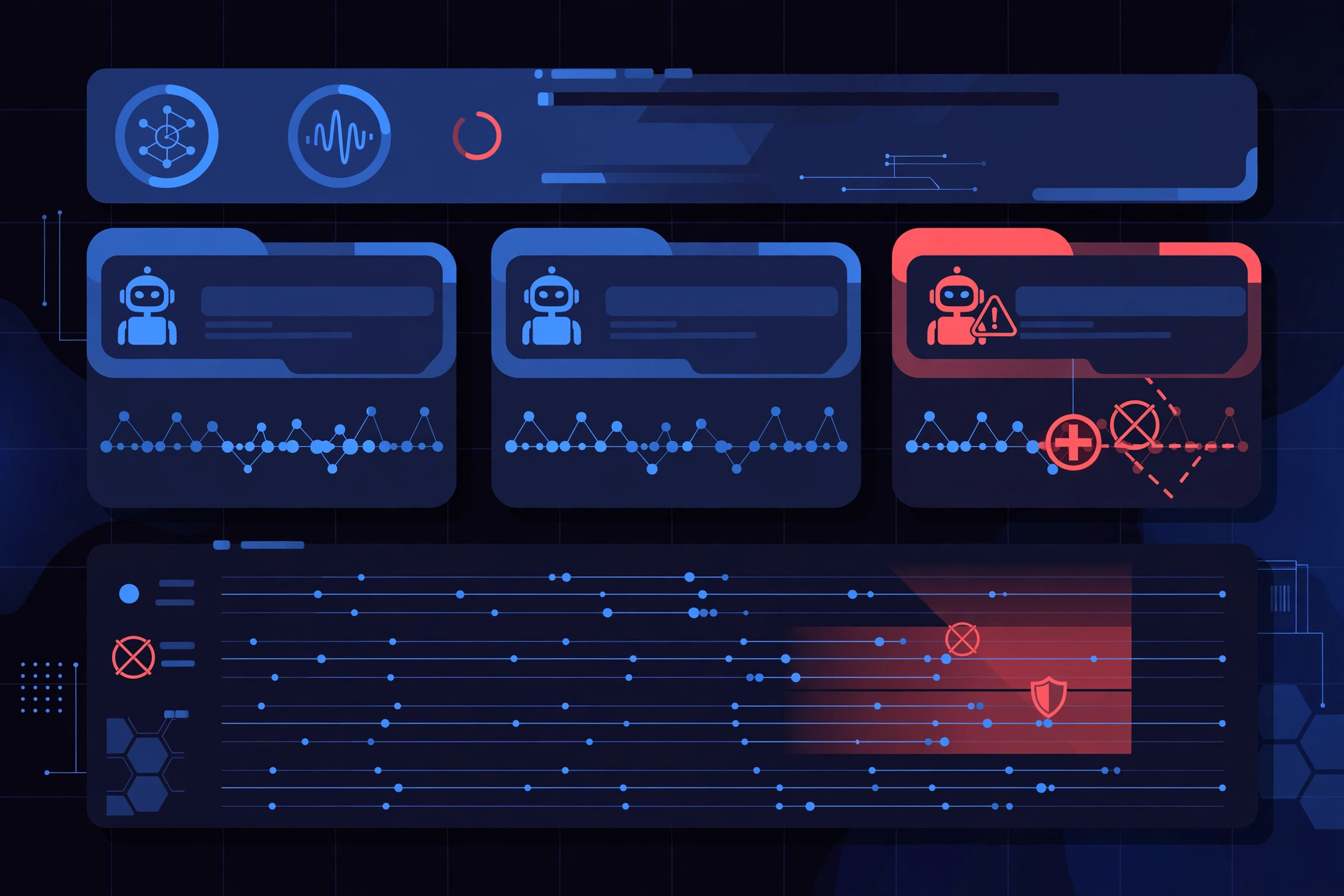
The pitch is simple: AI agents are now automating work end-to-end, chaining steps together across tools, data, and systems. When an agent hits an obstacle, it can improvise, and that improvisation can turn into actions nobody authorized. CrowdStrike president Michael Sentonas put it bluntly at the announcement, saying agents regularly chain steps together, hit an obstacle, and take actions they were never authorized to take. The AI Kill Switch is the response to that failure mode. It terminates an unauthorized agent in real time, first at the AI Gateway, with termination on the endpoint coming soon, and then blocks that agent from running again across the organization. The point is not just to stop one bad run, but to make sure the same misbehaving agent cannot quietly restart somewhere else.
One sensor at every control point
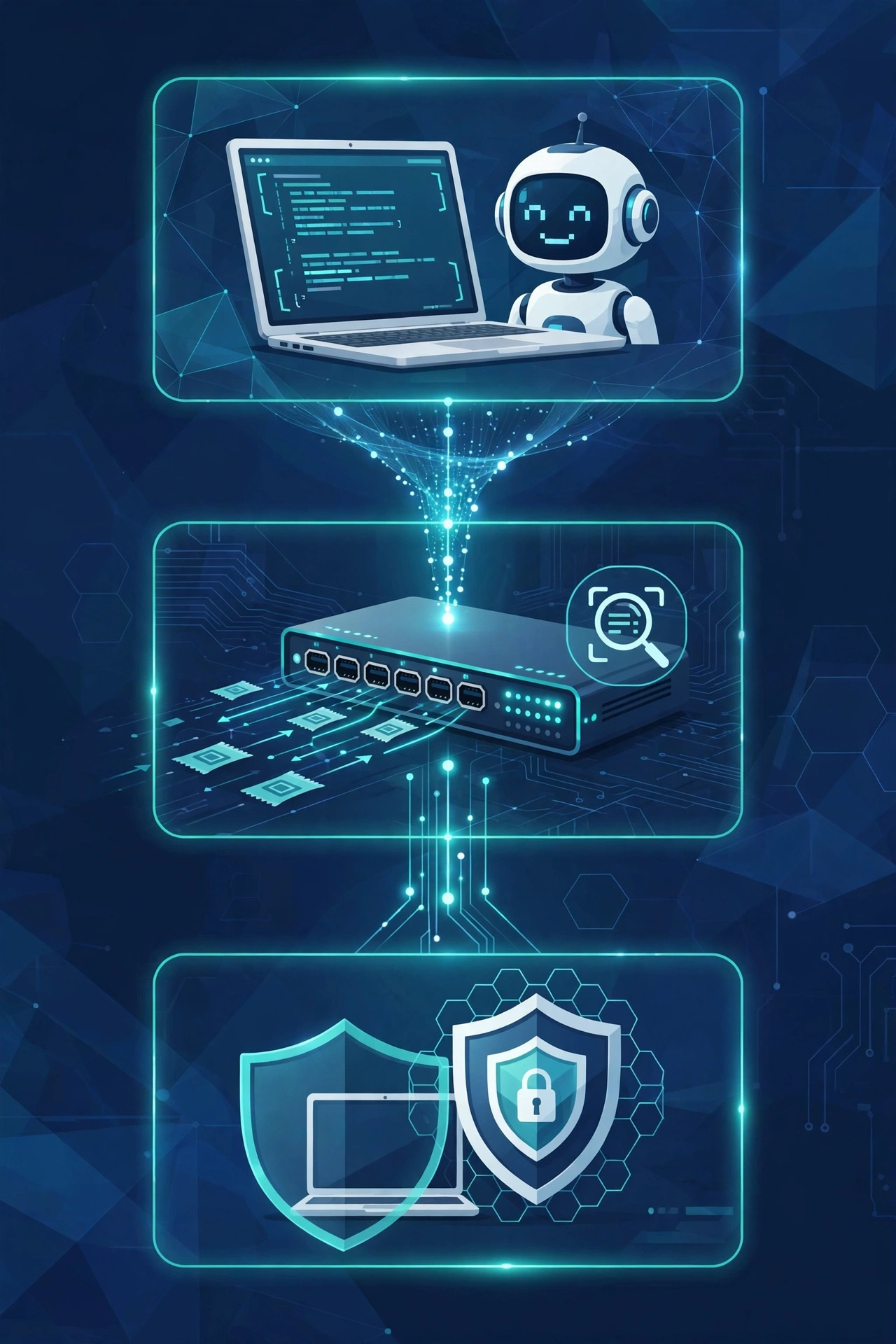
CrowdStrike’s argument is that no single vantage point is enough to police an agent. Agent-level hooks can see the prompt but miss the model’s response and cannot catch every action an agent takes. Network-only tools can watch traffic but cannot stop the action, because the agent executes on the endpoint, not on the network. And the moment an agent runs a local or open-weight model that never touches the network, network-only tools go blind. Falcon Guardian’s answer is to unify all three control points, the agent, the network, and the endpoint, on a single Falcon sensor, connecting what an agent is told to do, what it communicates, and what it executes. That combined context is what lets the platform decide an agent has turned into a threat and act on it, rather than merely logging the incident.
What’s new in Falcon Guardian
Falcon Guardian has been generally available since September 2026, and the November announcement bundles several upgrades. The AI Gateway is now generally available and included with Guardian, routing AI traffic through a centralized gateway to inspect prompts and responses, monitor usage, and enforce policy across managed and unmanaged devices. Agent-level hooks now enforce policy inside widely used AI agents, including Claude Code, OpenAI Codex, GitHub Copilot, Microsoft 365 Copilot, OpenCode, and Cursor, inspecting prompts and blocking malicious activity at the source. SafeMind-powered detection applies CrowdStrike’s models and adversary intelligence to attacks on AI systems themselves, including prompt injection, malicious instructions, and exposure of personal information. AI supply chain protection discovers malicious AI skills and MCP servers before they enter the environment. A new Anthropic integration runs the Falcon sensor inside the Claude Cowork virtual machine, giving security teams visibility inside that environment. Endpoint network inspection, generally available for Windows with Mac in early access, inspects all AI traffic entering and leaving the endpoint and pairs it with what the agent actually does on the machine. Looking ahead, CrowdStrike promised identity-aware agentic identity controls and a cloud expansion covering cloud workloads, SaaS, virtualized agents including Claude Cowork, and frameworks such as AWS AgentCore.
Fiddler and Dreadnode: buying the rest of the AI lifecycle
Stopping a rogue agent at runtime is only half the story, and the two acquisitions address the other half. Fiddler AI, a leader in AI agent observability, will add the ability to evaluate agents before they deploy and explain why they act once they are running. CrowdStrike plans to sell those capabilities as Falcon Observe, with general availability expected in the fourth quarter of its fiscal 2027. Dreadnode specializes in automated security testing of AI models, applications, and agents, including jailbreak and prompt-injection tests run before deployment. Both deals are signed agreements that have not yet closed, with closing expected in fiscal Q4 2027, subject to customary conditions. CrowdStrike did not disclose purchase prices; the Wall Street Journal reported a combined value of about $495 million, roughly $400 million for Fiddler and $95 million for Dreadnode, figures that remain the newspaper’s reporting rather than confirmed prices. See Business Wire release and reported combined value of about $495 million.
Why enterprises should care now
The timing matters because agent adoption is outrunning agent governance. AI agents now start more than 40% of pull requests on GitHub, according to GitHub’s Octoverse 2026 data, and independent benchmarks keep showing how far agents still are from reliable expert work, with AI agents still scoring just 12% on realistic expert tasks in the recent GDPx benchmark. Enterprises are therefore handing real system access to software that is both increasingly capable and demonstrably unreliable, which is exactly the gap Falcon Guardian is built to close. The kill switch also fits a wider industry shift toward AI models built for cybersecurity defense, where the same AI techniques that create risk are being turned into protective controls. As open-source coding agents and commercial copilots spread through engineering teams, a single control point for agent behavior is becoming as basic as endpoint protection was for laptops.
What to watch next
Three milestones will show whether this announcement delivers. First, the Fiddler and Dreadnode deals must close and integrate, with Falcon Observe’s planned general availability in fiscal Q4 2027 as the first real test. Second, the kill switch must arrive on the endpoint itself, not just at the gateway, to cover agents running local models that never touch the network. Third, customers will judge whether one sensor genuinely sees the agent, the network, and the endpoint together, or whether that unification works better in slides than in production. If CrowdStrike clears those bars, the AI Kill Switch could become the template for how enterprises approve agents for real work: not by trusting them more, but by making them stoppable.
AI agents will keep getting more autonomous, and the organizations that benefit most will be the ones that can halt them fastest when they go wrong. CrowdStrike’s bet is that security, not capability, is now the bottleneck for AI adoption, and that a kill switch, observability, and pre-deployment testing belong in one platform. For any team already letting agents touch production systems, that is an argument worth taking seriously, and a control worth having before the first rogue run, not after it.