Most AI models learn in simulation. Embodied AI — robots that see, move, and manipulate the physical world — cannot. A robot that has only ever practiced in a virtual warehouse will fumble the first time a real parcel shifts, a forklift crosses its path, or a shelf is stacked differently than expected. On November 5, 2026, Cainiao, Alibaba’s logistics arm, announced a plan to fix that bottleneck at industrial scale: an AI and embodied intelligence industry partnership that opens its global warehouse network to robotics companies, turning live logistics operations into what it calls the world’s largest real-scene training cluster for AI and embodied intelligence.
What Cainiao Announced
Launched at an event in Hong Kong with nearly 100 representatives from across the industry chain, the initiative invites AI and robotics partners to train and validate their systems inside Cainiao’s working logistics network. The goal, in the company’s words, is to support technology training, real-world validation and industrial deployment — the three steps that separate a lab demo from a robot that can actually hold a job. Cainiao has already signed initial cooperation agreements with leading firms in AI computing and embodied intelligence, and says it will keep expanding partnerships with technology companies and research institutions to build a global AI innovation ecosystem. “AI has become a new engine of productivity,” said William Xiong, CEO of Cainiao Global. “As AI and embodied intelligence move from the lab into real industry, we want to leverage our global network to help partners accelerate value creation.” Read the Cainiao announcement for the full release, and Unite.AI’s analysis of the partnership for an independent take.
The World’s Largest Real-World Training Ground
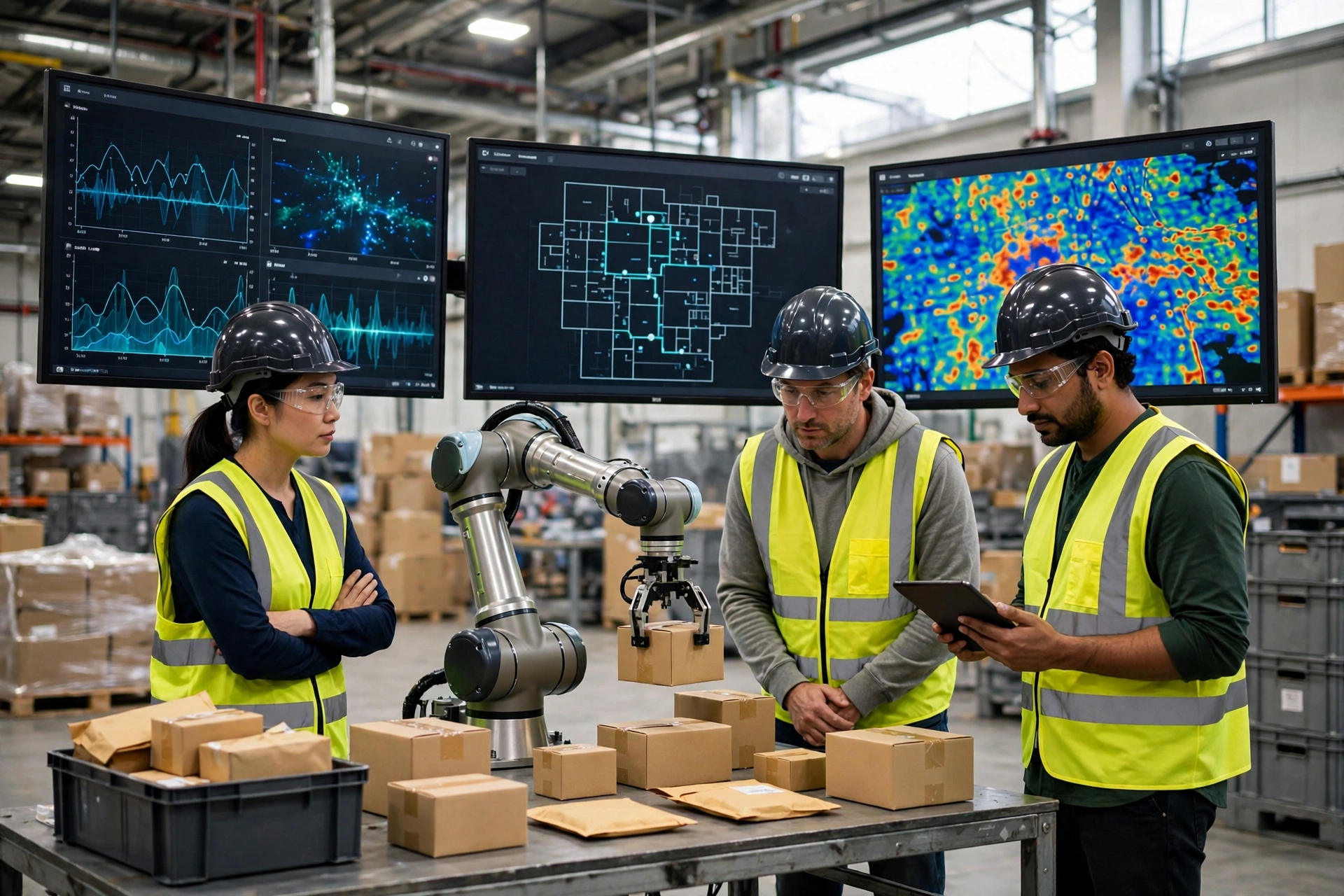
The training ground is the logistics network itself. Cainiao’s operations span domestic pickup, cross-border line-haul and overseas fulfillment across multiple countries, industries and operating environments, handling high volumes of multi-SKU shipments — exactly the messy, varied conditions robots need to learn from. The company is opening dozens of industry-specific proof-of-concept scenarios covering warehouse picking, intelligent navigation and delivery, high-altitude inspection, security operations, aviation logistics and auto parts management, giving partners a platform for joint R&D, real-machine training and business validation. This matters because embodied AI is a data problem as much as a hardware problem: a robot needs thousands of real grasps, navigations and recoveries from failure before it is reliable, and no simulator fully reproduces a working warehouse. It is the physical-world counterpart to a trend we have already seen in software — our roundup of embodied AI among 2026’s breakthrough technologies flagged autonomous systems moving from screens into factories, homes and warehouses, and the robotics and automation trends shaping the industry point the same way.
From Single Tasks to Full Workflows
Cainiao says it has already scaled pilot deployments across express delivery, e-commerce, fast-moving consumer goods and auto parts, and the pilots are organized as a ladder of difficulty. Basic tasks include parcel feeding and labeling; mid-level precision tasks include small-item sorting; and advanced long-horizon tasks include palletizing and complex depalletizing. That progression is the point: robots are expanding from single-point operations — one repetitive motion, done well — to sophisticated, multi-step work in live environments. Cainiao’s March 2026 warehouse plan for robotic facilities in Hong Kong, the Netherlands, Spain, France, Germany and the United States set the stage, centering on its self-developed warehouse robots and AI scheduling system; at the time the company reported operating more than 40 overseas warehouses across 18 countries. The company frames the payoff in striking terms: as intelligence extends from the digital world into physical industries, efficiency improvements over the next decade could reach 10 to 50 times. That is a forecast, not a measurement — but it explains why a logistics company, rather than a robotics vendor, is positioning itself at the center of the embodied AI story.
Global Tech in Three Days: Shipping the Robots Themselves
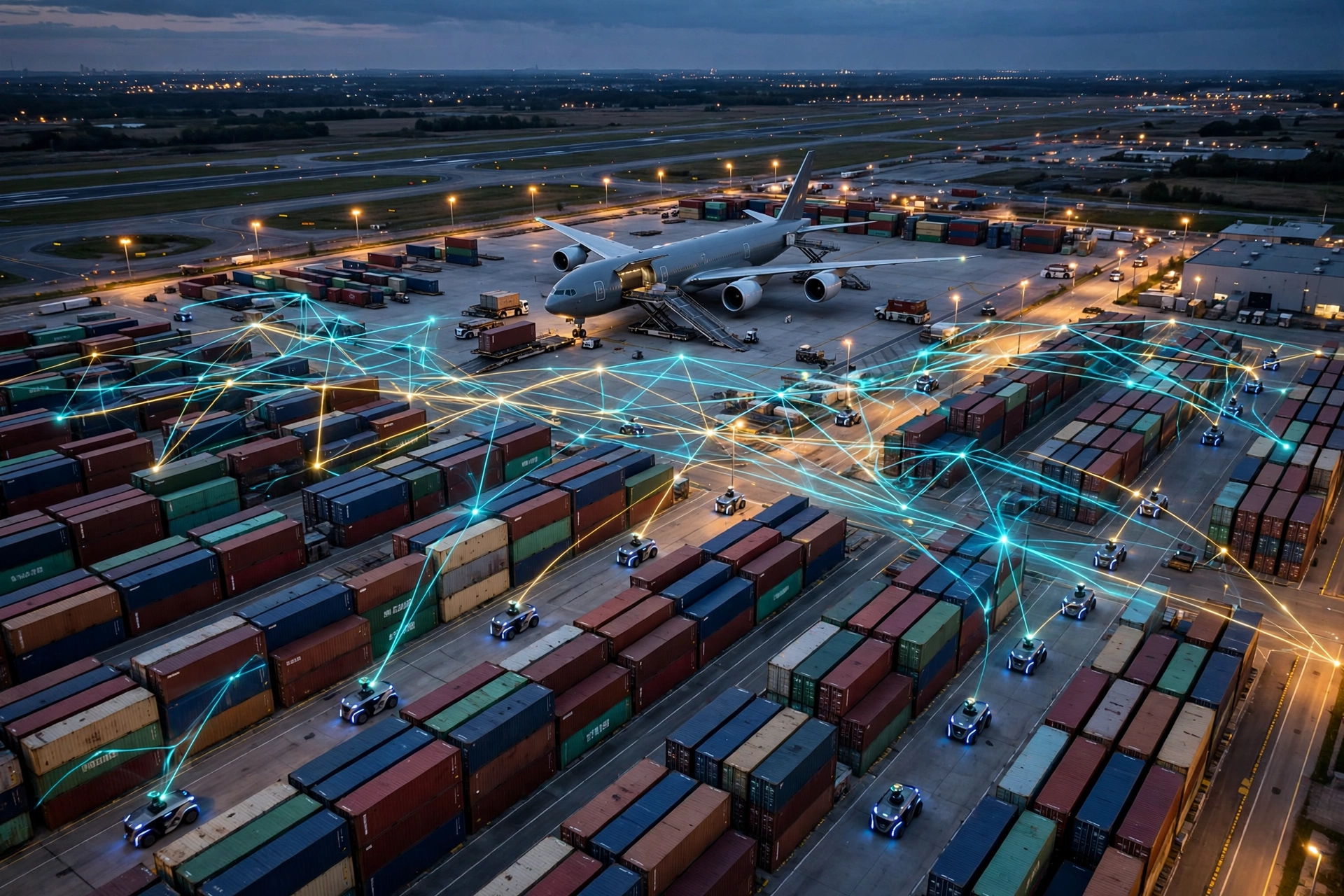
The second half of the announcement is about distribution, not training. Cainiao also unveiled “Global Tech in Three Days,” a service for AI computing and robotics companies that handles the end-to-end supply chain from prototype testing through scaled delivery and overseas operations. It targets consumer robot makers, AI computing companies and embodied-intelligence hardware and component suppliers, with integrated support including customs, forward and reverse logistics, high-value cargo insurance, forward warehousing and spare-parts management. Global express covers on-demand needs such as R&D testing, customer demos, product fulfillment and small-batch replenishment; global air freight is tailored for large, high-value shipments including AI infrastructure equipment, control systems and core modules; and the warehouse network supports regional stocking, multi-country warehousing and local delivery. “We want to extend the global logistics capabilities we have built for e-commerce into AI and embodied intelligence,” Xiong said. “Our goal is to make intelligent technologies go global as efficiently and simply as e-commerce parcels.” It is a reminder that the robot race is also a supply-chain race — a lesson from the consumer side, where even Apple’s reported HomeView Ultra home robot will live or die on whether its hardware can reach buyers at scale, and from the software side, where platforms like CodeBoxx’s CrewKit Forge AI software factory are industrializing how AI systems get built and shipped.
What to Watch Next — and What Is Still Unproven
The announcement is ambitious, and the honest caveats are worth stating. No partner names, investment figures, or deployment timelines were disclosed, and the “world’s largest” training cluster claim has no published size or benchmark behind it — it is a statement of intent about a network that is still being opened up. The pilot tasks described are real, but the release offers no success rates, throughput figures, or independent evaluation of how well robots trained in Cainiao’s network perform. The real test will be whether partners actually ship robots that work reliably in live warehouses — and whether the training data generated inside a logistics network transfers to the very different environments, from factories to hospitals, where embodied AI is supposed to go next. TNGlobal’s coverage of the launch carries the full release text. If Cainiao’s bet pays off, the template could spread: every large logistics operator sits on the same asset — millions of real-world interactions a day — and the company that turns that asset into robot training data first may shape how quickly embodied AI leaves the lab.
Cainiao’s announcement is not about a single robot. It is about infrastructure: a global logistics network reimagined as a training ground, and a supply chain reimagined as a launchpad for AI hardware. Embodied AI has spent years proving it can work in controlled demos; the next phase is proving it can work in the wild, at scale, day after day. Warehouses are where that proof will be earned first — and Cainiao just offered its warehouses to anyone building the robots.