

AI agents have a decision problem. Every time an agent picks a tool, routes a ticket or chooses its next step, it usually asks a full large language model to write out an answer — slow, expensive, and overkill for a yes-or-no call. On November 23, 2026, Amazon Web Services shipped a different answer: Strands Decider v2, a family of five open-weight models built to decide instead of chat, alongside Box CLI, a sandbox that keeps coding agents on a short leash. Together they attack the two things holding autonomous agents back — cost and trust.
The update lands in Strands Agents, AWS’s open-source toolkit for building autonomous workers, which the company first released in May 2025. Decider v2 is about making agents faster and cheaper; Box CLI is about making them safer. Both are available now, and both are open — the models under an Apache 2.0 licence on Hugging Face and the Strands Decider repository, and Box CLI as part of the open-source Strands Box sandbox.
What Is a Decision Model?
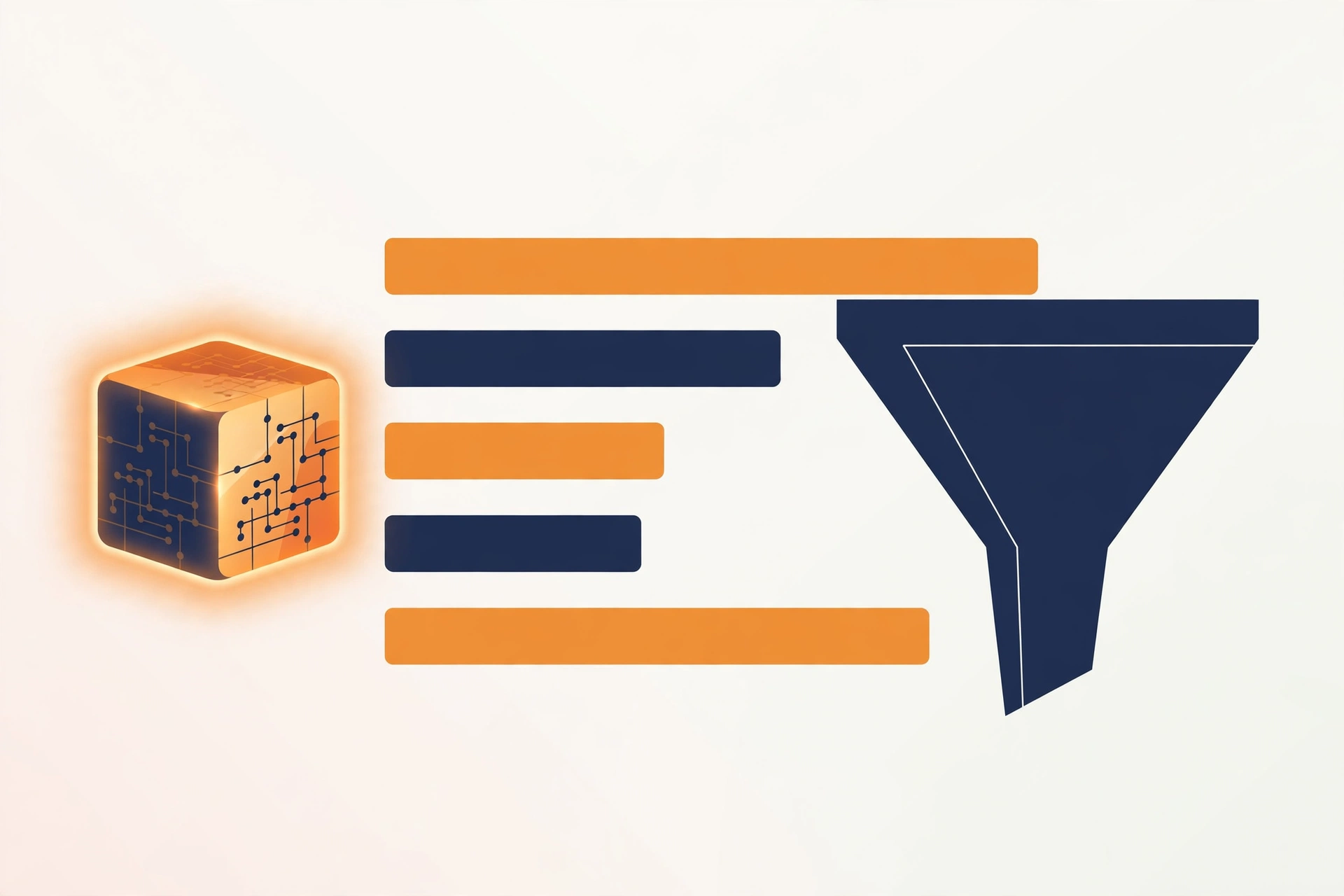
A regular language model answers in prose. A decision model does something narrower: it looks at a situation, scores a fixed list of options, and returns the probabilities for each — no essay attached. That is the whole idea behind Strands Decider. Instead of generating text to pick a tool or route a request, the model runs a single forward pass, scores every supplied option, and hands back the numbers.
That matters because most of what an agent does all day is not creative writing. It is repeated, bounded choices: which tool to call, whether a ticket is urgent, whether to act or escalate to a human. Using a flagship model for those calls is like hiring a novelist to sort your mail. A small decision model does the same job in a fraction of the time and at a fraction of the cost — and because it returns a confidence score, the agent can tell when it is sure enough to act and when it should ask a person.
The v2 models are built on Google’s Gemma 4 architecture and come in five sizes: E2B, E4B, 12B, 26B-A4B and 31B, from a lightweight edge version up to a 31-billion-parameter variant for complex decisions. They handle text, image and video tasks, work with longer inputs including multi-step agent execution logs, and use a technique called prefix-bidirectional attention that lets them score all options in one prefill pass — early context informs later questions without re-reading the input. AWS says the largest model scores 82.1 across six public text benchmarks, ahead of Google’s Gemini Decision 1 at 79.4.
Five Models, One Job: Decide Fast and Cheap
AWS’s own deployment is the headline proof point — and it should be read as the company’s own claim, not an independent benchmark. The company says it replaced Claude Sonnet 4.6 with Decider v2 on its largest internal ticketing system, cutting labelling costs by 98% and ticket response times by 78%. Those are dramatic numbers, and they have not been independently verified, but the direction is plausible: routing and labelling are exactly the kind of repetitive classification work decision models are built for.
The models are also designed to collaborate with other agents rather than replace them. They can steer robotic arms, evaluate other AI agents, and route routine queries to cheaper models — the unglamorous plumbing that makes a multi-agent system affordable at scale. Deployment options include local CUDA, Mac or CPU serving, a real-time Amazon SageMaker AI endpoint, and AWS Lambda, so teams can run them wherever their data lives.
This is part of a wider shift in the industry. Model builders are trading raw size for cleverness: Z.ai’s GLM-5.4 re-runs its own layers to think harder instead of adding parameters, and the whole market is discovering that the expensive model should only be called when the cheap one is not sure. Decider v2 is AWS’s bet that the decision layer of the agent stack becomes its own product category.
Box CLI: A Sandbox for Coding Agents

The second half of the release tackles the other agent headache: security. Coding agents such as Claude Code, Codex and Kiro CLI are powerful precisely because they can read your files, run commands and touch your network — and that is also what makes them dangerous. An agent with no restrictions can accidentally delete files it should not touch, leak a sensitive key, or be manipulated through a malicious prompt into doing something damaging.
Strands Box, launched in developer preview on October 7, 2026, is an open-source operating-system sandbox that enforces strict security policies on every agent action. The new Box CLI extends it with native command-line support: developers can start an installed agent with a command like box run claude, and Claude Code, Codex or Kiro CLI keep their usual interfaces while Box enforces the selected profile’s boundaries. The agent works without constantly pausing to ask permission — and without the freedom to wander off.
Credentials are the clever part. API keys and AWS tokens stay outside the sandbox, injected only on policy-approved requests, so even a compromised or tricked agent cannot exfiltrate them. Box CLI is still in preview and runs on Apple silicon Macs with macOS 15 or later, and on Linux ARM64 and x86-64.
What AWS’s Own Numbers Say
The 98% cost cut and 78% speed gain come from AWS’s own internal ticketing system, and the 82.1 benchmark score is AWS’s reported figure against Google’s Gemini Decision 1. None of it has been independently verified, and internal deployments are always the friendliest possible test. But the numbers are consistent with what decision models are supposed to do — replace a general-purpose model with a specialised one on a narrow, repeated task — and the open weights mean anyone can now test the claim themselves instead of taking AWS’s word for it.
That openness is the real story. Because the models are published under Apache 2.0 on Hugging Face, teams with data-residency or procurement constraints can inspect them and self-host them, with no API waitlist and no per-call bill. It is the same playbook that made open-weight models the default for so much of the industry — and it puts pressure on every other cloud provider to offer the same.
Why This Matters for Developers
If you build with agents, this release changes two daily frustrations. First, the cost of the decision layer: swapping a flagship model for a Decider model on routing, triage and escalation calls can cut the bill for the most frequent agent operations by an order of magnitude. Second, the permission dance: Box CLI means you no longer have to choose between approving every single agent action and giving the agent the keys to everything. The sandbox gives it room to work and a fence it cannot cross.
The timing fits the week. Anthropic’s Claude Ship is automating code review, OpenAI and Cisco’s Shirudo is shielding Linux systems without a reboot, and Meta’s Muse agent is now shopping for UK users — agents are moving from demos into daily work, and the infrastructure around them is racing to catch up. Google Gemini’s Computer Use is bringing agents to the Mac desktop. Decider v2 and Box CLI are AWS’s contribution to that same shift: cheaper decisions, safer execution.
The Honest Caveats
Three things are worth knowing before you adopt either tool. First, the headline savings are AWS’s own numbers from its own system — your mileage will vary, and you should benchmark on your own workload before assuming a 98% cut. Second, Box CLI is still in preview, with platform limits to macOS 15+ on Apple silicon and Linux, so Windows developers will have to wait. Third, a decision model is only as good as the options you give it: it scores the choices you supply, so a badly designed choice set will still produce confident wrong answers. The confidence score helps — it tells you when to escalate — but only if you actually wire the escalation in.
None of that dims the release. Open-weight decision models and a real sandbox for coding agents are exactly the two pieces the agent ecosystem has been missing, and AWS has now shipped both in one day. Try the small models first, sandbox the agents, and let the benchmark scores — yours, not AWS’s — decide how far they go.
Sources: the official Strands Agents site, Unite.AI’s report and Silicon Report’s coverage.